
Main Courses
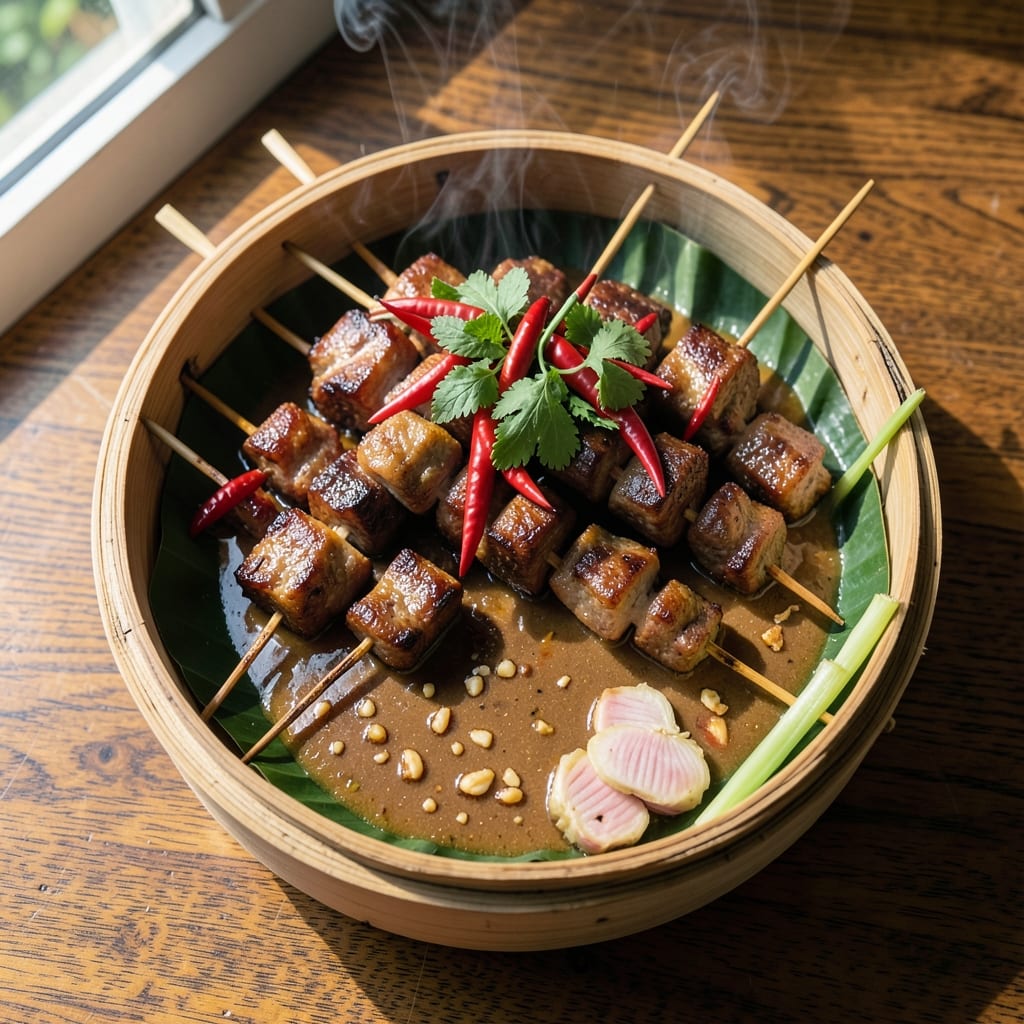
This authentic Thai beef satay recipe delivers the smoky, charred flavors of street-side Bangkok eateries—where tender beef skewers glaze with a velvety peanut-lime sauce. The secret lies in marinating the beef overnight with lemongrass, galangal, and kaffir lime leaves, then grilling over high heat to achieve that signature caramelized crust. Every bite balances sweet, spicy, and umami, just like the satay I first tasted in Chiang Mai.
What sets this recipe apart is the charred peanut butter and lime gloss—a glossy, aromatic sauce that clings to each skewer. The marinade transforms tough cuts into melt-in-your-mouth beef, while the skewering technique ensures even cooking and dramatic presentation. Serve with traditional sides like cucumber salad (yum wun sai) and steamed jasmine rice to complete the experience.
This isn’t just another satay recipe—it’s a foolproof method for restaurant-quality results at home. The marinade infuses deep flavors, the grill creates those coveted char marks, and the sauce ties everything together with its signature creamy-sweet balance. Whether you’re hosting a dinner party or craving a taste of Thailand, this dish delivers authenticity without compromise.
The key to success? Patience and precision—let the marinade work its magic overnight, control the grill heat for even charring, and don’t skip the sauce reduction for maximum flavor. Once mastered, you’ll never buy satay again. Let’s get cooking!
Ingredients for authentic thai beef satay
Sixteen ingredients transform ordinary beef into restaurant-quality Thai satay skewers.
| Ingredient | Amount | Notes |
|---|---|---|
| Beef Chuck Roast 🥩 | 2 ½ lb | Cut into 1-inch cubes, boneless |
| Stems Lemongrass 🌿 | 8 whole | Bruised to release oils, bottom 3 inches |
| Galangal Root 🍃 | 4 oz | Fresh, peeled, sliced thin |
| Kaffir Lime Leaves 🍋 | 6 whole | Fresh, lightly bruised |
| Garlic Cloves 🧄 | 8 cloves | Minced, fresh preferred |
| Shallots 🧅 | 4 whole | Minced, about 0.5 cup |
| Fish Sauce 🍶 | ¼ cup | Red Boat brand preferred |
| Brown Sugar 🍯 | ½ cup | Packed, light brown preferred |
| Turmeric Powder 🌶️ | 1 tbsp | Freshly ground preferred |
| Ground White Pepper 🌶️ | 1 tsp | Freshly ground preferred |
| Bamboo Skewers 🪵 | 24 whole | Soaked 30 minutes in water |
| Peanut Butter 🥜 | 1 cup | Natural, unsweetened |
| Lime Juice 🍋 | ½ cup | Freshly squeezed, about 4 limes |
| Coconut Milk 🥥 | ½ cup | Full-fat, canned preferred |
| Palm Sugar 🍯 | ¼ cup | Or substitute brown sugar |
| Chili Flakes 🌶️ | 1 tbsp | Adjust to taste |
| Fresh Cilantro 🌿 | ¼ cup | Chopped, for garnish |
The beef cut is non-negotiable—chuck roast yields the best texture when marinated and grilled. Look for well-marbled cuts at Asian markets or specialty butchers, as they often carry better-quality beef than mainstream grocers. Fresh galangal and kaffir lime leaves are essential for authenticity; Thai Farms or H Mart stock them year-round. If you can't find fresh galangal, substitute an extra 2 oz of ginger, though the flavor won't be identical. For the marinade, measure ingredients precisely—Thai cuisine relies on balance, and even small deviations can alter the final flavor profile.
No lemongrass? Substitute 2 extra stalks of ginger, but bruise them thoroughly to mimic lemongrass's citrusy aroma. Running short on fish sauce? Soy sauce works in a pinch, though it lacks the umami depth. The peanut butter for the sauce must be natural and unsweetened—Smucker's Natural or 365 Organic are reliable choices. Palm sugar is ideal, but light brown sugar works perfectly if unavailable. For the skewers, soak them for 30 minutes to prevent burning. If using metal skewers, opt for flat ones to ensure even cooking and prevent the beef from spinning during grilling.
Marinate the beef for at least 12 hours, though 24 hours yields superior tenderness. Store the marinade and beef in an airtight container in the fridge. The sauce can be made up to 3 days ahead—simmer it uncovered to prevent skin formation, then reheat gently before serving. Charred skewers reheat beautifully; wrap them in foil and warm in a 350°F oven for 10 minutes. For make-ahead convenience, freeze cooked satay on a tray before transferring to bags—this preserves texture when reheating. The sauce thickens as it cools, so thin with a splash of warm water before serving if needed.
Why You'll Love This Recipe
- Foolproof Marination: I swear by the lemongrass and galangal paste—it tenderizes that beef chuck like magic while keeping it juicy. No fancy knife skills needed; just pound the paste into the meat with a rolling pin (or a heavy pan, if you’re lazy like me).
- Umami Bomb: That garlic and kaffir lime leaf combo? It’s the secret weapon. The lime leaves add a citrusy brightness that cuts through the richness, while the galangal gives it this warm, peppery depth—like a Thai restaurant’s signature bite, but homemade.
- Weeknight Hero: Marinate the beef overnight (or even 4 hours), then grill or bake while you prep the peanut sauce. Serve with rice and quick-pickled veggies, and boom—dinner’s done. Honestly, this is my go-to when I don’t want to slave over a stove.
- Budget-Friendly Feast: A single beef chuck roast stretches across multiple meals—leftover satay skewers reheat beautifully, or shred it for next-day lettuce wraps. Plus, galangal and kaffir lime leaves freeze well, so you’re not buying fresh every time. Smart spending, big flavor.
Step-by-step instructions for authentic Thai beef satay
Mastering this recipe delivers restaurant-quality satay with perfect char and complex flavors.
Marinate the Beef with Authentic Thai Aromatics
Cut the 2.5 lb beef chuck roast into 1-inch cubes and place in a large mixing bowl. In a separate bowl, combine the 8 whole stems lemongrass (bruised), 4 oz galangal root (peeled and sliced), 6 whole kaffir lime leaves (lightly bruised), 8 cloves garlic (minced), and 4 whole shallots (minced). Pulse in a food processor until finely chopped, then add to the beef.
Whisk together the 0.25 cup fish sauce, 0.5 cup brown sugar, 1 tbsp turmeric powder, and 1 tsp ground white pepper until the sugar dissolves. Pour this mixture over the beef and aromatics. Cover and refrigerate for at least 4 hours, preferably overnight. The marinade should penetrate deeply, transforming tough chuck into tender, flavorful cubes.
Thread and Chill the Skewers
Soak the 24 whole bamboo skewers in water for 30 minutes to prevent burning. Thread the marinated beef onto the skewers, leaving a small gap between each cube. Arrange the skewers on a tray lined with parchment paper and refrigerate for 1 hour to firm up the beef and prevent it from sliding off during grilling.
This chilling step is crucial—it ensures the skewers hold their shape and the beef cooks evenly. If you're short on time, you can skip this step but expect slightly more movement during grilling.
Grill the Satay Over High Heat
Preheat your grill to high heat (about 450°F). Place the skewers on the grill and cook for 8-10 minutes, turning occasionally, until the beef is deeply charred and cooked through to an internal temperature of 160°F. The char should be visible on all sides, with a slight crust forming on the beef.
Don't rush this step—high heat is essential for that authentic smoky char. If your grill isn't hot enough, the satay will steam rather than sear. For best results, work in batches to avoid crowding the grill.
Prepare the Peanut-Lime Glaze
In a small saucepan, combine the 1 cup peanut butter, 0.5 cup lime juice, 0.5 cup coconut milk, 0.25 cup palm sugar, and 1 tbsp chili flakes. Cook over medium-low heat, stirring constantly, for 10-12 minutes until the mixture thickens to a glossy, spreadable consistency. The glaze should coat the back of a spoon and have a smooth, velvety texture.
Taste and adjust the balance of sweetness, tang, and heat. If it's too thick, add a splash of water or coconut milk to loosen it. Keep the glaze warm while you cook the satay.
Glaze and Garnish the Satay
Transfer the grilled satay to a serving platter and generously brush each skewer with the peanut-lime glaze, coating all sides. Garnish with the 0.25 cup chopped fresh cilantro and serve immediately with steamed jasmine rice and cucumber slices.
The glaze should glisten and cling to the skewers, adding a rich, nutty contrast to the charred beef. Each bite should deliver a perfect balance of smoky, spicy, sweet, and tangy flavors—just like street-side satay stalls in Thailand.
Pro Tips For Making Authentic Thai Beef Satay
- Pound Lemongrass Hard: Use the flat side of a meat mallet or rolling pin to smash the lemongrass stems—this releases more oils and aroma than chopping. I learned this the hard way after making satay that smelled amazing but tasted flat.
- Char Galangal First: Lightly char the galangal root over a gas flame or in a dry pan before grinding—it adds a smoky depth that mimics traditional street-food prep. Skip this, and your marinade will taste too clean.
- Skewer While Cold: Thread beef onto skewers after it’s fully chilled from the marinade—warm meat stretches, and you’ll end up with sad, uneven chunks. Give it 30 minutes in the fridge first.
- Toast Kaffir Lime Leaves: Briefly toast the leaves in a dry skillet until fragrant (about 10 seconds per side)—this removes bitterness and intensifies their citrusy punch. Sounds weird, but it works: my first batch tasted like soap until I tried this.
Troubleshooting great authentic thai beef satay
Marinade Not Infusing
If your beef isn’t absorbing the marinade flavors, try pounding the cubes lightly with a meat mallet to break down fibers. I also recommend vacuum-sealing the beef and marinade for 12 hours—this ensures even distribution. If using a ziplock bag, massage the marinade into the beef thoroughly before refrigerating. 💡
Skewers Falling Apart
Bamboo skewers burn easily if not soaked properly—soak for 30+ minutes in water. For extra security, thread beef cubes with a small piece of lemongrass or shallot between each piece to act as a natural spacer. If using metal skewers, chill the assembled skewers for 1 hour before grilling to prevent sliding. 🪵
Sauce Too Thick or Grainy
For a silky sauce, strain through a fine-mesh sieve after cooking to remove any peanut butter chunks. If it’s too thick, thin with 1-2 tbsp warm water or coconut milk. For extra smoothness, whisk in 1 tbsp lime juice while warm—this emulsifies the sauce naturally. 🥜
Uneven Char or Raw Beef
High heat is critical—preheat your grill to 450°F and avoid overcrowding. Use a two-zone fire (hot on one side, cooler on the other) to sear first, then move to indirect heat. Check internal temp with a meat thermometer—160°F ensures doneness without drying. 🔥
Lime Juice Curdling Sauce
Add lime juice gradually while stirring constantly over low heat. If curdling occurs, whisk in 1 tsp cornstarch mixed with 1 tbsp water to stabilize. For extra tang, finish with fresh lime zest instead of extra juice—it adds aroma without risking separation. 🍋
Bamboo Skewers Burning
Soak skewers in water + 1 tbsp vinegar for 30 minutes to prevent charring. If they still burn, move them to a cooler part of the grill after initial searing. For a smokier flavor, brush with a tiny bit of oil before grilling—but avoid excessive oil, which can drip and flare. ⚡
Nutrition facts
Frequently asked questions
What's the best cut of beef for authentic Thai satay?
Chuck roast is ideal—its marbling ensures tender, flavorful results when marinated properly. For extra tenderness, try flank steak or sirloin tip, but avoid lean cuts like tenderloin, which can dry out during grilling.
Can I make this satay without a grill?
Use a cast-iron skillet over medium-high heat for a stovetop version. Heat the pan until hot, then sear skewers for 2-3 minutes per side until charred. For even cooking, work in batches to maintain high heat. A broiler also works—place skewers 3 inches from heat for 4-5 minutes per side.
How do I substitute hard-to-find ingredients?
Replace galangal with extra ginger (2 oz) and kaffir lime leaves with bay leaves (6 whole). For palm sugar, use light brown sugar in equal amounts. If you lack lemongrass, add 2 extra stalks of ginger and 1 tbsp lime zest to compensate.
Can I prepare the marinade ahead of time?
Yes! Store the marinade (without beef) in an airtight container in the fridge for up to 5 days or freeze for 3 months. For the beef, marinate for at least 12 hours—the longer, the better. If using frozen marinade, thaw it first and combine with beef immediately.
What sides pair best with Thai beef satay?
Serve with steamed jasmine rice, cucumber salad (yum wun sai), and Thai green papaya salad. For extra authenticity, add fried shallots and lime wedges. The crisp, cool elements balance the rich, smoky satay perfectly.