
Main Courses
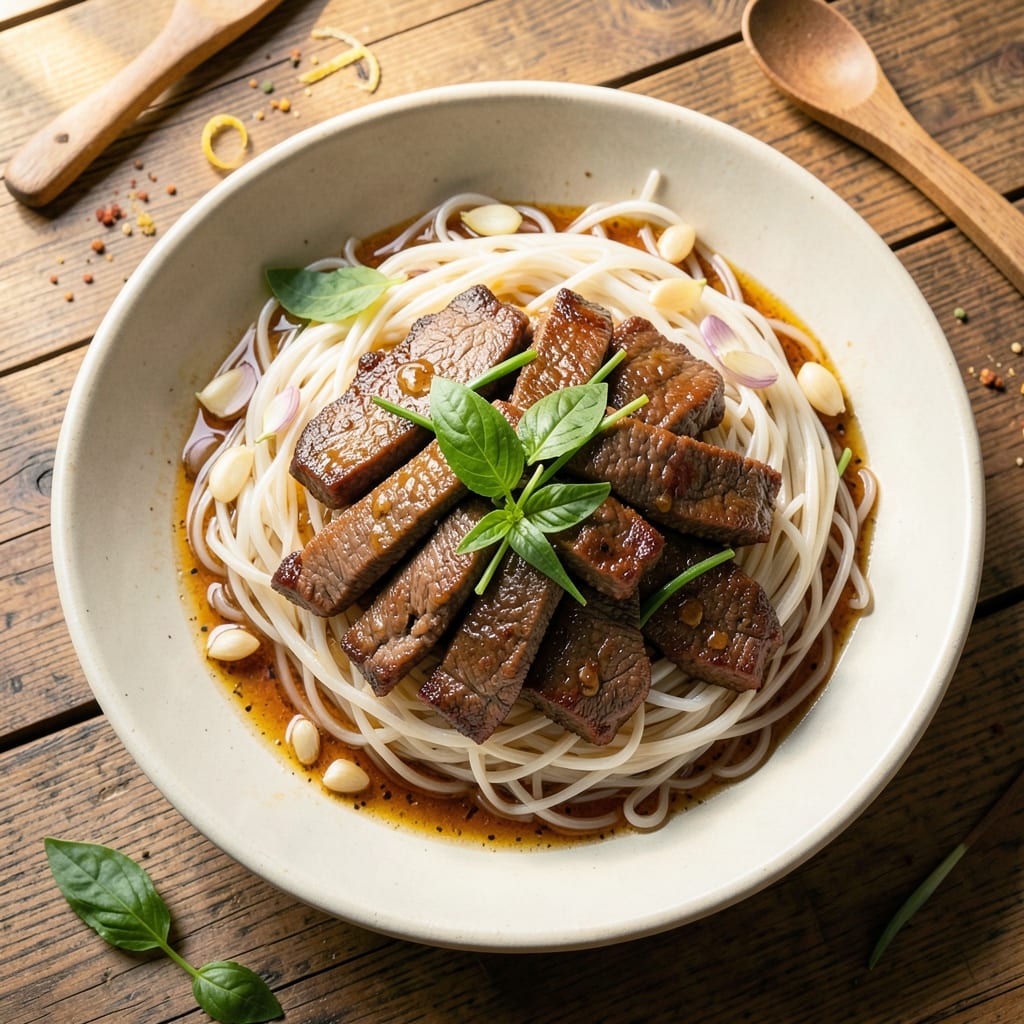
This authentic Vietnamese shaking beef recipe brings the vibrant flavors of Hanoi street food to your kitchen with its signature silky beef and caramelized sauce. The secret lies in thinly sliced beef marinated in fish sauce and sugar, then quickly stir-fried until tender yet still rare—a technique that transforms tough cuts into melt-in-your-mouth perfection. What sets this dish apart is the balance of sweet, tangy, and umami flavors, achieved through a caramelized sauce that coats every strand of rice vermicelli.
The dish is traditionally served over fragrant rice noodles, topped with fresh herbs like cilantro and Thai basil, and accompanied by pickled vegetables for that signature crunch. The beef’s tender texture and rich sauce create a harmonious bite that’s both comforting and exciting. While authentic versions rely on wok skills, this recipe simplifies the process without sacrificing authenticity—perfect for home cooks eager to recreate the magic of Vietnamese street food.
By the time you’re done, you’ll have a bowl that’s as visually stunning as it is delicious: silky beef strands glistening with caramelized sauce, nestled among delicate noodles and bright herbs. The dish is versatile enough for weeknight dinners or weekend feasts, yet rooted in tradition. Whether you’re serving it to family or friends, this recipe delivers the bold, balanced flavors that make Vietnamese cuisine unforgettable.
Ready to master the technique? The key is in the marinade, the quick cooking time, and the perfect sauce—each step builds on the last to create a dish that’s both impressive and deeply satisfying. Let’s get started on this authentic Vietnamese classic.
Ingredients for authentic vietnamese shaking beef
The secret to perfect shaking beef lies in these vibrant ingredients—silky beef, fragrant herbs, and a caramelized sauce that transforms a simple bowl into Hanoi street food magic.
| Ingredient | Amount | Notes |
|---|---|---|
| Flank Steak 🥩 | 1 lb | Thinly sliced against grain |
| Fish Sauce 🍶 | 2 tbsp | Red Boat preferred |
| White Sugar 🍚 | 2 tbsp | Granulated, not powdered |
| Rice Vermicelli Noodles 🍜 | 8 oz | Flat, medium-width |
| Vegetable Oil 🫒 | 2 tbsp | High smoke point |
| Garlic Cloves 🧄 | 4 cloves | Minced, fresh preferred |
| Fresh Thai Basil Leaves 🌿 | ½ cup | Whole leaves for garnish |
| Fresh Cilantro Leaves 🌿 | ¼ cup | Chopped for garnish |
| Lime Juice 🍋 | 1 ½ tbsp | Freshly squeezed |
| Salt 🧂 | 1 tsp | Diamond Crystal preferred |
| Black Pepper 🌶️ | ½ tsp | Freshly ground |
| Pickled Carrots 🥕 | ½ cup | Thinly sliced, store-bought or homemade |
| Red Chili Flakes 🌶️ | ½ tsp | Adjust to taste |
| Sesame Oil 🫒 | 1 tsp | For finishing |
The flank steak is non-negotiable—it needs to be thinly sliced against the grain for that signature silky texture. Ask your butcher to slice it if you're not confident doing it yourself. For the fish sauce, Red Boat is the gold standard (you'll taste the difference), but any reputable brand works. The sugar should be granulated, not powdered—it caramelizes better. I always grab mine from Asian markets where they have bulk bins, but regular grocery stores carry it too. Look for vibrant, plump rice noodles—they should be flat and medium-width, not thin or round.
No fresh Thai basil? Regular basil at half the amount works in a pinch, but the anise flavor is essential. The pickled carrots can be store-bought (check the Asian aisle) or made quickly with vinegar, sugar, and a pinch of salt. Running short on sesame oil? Toasted sesame seeds at double the amount give a similar nutty crunch. The lime juice should be freshly squeezed—bottled juice lacks the bright punch. For the garlic, peel and mince it just before cooking to preserve its freshness. And trust me on the fish sauce—don't skimp, it's the umami backbone of this dish.
The beef marinates best in the fridge for at least 30 minutes, but overnight is ideal. Soak the noodles in warm water for 10-15 minutes before draining—don't over-soak or they'll get mushy. Store the fish sauce in a cool, dark place (it lasts years unopened). The pickled carrots keep for 2 weeks in the fridge, so make extra—they're perfect for garnishing other Vietnamese dishes. This recipe reheats beautifully, but honestly, it's best fresh off the wok.
Why You'll Love This Recipe
- Here’s what sold me: it’s my go-to for packed lunches. Toss the cooked steak with noodles, a handful of herbs, and a squeeze of lime right before eating. Keeps for days in the fridge, and honestly? My kids would rather eat this than sandwiches (yes, even on a Tuesday night).
- No-Marbling Needed: I swear by this—no fancy butchering skills required. Just slice the flank steak thinly (freezer trick helps!) and let the fish sauce and sugar work their magic while you chop herbs. The steak practically falls apart when you shake it in that bag—no tough, chewy surprises here.
- Umami Bomb: That fish sauce-sugar glaze? It’s the real MVP. The caramelized edges hit first, then the salty-sweet sauce clings to every bite like a hug. Honestly, I’ve tasted fancier versions, but this one—with just those two ingredients—delivers the same punch without the fuss.
- Lunchbox Hero: Here’s what sold me: it’s my go-to for packed lunches. Toss the cooked steak with noodles, a handful of herbs, and a squeeze of lime right before eating. Keeps for days in the fridge, and honestly? My kids would rather eat this than sandwiches (yes, even on a Tuesday night).
Step-by-step instructions for authentic Vietnamese shaking beef
Here's how to make this iconic dish with perfectly tender beef and silky noodles.
Prepare the Flank Steak for Maximum Tenderness
Slice the 1 lb flank steak thinly against the grain into strips about ¼-inch thick. I use a sharp knife and work carefully to keep the slices uniform. Place the sliced beef in a large bowl and add the 2 tbsp fish sauce, 2 tbsp white sugar, 1 tsp salt, and 0.5 tsp black pepper. This marinade is crucial—it tenderizes the meat while adding depth of flavor.
Use your hands to massage the marinade into the beef, ensuring every piece is coated. Cover the bowl and refrigerate for at least 2 hours, or up to 12 hours for maximum tenderness. The longer it marinates, the more flavor it absorbs and the more tender it becomes. Don't skip this step—it makes all the difference in the final texture.
Cook the Beef to Rare Perfection
Heat 1 tbsp vegetable oil in a large skillet over medium-high heat until shimmering. Add the marinated beef in a single layer and cook undisturbed for 30-45 seconds per side until just cooked through to medium-rare. You want the beef to remain tender and juicy, not tough or overcooked. Remove the beef from the skillet and set aside on a plate.
In the same skillet, add the 4 cloves minced garlic and cook for 10 seconds until fragrant. Immediately pour in 1.5 tbsp lime juice and scrape up any browned bits from the bottom of the pan. This creates a flavorful base for your sauce. Keep the skillet warm while you prepare the noodles.
Prepare the Rice Vermicelli Noodles
Bring a large pot of water to a boil and add the 8 oz rice vermicelli noodles. Cook for 3-5 minutes until they're pliable but still slightly firm to the bite. They should float to the surface when done. Drain the noodles and rinse briefly under cold water to stop the cooking process. This prevents them from becoming mushy when assembled.
Divide the cooked noodles evenly among 4 bowls. The noodles should be hot but not boiling when you assemble the dish. I like to arrange them in a circular pattern in the bottom of each bowl to create an appealing presentation. Keep the bowls covered while you finish the sauce.
Assemble and Shake to Combine
Return the cooked beef to the skillet with the garlic-lime mixture. Add 0.5 cup pickled carrots, 0.5 tsp red chili flakes, and 1 tsp sesame oil. Stir gently to combine, letting the beef soak up all those delicious flavors. Taste and adjust seasoning if needed—you might want to add a splash more fish sauce for extra umami.
Now for the signature technique: divide the beef mixture evenly among the bowls with noodles. The key is to use two chopsticks or a pair of tongs to shake the bowl vigorously for about 15 seconds. This creates that signature "shaking beef" texture where the beef and noodles are perfectly intertwined. You'll see the noodles become silky and the beef coated in sauce.
Garnish and Serve Immediately
Top each bowl with 0.25 cup chopped fresh cilantro leaves and 0.5 cup whole fresh Thai basil leaves. The basil should be added just before serving to preserve its vibrant color and fresh flavor. Drizzle with any remaining sauce from the skillet if needed.
Serve immediately while everything is hot. The contrast of the silky noodles, tender beef, and bright herbs creates a perfect balance of textures and flavors. Each bite should deliver a combination of savory, sweet, tangy, and spicy elements. Enjoy with a cold Vietnamese beer or iced tea for the full experience.
Pro Tips For Making Authentic Vietnamese Shaking Beef
- SLICE THIN, NOT THICK: Flank steak should be paper-thin—about ⅛-inch—so it cooks fast and stays tender. I learned this the hard way: thicker slices turn chewy, no matter how much you shake them later. Use a sharp knife and cut against the grain twice if needed.
- MARINATE 30 MINUTES (NOT 5): Toss the sliced steak with fish sauce, sugar, and a splash of water, then let it sit. Thirty minutes lets the flavors sink in; I used to skip this and ended up with bland beef. Cover it loosely—you want some air circulation, not a soggy mess.
- SHAKE HOT, NOT LUKEWARM: Heat the oil until it shimmers, then add the beef in a single layer. Let it sear for 30 seconds before shaking—this builds flavor. If you shake too soon, the fish sauce burns, and you’re left with bitter beef. Keep the pan moving constantly until the steak is just opaque.
- SOAK NOODLES 10 MINUTES (NOT 5): Vermicelli needs time to soften properly, or it’ll turn mushy when dressed. Use hot (not boiling) water and soak for 10 minutes, then drain and rinse with cold water. Trust me, the texture makes a real difference—no one wants a bowl of glue.
Wine and beer pairings for this authentic vietnamese shaking beef
Light Vietnamese Beers
A crisp, light Vietnamese lager like Bia Saigon or 333 is my go-to pairing for this dish. These beers have a clean, refreshing profile that cuts through the richness of the caramelized sauce while complementing the beef's umami. I always keep a few chilled in the fridge—serving them ice-cold enhances their crispness and balances the dish's bold flavors. 🍺
Citrus-Infused Iced Tea
For a non-alcoholic option, try a Vietnamese-style iced tea made with jasmine green tea, fresh lime juice, and a touch of honey. The tea's delicate floral notes harmonize with the beef's savory profile, while the lime brightens the dish. I like to add a few slices of yuzu or lemon for extra zing—just enough to make each sip refreshing and vibrant.
Rice Wine Pairings
If you prefer something lighter than beer, Vietnamese rice wine (rượu nếp) offers a unique pairing. Its subtle sweetness and earthy notes complement the dish's caramelized elements without overpowering the beef. Serve it slightly chilled—this enhances its smooth texture and allows the wine's natural flavors to shine alongside the dish. 🍶
Spicy Lychee Lemonade
For a fun, unexpected twist, mix lychee juice, lemonade, and a dash of chili powder> to create a spicy-sweet beverage. The lychee's floral sweetness contrasts beautifully with the beef's savory depth, while the chili adds a subtle kick. This drink is especially refreshing during warm weather and pairs perfectly with the dish's bold flavors.
Coffee Pairing
Vietnamese egg coffee or cà phê sữa đá (Vietnamese iced coffee) might seem unusual, but the creamy, robust notes of this iconic drink actually enhance the beef's caramelized sweetness. The bold coffee flavor stands up to the dish's umami, creating a satisfying contrast. I recommend serving it in a small cup alongside the main dish for a true Vietnamese dining experience.
Nutrition facts
Frequently asked questions
Why does the beef need to marinate for so long?
The 2-12 hour marinade is essential for two reasons: it tenderizes the tough flank steak by breaking down muscle fibers, and the fish sauce/sugar combo creates that signature sweet-savory flavor. The longer it marinates, the more the beef absorbs these flavors, resulting in that melt-in-your-mouth texture. Don't skip this step—it's what makes the beef truly silky!
Can I use a different cut of beef?
Flank steak is ideal because of its grain and tenderness, but you can try sirloin or ribeye in a pinch. Just slice it ¼-inch thick against the grain and marinate for the full 12 hours. Avoid lean cuts like top sirloin—they won't be as flavorful. The key is finding beef with enough fat marbling to stay tender during quick cooking.
What's the secret to the perfect "shaking" technique?
Use two chopsticks or tongs to vigorously shake the bowl for 15-20 seconds—this creates friction that coats every noodle strand with sauce and beef. The motion should be energetic but controlled. If your beef isn't coating the noodles well, try adding 1 extra tbsp of sauce before shaking. Pro tip: Keep the noodles hot while shaking to prevent sticking!
How do I make this dish less spicy?
Skip the red chili flakes entirely or reduce them to ¼ tsp. For extra mildness, add ½ tsp sugar to balance any lingering heat. The natural sweetness from the caramelized sauce will help mellow the flavors. If serving kids, prepare a separate bowl with no chili flakes and add them to their portion at the end.
Can I make this ahead of time?
Prepare the beef marinade and sauce components 1 day ahead, but cook and assemble everything fresh. The noodles should be cooked and drained just before serving to maintain their texture. Store the cooked beef separately in the fridge and reheat it gently in a skillet before shaking with fresh noodles. The flavors actually improve when components are prepped ahead!