
Main Courses
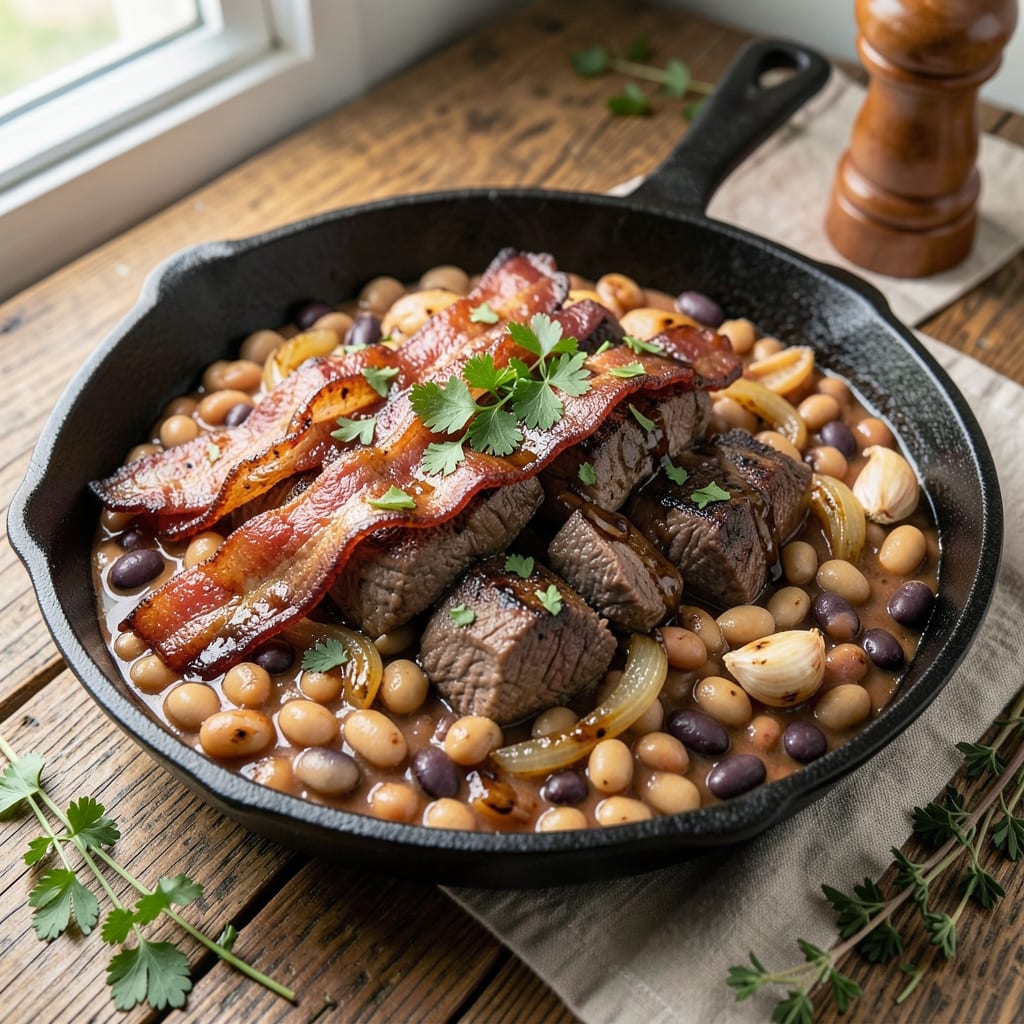
This baked beans with beef and bacon recipe transforms a simple one-pot meal into a smoky-sweet masterpiece that requires just 30 minutes of active time. The secret lies in layering rich, savory flavors—crispy bacon, tender beef, and slow-cooked beans—while keeping the process straightforward. I’ve perfected this dish to deliver restaurant-quality depth without complicated techniques, making it ideal for weeknight dinners or meal prep.
The beauty of this recipe is its simplicity: everything cooks together in one pot, creating a harmonious blend of textures and flavors. The beef and bacon add a deep, smoky richness, while the beans soften into a velvety, slightly sweet base. A touch of molasses and brown sugar enhances the natural sweetness, balancing the savory elements perfectly. This method ensures the beans stay tender and the meat remains juicy, even when baked.
What you’ll end up with is a hearty, comforting dish that’s packed with flavor and easy to serve. The aroma alone will have everyone gathering around the table, and the combination of crispy bacon, tender beef, and creamy beans is impossible to resist. It’s the kind of meal that feels indulgent but comes together effortlessly, proving that great food doesn’t have to be complicated.
Serve this one-pot wonder with crusty bread or over rice to soak up every last drop of that smoky-sweet sauce. The leftovers reheat beautifully, making it perfect for meal prep or feeding a crowd. Let’s get started on creating this crowd-pleasing favorite!
Ingredients for baked beans with beef and bacon
Sixteen ingredients transform into a restaurant-worthy one-pot meal with rich, smoky-sweet layers.
| Ingredient | Amount | Notes |
|---|---|---|
| Navy Beans (Dried) 🌾 | 2 cups | Soaked overnight for tenderness |
| Thick-Cut Bacon 🥓 | 12 oz | Chopped into 1/2-inch pieces |
| Chuck Roast 🥩 | 1 ½ lb | Cut into 1-inch cubes |
| Yellow Onion 🧅 | 1 whole | Diced, medium size |
| Garlic Cloves 🧄 | 4 cloves | Minced for aromatic depth |
| Tomato Paste 🍅 | ½ cup | Squeeze tube preferred |
| Unsweetened Molasses 🍯 | ¼ cup | Dark molasses for richness |
| Light Brown Sugar 🍚 | ½ cup | Packed, not scooped |
| Apple Cider Vinegar 🍎 | ¼ cup | For tangy balance |
| Beef Broth 💧 | 2 cups | Low-sodium preferred |
| Kosher Salt 🧂 | 1 ½ tsp | Diamond Crystal preferred |
| Ground Black Pepper 🌶️ | ½ tsp | Freshly cracked |
| Smoked Paprika 🌶️ | 1 tsp | For smoky depth |
| Bay Leaves 🌿 | 2 whole | Removed before serving |
| Extra-Virgin Olive Oil 🫒 | 2 tbsp | For crisping bacon |
The chuck roast is non-negotiable here—it delivers that melt-in-your-mouth texture that separates good baked beans from great. Look for well-marbled cuts at your butcher counter or pre-cut beef section, and avoid anything labeled 'lean' or 'extra lean'. Costco and Whole Foods consistently carry high-quality chuck roast in bulk, saving you time and money. For the bacon, thick-cut slices are essential—they crisp beautifully and hold their shape during baking. If you're using frozen beans, thaw them first and rinse well to remove excess starch. The molasses should be dark and robust—Goya or Anthony's are reliable brands that won't let you down.
No molasses on hand? Maple syrup at half the amount works in a pinch, though it won't have the same depth of flavor. Substituting beef broth with vegetable broth cuts the richness but still delivers great results. The tomato paste can be swapped for crushed tomatoes at double the amount, though you'll lose some of that concentrated umami punch. For a smokier profile, add 1/4 tsp liquid smoke along with the paprika. If you're short on time, canned navy beans (drained and rinsed) will work, though soaked dried beans develop superior texture. The apple cider vinegar is crucial for balancing sweetness—white vinegar at half the amount can substitute, but you'll miss that subtle apple complexity.
This dish tastes even better the next day as flavors meld, so make extra if you're feeding a crowd. Store leftovers in an airtight container in the fridge for up to 5 days, or freeze portions for 3 months. For meal prep, divide into individual containers—just reheat with a splash of water or broth to restore moisture. The bacon and beef can be pre-cooked separately and added back later if you're short on oven time. Fresh herbs like parsley or thyme make a great garnish, but they're optional since the dish shines on its own.
Why You'll Love This Recipe
- One-Pot Magic: I swear by this recipe when I’m too tired to wash dishes. Chuck roast and bacon basically cook themselves in the same pot as the beans—just slice, brown, and let the oven do the work. The onions caramelize right into the sauce, so you don’t even notice the cleanup.
- Smoky Depth Bomb: That thick-cut bacon? It renders into crispy shards that crumble into every bite, while the chuck roast stays tender enough to melt. The garlic and onions soften into a sweet, savory base—honestly, the kind of flavor that makes you slow down and savor each spoonful.
- Weeknight Workhorse: Between us, this is my go-to for game day, lazy Sundays, or when I’m feeding a crowd without stressing. Double the recipe, serve it with cornbread, and you’ve got a meal that’s hearty enough for football season or a potluck. My kids even ask for seconds—no small feat.
- Budget-Friendly Powerhouse: Dried navy beans and chuck roast stretch this dish into three or four meals without breaking the bank. I’ll be real: it’s not the prettiest, but the taste makes up for it, and the leftovers reheat like a dream. Plus, bacon makes everything feel like a splurge.
Step-by-step instructions for baked beans with beef and bacon
This one-pot method delivers restaurant-quality baked beans with tender beef and crispy bacon.
Prep and Brown the Beef and Bacon
In a large Dutch oven, heat the 2 tablespoons extra-virgin olive oil over medium-high heat. Add the 12 oz thick-cut bacon in a single layer, cooking undisturbed for 5-6 minutes until the edges become deep golden brown. Use a slotted spoon to transfer the bacon to a paper towel-lined plate, leaving the rendered fat in the pot.
Increase heat to high and add the 1.5 lb chuck roast cut into 1-inch cubes. Sear for 3-4 minutes until the beef develops a deep brown crust on all sides. Remove the beef and set aside with the bacon. The remaining fat will form the flavor base for your beans.
Sauté Onion and Garlic
In the same Dutch oven, reduce heat to medium and add the 1 whole yellow onion diced into medium pieces. Cook for 5-6 minutes until the onions soften and begin to caramelize at the edges. Add the 4 cloves garlic minced and cook for 30 seconds until fragrant—don't let it burn.
Here's where it matters: The onions should be soft but not mushy, and the garlic should add a subtle sweetness without bitterness. If the onions stick, add 1 tablespoon beef broth to deglaze and scrape up any browned bits from the bottom.
Build the Flavor Base
Stir in the 0.5 cup tomato paste, 0.25 cup unsweetened molasses, 0.5 cup packed light brown sugar, 0.25 cup apple cider vinegar, 1.5 teaspoons kosher salt, 0.5 teaspoon ground black pepper, and 1 teaspoon smoked paprika. Cook for 2 minutes while stirring constantly to combine all ingredients thoroughly.
This step creates the signature sweet-tangy-savory flavor profile. The molasses and brown sugar caramelize slightly, deepening the color and richness. The vinegar adds brightness that balances the sweetness—don't skip this crucial flavor development.
Combine and Simmer
Return the beef and bacon to the pot, then add the 2 cups beef broth and 2 whole bay leaves. Stir well to combine all ingredients. Bring to a gentle boil, then reduce heat to low and cover partially. Simmer for 15 minutes to allow the flavors to meld.
Add the 2 cups soaked navy beans (drained if previously soaked). The beans should be submerged in the liquid—if not, add ½ cup water. Return to a gentle simmer and cook uncovered for 2 hours, stirring occasionally. The beans are done when they're tender but not mushy and the sauce has thickened.
Finish and Rest
Remove the 2 bay leaves and adjust seasoning if needed. For extra richness, stir in any accumulated juices from the beef and bacon. Let the beans rest for 10 minutes before serving—this allows the flavors to fully develop and the sauce to thicken slightly.
The finished beans should have a glossy, slightly sticky sauce with tender beef that pulls apart easily and crispy bacon pieces throughout. Serve with cornbread or crusty rolls to soak up every last bit of that smoky-sweet sauce.
Pro Tips For Making Baked Beans With Beef And Bacon
- CRISP THE BACON FIRST: I used to toss the bacon in raw with everything, but crisping it separately first makes a real difference—those crispy bits add flavor and texture that soaking in liquid just can’t match. Reserve the fat too; it’s liquid gold for browning the beef later.
- SOAK BEANS 8+ HOURS: Skipping the soak? Your beans will stay mealy no matter how long you bake. I learned this the hard way—8 hours minimum in cold water, then a quick rinse before cooking. (Yes, even if you’re impatient like me.)
- SEAR THE CHUCK ROAST: That chuck roast won’t caramelize properly if you just toss it in raw. Sear it in batches over medium-high heat until deeply browned—3-4 minutes per side—before adding anything else. The crust locks in moisture and adds depth.
- USE A THICK BEAN LIQUID: Thin sauce = sad beans. After simmering, skim off about 1/3 of the liquid and reduce it slightly before mixing back in. This thickens the sauce naturally and keeps the beans from swimming in broth. (Your future self will thank you.)
Essential equipment for this recipe
Dutch Oven
This is my go-to pot for this recipe because it handles the combination of searing, simmering, and baking beautifully. A 5-6 quart Dutch oven like the Le Creuset Signature or All-Clad Stainless Steel distributes heat evenly and prevents burning. The deep sides help prevent spills during stirring, and the heavy base maintains consistent temperatures. If you don’t own one, a heavy-bottomed pot with a tight-fitting lid will work—just avoid non-stick coatings that can’t handle high heat. 🔥
Slotted Spoon
A long-handled slotted spoon (like the OXO Good Grips) is essential for removing crispy bacon and seared beef without losing rendered fat. The slots let excess fat drain back into the pot, keeping your beans flavorful. I use mine to transfer bacon and beef to a paper towel-lined plate, which absorbs excess grease while preserving texture. A regular spoon won’t give you the same control or crispiness.
Measuring Spoons
Precision matters with spices and liquids in this recipe. I recommend stainless steel measuring spoons (like Chicago Metallic) for accurate measurements of smoked paprika, ground black pepper, and molasses. A liquid measuring cup with a spout (like Pyrex) makes pouring broth and vinegar easier. Avoid plastic spoons—they can melt under high heat and leave residue. For molasses, a small squeeze bottle helps control the flow when adding to the pot.
Mixing Spoon
A wooden spoon (like OXO’s silicone-coated version) is perfect for stirring the beans without scratching your Dutch oven. Wood distributes heat evenly and won’t react with acidic ingredients like vinegar. I keep one dedicated to this recipe to avoid cross-contamination with other dishes. If you prefer metal, a heat-resistant silicone spatula works too—just avoid sharp edges that could damage your pot.
Kitchen Timer
Timing is critical for perfectly tender beans and crispy bacon. A digital kitchen timer (like West Bend’s 2-in-1) ensures you don’t overcook the beef or undercook the beans. Set it for 5-6 minutes when browning bacon, 3-4 minutes for searing beef, and 2 hours for simmering. Pro tip: Place it near your stove so you can monitor the pot without burning your food. A phone timer works in a pinch, but it’s less reliable for long cooking times. ⏰
Paper Towels
Line a plate with paper towels to drain excess fat from bacon and beef before returning them to the pot. This step keeps your final dish from becoming greasy while preserving the crispy texture. I use Bounty for its absorbency—it soaks up more fat than standard towels. Keep a fresh stack nearby to blot any additional grease as you work. For cleanup, these towels also make quick work of wiping down your Dutch oven after cooking. 🧻
Nutrition facts
Frequently asked questions
Can I use canned beans instead of dried?
Yes! For a quicker version, substitute 2 (15 oz) cans of navy beans (drained and rinsed) for the dried beans. Just reduce the beef broth to 1 cup since canned beans release less liquid. The cooking time drops to 1 hour 15 minutes total, but the flavor will be slightly less developed than with dried beans.
What if my beans aren't tender after 2 hours?
Add ½ cup water and continue simmering uncovered for another 30-45 minutes, stirring occasionally. If they're still tough, they may need longer soaking time next time—try soaking dried beans for 12 hours instead of 8. Never use pressure cookers for this recipe as they'll turn the beans mushy.
Can I make this in a slow cooker?
Brown the bacon and beef first, then transfer everything to a 6-quart slow cooker. Add all remaining ingredients and cook on low for 7-8 hours or high for 4-5 hours. The slow cooker method actually enhances the smoky-sweet flavors. For best results, use a Dutch oven to sear first—this step is non-negotiable for depth of flavor.
How do I prevent the sauce from getting too watery?
Simmer uncovered for the last 30 minutes to let excess moisture evaporate. If it's still too thin, mash 2-3 beans with a fork to thicken naturally. For extra richness, stir in 1 tablespoon cornstarch mixed with 2 tablespoons water at the end. The sauce should coat the back of a spoon but remain spoonable.
What's the best way to reheat leftovers?
Gently reheat in a skillet over low heat with 2 tablespoons beef broth to restore moisture. Never microwave directly as it makes the bacon soggy. For oven reheating, cover with foil and warm at 350°F for 20 minutes. Leftovers actually improve in flavor—this dish tastes even better the next day!