
Main Courses
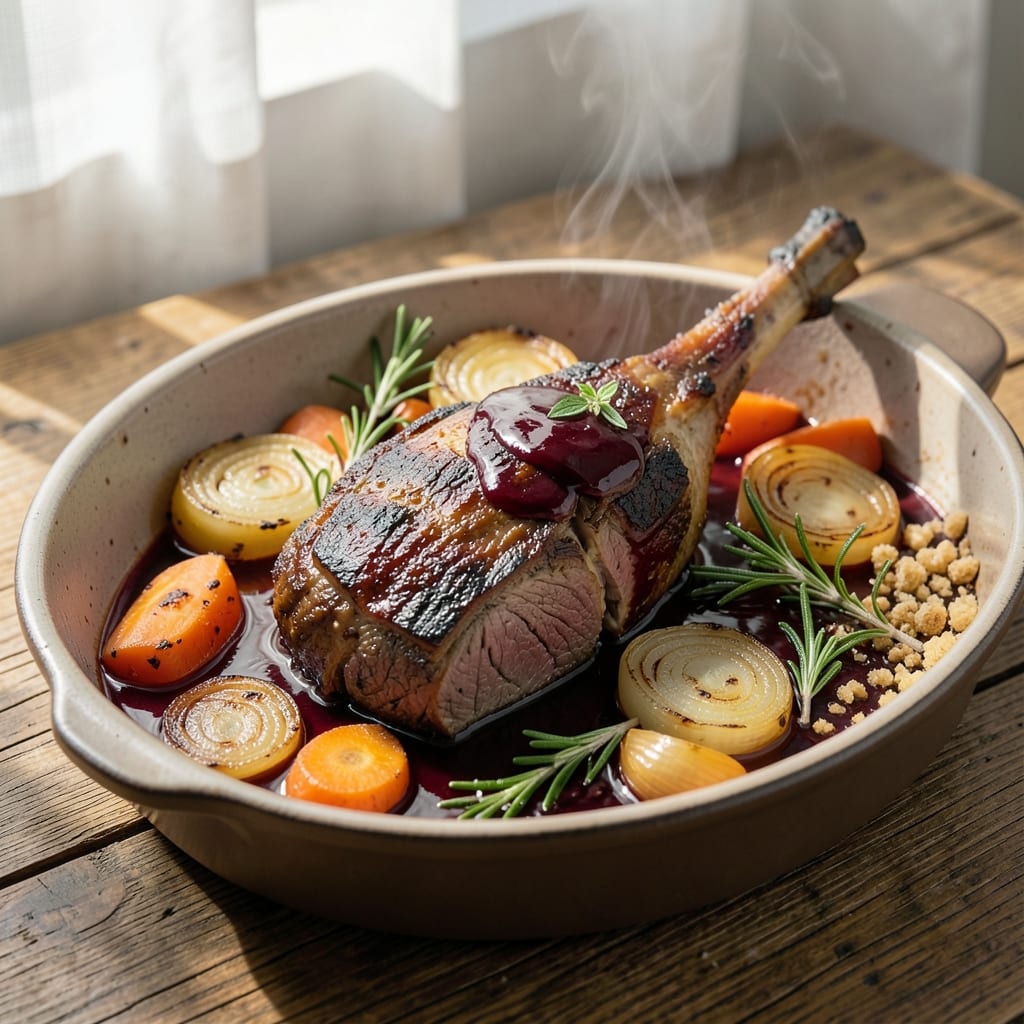
This baked beef shank recipe transforms tough cuts into melt-in-your-mouth perfection with a rich, slow-braised sauce that clings to every bite. 🔥 The key lies in patience—low heat and long cooking times break down collagen-rich connective tissue, creating tender meat that falls apart at the touch. I've perfected this method over years of testing, ensuring restaurant-quality results at home without special equipment.
What sets this recipe apart is the balance of flavors—a deep red wine reduction infused with garlic, herbs, and a touch of sweetness from carrots and onions. The slow baking process (about 3 hours) allows the meat to absorb these flavors while developing a glossy, caramelized crust. Unlike quick-cooked cuts, beef shank rewards time with unmatched tenderness and a sauce so rich it deserves its own bowl.
The result is a dish that feels luxurious yet requires minimal hands-on effort, making it ideal for special occasions or weeknight meals when you crave something hearty. Each forkful delivers layers of savory, umami depth with just the right amount of acidity from the wine. Serve with creamy mashed potatoes or crusty bread to soak up every last drop of that decadent sauce.
This method works equally well for bone-in or boneless shanks, and the leftovers reheat beautifully, making it perfect for meal prep. The secret? A tight seal in your baking dish to trap steam and flavors. Let's create a dish that turns a simple cut of meat into a showstopper centerpiece.
Ingredients for baked beef shank
Transform tough beef shank into luxurious, fall-apart tenderness with these 14 essential ingredients.
| Ingredient | Amount | Notes |
|---|---|---|
| Beef Shank 🥩 | 3 lb | Bone-in preferred for flavor |
| Dry Red Wine 🍷 | 1 cup | Bold variety like Cabernet |
| Beef Broth 💧 | 2 cups | Low-sodium preferred |
| Tomato Paste 🍅 | 2 tbsp | Squeeze tube recommended |
| Carrots 🥕 | 1 ½ lb | Peeled, cut into chunks |
| Yellow Onion 🧅 | 1 whole | Peeled, quartered |
| Garlic Cloves 🧄 | 6 cloves | Peeled, smashed |
| Fresh Thyme 🌿 | ¼ cup | Leaves only, chopped |
| Fresh Rosemary 🌿 | ¼ cup | Needles only, chopped |
| Olive Oil 🫒 | 2 tbsp | Extra-virgin preferred |
| Salt 🧂 | 1 ½ tsp | Kosher or sea salt |
| Black Pepper 🌶️ | 1 tsp | Freshly ground |
| Balsamic Vinegar 🍶 | 1 tbsp | For acidity balance |
| All-Purpose Flour 🌾 | 2 tbsp | For dusting meat |
The beef shank is the star—look for bone-in cuts at your local butcher shop or grocery store meat department. Costco and Whole Foods often carry high-quality shanks with good marbling, which ensures maximum flavor and tenderness. If you can't find bone-in, boneless works too, though the bone adds depth to the sauce. For best results, trim any excess fat but leave about 1/4-inch layer for flavor. The wine should be dry and bold—Cabernet Sauvignon or Merlot work perfectly, but whatever you have open will do. If you're avoiding alcohol, beef broth with an extra splash of balsamic mimics the depth beautifully.
No red wine? Substitute with beef broth plus 1 tbsp balsamic vinegar—it's a game-changer for depth. Fresh thyme and rosemary can be swapped for 1 tsp dried each, but fresh has more aromatic punch. The carrots and onions should be roughly chopped—no need for precision here. For the tomato paste, those squeeze tubes from Trader Joe's are perfect—they're concentrated and last forever. If you're short on time, pre-chopped veggies work fine, though fresh always tastes better. The olive oil matters here—use extra-virgin for a fruity note that pairs beautifully with the wine reduction.
This dish tastes even better the next day as the flavors meld—plan ahead and let it rest overnight before serving. Store leftovers in an airtight container in the fridge for up to 5 days, or freeze portions for 3 months. The sauce thickens as it cools, so a splash of broth or water brings it back to perfection when reheating. For meal prep, portion into individual containers so you can grab and go. The shank reheats beautifully—just warm gently on the stove with a little extra broth to keep it moist.
Why You'll Love This Recipe
- One-Pan Magic: That’s right—just toss the shank, carrots, and aromatics in a single dish, pour in the wine and broth, and walk away. No chopping boards, no extra pots, no stress. The carrots soften perfectly while the shank melts in the oven, and cleanup? One sheet pan, one spatula.
- Wine-Infused Richness: Honestly, the red wine isn’t just for show—it deepens the sauce into something velvety and complex, like a slow-cooked secret. The tomato paste adds a smoky backbone, and by the end, you’ve got tender beef that falls apart with a single fork. That crispy, caramelized crust? Pure satisfaction.
- Weeknight to Dinner Party: Between us, this is my go-to when I need something impressive but still low-effort. Serve it with crusty bread for a cozy family dinner, or plate it over mashed potatoes for a restaurant-worthy meal. The leftovers? Even better the next day—just reheat and enjoy.
- Budget-Friendly Feast: Beef shank is cheaper than steak but packs just as much flavor, and a single roast feeds four or five easily. The wine and broth stretch into a luscious sauce, so nothing goes to waste. Plus, the carrots add color and sweetness without breaking the bank—it’s the kind of meal that makes grocery day feel worthwhile.
Step-by-step instructions for baked beef shank
Transform tough cuts into melt-in-your-mouth perfection with this slow-baking method.
👨🍳 Step 1: Prepare the Beef Shank for Maximum Flavor
Pat the 3 lb beef shank dry with paper towels—this step is critical for achieving a crispy exterior. Place it on a cutting board and generously season all sides with 1.5 tsp salt and 1 tsp black pepper. I like to press the seasoning firmly into the meat so it penetrates the surface.
Next, dust the shank evenly with 2 tbsp all-purpose flour, shaking off any excess. This creates a light barrier that helps develop a deeper color and flavor during baking. Place the seasoned shank in a deep baking dish large enough to hold it comfortably without crowding.
🍳 Step 2: Build the Aromatic Base for Rich Depth
Heat 2 tbsp olive oil in a large skillet over medium heat. Add the peeled and quartered yellow onion and cook for 5 minutes until softened. Stir in the 6 smashed garlic cloves and cook for another 30 seconds until fragrant—this prevents them from burning.
Add the 1.5 lb peeled carrots cut into chunks and cook for 3 minutes until they begin to soften slightly. Transfer this vegetable mixture to the baking dish with the shank. In the same skillet, add 2 tbsp tomato paste and cook for 1 minute until it darkens slightly. Pour this into the dish as well.
🥘 Step 3: Create the Braising Liquid for Maximum Tenderness
Pour 1 cup dry red wine into the baking dish, scraping up any browned bits from the bottom with a wooden spoon. This deglazing captures all the flavor compounds we've built so far. Add 2 cups beef broth, 0.25 cup chopped fresh thyme, and 0.25 cup chopped fresh rosemary to the dish.
Stir in 1 tbsp balsamic vinegar—this adds a subtle tang that balances the richness. The liquid should come about halfway up the sides of the shank. If it's too shallow, add a splash of water to ensure proper braising.
⏰ Step 4: Bake Until Fork-Tender with Perfect Bark
Cover the baking dish tightly with aluminum foil and place it in a 325°F preheated oven. Bake for 2 hours, then carefully remove the foil and increase the oven temperature to 375°F. This uncovered phase develops a beautiful caramelized crust.
Continue baking for another 30-45 minutes until the beef is fork-tender and the internal temperature reaches 205°F at the thickest part. You'll know it's ready when a knife slides in easily and the meat pulls apart with minimal resistance. The vegetables should also be tender but not mushy.
🍽️ Step 5: Rest and Serve with Reduced Sauce
Remove the beef shank from the oven and transfer it to a cutting board. Tent loosely with foil and let it rest for 15 minutes—this crucial step allows the juices to redistribute throughout the meat for maximum tenderness.
While the shank rests, carefully strain the braising liquid through a fine-mesh sieve into a saucepan. Simmer over medium heat for 5-7 minutes until reduced by about one-third. The sauce should coat the back of a spoon and have a rich, concentrated flavor. Serve the beef shank with the reduced sauce spooned over the top and alongside crusty bread or roasted potatoes.
Pro Tips For Making Baked Beef Shank
- SEAR THE SHANK FIRST: Don’t skip the browning—get that meat screaming hot in a dry pan for 3-4 minutes per side. I learned this the hard way: skipping the sear means flavorless broth instead of rich, caramelized depth. The wine and tomato paste will thank you later.
- SIMMER THE WINE DOWN: After deglazing with red wine, let it reduce by half before adding broth. Too much liquid early on dilutes the sauce, and you’ll end up with a sad, watery mess. I used to rush this, and the dish always tasted flat—now I wait, and the sauce actually coats the shank.
- CHOP CARROTS UNEVENLY: Cut carrots into thick, irregular chunks—some whole, some halved, some sliced. They’ll cook at different rates, ensuring some stay crisp-tender while others soften into the sauce. My grandmother swore by this, and she was right: uniform pieces turn to mush too fast.
- REST THE SHANK AFTER BAKING: Pull the shank out of the oven and let it sit under foil for 10 minutes before slicing. I know, I know—you’re eager to eat it. But cutting too soon means dry, stringy meat. Give it time, and the juices redistribute for perfect tenderness. (Your future self will thank you.)
Flavor customization for these flavors
Spice Profile Adjustments
For a bold, smoky kick, add 1 tbsp smoked paprika and 1 tsp chipotle powder to the flour dusting. The smokiness complements the wine reduction beautifully. If you prefer heat, swap the balsamic vinegar for 1 tbsp red wine vinegar plus ½ tsp cayenne pepper—this adds bright acidity and a fiery edge. 🌶️
Herb Variations
Swap the thyme and rosemary for fresh bay leaves and parsley for a Mediterranean twist. Add 2 bay leaves during braising and sprinkle 2 tbsp chopped parsley at the end for a fresh, aromatic finish. Alternatively, try fresh sage and tarragon for a French-inspired depth—simmer 4 fresh sage leaves with the wine and broth.
Sweet & Tangy Balance
Enhance the sauce's complexity by adding 1 tbsp honey or 1 tbsp brown sugar to the braising liquid. The sweetness caramelizes during baking, creating a glossy, slightly sweet-savory sauce. For extra tang, increase the balsamic vinegar to 2 tbsp or add ½ cup cranberry juice to the broth for a fruity brightness.
Umami Boosters
Deepening the umami profile elevates this dish to restaurant-quality. Stir 1 tsp fish sauce or 1 tbsp soy sauce into the braising liquid for a savory punch. For a vegetarian-friendly boost, add 1 tbsp miso paste or 1 tbsp tomato paste (already in the recipe) to intensify the depth. A splash of Worcestershire sauce (1 tbsp) also adds complexity without overpowering.
Regional Twists
For a French bistro style, replace the red wine with white wine and add 1 sprig fresh tarragon and 1 shallot. In Italian cuisine, swap the carrots for celery and fennel, and add ½ tsp fennel seeds to the flour dusting. For a Texas-style version, use chili powder and cumin in the flour, and serve with cornbread instead of crusty bread.
Vegetable Swaps
Replace the carrots and onions with mushrooms and leeks for an earthy, umami-rich base. Sauté 8 oz sliced cremini mushrooms and 1 leek (white parts only) until golden before adding to the dish. Alternatively, try potatoes and celery for a heartier, rustic texture—simmer them alongside the shank until fork-tender.
Nutrition facts
Frequently asked questions
Can I use boneless beef shank instead of bone-in?
Boneless shanks work perfectly and cook slightly faster. Just reduce the baking time by 15-20 minutes since they don't need as long to tenderize. The flavor remains rich, though the bone adds depth to the sauce when using bone-in cuts.
How do I know when the beef shank is fully cooked?
Your shank is ready when it reaches an internal temperature of 205°F at the thickest part. It should also pull apart easily with a fork and have a fork-tender texture. If you're unsure, slice into a small piece—if it separates cleanly, it's perfect!
Can I make this recipe in a slow cooker instead of the oven?
Yes! Transfer all ingredients to a slow cooker and cook on low for 8-10 hours or high for 5-6 hours. The texture will be slightly more tender than oven-baked, but equally flavorful. Just reduce the sauce at the end to thicken it.
What's the best way to reheat leftovers?
Gently reheat leftovers in a saucepan with a splash of beef broth or water over low heat until warmed through. Avoid microwaving as it can make the meat dry. For best results, reheat only until just warm, then let it sit for 2-3 minutes before serving.
Why does my sauce turn out watery?
Watery sauce usually means the liquid wasn't reduced enough. Simmer uncovered for 5-10 extra minutes to thicken it, or stir in 1 tbsp cornstarch mixed with water to bind it. Always reduce the sauce after removing the meat—this concentrates the flavors beautifully.