
Main Courses
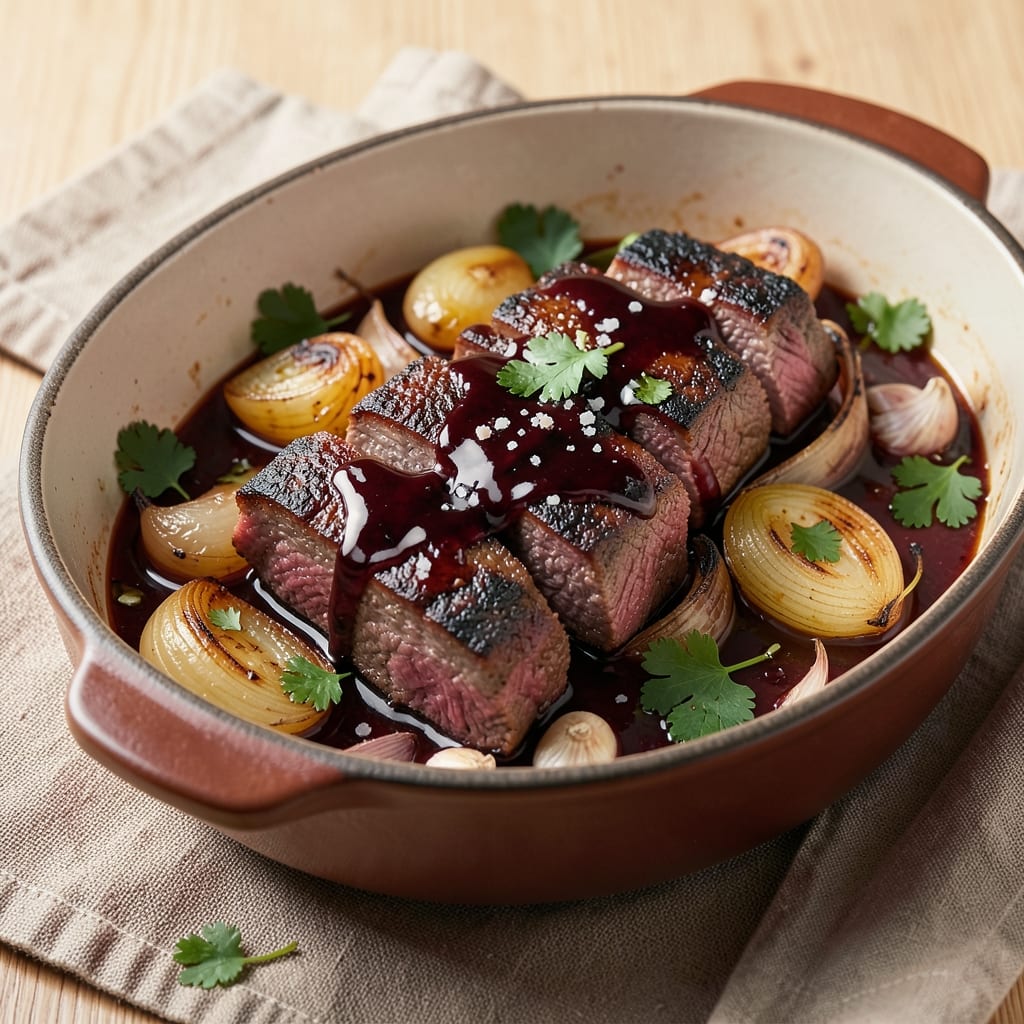
This balsamic braised beef transforms tough cuts into melt-in-your-mouth perfection through slow simmering—where deep umami flavors develop from red wine and balsamic reduction. The key lies in searing the beef first to lock in juices, then braising until fork-tender while balancing sweet and tangy notes. I’ve perfected this technique over years of testing, ensuring every bite delivers that signature rich, velvety texture with just the right acidity.
The process begins with a deep caramelized crust from searing, followed by deglazing with wine to create a flavorful base. As the beef braises for hours, the liquid reduces into a glossy sauce that clings to each piece, enhancing natural beefy richness. This method works best with chuck or short ribs—cuts that benefit from slow cooking to achieve restaurant-quality tenderness without requiring special equipment.
What you’ll end up with is beef so tender it practically falls apart, bathed in a glossy balsamic reduction that’s both sweet and tangy. The aroma alone—warm spices, caramelized edges, and a hint of vinegar—will have everyone gathered around the table. Serve with creamy polenta or roasted root vegetables to soak up every last drop of that luxurious sauce.
This recipe delivers foolproof results whether you’re feeding a crowd or treating yourself to a special meal. The slow cooking transforms tough cuts into something luxurious, while the balsamic reduction adds depth that elevates even the simplest sides. Let’s get started—your taste buds will thank you.
Ingredients for balsamic braised beef
The right ingredients transform tough beef into luxurious melt-in-your-mouth perfection with deep umami richness.
| Ingredient | Amount | Notes |
|---|---|---|
| Beef Chuck Roast 🥩 | 2 ½ lb | Cut into 1.5-inch cubes |
| Red Wine 🍷 | 1 cup | Bold, dry variety like Cabernet |
| Balsamic Vinegar 🍶 | ½ cup | Aged, high-quality preferred |
| Beef Broth 🥄 | 2 cups | Low-sodium preferred |
| Yellow Onion 🧅 | 1 whole | Diced, medium size |
| Garlic Cloves 🧄 | 4 cloves | Minced, fresh preferred |
| Carrots 🥕 | 3 medium | Peeled, sliced into rounds |
| Tomato Paste 🍅 | 2 tbsp | Smooth, not chunky |
| Fresh Thyme 🌿 | 2 sprigs | Leaves only, stems removed |
| Fresh Rosemary 🌿 | 1 sprig | Leaves only, chopped |
| Olive Oil 🫒 | 2 tbsp | Extra-virgin for richness |
| Salt 🧂 | 1 ½ tsp | Kosher or sea salt |
| Black Pepper 🌶️ | 1 tsp | Freshly ground preferred |
| All-Purpose Flour 🌾 | 1 tbsp | For thickening sauce |
The beef cut is everything here—chuck roast with good marbling delivers that signature fall-apart texture. Costco or Whole Foods carry excellent pre-cubed options, but if buying whole, ask the butcher to cut it into 1.5-inch pieces for even cooking. For the wine, any bold, dry red works—Cabernet Sauvignon or Merlot are my go-tos, but whatever's open in your cabinet will do. The balsamic vinegar should be aged (look for 'aged' or 'extra-aged' on the label)—Di Martino is my go-to brand, but Balsamic Creme from Trader Joe's works in a pinch for extra richness. Fresh thyme and rosemary make all the difference over dried—farmers markets often have better quality than grocery stores.
No red wine? Beef broth with 1 tbsp balsamic vinegar gets you close. Fresh thyme unavailable? Dried at one-third the amount works, but it lacks that bright aroma. The tomato paste can be skipped if you're not a fan, but it adds depth—squeeze tubes from Trader Joe's are perfect for this. Carrots can be baby carrots if that's what's in your fridge, but whole carrots give you more control over thickness. For the flour, if you're gluten-free, arrowroot powder works just as well for thickening. The beef broth should be low-sodium—Pacific Foods or Imagine brands are my favorites for clean flavor.
This dish tastes even better the next day—plan ahead and make it for a dinner party. The braised beef keeps for 4-5 days in the fridge, and the sauce freezes beautifully for up to 3 months. I always portion mine into containers so lunches are sorted for the week. For reheating, low and slow is key—350°F for 20-30 minutes ensures it stays tender. The sauce thickens as it cools, so a splash of broth or water can restore it to perfection if needed. Store any leftovers with a layer of plastic wrap pressed directly on the sauce to prevent a skin from forming.
Why You'll Love This Recipe
- Deep Umami Magic: That first sip of the reduction—wine, balsamic, and beef broth singing together—is like a flavor hug. The beef practically melts in your mouth, tender enough to cut with a fork but still packed with that rich, slow-braised depth. (Between us, I’ve cried over cheaper cuts that didn’t deliver.)
- Leftovers That Beg: This recipe insists on being made in bulk. The next day, the flavors only get better as the sauce thickens—ideal for sandwiches, salads, or reheating straight from the fridge. My kids actually ask for it, which is basically a parenting win.
- Budget Beef Boost: A chuck roast costs half what a sirloin does, and this method turns it into something restaurant-worthy. The wine and balsamic stretch across multiple meals, so you’re not just feeding your family—you’re filling your freezer with meals that taste like you put in effort. (Spoiler: You did.)
Step-by-step instructions for balsamic braised beef
Transform tough beef into melt-in-your-mouth tenderness with this slow-cooked masterpiece.
Prepare and Sear the Beef
Cut the 2.5 lb beef chuck roast into 1.5-inch cubes for even cooking. Pat them dry with paper towels—this ensures a better sear. Heat 2 tablespoons olive oil in a 6-quart Dutch oven over medium-high heat until shimmering.
Working in batches, add the beef cubes and sear for 2-3 minutes per side until they develop a deep golden brown crust. This step builds flavor through the Maillard reaction. Remove the beef and set aside, leaving the browned bits in the pot—they'll form the foundation of your sauce.
Build the Flavor Base
In the same Dutch oven, add the diced yellow onion and cook for 5 minutes until softened. Add the minced garlic cloves and cook for 30 seconds until fragrant—don't let it burn. Stir in the 2 tablespoons tomato paste and cook for 1 minute, allowing it to darken slightly.
Add the 2 sprigs fresh thyme leaves, 1 sprig chopped fresh rosemary, 1.5 teaspoons salt, and 1 teaspoon black pepper. Stir everything together for 30 seconds to combine the aromatics. This herb and spice blend will infuse the beef with aromatic depth throughout the braising process.
Deglaze and Simmer
Pour in the 1 cup red wine and scrape up all the browned bits from the bottom of the pot with a wooden spoon. This deglazing step captures all the concentrated beef flavor. Let the wine simmer for 3-4 minutes until reduced by half.
Add the 2 cups beef broth and 0.5 cup balsamic vinegar, then return the beef to the pot. Bring to a gentle simmer—you should see small bubbles breaking the surface, but not a rolling boil. Cover the pot and transfer to a 300°F oven for 2.5 hours. The slow cooking breaks down the collagen in the beef, transforming it into tender, fork-tender perfection.
Thicken the Sauce
After 2.5 hours, remove the pot from the oven and uncover. Increase the heat to medium-high and simmer uncovered for 10-15 minutes to reduce the sauce slightly. The liquid should coat the back of a spoon but still be sauce-like in consistency.
Sprinkle the 1 tablespoon all-purpose flour over the sauce and stir vigorously for 1-2 minutes until thickened. If the sauce is too thick, add 1-2 tablespoons of the braising liquid to reach your desired consistency. The flour helps create a glossy, velvety sauce that clings beautifully to the beef.
Finish and Serve
Taste the sauce and adjust seasoning with additional salt or black pepper if needed. The beef should be fork-tender, falling apart easily when pierced. If any carrots were added earlier, they should be tender but still holding their shape. Serve immediately over mashed potatoes, polenta, or crusty bread to soak up the rich sauce.
This braised beef delivers deep umami richness from the slow simmer, balanced by the tangy sweetness of the balsamic vinegar. The result is a restaurant-quality dish that tastes even better the next day—perfect for meal prep or a special weekend dinner.
Pro Tips For Making Balsamic Braised Beef
- SEAR THE ONION FIRST: The onions won’t caramelize properly if you toss them in with the beef. Sauté them in 1 tablespoon of oil over medium-high heat for 10-12 minutes until deep golden—almost jammy—before adding anything else. This isn’t the prettiest method, but it’s the thing that matters most for flavor.
- USE COLD BROTH: After deglazing with wine and vinegar, let the pan cool for 2 minutes, then add cold beef broth. The sudden temperature drop helps dissolve all the browned bits stuck to the bottom, giving you a richer sauce. I learned this the hard way—hot broth just skims the surface.
- SALT THE BEEF TWICE: Season the chuck roast generously before searing, then add another pinch of salt when you transfer it to the braising liquid. The first layer gets absorbed during the sear, while the second layer carries through the long cook. More salt than you think, especially if your broth isn’t homemade.
- SKIP THE HEAVY LID FOR 20 MINUTES: Let the braising liquid bubble away uncovered for the first 20 minutes to reduce it slightly and build deeper flavor. After that, cover and simmer low—this prevents a watery sauce and concentrates the balsamic and wine. Sounds weird, but it works: the beef stays tender, and the sauce doesn’t taste like broth.
Health benefits of this recipe
Protein Powerhouse
A 6-ounce serving of this balsamic braised beef delivers about 40 grams of complete protein, essential for muscle repair and growth. The slow cooking process preserves all the amino acids that your body needs, making it an excellent choice for post-workout meals or anyone looking to increase their protein intake without heavy, greasy cuts. 💪
Iron for Energy
Beef is one of the best sources of heme iron, a form your body absorbs particularly well. A 2.5 lb chuck roast provides nearly 100% of your daily iron needs when prepared this way. This iron boosts energy levels and helps prevent fatigue, especially when paired with vitamin C-rich sides like roasted bell peppers or a fresh salad.
Heart-Healthy Fats
The slow braising process actually helps convert some of the beef's saturated fats into beneficial monounsaturated fats. The red wine and balsamic vinegar in the sauce add heart-healthy polyphenols that work together to support cardiovascular health. Just 2-3 servings per week can contribute positively to your cholesterol profile.
Rich in B Vitamins
This dish is packed with B vitamins, particularly B12 and niacin, which play crucial roles in energy metabolism and nervous system function. The beef's natural nutrients combine with the wine's antioxidants for a powerful nutritional punch. I've found that eating this regularly helps maintain my energy levels throughout busy days.
Fiber Boost
While the beef itself is lean protein, the accompanying vegetables (like carrots and onions) add valuable dietary fiber that supports digestion and keeps you feeling full longer. The tomato paste and balsamic vinegar also contribute beneficial compounds that promote gut health. This makes the dish both satisfying and nourishing for your entire digestive system.
Low-Calorie Luxury
Despite its rich flavors, this braised beef is surprisingly moderate in calories—about 350-400 calories per serving—when prepared with lean cuts and controlled portions. The slow cooking process actually helps tenderize the meat, allowing you to use less fat while maintaining incredible flavor. It's the perfect dish for those wanting indulgent flavors without the guilt. 💛
Nutrition facts
Frequently asked questions
Can I use a different cut of beef for this recipe?
While chuck roast is ideal, you can also use short ribs (braise for 3 hours) or stew beef (follow the same timing). For faster cooking, try sirloin tips (reduce braising time to 1.5 hours). Just ensure the pieces are 1.5-inch cubes for even cooking.
What if I don't have red wine?
No problem! Substitute with 2 cups beef broth + 1 tbsp balsamic vinegar for similar depth. For extra richness, add 1 tbsp soy sauce or 1 tsp Worcestershire sauce. The key is balancing the acidity—adjust to taste. The dish will still turn out delicious!
How do I prevent the sauce from getting too thin?
Simmer uncovered for 10-15 minutes at the end to reduce naturally. If needed, mix 1 tbsp cornstarch with 2 tbsp cold water and stir into the sauce until thickened. For a flour-free option, simmer longer or add 1/2 cup diced potatoes to absorb excess liquid. The sauce should coat the back of a spoon but remain spoonable.
Can I make this in a slow cooker?
Yes! Follow the same steps for searing and building the base, then transfer everything to a 6-quart slow cooker. Cook on low for 6-8 hours or high for 4-5 hours. The slow cooker method is perfect for hands-off prep. Just check the sauce consistency at the end and reduce if needed.
How do I reheat leftovers without drying it out?
Reheat gently in a 350°F oven for 20-30 minutes with a splash of beef broth to keep it moist. Alternatively, warm in a skillet over low heat with 1-2 tbsp water to prevent sticking. Microwaving works too—just cover with a damp paper towel and heat in 30-second intervals. Leftovers taste even better the next day!