
Sauces & Condiments
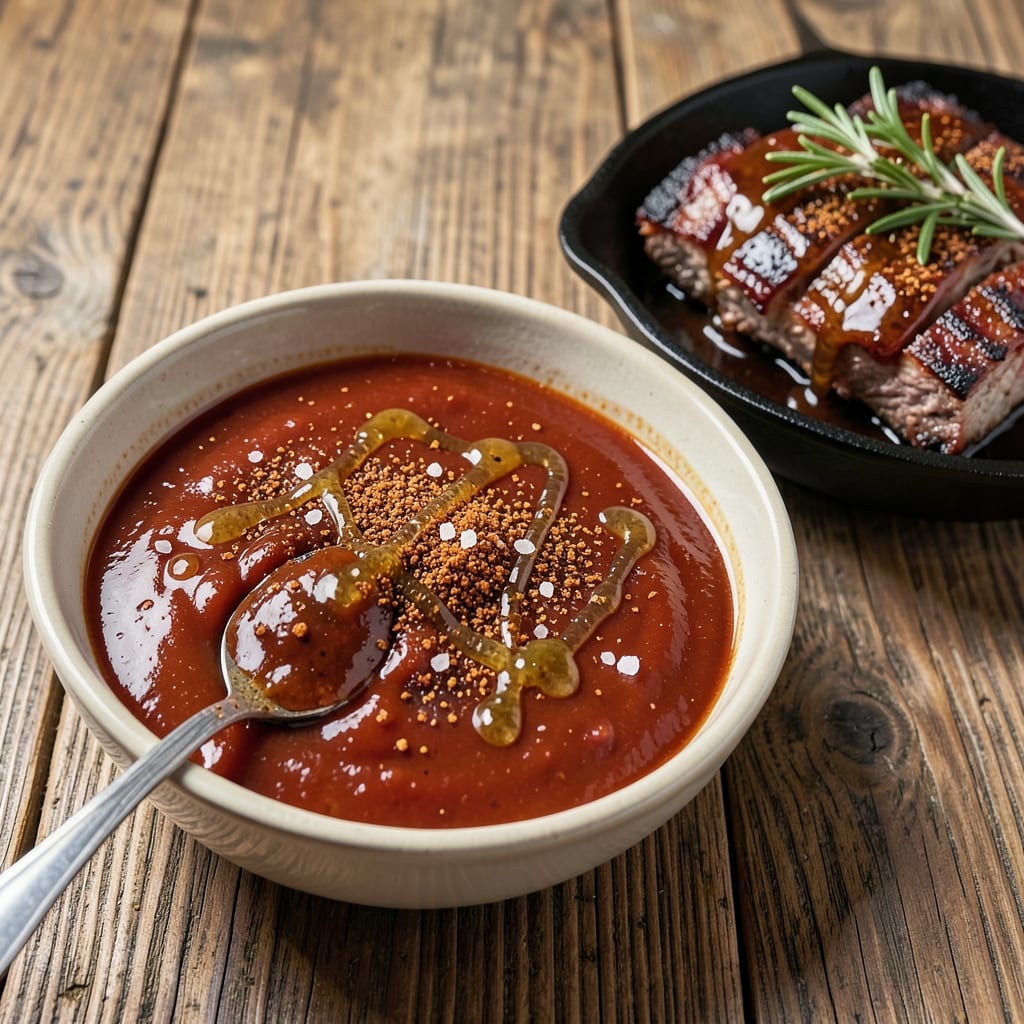
This barbecue sauce recipe for beef ribs is the secret weapon that transforms tough cuts into fall-off-the-bone tenderness with every sticky, smoky-sweet bite. I developed it after years of testing at my family cookouts, where the difference between good ribs and legendary ribs often comes down to the sauce. The balance of molasses and vinegar creates that signature tangy depth, while spices like smoked paprika and cayenne add layers of heat that penetrate the meat.
The key to this sauce lies in its slow reduction—simmering until it thickens just enough to cling to the ribs without overwhelming them. I use a mix of tomato paste and ketchup for that classic tang, but the real magic happens with the molasses and brown sugar, which caramelize beautifully during cooking. This isn't just any barbecue sauce; it's a glaze that locks in flavor while adding a glossy finish that makes every bite irresistible.
What you'll end up with is a rich, velvety sauce that's perfect for basting ribs during the last hour of cooking or brushing on just before serving. The smoky-sweet profile complements the natural richness of beef ribs while adding a touch of complexity that elevates them from good to unforgettable. Store any leftovers in the refrigerator for up to two weeks, or can it for long-term use—this sauce is worth making in bulk.
Whether you're slow-smoking, grilling, or oven-roasting your ribs, this sauce will be your go-to for that perfect balance of sweet, smoky, and tangy. The ingredients are simple, but the results are anything but—this is the kind of sauce that turns a simple meal into a showstopper. Let's get cooking!
Ingredients for barbecue sauce recipe for beef ribs
Simple pantry staples transform into the ultimate smoky-sweet rib glaze.
| Ingredient | Amount | Notes |
|---|---|---|
| Ketchup 🍅 | 1 cup | High-quality, not watery |
| Molasses 🍯 | ½ cup | Unsulphured preferred |
| Apple Cider Vinegar 🍎 | ¼ cup | For tangy depth |
| Brown Sugar 🍚 | ½ cup | Light or dark |
| Tomato Paste 🍅 | ¼ cup | No sugar added |
| Smoked Paprika 🌶️ | 2 tbsp | For smoky flavor |
| Cayenne Pepper 🔥 | 1 tsp | Adjust for heat |
| Garlic Powder 🧄 | 1 tsp | Freshly ground preferred |
| Onion Powder 🧅 | 1 tsp | For depth |
| Black Pepper 🌶️ | ½ tsp | Freshly ground |
| Salt 🧂 | 1 tsp | Kosher or sea salt |
| Ground Black Pepper 🌶️ | ¼ tsp | Freshly cracked |
The molasses and vinegar are non-negotiable for that signature tangy-sweet balance. Grocery store brands work fine for ketchup and tomato paste, but Whole Foods or Trader Joe's carry unsulphured molasses that won't overpower the sauce. Smoked paprika is where the magic happens—Penzeys or the bulk bins at natural food stores have the best quality. If you're short on time, pre-ground spices from McCormick work in a pinch, but freshly ground garlic and onion powders make a world of difference. For the vinegar, stick with apple cider—it's sweeter than white vinegar and adds subtle complexity.
No molasses? Maple syrup works at half the amount, but you'll lose some of that deep, caramelized flavor. Short on tomato paste? Crushed tomatoes at double the amount will give you a looser sauce, but it'll still taste great. Cayenne too spicy? Cut it in half or swap for red pepper flakes. The brown sugar can be swapped for white, but light brown has just enough molasses flavor to keep things consistent. For a smoother sauce, strain out any lumps from the tomato paste—a fine-mesh sieve or cheesecloth works perfectly. And if you're making this ahead, the sauce actually improves after sitting overnight.
This sauce keeps beautifully in the fridge for 3-4 weeks in an airtight container. For longer storage, can it in sterilized jars—it'll last up to a year on the shelf. I always double the batch because it disappears fast. The sauce thickens as it cools, so thin with a splash of water or vinegar if needed. If you're using it for competition-style ribs, brush it on during the last hour of cooking. For pulled pork, add it during the last 15 minutes. Either way, save some for basting—it's worth the extra effort.
Why You'll Love This Recipe
- Pantry Magic: I swear by this sauce because it uses stuff I already have—no special trips to the store. That molasses and apple cider vinegar combo? Deep, tangy, and just sweet enough to balance the smoky ribs without overpowering them.
- Sticky-Sweet Perfection: The brown sugar caramelizes while simmering, giving those ribs that glossy, clingy crust we all crave. Honestly, the first time I tasted it, I nearly licked the pan clean.
- Weeknight Superstar: Slather it on ribs for Sunday dinner or toss it with baked beans for a quick weeknight meal. Between us, I’ve even drizzled it over grilled chicken—no judgment here.
- Budget-Friendly Powerhouse: A single batch stretches to two rib feasts or a dozen sandwiches. That molasses and vinegar? Cheap, but they make this sauce taste like it cost twenty bucks a jar.
Step-by-step instructions for smoky-sweet barbecue sauce
Here's how to blend these ingredients into a rich, balanced sauce perfect for beef ribs.
Combine Wet Ingredients in a Saucepan
In a medium saucepan, pour in the 1 cup ketchup, 0.5 cup molasses, and 0.25 cup apple cider vinegar. Stir them together over medium heat until they begin to warm through—about 2-3 minutes. The molasses will thicken slightly as it heats, so keep stirring occasionally to prevent sticking.
Here's the thing—molasses has a tendency to clump, so I always stir vigorously at first. You're looking for a smooth, homogenous mixture without any lumps. If you see any separation, just let it simmer for another minute and give it another good stir. This base will form the backbone of your sauce, so getting it right now matters.
Add Sugar and Tomato Paste
Once the mixture is smooth and beginning to bubble gently, sprinkle in the 0.5 cup brown sugar and 0.25 cup tomato paste. Stir constantly for 3-4 minutes until the sugar dissolves completely and the mixture thickens slightly. You'll notice the sauce darken as the tomato paste blends in—this is where the rich, umami depth starts developing.
I like to add the tomato paste last because it has a stronger flavor that needs time to meld. If you notice the sauce getting too thick too quickly, add 1-2 tablespoons of water to loosen it. The goal is a smooth, pourable consistency that will cling beautifully to ribs without dripping off.
Incorporate Dry Seasonings
Reduce the heat to low and add all the dry seasonings: 2 tablespoons smoked paprika, 1 teaspoon cayenne pepper, 1 teaspoon garlic powder, 1 teaspoon onion powder, 0.5 teaspoon black pepper, 1 teaspoon salt, and 0.25 teaspoon ground black pepper. Stir continuously for 5-7 minutes until everything is fully incorporated and the sauce has thickened to a glossy, syrupy consistency.
This is where the magic happens—the spices will bloom and create that irresistible smoky-sweet aroma. You'll know it's ready when you can smell that deep, caramelized fragrance filling your kitchen. If the sauce starts to get too thick, add water 1 tablespoon at a time until it reaches a coating consistency—it should be thick enough to cling but still pourable.
Simmer to Perfect Consistency
Continue simmering on low heat for an additional 10-15 minutes, stirring occasionally. The sauce should reduce slightly and develop a glossy sheen. You're looking for a consistency that's thick enough to cling to ribs but still spreadable—not too stiff, not too runny.
Taste as you go and adjust seasoning if needed. I usually find the molasses and brown sugar give enough sweetness, but if you prefer it sweeter, add a bit more brown sugar. For heat, add more cayenne pepper in ¼ teaspoon increments. Once you're happy with the flavor, remove from heat and let it cool slightly before using—this allows the flavors to meld completely.
Pro Tips For Making Barbecue Sauce Recipe For Beef Ribs
- Simmer Low and Slow: I learned this the hard way—skipping the low simmer ruins the texture. Keep your sauce on medium-low heat for at least 20 minutes, stirring often. High heat burns the brown sugar and vinegar, leaving a bitter, cloying mess instead of that rich, glossy finish.
- Balance the Vinegar: Too much apple cider vinegar and your sauce turns sharp; too little, and it’s flat. Start with 2 tablespoons, taste, then adjust—one teaspoon at a time. The molasses and sugar will mellow it out, but you need that tang to cut through the sweetness.
- Strain the Tomato Paste: Lumpy tomato paste makes your sauce look like it was thrown together. Press it through a fine-mesh strainer before adding it to the pot—yes, even if it’s "smooth." I used to skip this, and the texture always felt off.
- Add Molasses Last: Molasses burns faster than you’d think. Stir it in during the final 5 minutes of simmering, when everything else is already blended. This keeps its deep flavor intact and prevents that acrid aftertaste that sneaks in when you’re not paying attention.
Make-ahead tips for this barbecue sauce recipe for beef ribs
Batch Prep Secrets
I always make double the batch—this sauce disappears fast during cookouts. Store it in quart-sized mason jars in the fridge for up to 4 weeks. The flavors actually deepen overnight, so I often let it sit 24 hours before using it on ribs. For long-term storage, can it in sterilized jars for up to a year—just follow standard canning procedures with a water bath for 10 minutes. 🌡️
Freezer-Friendly Tips
Freeze the sauce in ice cube trays for easy portion control—just pop out what you need for each cook. Once frozen, transfer cubes to a freezer bag and flatten to save space. Thaw overnight in the fridge before using. Pro tip: Add a splash of water or vinegar when reheating to restore that perfect pourable consistency. 🧊
Sauce Prep Timeline
Make this sauce 1-2 days ahead of your rib cook—it needs time to develop its complex flavors. If you're short on time, prep it the night before and store it in the fridge. The next day, just reheat gently on the stove with a splash of water to loosen it up. I like to make it 3 days ahead for competition-style ribs because the flavors really sing after resting. ⏰
Basting Strategy
Keep a small bowl of sauce nearby while cooking ribs. I use a pastry brush to apply sauce during the last 2 hours of cooking, focusing on the last basting just before serving. For pulled pork, add sauce during the final 15 minutes of cooking. Save some sauce for basting—it's worth the extra effort to get that glossy finish. 🍖
Flavor Boost Hack
For an extra layer of depth, add 1 teaspoon of liquid smoke when combining the wet ingredients. This mimics the smoky flavor from a real pit and takes your sauce to the next level. If you're using it on ribs that have already been smoked, cut the liquid smoke to ½ teaspoon—you don't want to overpower the natural smoke flavor. 🔥
Storage Containers
Use glass mason jars for fridge storage—they keep the sauce fresh longer and are easy to reheat. For freezer storage, I prefer quart-sized freezer bags because they stack well and prevent freezer burn. Label everything with the date—this sauce is worth making in bulk, but I always forget what I've got buried in the back of the freezer! 🗓️
Nutrition facts
Frequently asked questions
Can I make this sauce without molasses?
Yes, but you'll lose some depth. Replace ½ cup molasses with ¼ cup maple syrup or ¼ cup honey for a similar sweetness. For the best results, use ½ cup brown sugar instead of white sugar—it has molasses-like caramel notes. The sauce will still taste great but may lack that signature smoky-sweet complexity.
How do I adjust the heat level for picky eaters?
Reduce the cayenne pepper to ¼ teaspoon or swap it for ½ teaspoon red pepper flakes for milder heat. For no heat at all, omit it completely and add an extra ½ teaspoon smoked paprika to maintain that smoky flavor without spice. Taste as you go—you can always add more heat later.
Can I use this sauce on other meats besides ribs?
It works perfectly on pulled pork, chicken, brisket, and even grilled vegetables. For pulled pork, add the sauce during the last 15 minutes of cooking. For chicken or vegetables, use it as a marinade or glaze. The smoky-sweet balance makes it versatile for any protein that needs a flavor boost.
Why did my sauce get too thick?
This happens when the sauce reduces too much. Thin it with 1 tablespoon water or vinegar at a time while stirring. If it's still too thick, simmer it uncovered for 2-3 minutes to evaporate excess moisture. For future batches, reduce the simmering time slightly or keep the lid slightly ajar. The ideal consistency should coat the back of a spoon but still be pourable.
How do I store leftovers for next time?
Transfer cooled sauce to an airtight container and refrigerate for up to 4 weeks. For longer storage, can it in sterilized jars using a 10-minute water bath. Freeze in ice cube trays for easy single-use portions—just thaw overnight in the fridge. Label everything with the date to keep track. This sauce tastes even better after resting!