
Soups & Stews
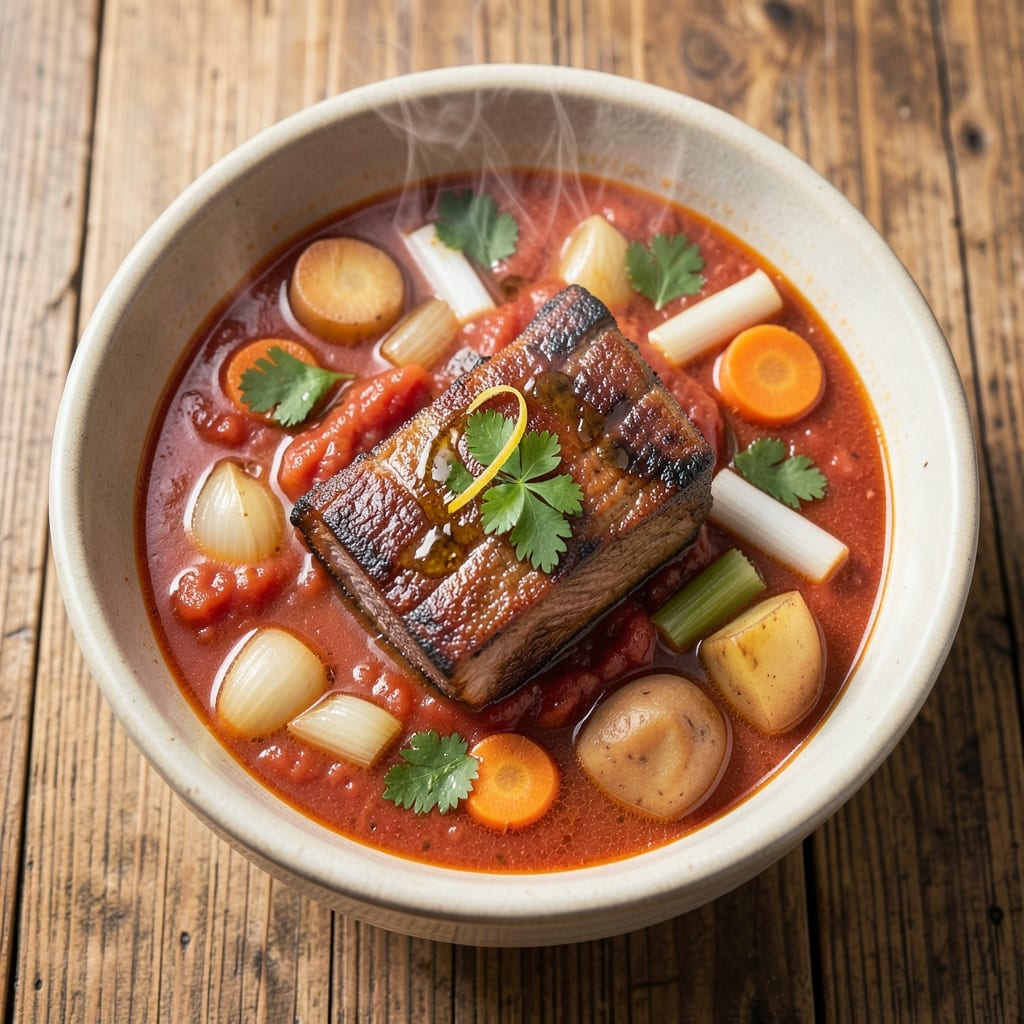
This basic vegetable beef soup recipe transforms simple ingredients into a deeply satisfying meal that warms both body and soul. The foundation starts with properly browning beef chunks—this caramelization step unlocks layers of umami that no shortcut can replicate. What makes this recipe truly special is how it balances tender beef, hearty vegetables, and rich broth without requiring fancy techniques.
You'll work with classic ingredients like carrots, celery, and potatoes that soften beautifully during the 1.5-hour simmer, while beef short ribs or stew meat break down into fork-tender perfection. The secret to flavor lies in building depth through aromatics—onions, garlic, and tomato paste create a flavor base that carries the entire soup. This method delivers restaurant-quality results with minimal effort, making it perfect for busy weeknights or meal prep.
By the time you're done, you'll have a steaming bowl of soup where each spoonful combines tender beef, perfectly cooked vegetables, and a broth so flavorful it needs no garnish. The texture is ideal—creamy from potatoes yet light enough to enjoy in any season. Whether you're feeding a family or meal prepping for the week, this soup delivers comfort in every bite.
One of the best aspects is its versatility—swap in seasonal vegetables, adjust spice levels, or add herbs to customize it endlessly. The instructions will guide you through each step with precision, ensuring you achieve that perfect balance of savory, sweet, and umami flavors. Let's get started on creating your own hearty pot of soup.
Ingredients for basic vegetable beef soup
Pantry staples meet restaurant-quality flavor in this hearty beef soup—just 14 ingredients for maximum comfort.
| Ingredient | Amount | Notes |
|---|---|---|
| Beef Short Ribs 🥩 | 2 lb | Bone-in for maximum flavor |
| Yellow Onions 🧅 | 2 whole | Chopped into 1/2-inch pieces |
| Carrots 🥕 | 4 medium | Peeled and cut into 1-inch chunks |
| Celery Stalks 🧄 | 4 whole | Chopped into 1/2-inch pieces |
| Russet Potatoes 🥔 | 2 lb | Peeled and cut into 1-inch cubes |
| Tomato Paste 🍅 | 2 tbsp | Squeeze tube or canned |
| Garlic Cloves 🧄 | 4 cloves | Minced or finely chopped |
| Beef Broth 💧 | 6 cups | Low-sodium preferred |
| Bay Leaves 🌿 | 2 whole | For deep aromatic flavor |
| Dried Thyme 🌿 | 1 tsp | Or 1 tbsp fresh thyme |
| Salt 🧂 | 1 ½ tsp | Kosher or sea salt |
| Black Peppercorns 🌶️ | ½ tsp | Freshly ground preferred |
| Olive Oil 🫒 | 2 tbsp | For browning beef |
| Fresh Parsley 🌿 | ¼ cup | Chopped for garnish |
The beef is non-negotiable here—bone-in short ribs give that rich, deep flavor you can't get from lean cuts. Costco or Trader Joe's usually have them pre-cut, which saves time. If you're buying whole ribs, ask your butcher to separate the bones for you. The carrots and celery should be fresh—bright orange and crisp for carrots, tight stalks for celery. Potatoes? Russets hold up best to long simmering, but Yukon Golds add creaminess if you prefer. Bay leaves might seem old-school, but they're what gives that subtle herbal depth to the broth.
No beef broth? Chicken broth plus 1 tbsp soy sauce works in a pinch, though the flavor won't be quite as rich. Fresh thyme is ideal, but dried at one-third the amount is totally fine—just crush it between your fingers first to release the oils. Tomato paste? Squeeze tubes are perfect here—no waste, and they keep forever. Swap the parsley for basil if you're feeling fancy, or skip it entirely if you're out. The potatoes can be diced ahead and stored in cold water for up to 2 days to prevent browning. Celery and carrots stay crisp in the fridge for 5-7 days if you wrap them tightly in a damp paper towel.
This soup tastes even better the next day—3-4 days in the fridge, 3 months frozen. I always double the batch and freeze half in portions. The beef gets fork-tender, so you can scoop it out for sandwiches later. For extra richness, stir in 1 tbsp of butter or olive oil when reheating. The broth reduces as it cools, so add a splash of water when reheating if it's too thick. Store leftovers in airtight containers with the lid slightly ajar to prevent sogginess.
Why You'll Love This Recipe
- Short Rib Magic: I’ll be real—those beef short ribs practically melt into the broth, turning this into something ridiculously rich with almost no extra work. Just sear them first, toss in veggies, and let the slow simmer do the heavy lifting.
- One-Pot Wonder: Honestly, you’re looking at a single pot, minimal chopping (onions, carrots, celery—no one judges if they’re uneven), and potatoes that soak up all the flavor. Cleanup? One bowl. Done.
- Leftovers I’ll Fight For: Between us, this soup only gets better the next day. The beef stays tender, the broth deepens, and I’ve been known to sneak seconds at lunch. (Yes, even on a Tuesday night.)
- Budget-Friendly Feast: Short ribs stretch further than you’d think, and the veggies—onions, carrots, celery—are pantry staples that won’t break the bank. Feed four for the price of takeout, and still have leftovers. Win.
Step-by-step instructions for vegetable beef soup
This hearty soup builds flavor layer by layer—start with the beef, then vegetables, then aromatics.
Brown the Beef Short Ribs for Deep Flavor
Heat a large Dutch oven over medium-high heat and add the 2 tablespoons olive oil. Once shimmering, add the 2 lb beef short ribs in a single layer, working in batches if needed. Let them sear undisturbed for 4-5 minutes until a deep golden crust forms.
This browning step is non-negotiable—it develops the Maillard reaction that creates rich, caramelized flavors. Flip the ribs and brown the other side for another 4-5 minutes. Remove them from the pot and set aside. You'll notice the beef releases its own juices, leaving behind a flavorful fond at the bottom of the pot.
Sauté the Vegetable Base
In the same Dutch oven (no need to wipe it clean—the browned bits are pure flavor), add the 2 whole yellow onions, 4 medium carrots, and 4 whole celery stalks, all chopped as specified. Cook over medium heat for 8-10 minutes, stirring occasionally, until the vegetables soften and the onions become translucent.
I like to stir frequently during this step to ensure even cooking. The vegetables should release their moisture and begin to caramelize slightly at the edges. This process builds the soup's foundation, creating a sweet, aromatic base that will infuse the entire dish.
Build the Soup with Potatoes and Broth
Add the 2 lb russet potatoes (cubed as instructed), 2 tablespoons tomato paste, 4 cloves garlic cloves (minced), 6 cups beef broth, 2 whole bay leaves, 1 teaspoon dried thyme, 1.5 teaspoons salt, and 0.5 teaspoon black peppercorns to the pot. Stir well to combine, scraping up any browned bits from the bottom.
Return the beef short ribs to the pot, making sure they're fully submerged in the liquid. Bring the mixture to a gentle boil, then reduce the heat to low and let it simmer uncovered for 1 hour and 15 minutes. You'll know it's ready when the beef is fork-tender and pulls away from the bone easily.
Finish and Garnish for Freshness
Once the beef is tender, remove the bay leaves and adjust the seasoning if needed. The soup should be rich and flavorful, but you can always add more salt or pepper to taste. Ladle the soup into bowls, garnishing each serving with 0.25 cup fresh parsley (chopped as instructed) for a pop of fresh color and brightness.
This final garnish isn't just for looks—it adds a subtle herbal note that cuts through the richness of the beef and vegetables. Serve immediately while the soup is steaming hot, and enjoy the perfect balance of hearty beef, tender vegetables, and deep umami flavor in every spoonful.
Pro Tips For Making Basic Vegetable Beef Soup
- SEAR THE RIBS FIRST: Hit those short ribs with a screaming-hot pan—no oil needed, just let the fat render for 3-4 minutes per side until deep brown. I used to skip this, and the soup always tasted like it needed more depth. That crust? It’s where all the flavor hides.
- CUT POTATOES UNIFORM: Chunk them into 1.5-inch cubes so they cook evenly—no mushy bits, no rock-hard centers. I learned this the hard way after serving a bowl with one perfect potato and another that fell apart like wet cardboard. (Yes, I ate the mushy one first.)
- DON’T BOIL THE VEGETABLES: Start with a rolling simmer, not a full boil, or your carrots and celery will turn to mush. After 10 minutes, add the potatoes and ribs—this keeps everything intact. I was skeptical until I tried it; now I can’t imagine doing it any other way.
- SALT THE WATER LIKE THE OCEAN: At least 1 tablespoon of salt for 4 quarts of water—more if your broth is light. The ribs need time to absorb flavor, and weak broth won’t cut it. I used to eyeball it, but now I measure. (Your taste buds will notice the difference.)
Creative variations of this recipe
Spicy Mexican Style
Transform your basic beef soup into a bold Mexican-inspired version by adding 1 tablespoon chili powder, ½ teaspoon ground cumin, and 1 teaspoon smoked paprika when sautéing the onions. Stir in 1 can (15 oz) diced tomatoes with the broth and add 1 chipotle pepper in adobo sauce for smoky heat. Top with avocado slices and cilantro before serving. 🌶️
Asian-Inspired Ginger-Lime
For an Asian twist, swap the thyme for 1 tablespoon fresh ginger (grated) and 1 tablespoon fish sauce (or soy sauce for vegetarian). Add 1 cup coconut milk after simmering and finish with lime wedges and Thai basil. The ginger brightens the beef while the coconut milk adds creamy depth. Serve with steamed jasmine rice for a complete meal.
Italian Wedding Soup Upgrade
Turn this into an Italian wedding soup by adding ½ cup small pasta (like ditalini) and 1 cup chopped spinach in the last 10 minutes of cooking. Stir in ½ cup ricotta cheese when serving for a creamy touch. Garnish with grated Parmesan and extra parsley. The spinach wilts beautifully while the pasta soaks up the rich broth.
Hearty Barley Addition
For extra texture and fiber, add ½ cup pearl barley along with the potatoes. It takes 1 hour and 15 minutes to cook fully, so no extra time is needed. The barley absorbs the broth beautifully, creating a satisfying bite in every spoonful. This version feels especially hearty and is perfect for cold weather. 🥣
Vegetarian Swap
Replace the beef with 2 cups mushrooms (cremini or portobello) and 1 cup lentils for a vegetarian-friendly version. Sauté the mushrooms first to develop their umami, then proceed with the recipe as written. The lentils add protein while keeping the soup rich and filling. Use vegetable broth instead of beef broth for consistency.
Slow Cooker Shortcut
For a hands-off approach, brown the beef as directed, then transfer everything (including the browned bits) to a 6-quart slow cooker. Add all remaining ingredients and cook on LOW for 7-8 hours or HIGH for 4-5 hours. The slow cooker deepens the flavors while keeping the beef incredibly tender. Perfect for busy days when you want minimal effort but maximum comfort. 💡
Nutrition facts
Frequently asked questions
Can I use ground beef instead of short ribs for this soup?
You can substitute 1 lb ground beef for the short ribs, but the flavor and texture will differ significantly. Ground beef cooks much faster (15-20 minutes) and won't develop the same rich, tender quality. For best results, brown the ground beef thoroughly first to build flavor, then proceed with the recipe. The soup will be heartier but less luxurious than with short ribs.
Why does my soup taste bland even after simmering?
Bland soup usually means insufficient seasoning or flavor development. First, ensure you browned the beef well—the fond creates depth. Second, taste as you go: add more salt gradually, or boost umami with 1 teaspoon soy sauce or ½ teaspoon Worcestershire sauce. Third, let the soup rest 10 minutes off heat before tasting—flavors meld during this time. Fresh herbs added at the end also brighten the dish.
Can I make this soup in a pressure cooker?
Brown the beef as directed, then transfer everything to your pressure cooker. Seal and cook on high pressure for 30 minutes (not including preheating time). Quick-release the pressure, then let it sit 5 minutes before opening. The beef will be fork-tender, and the vegetables will soften perfectly. This cuts cooking time to about 45 minutes total.
What vegetables can I substitute if I don't have carrots or celery?
Swap carrots for sweet potatoes (adds natural sweetness) or turnips (earthy flavor). Replace celery with leeks (milder) or fennel (licorice notes). For a different texture, try zucchini or green beans—just add them in the last 10 minutes of cooking so they don't turn mushy. The key is balancing sweet, earthy, and crisp elements.
How do I prevent the potatoes from turning to mush?
Potatoes can turn mushy if overcooked or cut too small. Cut them into 1-inch cubes (not smaller) and add them to the pot when the beef and vegetables have already cooked for 20 minutes. This ensures they soften without disintegrating. For extra stability, use Yukon Gold potatoes—they hold their shape better than Russets when simmered. Stirring gently occasionally also helps maintain texture.