
Main Courses
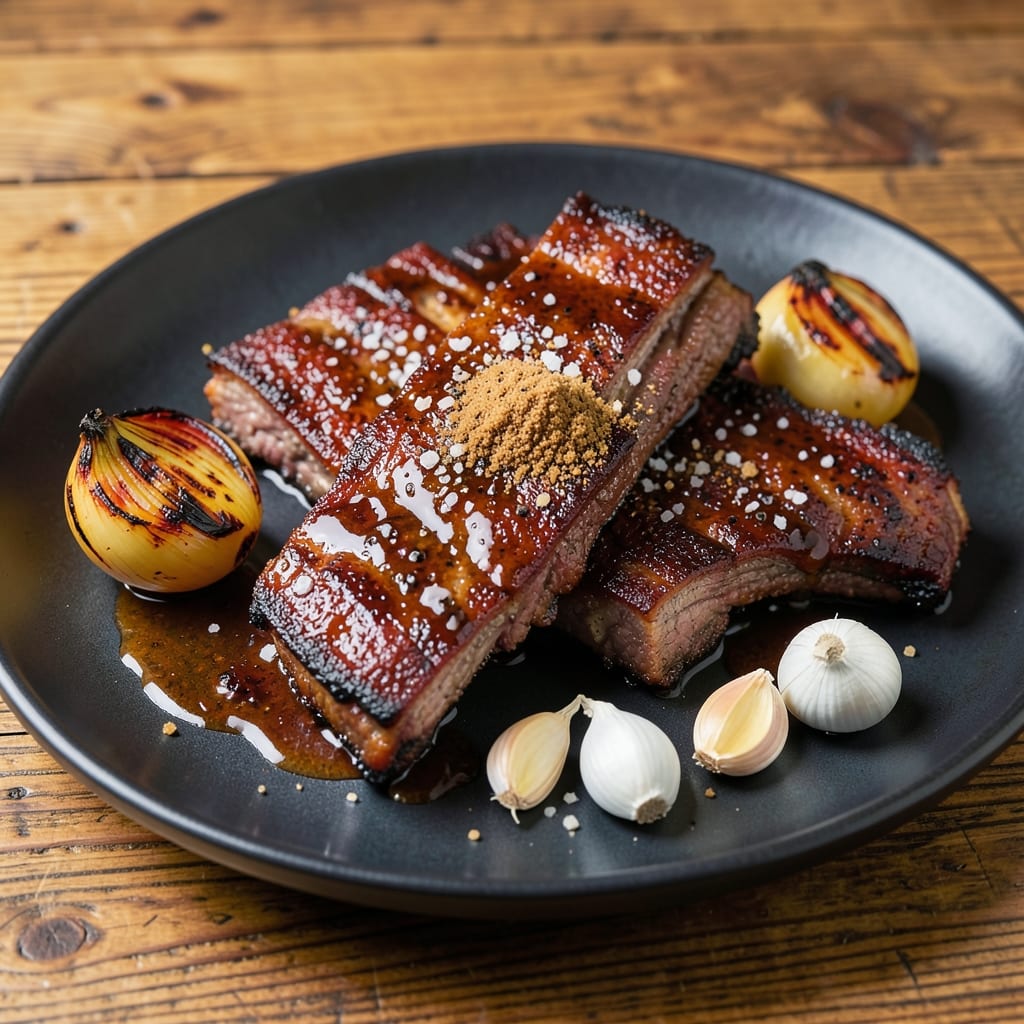
This BBQ beef spare ribs recipe delivers the perfect balance of smoky bark and fall-off-the-bone tenderness that only comes from low-and-slow cooking. 🔥 As someone who grew up with ribs simmering over hickory smoke, I know the difference between good ribs and great ribs—and this method gets you there every time. The secret lies in patience, precise seasoning, and letting the meat work its magic over hours, not minutes.
The 3-2-1 method—three hours of smoking, two hours of wrapping, and one hour of unwrapped finishing—transforms tough cuts into melt-in-your-mouth perfection. You’ll start with a dry rub that clings to the ribs like armor, then build layers of flavor as the bark develops and the meat tenderizes. Whether you’re using a smoker, grill, or even your oven, the technique stays the same: slow, steady heat and unwavering attention to detail.
By the time you’re done, you’ll have ribs with a deep mahogany crust that cracks under pressure, revealing juicy meat so tender it falls apart at the slightest touch. The glaze, if you choose to use one, adds a sticky-sweet finish that ties everything together. Serve with classic sides like tangy coleslaw or buttery cornbread, and you’ve got a meal that’s worth every minute of wait.
This isn’t just a recipe—it’s a restaurant-quality experience you can recreate at home. The key is trusting the process, resisting the urge to rush, and letting the smoke and time do the heavy lifting. Once you master this, you’ll never buy ribs again. Let’s get started.
Ingredients for bbq beef spare ribs
Four pounds of meaty ribs, a smoky rub, and patience—this is where restaurant-quality BBQ starts.
| Ingredient | Amount | Notes |
|---|---|---|
| Beef Spare Ribs 🍖 | 4 lb | Bone-in, meaty ends included |
| Yellow Onion 🧅 | 1 whole | Cut into wedges for wrapping |
| Fresh Garlic 🧄 | 6 cloves | Minced for rub and wrapping |
| Brown Sugar 🍚 | ½ cup | Light or dark variety |
| Smoked Paprika 🌶️ | 2 tbsp | For deep smoky flavor |
| Ground Black Pepper 🌶️ | 1 ½ tbsp | Freshly cracked preferred |
| Kosher Salt 🧂 | 2 tbsp | Diamond Crystal preferred |
| Dried Thyme 🌿 | 1 tbsp | Or 1 tbsp fresh thyme leaves |
| Dried Mustard Powder 🌶️ | 1 tsp | Adds tangy depth |
| Apple Cider Vinegar 🍎 | ½ cup | For wrapping liquid |
| Beef Broth 🥫 | 1 cup | Low-sodium preferred |
| Wood Chips 🌳 | 1 bag | Hickory or oak preferred |
| BBQ Sauce 🍯 | ½ cup | Optional for finishing glaze |
| Unsalted Butter 🧈 | 2 tbsp | For basting during wrap |
| Aluminum Foil 📄 | 1 sheet | Heavy-duty preferred |
The ribs are the star, so pick meaty ends—those little bones add flavor and texture. Costco or local butchers usually have the best cuts, often pre-trimmed for convenience. If you're buying whole racks, remove the membrane first (it's that silvery skin)—just slide a butter knife under it and peel it off. Trust me, it makes all the difference. The wood chips? Hickory or oak are classic, but fruitwoods like cherry add sweetness if you're feeling adventurous. Soak them in water for 30 minutes before using—keeps them from burning.
No smoked paprika? Regular paprika plus a pinch of liquid smoke works in a pinch, but you'll miss that authentic smoky depth. The brown sugar can be swapped for white sugar or even maple syrup if you're out, but it won't caramelize the same way. Fresh thyme is ideal, but dried works at one-third the amount. For the wrapping liquid, apple cider vinegar plus beef broth is non-negotiable—it tenderizes while keeping the meat juicy. And if you're skipping the BBQ sauce, a mix of ketchup and molasses gives a similar sweet-tangy finish.
The ribs keep best in the fridge for 3-4 days before cooking, but don't rush the process. The rub stays potent for 2 weeks in an airtight container. Leftover cooked ribs? Store them wrapped in foil for 4-5 days—they actually taste better the next day as the flavors meld. I always make extra because leftovers freeze beautifully for 3 months. Just thaw overnight in the fridge before reheating. And save those bones! Make broth or use them for ribs hash—zero waste here.
Why You'll Love This Recipe
- One-Pan Magic: I swear by this recipe because it’s that simple—just ribs, onions, and garlic tossed in a smoky-sweet sauce. No fancy equipment, no flipping between pots. Honestly, I’ve made it on a griddle, in the oven, or even on a campfire. The onions caramelize right along with the ribs, so you get that sticky, sweet glaze without extra work.
- Smoky-Sweet Obsession: That combo of brown sugar and smoked paprika? It’s the secret weapon. The sugar melts into a glossy coating while the paprika adds this deep, smoky warmth that sticks to every bite. I’ll be real: my kids fight over the last piece, and they’re not even meat lovers.
- Tailgate Ready: Between us, this is my go-to for game days, potlucks, or when my book club overstays its welcome. The ribs feed a crowd, and the leftovers? Even better the next day. I’ve packed them for picnics, reheated them for lunch—it’s the kind of dish that works for any gathering, no matter how casual.
- Leftovers on Lock: I make a double batch every time because the ribs stay tender and flavorful for days. The sauce thickens up nicely, so reheating is a breeze—just a quick warm in the oven or microwave. It’s my budget-friendly secret: a big, satisfying meal that doesn’t break the bank or take forever. Plus, the bones? Crunchy and perfect for soup later.
Step-by-step instructions for smoky BBQ beef spare ribs
Here's how to transform tough ribs into melt-in-your-mouth perfection with that coveted smoky bark.
🔥 Step 1: Create the Dry Rub and Prep the Ribs
In a medium bowl, combine the 0.5 cup brown sugar, 2 tbsp smoked paprika, 1.5 tbsp ground black pepper, 2 tbsp kosher salt, 1 tbsp dried thyme, and 1 tsp dried mustard powder. Mix until the sugar is evenly coated with spices - this is your flavor bomb.
Pat the 4 lb beef spare ribs completely dry with paper towels. This drying step is non-negotiable - it creates that perfect bark. Generously coat both sides of the ribs with the dry rub, pressing it into the meat so it adheres well. Let them sit at room temperature for 30 minutes while you prep the smoker.
🔥 Step 2: Set Up the Smoker for Low-and-Slow Cooking
Fill a smoker box with the 1 bag wood chips (hickory or oak) and soak them in water for 30 minutes if your smoker requires it. Set your smoker to 225°F and let it preheat for 15 minutes until you see clean, blue smoke.
Place the ribs bone-side down on the smoker grate. The meaty ends should point toward the back of the smoker to catch any drippings. Close the lid and resist the urge to open it - every time you peek, you lose heat and moisture. Cook for 3 hours until the internal temperature reaches 165°F.
🥘 Step 3: Wrap and Rest for Maximum Tenderness
Here's where the magic happens. Cut the 1 sheet aluminum foil into two large pieces. On each piece, place 3-4 onion wedges from the 1 whole yellow onion, 2 tbsp unsalted butter, 6 minced garlic cloves, 0.5 cup apple cider vinegar, and 1 cup beef broth.
Remove the ribs from the smoker and place them on the foil, meat-side down. Fold the foil into a tight packet, sealing all edges completely. Return to the smoker and cook for another 2-3 hours until the internal temperature reaches 203°F and the meat pulls apart easily. This wrapping technique, called the "Texas crutch," helps break down the collagen for that fall-apart texture.
🔥 Step 4: Finish with Optional BBQ Sauce Glaze
Once the ribs reach 203°F, remove them from the smoker and carefully open the foil packets. Let them rest for 10 minutes before brushing with the 0.5 cup BBQ sauce if using. For extra shine, place them back in the smoker for 5-10 minutes until the sauce caramelizes.
Transfer the ribs to a cutting board and let them rest for another 10 minutes before serving. The ribs should have a beautiful dark mahogany bark on the outside and be fork-tender on the inside. Slice between the bones and serve with extra BBQ sauce for dipping - you'll want to lick the plate clean!
Pro Tips For Making Bbq Beef Spare Ribs
- Trim the Fat First: DESCRIPTION:
- Char the Garlic: DESCRIPTION:
- Don’t Crowd the Pan: DESCRIPTION:
- Braise Low and Slow: DESCRIPTION:
Perfect pairings for this bbq beef spare ribs
Smoky Bark Sides
Nothing cuts through the richness of smoked ribs like a crisp, tangy coleslaw made with 1 cup mayonnaise, 2 tbsp apple cider vinegar, 1 tbsp Dijon mustard, and 1 tbsp sugar. I shred 2 cups cabbage and 1 cup carrots fine and let it sit for 30 minutes before serving—this gives the flavors time to meld. The acidity balances the smokiness perfectly. 🥬
Buttery Cornbread
A classic Southern-style cornbread with 1 cup cornmeal, 1 cup all-purpose flour, 1 cup buttermilk, and 2 tbsp melted butter is non-negotiable. I bake it in a cast-iron skillet until golden and serve it warm with a pat of extra butter. The slight sweetness and crumbly texture soak up any leftover BBQ sauce drippings. 🍞
Pickled Vegetables
Quick-pickled red onions and jicama sticks add a refreshing crunch. Thinly slice 1 red onion and 1 jicama, then toss with ½ cup apple cider vinegar, 1 tbsp sugar, and ½ tsp salt. Let them sit for 20 minutes before serving. The bright acidity cleanses your palate between bites. 🌶️
Beverage Pairings
A cold light lager like Peroni or Corona cuts through the richness without overpowering the smoky flavors. For something stronger, a bourbon whiskey like Maker's Mark adds a caramel sweetness that complements the ribs. If you prefer wine, a Zinfandel from California brings fruity notes that pair beautifully with the bark. 🍺
Extra Sauce Station
Set up a sauce bar with three options: classic BBQ sauce, a tangy vinegar-based mop sauce (mix ½ cup apple cider vinegar, ½ cup water, and 1 tbsp brown sugar), and a spicy honey-mustard dip (combine ¼ cup honey, 2 tbsp Dijon mustard, and 1 tbsp hot sauce). Let guests customize their dipping experience. 🍯
Bread Basket
Warm, crusty brioche rolls or sourdough slices make the perfect vehicle for saucy ribs. I like to brush them with garlic butter before serving—it adds another layer of flavor. For a heartier option, serve with cheesy garlic pull-apart bread made with mozzarella and Parmesan. 🥖
Nutrition facts
Frequently asked questions about smoked beef spare ribs
How do I know when beef spare ribs are fully cooked?
Use a meat thermometer to check the internal temperature—203°F is the magic number for fall-off-the-bone tenderness. The ribs should pull apart easily with just a fork when you cut between the bones. Pro tip: The 3-2-1 method (3 hours unwrapped, 2 hours wrapped, 1 hour unwrapped) ensures perfect doneness every time.
Can I cook these ribs without a smoker?
Use your oven set to 225°F with a water pan on the bottom rack for moisture. Place the ribs on a wire rack over a baking sheet, and add wood chips to a foil pan under the rack for smoke flavor. The cooking time stays the same—just monitor the temperature closely. For a grill version, use indirect heat and maintain 225°F with a pellet tube or smoker box.
Why do my ribs turn out tough instead of tender?
Most likely, you rushed the cooking time or didn't wrap them properly. Beef spare ribs need that 203°F internal temperature to break down collagen—don't cut them short! Also, make sure your foil packets are airtight (no steam escapes) and include moisture sources (onion, butter, vinegar). Patience is key—low and slow is the only way.
What's the best way to store leftover ribs?
Wrap the ribs tightly in aluminum foil and store in the fridge for 3-4 days or freeze for up to 3 months. For reheating, warm in a 300°F oven for 10-15 minutes with a splash of beef broth to restore moisture. The flavors actually improve overnight as the meat absorbs all those delicious juices!
Can I use this recipe for pork spare ribs instead?
While the technique works, pork ribs are leaner and cook faster. Reduce the total time by about 1 hour and check for doneness at 195°F internal temperature. The rub and wrapping method stay the same, but pork benefits from less time wrapped to avoid overcooking. For extra insurance, use a meat probe to monitor progress.