Soups & Stews
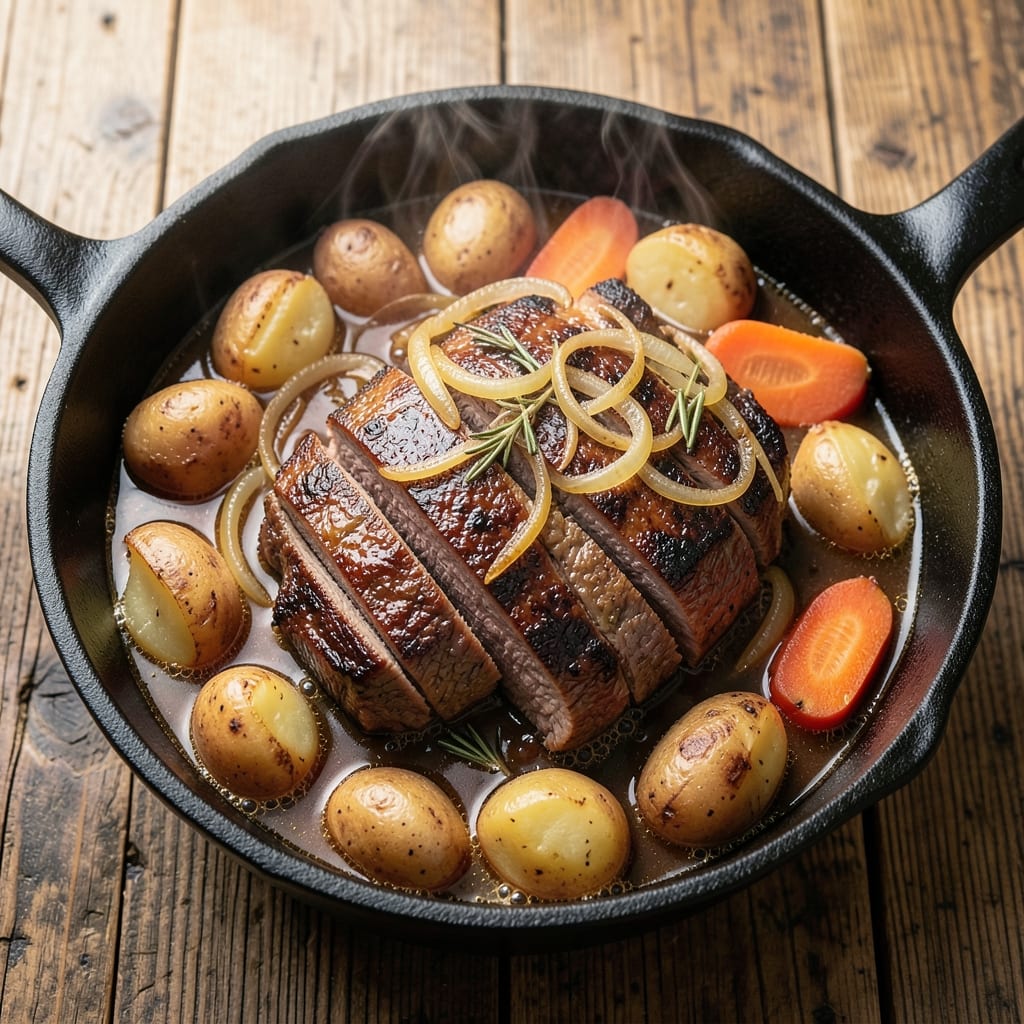
This beef ale stew recipe transforms tough chuck roast into melt-in-your-mouth perfection through slow simmering and beer-infused richness. The secret lies in caramelizing onions until deep golden, then deglazing with ale to create a complex, aromatic base that tenderizes the meat while building layers of flavor. Professional braising techniques ensure every bite delivers juicy beef, velvety sauce, and the perfect balance of malty sweetness from the ale.
The process begins with searing the beef to lock in juices, followed by building the stew's foundation with onions, garlic, and herbs that infuse the ale with depth. As it simmers for hours, the meat becomes fork-tender while absorbing the rich, caramelized flavors. Potatoes and carrots cook directly in the stew, absorbing the savory broth for maximum flavor in every bite. This is the kind of hearty, restaurant-quality dish that feels like a hug in a bowl.
What makes this recipe stand out is the careful balance of techniques—proper searing creates a flavorful crust, deglazing captures every browned bit, and long simmering develops the stew's signature depth. The result is a dish with a caramelized onion aroma that fills your kitchen, tender beef that falls apart easily, and a sauce that's rich yet perfectly balanced with the ale's malty notes. Serve with crusty bread to soak up every last drop of that flavorful broth.
Perfect for chilly evenings or special occasions, this beef ale stew delivers comfort food at its finest. The recipe scales beautifully for gatherings, and leftovers taste even better the next day as flavors meld further. Let's create a stew that will have everyone asking for seconds—and then thirds.
Ingredients for beef ale stew
Sixteen ingredients for a stew that tastes like home—deep, rich, and full of slow-simmered comfort.
| Ingredient | Amount | Notes |
|---|---|---|
| Chuck Roast 🥩 | 3 lb | Well-marbled for tenderness |
| Yellow Onions 🧅 | 3 whole | Large, halved lengthwise |
| Carrots 🥕 | 4 whole | Medium, peeled, cut into chunks |
| Russet Potatoes 🥔 | 2 lb | Peeled, cut into 2-inch chunks |
| Dark Ale 🍺 | 2 cups | Malty, non-alcoholic if preferred |
| Beef Broth 💧 | 2 cups | Low-sodium preferred |
| Garlic Cloves 🧄 | 4 cloves | Minced for depth |
| Fresh Thyme 🌿 | 2 sprigs | Or 1 tsp dried thyme |
| Fresh Bay Leaves 🌿 | 2 whole | For aromatic depth |
| Tomato Paste 🍅 | 2 tbsp | For rich color |
| Olive Oil 🫒 | 2 tbsp | For searing |
| Salt 🧂 | 1 ½ tsp | Kosher or sea salt |
| Black Pepper 🌶️ | 1 tsp | Freshly ground |
| Worcestershire Sauce 🍶 | 1 tbsp | For umami depth |
The chuck roast is non-negotiable here—marbling is key for that melt-in-your-mouth texture. Most grocery stores carry it pre-cut, but if you're buying a whole roast, ask the butcher to cube it for you. Costco or Kroger usually have it on hand. Look for pieces with visible fat marbling—this ensures juiciness as it braises. For the onions, yellow or red work best; they caramelize beautifully and add natural sweetness. If you're short on time, Trader Joe's sells pre-chopped onions that work in a pinch, though fresh is always better.
No dark ale? Substitute with beef broth plus a splash of balsamic vinegar—it mimics the malty depth. Fresh thyme is ideal, but dried works at half the amount. The Worcestershire sauce adds that signature umami kick—Lea & Perrins is the gold standard, but any good brand will do. For tomato paste, San Marzano is best, but the squeeze tubes from Trader Joe's are a budget-friendly alternative. Potatoes should be firm—Russets or Yukon Golds hold up best to long cooking. If you're in a hurry, baby potatoes work too, but they take slightly longer to soften.
This stew tastes even better the next day as flavors meld. Store in an airtight container in the fridge for up to 4-5 days. For longer storage, freeze portions for up to 3 months. I like to portion it into individual containers—perfect for quick lunches. The broth thickens as it cools, so add a splash of water or ale when reheating. Leftovers reheat beautifully in a pot on the stove or in the microwave, though the stovetop method gives you more control over the consistency.
Why You'll Love This Recipe
- Set-and-Forget Simplicity: I swear by this one—dump everything in a pot, let it slow-cook, and walk away. The chuck roast practically melts into tender perfection while I’m doing laundry or scrolling through my phone. No hovering, no stress, just hands-off magic.
- Dark Ale Magic: That first sip of the rich, malty ale in the stew? Chef’s kiss. It cuts through the beef’s richness while caramelizing the onions into sweet, jammy layers. Even my beer-loving husband calls it his new favorite way to drink ale.
- Leftovers for Days: Between us, this stew only gets better after day two. The potatoes soak up all that deep flavor, and the beef? Falls apart at the touch of a fork. I make a double batch on Sundays—lunches, dinners, and even cold sandwiches (yes, really) for the week.
- Budget-Friendly Feast: A chuck roast and a six-pack of ale stretch farther than you’d think. I feed four people for under $20, and it’s the kind of meal that makes everyone pause mid-bite. Honestly, it’s my go-to for when I need to impress without breaking the bank.
Step-by-step instructions for beef ale stew
Here's the method for crafting a rich, slow-simmered stew with deep beer flavor and tender meat.
Sear the Chuck Roast for Maximum Flavor
Pat the 3 lb chuck roast dry with paper towels and season generously with 1.5 tsp salt and 1 tsp black pepper. Heat 2 tbsp olive oil in a large Dutch oven over medium-high heat until shimmering. Place the roast in the pot and sear for 4-5 minutes per side until deeply browned—this creates the Maillard reaction that builds rich flavor.
Don't rush this step. You want the exterior to develop a dark crust while the interior remains cold. Once browned, remove the roast and set it aside on a plate. You'll notice the oil will be dark and flavorful—this is exactly what you want for your stew base.
Caramelize Onions and Build the Stew Base
In the same Dutch oven, add the 3 whole yellow onions, halved lengthwise, cut-side down. Cook over medium heat for 10-12 minutes without stirring until deeply caramelized and golden brown. This slow process develops sweet, complex flavors that form the foundation of your stew.
Once caramelized, flip the onions and cook for another 5 minutes. Add the 4 whole carrots, cut into chunks, and cook for 3 minutes to lightly soften. Stir in the 4 cloves minced garlic and cook for 30 seconds until fragrant. This sequence ensures the onions caramelize properly without burning.
Develop the Beer and Broth Sauce
Return the seared chuck roast to the pot. Add the 2 tbsp tomato paste, stirring to coat the meat and vegetables. Pour in the 2 cups dark ale and 2 cups beef broth, scraping up any browned bits from the bottom of the pot. This deglazing captures all the flavor you've built so far.
Bring to a simmer, then add the 2 sprigs fresh thyme, 2 whole fresh bay leaves, and 1 tbsp Worcestershire sauce. The mixture should bubble gently. Here's where the magic happens: the beer's maltiness and the broth's depth will begin to meld with the meat's natural juices. Let it simmer uncovered for 30 minutes to allow the flavors to develop.
Add Potatoes and Simmer Until Tender
Cut the 2 lb russet potatoes into 2-inch chunks and add them to the stew. Stir gently to distribute the potatoes throughout the liquid. Return to a simmer and cook uncovered for 1.5 to 2 hours, maintaining a gentle bubble. The potatoes should be fork-tender and the meat should easily pull apart with two forks.
Check the seasoning after 1 hour of cooking. If needed, adjust with additional salt or pepper. The stew should be rich and flavorful, with the beer's depth complementing the meat's tenderness. Real talk: your kitchen will smell incredible at this point—this is the payoff for the slow cooking.
Finish and Serve with Perfect Texture
Once the potatoes are tender and the meat is fork-tender, remove the fresh thyme sprigs and bay leaves. Taste the stew and adjust seasoning if needed. The consistency should be thick and hearty—if it's too thin, let it simmer uncovered for another 10-15 minutes to reduce slightly.
Serve immediately with crusty bread to soak up every last bit of that beer-kissed sauce. Each spoonful should deliver tender beef, caramelized onions, and the rich depth of the dark ale. This is comfort food at its finest—perfect for chilly evenings or game days.
Pro Tips For Making Beef Ale Stew
- SEAR THE ROAST FIRST: Chuck roast loves a good crust, and skipping this step means flavorless, mushy beef. Hit it with high heat—no crowding the pan—until deep brown in spots before adding onions or ale. I learned this the hard way when my stew tasted like "beef broth with beer."
- CUT POTATOES SMALLER: Big chunks stay undercooked; tiny ones turn to mush. Aim for 1-inch cubes—they’ll soften perfectly without falling apart, and the ale will coat them evenly. Russets break down fast, so resist the urge to go too big.
- DON’T RUSH THE SIMMER: After the initial sear, let the stew bubble hard for 10 minutes to build depth. Then drop to a low simmer—any faster, and the ale will evaporate before the flavors meld. I used to speed it up and always wondered why it tasted flat.
- USE STARCHY WATER FOR POTATOES: Dump the cold potatoes straight from the fridge into the stew, and they’ll absorb liquid like a sponge. Rinse them first in cold water, then boil for 2 minutes—this jumpstarts cooking and keeps them from turning gluey. Sounds weird, but it works.
Pro cooking tips for beef ale stew
Sear Like a Pro
That initial sear isn't just about browning—it's about building deep, complex flavors through the Maillard reaction. I use a heavy-bottomed Dutch oven (like Le Creuset) because it distributes heat evenly and prevents hot spots. Pat your 3 lb chuck roast completely dry with paper towels before seasoning—this ensures maximum browning. Work in batches if needed, but never overcrowd the pan. The goal is deep golden-brown crusts on all sides, which takes about 4-5 minutes per side on medium-high heat. 🔥
Caramelize Onions Slowly
Patience is key here—rush this step, and your onions will burn instead of caramelize. Use yellow or red onions (they're sweeter than white) and cut them in half lengthwise. Place them cut-side down in the Dutch oven and let them cook unmoved for 10-12 minutes on medium heat. The onions should turn deep amber with crisp edges. Flip them once to caramelize the other side, then add your carrots and garlic to lightly soften them without overcooking. This process develops sweet, jammy flavors that form the stew's soul.
Deglaze with Precision
After removing the seared roast, never scrape the browned bits—they're packed with flavor! Pour in your 2 cups dark ale (I love Guinness or Samuel Smith's Nut Brown Ale) and 2 cups beef broth, then use a wooden spoon to scrape up every last bit from the bottom. This deglazing step captures all the fond (browned bits) that would otherwise burn. Let it simmer for 5 minutes to reduce slightly before adding the roast back in. This creates a rich, velvety base that coats every bite.
Simmer Control
Maintaining a gentle simmer (not a rolling boil) is crucial—it prevents the stew from becoming watery and ensures even cooking. Use a lid for the first 30 minutes to help the meat and vegetables absorb the flavors, then remove it to allow excess moisture to evaporate. After adding the potatoes, check the liquid level—it should cover the ingredients by about ½ inch. If it's too low, add ¼ cup water or beer. The stew should cook for 1.5-2 hours until the meat is fork-tender and the potatoes are soft.
Herb Handling
Fresh herbs make all the difference—thyme and bay leaves add aromatic depth that dried herbs can't match. Add them early (with the ale and broth) so they infuse the stew gradually. Before serving, remove and discard the herb stems and bay leaves—they're tough and can make the stew taste bitter. A quick skimming of any foam from the surface also improves texture. Pro tip: Add a sprig of fresh parsley at the end for brightness if you like, but it's optional.
Finishing Touches
The final 10-15 minutes of simmering are about reducing the sauce to the perfect consistency. If it's too thin, let it cook uncovered until thickened. Taste and adjust seasoning—sometimes stews need a pinch more salt or a squeeze of lemon to balance the richness. For extra depth, stir in 1 tbsp Worcestershire sauce or a dash of soy sauce (trust me, it works!). Serve with crusty bread or buttered egg noodles to soak up every last drop of that beer-kissed sauce. ✨
Nutrition facts
Frequently asked questions
Can I substitute ale for another type of beer?
A dark ale works best for its malty sweetness, but you can use stout or porter for similar depth. Avoid light lagers—they lack the richness needed for stew. For non-alcoholic options, try beer broth or vegetable broth with a splash of balsamic vinegar to mimic the beer's complexity. The key is balancing sweetness and body in the sauce.
How do I know when the chuck roast is tender enough?
The meat should easily pull apart with two forks when pierced—no resistance at all. If it's still tough after 2 hours, add ½ cup water and simmer uncovered for another 30-45 minutes. Overcooking won't happen if you maintain a gentle simmer (small bubbles, not a boil). The internal temperature should reach 203°F—this breaks down collagen for melt-in-your-mouth texture.
Can I make this stew in a slow cooker?
Brown the meat first in a skillet, then transfer everything to the slow cooker. Cook on low for 7-8 hours or high for 4-5 hours, adding potatoes during the last 1 hour of cooking. The slow cooker's gentle heat works perfectly for tenderizing the beef. Just skip the initial caramelization step—it won't develop properly without direct heat.
Why does my stew taste bitter?
Bitterness usually comes from overcooked onions or herbs. Remove and discard any bay leaves or thyme stems before serving. If the ale itself is bitter, try balancing it with 1 tsp brown sugar or ½ tsp honey during the final 10 minutes of simmering. A splash of lemon juice can also brighten the flavors. Always taste as you go!
What's the best way to reheat leftovers?
Reheat gently in a pot over medium-low heat, stirring occasionally, until warmed through (10-15 minutes). Avoid microwaving—it can make the sauce watery. If the stew seems thick, add 1-2 tbsp ale or broth to restore consistency. The flavors actually improve overnight as the meat absorbs more liquid. Store leftovers in an airtight container for up to 4-5 days.