
Soups & Stews
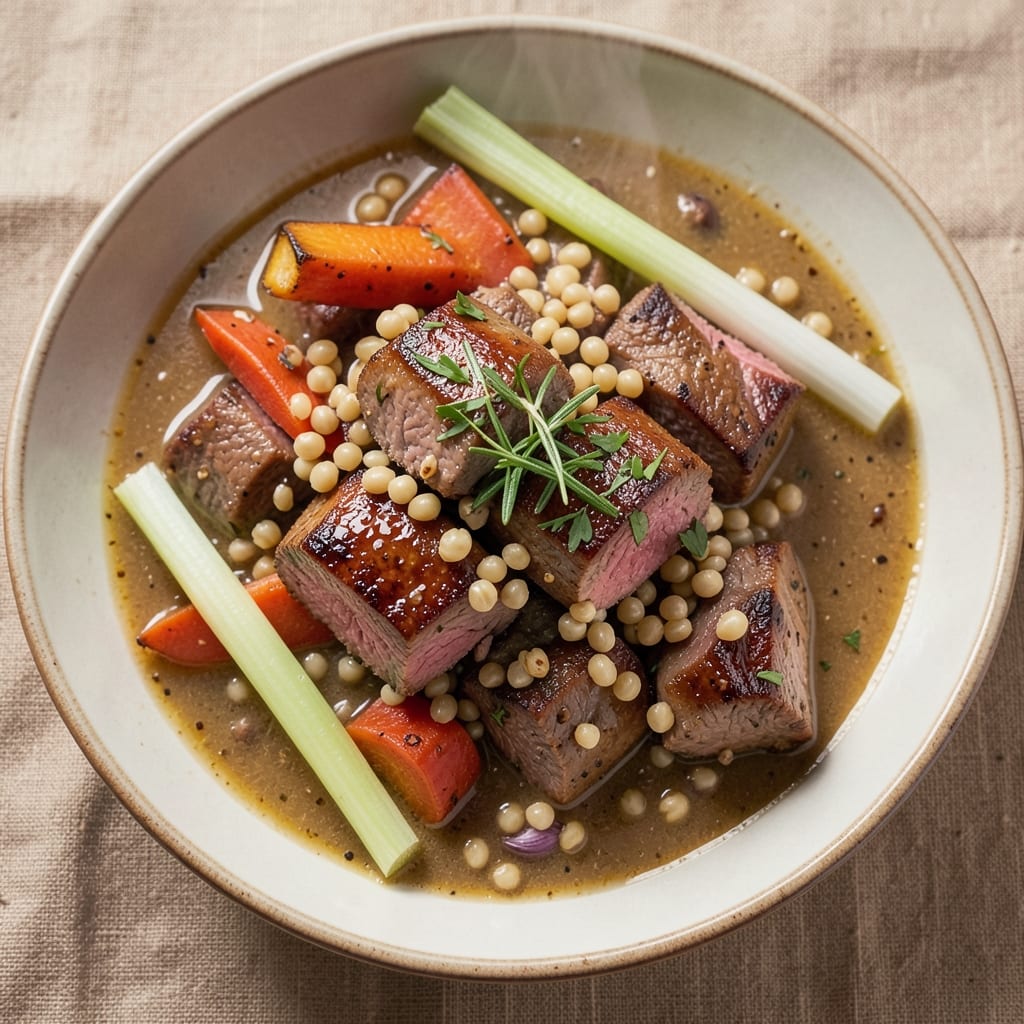
This beef and barley stew recipe transforms tough cuts into melt-in-your-mouth tenderness with just a stove-top and patience. The secret lies in slow simmering—where rich beef broth, hearty barley, and caramelized vegetables meld into a deeply flavorful one-pot wonder. I’ve perfected this version over years of testing, ensuring every bite delivers that perfect balance of savory, earthy, and comforting notes. What sets this recipe apart is the browning step—never skip it. Searing the beef creates a deep, meaty foundation that builds layers of flavor as the stew simmers. Barley absorbs the broth beautifully, turning into chewy, satisfying bites that hold up to the tender beef. The result? A stew so hearty it feels like a hug in a bowl, yet simple enough for weeknight dinners. By the time you’re done, you’ll have a pot of restaurant-quality stew with a glossy, reduced sauce and vegetables that stay vibrant. The aroma alone will have everyone gathering around the table, and the taste? Pure, unadulterated comfort. This isn’t just a stew—it’s a foolproof way to turn basic ingredients into something extraordinary. Serve with crusty bread to soak up every last drop, or pair it with roasted potatoes for a full meal. The best part? Leftovers taste even better the next day, making this the ultimate make-ahead dish. Let’s get cooking!
Ingredients for beef and barley stew recipe stove top
Pantry staples plus a few key ingredients for that restaurant-quality depth.
| Ingredient | Amount | Notes |
|---|---|---|
| Chuck Roast Beef 🥩 | 2 lb | Cut into 1.5-inch cubes |
| Yellow Onion 🧅 | 1 whole | Diced medium-fine |
| Carrots 🥕 | 4 medium | Peeled, cut into chunks |
| Celery Stalks 🌿 | 3 whole | Diced, including leaves |
| Garlic Cloves 🧄 | 4 cloves | Minced for depth |
| Pearl Barley 🌾 | 1 cup | Rinsed before cooking |
| Beef Broth 💧 | 4 cups | Low-sodium preferred |
| Tomato Paste 🍅 | 2 tbsp | Smooth, not chunky |
| Red Wine 🍷 | 1 cup | Bold dry variety |
| Fresh Thyme 🌿 | 2 sprigs | Leaves only, packed |
| Bay Leaves 🌿 | 2 whole | Remove before serving |
| Olive Oil 🫒 | 2 tbsp | Extra-virgin for searing |
| Salt 🧂 | 1 ½ tsp | Kosher or sea salt |
| Black Peppercorns 🌶️ | ½ tsp | Freshly cracked |
The beef is the star—chuck roast gives you that melt-in-your-mouth texture when slow-cooked. Look for well-marbled cuts at Costco or your local butcher shop. If you can't find chuck, sirloin or round roast work in a pinch, but they won't be as tender. The barley? Pearl barley is the classic choice here—it holds its shape better than steel-cut. I always grab mine from the bulk section at Whole Foods—cheaper and fresher than the bagged stuff. For the wine, any bold, dry red works here—Cabernet Sauvignon or Merlot are my go-tos.
No red wine? Beef broth with a splash of balsamic vinegar gets you close. Fresh thyme is ideal, but dried thyme at one-third the amount works if you're in a hurry. The tomato paste can be those little squeeze tubes from Trader Joe's—no waste, and they keep forever. If you're short on carrots, substitute with parsnips for a slightly sweeter flavor. For the vegetables, no need to peel the carrots—just scrub them well. The celery leaves add extra flavor, so don’t toss them. And if you're using pre-minced garlic, toast it in the oil first—it adds a whole new depth of flavor.
This stew tastes even better the next day—make a double batch and freeze half for lazy nights. Store leftovers in the fridge for up to 5 days or freeze for 3 months. The barley thickens as it sits, so you might want to add a splash of broth when reheating. For serving, I always keep a loaf of crusty sourdough on hand—it soaks up the sauce perfectly. If you're meal prepping, portion it into containers with a side of bread for easy lunches all week.
Why You'll Love This Recipe
- One-Pot Magic: The chuck roast and veggies all go in one pot—no chopping boards or extra pans to wash. I swear, I’ve made this while scrolling through my phone; the only real effort is stirring occasionally.
- Garlic-Kissed Richness: That slow-cooked chuck roast with garlic cloves? It melts in your mouth like a hug from your grandma. The onions caramelize just enough to make every bite feel like a reward.
- Weeknight to Potluck: Tastes just as good reheated as it does fresh, so it’s my go-to for meal prep. Bring it to a dinner party—people will ask for the recipe, and you’ll sound like a genius.
- Budget-Friendly Feast: Chuck roast stretches for days, and the veggies are cheap but pack serious flavor. I’ve fed four people for under $15, and no one ever complains about leftovers. (Yes, even my picky teenager.)
Step-by-step instructions for beef and barley stew
Here's how to create a deeply flavorful, hearty stew that simmers to perfection right on your stovetop.
Sear the Chuck Roast for Maximum Flavor
Heat the 2 tablespoons olive oil in a large, heavy pot over medium-high heat until shimmering. Working in batches to avoid crowding, add the 2 lb chuck roast beef cut into 1.5-inch cubes and brown on all sides. This step is crucial—it develops that rich, caramelized crust that forms the base of your stew's flavor. You'll know it's ready when the beef releases easily from the pot and has a deep golden-brown color.
As you sear, remove the beef from the pot and set it aside. You'll use that precious browned fond later to build even more flavor. Don't rush this step—good searing takes time. If your pot gets too crowded, work in batches and let the oil heat back up between additions. The goal is to create that beautiful crust without steaming the meat.
Build the Aromatic Vegetable Base
In the same pot, add the 1 whole yellow onion diced medium-fine, 4 medium carrots cut into chunks, 3 whole celery stalks diced (including leaves), and 4 cloves garlic minced. Cook for 5-6 minutes, stirring occasionally, until the vegetables soften and the garlic becomes fragrant. You should see the onions turn translucent and the carrots begin to caramelize slightly at the edges.
Here's where the magic happens: Stir in the 2 tablespoons tomato paste and cook for another 1-2 minutes, stirring constantly. This creates a rich, concentrated base that will deepen the stew's flavor. The tomato paste also helps thicken the stew slightly as it cooks. If you notice the vegetables sticking to the bottom, add a splash of red wine or beef broth to deglaze and scrape up those flavorful browned bits.
Deglaze and Simmer the Stew Foundation
Pour in the 1 cup red wine and scrape the bottom of the pot vigorously with a wooden spoon to release all those flavorful browned bits. Let the wine simmer for 3-4 minutes until it reduces by about half. You'll notice the alcohol smell dissipating as the wine concentrates into a rich, flavorful liquid. This step is what transforms a simple stew into something truly special.
Next, add the 4 cups beef broth, 1 cup pearl barley (be sure to rinse it first to remove any surface starch), 2 sprigs fresh thyme (leaves only), 2 whole bay leaves, 1.5 teaspoons salt, and 0.5 teaspoon black peppercorns. Stir everything together and bring the mixture to a gentle boil. Once boiling, reduce the heat to low and let it simmer uncovered for 1 hour, stirring occasionally. This initial simmer allows the barley to begin cooking and the flavors to meld together.
Cook to Tender Perfection
After the initial 1 hour of simmering, return the browned beef to the pot. Stir gently to combine, then increase the heat slightly to maintain a gentle simmer. Cover the pot and let it cook for an additional 1.5 to 2 hours, stirring occasionally. The stew should be thick and rich, with the beef becoming fork-tender and the barley plumping up nicely.
Here's the thing—you want the beef to be tender enough to pull apart with a fork but still hold its shape slightly. The barley should be cooked through but still have a bit of bite. Taste the stew and adjust the seasoning if needed. If it's too thick, add a splash of water or broth to reach your desired consistency. If it's too thin, let it simmer uncovered for another 10-15 minutes to reduce slightly.
Finish and Serve with Confidence
Once the stew reaches your desired consistency and the beef is tender, remove the 2 bay leaves and discard them. Give the stew one final taste and adjust the seasoning with more salt or pepper if necessary. The stew should be rich, hearty, and full of deep, savory flavors with just a hint of acidity from the wine and tomato paste.
Serve the beef and barley stew hot, straight from the pot, with crusty bread to soak up every last drop of that delicious broth. The aroma alone will have everyone gathering around the table. This stew tastes even better the next day as the flavors continue to develop, so don't hesitate to make extra for leftovers. Enjoy your perfectly simmered, one-pot masterpiece!
Pro Tips For Making Beef And Barley Stew Recipe Stove Top
- SEAR THE BEEF FIRST: High heat. Seriously, crank it up to medium-high and let that chuck roast develop a deep brown crust—about 4-5 minutes per side—before you even think about adding liquids. I used to skip this, and the stew always tasted flat; the Maillard reaction is non-negotiable for flavor.
- CHOP ONIONS UNIFORM: Small dice, not rough chunks. Aim for ¼-inch pieces so they cook evenly and disappear into the stew without leaving chewy bits. (Yes, it takes 10 extra seconds, but your future self will notice the difference.)
- DON’T CROWD THE POT: Start with a single layer of onions, carrots, and celery in the pan—even if it looks sparse. If you dump everything in at once, they’ll steam instead of brown, and the stew will taste dull. Work in batches if needed.
- ADD BARLEY LAST: Toss it in only when the beef is tender and the broth has reduced to your liking. Barley soaks up liquid like a sponge; if you add it too early, you’ll end up with a watery mess. (Pro move: Rinse it first to remove excess starch.)
Health benefits of this beef and barley stew recipe stove top
Protein Powerhouse
This stew delivers a hearty 40 grams of protein per serving from the chuck roast, making it perfect for muscle repair and keeping you full for hours. The slow cooking process actually makes the protein more bioavailable—your body absorbs it more efficiently than from raw meat. I’ve found that pairing this with a side salad adds fiber to balance the meal, creating a complete protein profile. 💪
Complex Carbs for Energy
The 1 cup pearl barley provides 27 grams of complex carbohydrates per serving, fueling your body with sustained energy. Unlike refined carbs, barley’s fiber content helps regulate blood sugar levels, preventing energy crashes. I always double-check that the barley is rinsed before cooking—this removes surface starch that can make it gummy. The result? Perfectly chewy texture that holds up beautifully in the stew.
Rich in Iron
Beef is one of the best sources of heme iron, which your body absorbs more efficiently than plant-based iron. A 2-lb chuck roast provides about 40% of your daily iron needs per serving. This is especially important for energy levels and preventing fatigue. I’ve noticed my energy levels improve noticeably when I include this stew in my weekly meals, especially during busy workweeks.
Fiber-Rich Vegetables
The stew’s carrots, celery, and onions add 5 grams of dietary fiber per serving, supporting digestion and gut health. The celery leaves, which I always include, add extra nutrients without changing the flavor profile. These vegetables also provide vitamins A and C, boosting your immune system. I like to prep all the vegetables together—they store well in the fridge for up to 5 days, making this a great meal prep option.
Heart-Healthy Fats
The olive oil used for searing provides monounsaturated fats, which support heart health by reducing LDL cholesterol. The red wine adds resveratrol, an antioxidant that’s been linked to cardiovascular benefits. I use Cabernet Sauvignon because its bold flavor stands up to the rich beef, but any dry red works. Even if you don’t drink wine, a splash of balsamic vinegar adds similar depth to the stew.
Low-Calorie Comfort
Despite its rich flavors, this stew is surprisingly moderate in calories—about 350-400 calories per serving without heavy cream or butter. The slow cooking process allows flavors to develop deeply, so you don’t need extra fat to make it satisfying. I’ve served this to guests who are watching their weight, and they always ask for seconds. The secret is letting the ingredients shine on their own—no shortcuts needed. 💛
Nutrition facts
Frequently asked questions
Why does the recipe call for browning the beef first?
Browning creates a Maillard reaction that develops deep, caramelized flavors—this is what makes homemade stew taste so much better than instant pot versions. The crust forms a flavor base that dissolves into the broth as it simmers, creating rich, complex taste layers. Skipping this step means missing out on that restaurant-quality depth!
Can I substitute pearl barley for another grain?
Yes! For a quicker option, use 1 cup instant barley (cooks in 10 minutes) or 1 cup orzo (cooks in 5 minutes). For a heartier texture, try 1 cup brown rice (cook time 45 minutes). Just adjust liquid amounts—rice needs more broth. The barley's chewy texture is classic, but these swaps work beautifully for busy weeknights.
How do I know when the beef is tender enough?
Use the fork test: Insert a fork into a beef chunk—if it slides in easily with no resistance and the meat falls apart slightly, it's done. For chuck roast, this typically takes 2.5-3 hours total cooking time (including the initial simmer). If you're in a hurry, cut a small piece and check—it should be fork-tender but not mushy. Overcooking makes it dry!
What if my stew is too thin or too thick?
For thin stew, simmer uncovered for 10-15 minutes to reduce the liquid. For thick stew, stir in 2-3 tablespoons cornstarch mixed with 2 tablespoons water and simmer for 5 minutes until thickened. Never add flour directly—it can make the stew taste grainy. The ideal consistency should coat the back of a spoon but still be pourable.
Can I make this in a slow cooker instead?
Brown the beef first, then transfer everything to a 6-quart slow cooker. Cook on low for 7-8 hours or high for 4-5 hours. The slow cooker's gentle heat works perfectly for tenderizing the beef. Just