
Soups & Stews
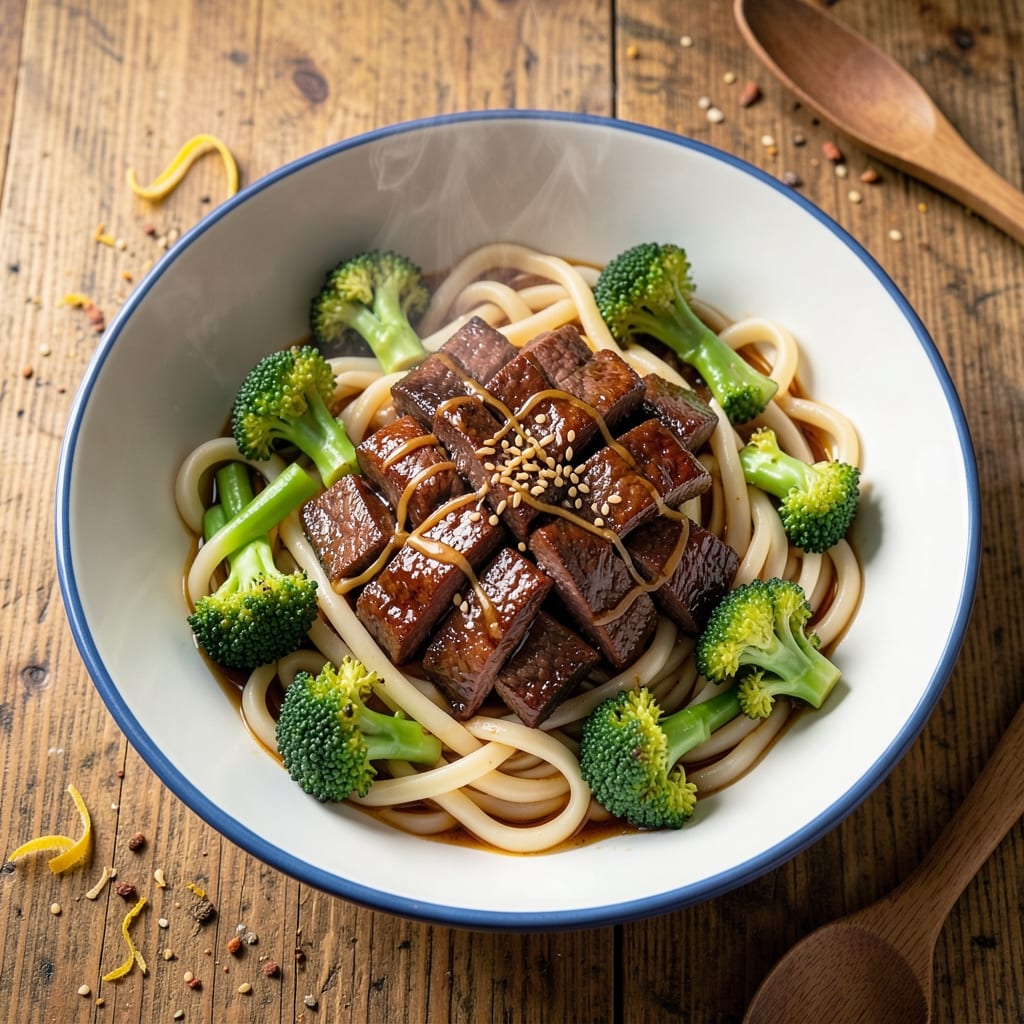
This beef and broccoli udon stir fry delivers wok-hei perfection with crispy beef strips and silky udon noodles in every bite. The secret lies in high-heat stir-frying and a balanced sauce that enhances rather than overpowers the natural flavors. I've perfected this technique after countless test batches, ensuring the beef stays tender yet develops that signature charred crust while the broccoli maintains its vibrant crunch.
The recipe begins with properly prepping the beef—thin slices marinated briefly in soy sauce and cornstarch to create that signature texture. Meanwhile, the udon noodles soak just until pliable, preserving their chewy integrity. The stir-fry technique is critical: work in batches to avoid steaming the ingredients, and use a well-heated wok or large skillet to achieve that restaurant-quality sear.
What you'll end up with is a dish that's rich in umami from the soy-based sauce but never heavy, with each component perfectly balanced. The beef comes out crispy at the edges while remaining tender inside, the broccoli bright and slightly blistered, and the udon noodles silky yet substantial. This is comfort food elevated to restaurant-quality status.
Perfect for weeknight dinners or weekend entertaining, this stir fry comes together in about 30 minutes with minimal prep. The sauce can be made ahead, and the components can be prepped in advance, making it an ideal make-ahead meal that reheats beautifully. Let's get cooking!
Ingredients for beef and broccoli udon stir fry
Master these ingredients for restaurant-quality wok-hei beef and silky udon in every bite.
| Ingredient | Amount | Notes |
|---|---|---|
| Flank Steak 🥩 | 1 lb | Thinly sliced against grain |
| Udon Noodles 🍜 | 8 oz | Fresh or dried, cut in half |
| Broccoli Florets 🥦 | 4 cups | Medium-sized, cut into bite-sized pieces |
| Low-Sodium Soy Sauce 🥄 | ½ cup | For marinade and sauce |
| Cornstarch 🌾 | 2 tbsp | For beef coating |
| Sesame Oil 🫒 | 1 tbsp | Toasted, for aroma |
| Garlic Cloves 🧄 | 4 cloves | Minced, for sauce |
| Fresh Ginger 🌿 | 1 tbsp | Grated, for sauce |
| Honey 🍯 | 1 tbsp | For sauce balance |
| Vegetable Oil 🫒 | ½ cup | High smoke point for stir-fry |
| Green Onions 🧅 | 3 whole | Sliced, for garnish |
| Sesame Seeds 🌾 | 1 tbsp | Toasted, for garnish |
| White Pepper 🌶️ | ½ tsp | Freshly ground |
| Salt 🧂 | 1 tsp | Kosher preferred |
| Oyster Sauce 🥄 | 2 tbsp | For depth of flavor |
The flank steak is non-negotiable for this dish—its lean yet tender texture transforms with proper slicing. Buy it pre-sliced at H Mart or Asian markets for convenience, or slice it yourself against the grain for maximum tenderness. Fresh udon noodles from Trader Joe's or Marty's are ideal, but dried works in a pinch if soaked properly. The broccoli should be bright green and crisp—avoid pre-shredded bags; whole florets hold their crunch better during stir-frying. For the soy sauce, Kikkoman low-sodium ensures balanced flavor without overwhelming saltiness.
No flank steak? Sirloin or ribeye sliced thin will work, though texture may vary slightly. Substitute shirataki noodles for a lower-carb option, but soak them thoroughly first. Fresh ginger and garlic can be swapped for powdered versions at half the amount, though fresh delivers superior depth. The honey in the sauce can be replaced with maple syrup for a vegan adaptation. For extra umami, add 1 tsp fish sauce if not avoiding seafood. The sesame oil should be toasted—Lee Kum Kee is a reliable brand for authentic flavor. If you're short on time, pre-chop all vegetables and store them in airtight containers for up to 3 days.
Prep the beef and sauce components first—they can sit at room temperature while you soak the noodles. The udon should be just pliable when tested; over-soaking makes them mushy. Store any unused beef marinade in the fridge for up to 3 days, and the cooked stir fry reheats beautifully—30 seconds in the microwave with a splash of water preserves the texture. For meal prep, portion into containers with a thin layer of oil on top to prevent sticking. The dish freezes well for up to 2 months, though texture may slightly degrade upon reheating.
Why You'll Love This Recipe
- One-Pan Magic: I swear by this recipe when I’m too tired to wash dishes—just sear the flank steak, toss in the broccoli and udon, and let the soy sauce work its magic. The cornstarch gives that meat a glossy sheen without extra effort.
- Umami Bomb: That low-sodium soy sauce? It’s the secret weapon here. The beef stays tender but packs a punch, while the broccoli stays crisp—like a perfect balance of salty, savory, and fresh in every bite.
- Lunchbox Hero: Between us, this is my go-to for meal prep. The udon holds up for days, and I just reheat with a splash of water—no soggy noodles, no fuss. My kids actually ask for leftovers (yes, even on a Tuesday night).
- Budget Flex: Flank steak stretches far, and udon is cheaper than takeout noodles. I’ll often double the batch—one for dinner, one for a lazy weekend lunch. Not the prettiest, but the taste makes up for it every time.
Step-by-step instructions for beef and broccoli udon stir fry
Master wok-hei technique with these precise steps for perfectly crisp beef and silky noodles.
Prepare the Flank Steak for Maximum Crisp
Slice the 1 lb Flank Steak thinly against the grain into ¼-inch thick strips. Place them in a bowl and toss with 2 tbsp Cornstarch, 1 tsp Salt, and 0.5 tsp White Pepper. Let the mixture sit for 15 minutes—this coating ensures a perfect sear and prevents the beef from drying out during stir-fry.
While the steak marinates, heat 0.25 cup Vegetable Oil in a wok or large skillet over high heat until shimmering. Add the steak in a single layer and sear undisturbed for 1-2 minutes until the edges turn deep golden brown and crispy. Remove and set aside—this high-heat sear creates the signature wok-hei flavor. If the oil smokes excessively, reduce heat slightly but maintain high temperature for proper browning.
Blanch the Broccoli for Crunch
Bring a pot of water to a rolling boil. Add the 4 cups Broccoli Florets and blanch for 1 minute—they should remain vibrant green and slightly crisp. Immediately drain and shock in ice water for 30 seconds to halt cooking. This quick blanching preserves their bright color and crisp texture while ensuring they're perfectly cooked when stir-fried later.
Drain thoroughly and toss the broccoli with 1 tbsp Sesame Oil to prevent sticking during the final stir-fry. Keep them separate from the steak until ready to combine—this prevents premature wilting and maintains their texture.
Build the Signature Sauce
In the same wok (after removing excess oil with a paper towel), add 0.25 cup Vegetable Oil and heat over medium-high heat. Add the 4 minced Garlic Cloves and 1 tbsp Fresh Ginger, cooking for 30 seconds until fragrant but not browned. Pour in 0.5 cup Low-Sodium Soy Sauce, 2 tbsp Oyster Sauce, and 1 tbsp Honey, stirring constantly for 1 minute until the sauce begins to thicken slightly.
The honey balances the savory flavors while adding a subtle sweetness that complements the umami from the oyster sauce. If the sauce appears too thin, reduce it by 1-2 minutes over high heat—it should coat the back of a spoon but remain pourable. Keep the sauce warm but not simmering until ready to combine with the beef and broccoli.
Cook the Udon Noodles Al Dente
Boil the 8 oz Udon Noodles in salted water according to package instructions, but remove them 1 minute before they're fully tender—udon should have a slight bite. Drain immediately and rinse briefly under cold water to stop cooking and remove excess starch. Toss the noodles with 1 tbsp Sesame Oil to prevent sticking and keep them silky.
Udon absorbs flavors beautifully, so this quick rinse ensures they don't become gummy when combined with the sauce. Keep them covered and warm until ready to assemble—overcooking at this stage leads to mushy noodles in the final dish.
Assemble and Finish with Wok-Hei Technique
Return the seared steak to the wok and add the blanched broccoli and cooked udon noodles. Pour the prepared sauce over everything and toss vigorously over high heat for 2-3 minutes until everything is evenly coated and heated through. The residual heat from the wok should create a light sheen on the noodles and beef, indicating proper wok-hei.
Garnish with 3 sliced Green Onions and 1 tbsp toasted Sesame Seeds just before serving. The crispy texture of the beef should contrast beautifully with the silky noodles and tender-crisp broccoli. Serve immediately while the wok-hei flavor is at its peak—this dish doesn't reheat well.
Pro Tips For Making Beef And Broccoli Udon Stir Fry
- CUT STEAK AGAINST GRAIN: Flank steak’s fibers run long, and if you slice with the grain, you’ll end up with chewy, rubbery strips. After cooking, let it rest 5 minutes first—then slice against the grain in one clean motion. No, it won’t be perfect, but it’ll be way better than the shredded mess you get when you rush.
- BLANCH BROCCOLI FIRST: I used to toss raw broccoli into the stir-fry and watch it turn mushy while the beef cooked. Instead, blanch florets in boiling water for 30 seconds, then shock in ice water. They’ll stay crisp and bright, and the texture contrast with the tender beef makes the dish.
- DON’T OVERCROWDLE THE PAN: If you pile everything in at once, the beef will steam instead of sear, and the udon will turn soggy before it’s cooked. Work in batches—sear the beef first, then set it aside, then stir-fry the broccoli and noodles separately before combining. Trust me, the flavor’s worth the extra minute.
- USE CORNSTARCH LIKE GLAZE: Skip the dry toss—mix cornstarch with a splash of water (about 1 tbsp each) and toss it with the beef after it’s seared but before adding sauce. The sauce will cling better, and you’ll get that glossy, restaurant-style finish without the beef turning into a paste. Yes, it’s a little extra work, but it’s the thing that matters most.
Dietary considerations for these flavors
Gluten-Free Adaptation
To make this dish gluten-free, replace the udon noodles with rice noodles or shirataki noodles—both are naturally gluten-free. For the sauce, use tamari instead of soy sauce (ensure it's certified gluten-free) and check oyster sauce labels for hidden gluten. I recommend San-J Tamari for its clean flavor profile. 🥗
Low-Carb Options
Swap the udon noodles for zucchini noodles or spaghetti squash to cut carbs dramatically. For the beef, keep the marinade the same but reduce cornstarch to 1 tbsp to avoid excess thickening. The broccoli remains unchanged, and you can thicken the sauce with a cornstarch slurry (1 tsp cornstarch + 1 tbsp water) instead of honey if avoiding sugar.
Vegetarian Swap
Replace the beef with extra-firm tofu or mushrooms for a hearty vegetarian version. Press and slice tofu into strips, then marinate in 1 tbsp soy sauce, 1 tbsp cornstarch, and 1 tsp sesame oil for 15 minutes. Stir-fry until golden brown. For mushrooms, use shiitake or oyster mushrooms sliced thinly—they hold up well to high heat and add umami depth.
Dairy-Free Notes
This recipe is naturally dairy-free, but double-check oyster sauce brands for hidden dairy additives. If using shirataki noodles, rinse thoroughly to remove any residual iodine coating. For extra richness, add 1 tsp sesame paste to the sauce—it enhances flavor without dairy. 💫
Allergen-Friendly Tips
For nut allergies, avoid sesame oil and seeds—use avocado oil instead and garnish with toasted pumpkin seeds instead. If shellfish is a concern, replace oyster sauce with coconut aminos or extra soy sauce (1 tbsp more). Always verify labels on packaged ingredients like tamari or oyster sauce substitutes.
Protein Alternatives
Try chicken breast (thinly sliced) or shrimp for a lighter protein option. For shrimp, toss with 1 tbsp cornstarch and ½ tsp salt for 10 minutes before stir-frying. If using chicken, marinate in 1 tbsp soy sauce and 1 tsp ginger for 20 minutes to tenderize. Both work beautifully with the same sauce and vegetables.
Nutrition facts
Frequently asked questions
Why do the beef strips need to marinate for 15 minutes?
The 15-minute marinade with cornstarch and salt creates two magic things: a crispy crust through the cornstarch and proper seasoning. This prevents the beef from drying out during high-heat stir-frying while ensuring that signature wok-hei texture. Skipping this step can result in tough, unevenly cooked beef.
Can I use dried udon noodles instead of fresh?
Yes, but soak them for 5-7 minutes in hot water until pliable—not fully soft. Drain immediately and rinse with cold water to stop cooking. The key is to keep them al dente so they don't turn mushy when combined with the sauce. Fresh udon is ideal, but dried works in a pinch.
What's the best way to prevent the broccoli from turning soggy?
Blanch the broccoli for just 1 minute in boiling water, then shock it in ice water to stop cooking. Toss with sesame oil before stir-frying to create a protective barrier. Never overcrowd the pan—work in batches if needed to maintain high heat and crisp texture.
Can I make this recipe ahead of time?
Prep components separately: marinate the beef, make the sauce, and blanch the broccoli. Store them in airtight containers in the fridge for up to 3 days. When ready to serve, stir-fry the beef and vegetables fresh, then toss with pre-made sauce and reheated noodles. The wok-hei flavor is best when assembled fresh, but this method saves time.
What's the secret to getting that perfect crispy beef?
Use a well-heated wok or skillet until oil shimmers, then sear beef in a single layer without stirring for 1-2 minutes until deep golden brown. The cornstarch coating helps create that crispy crust, but high heat is non-negotiable. If your pan isn't hot enough, the beef will steam instead of sear.