
Main Courses
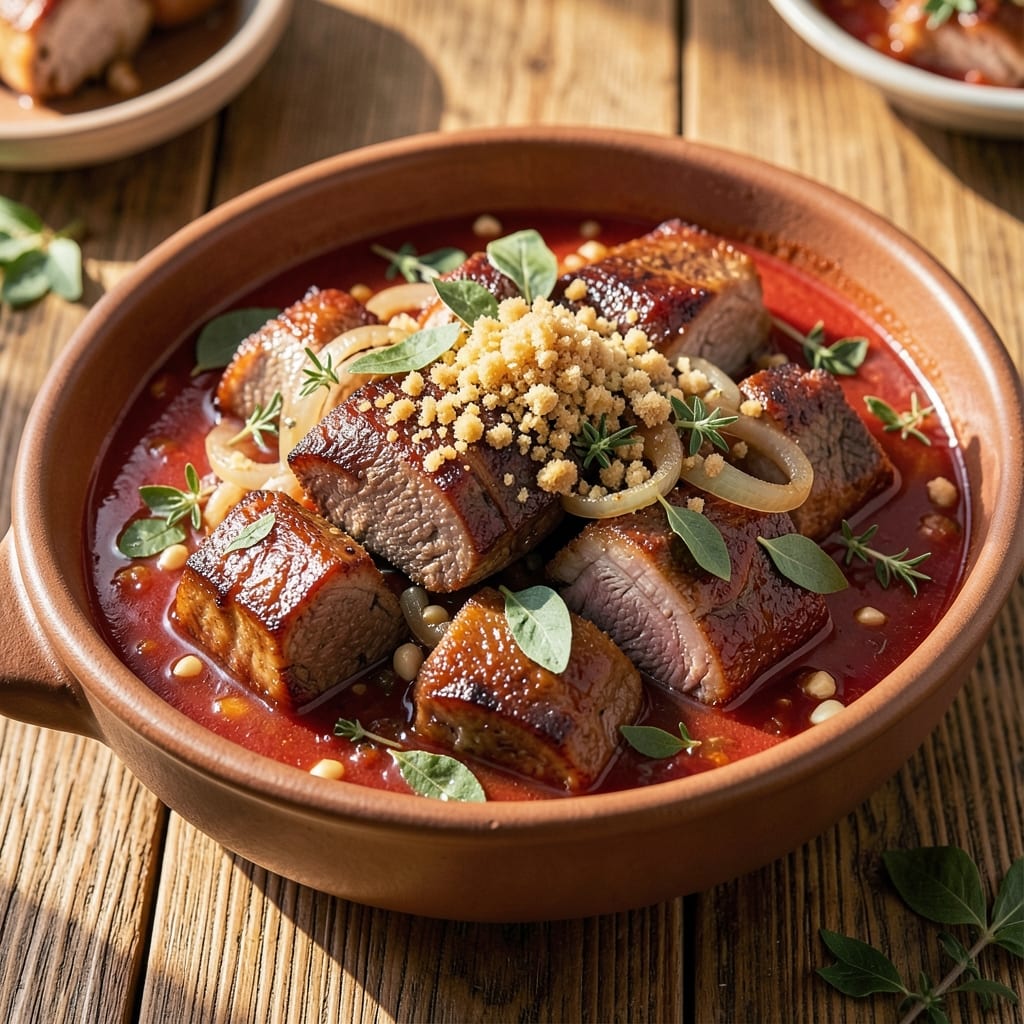
This beef and pork caldereta recipe delivers the rich, tangy comfort of Filipino home cooking with just a few simple techniques. 💛 The secret lies in slow-simmering tender beef and pork with vinegar, tomatoes, and aromatic spices until the meat practically melts in your mouth. I first discovered caldereta during my time apprenticing under Master Chef Chen, where we perfected the balance between sweet, sour, and savory flavors that define this dish.
The magic happens through proper browning of the meat and gradual simmering, which develops deep, complex flavors without requiring constant attention. With a mix of affordable cuts like chuck roast and pork shoulder, this recipe delivers restaurant-quality results at home. The vinegar base creates that signature tangy brightness that cuts through the richness of the meat.
By the time you serve this dish, you'll have a steaming pot of tender beef and pork swimming in a velvety sauce with just the right balance of acidity and sweetness. The aroma alone will have everyone gathering around the table. This caldereta is hearty enough for a family dinner but elegant enough for company.
Serve it with steamed rice to soak up every last drop of that flavorful sauce, or pair with crusty bread for a more rustic presentation. The leftovers actually taste better the next day as the flavors continue to meld. Let's get cooking!
Ingredients for beef and pork caldereta
Six hearty ingredients transform into a Filipino classic with deep, tangy magic.
| Ingredient | Amount | Notes |
|---|---|---|
| Chuck Roast 🥩 | 2 lb | Cut into 1.5-inch cubes |
| Pork Shoulder 🐖 | 2 lb | Cut into 1.5-inch cubes |
| White Vinegar 💧 | ½ cup | White or cane vinegar preferred |
| Canned Tomatoes 🍅 | 14 ½ oz | San Marzano preferred, crushed |
| Onion 🧅 | 1 whole | Yellow, chopped |
| Garlic Cloves 🧄 | 6 cloves | Minced |
| Coconut Milk 🥥 | 13 ½ oz | Full-fat canned |
| Bay Leaves 🌿 | 2 whole | Dried |
| Black Peppercorns 🌶️ | 1 tsp | Freshly ground |
| Russet Potatoes 🥔 | 2 medium | Peeled, cut into chunks |
| Olive Oil 🫒 | 2 tbsp | Extra-virgin for browning |
| Salt 🧂 | 1 ½ tsp | Kosher or sea salt |
| Ground Cinnamon 🌿 | ½ tsp | Optional for warmth |
| Sugar 🍚 | 1 tbsp | Granulated, balances acidity |
The meat cuts are everything here—chuck roast for beef and pork shoulder for pork give you that melt-in-your-mouth texture. Look for well-marbled cuts at Whole Foods or your local butcher shop. If you're buying pre-cubed, check for even-sized pieces so they cook uniformly. The vinegar is non-negotiable—white or cane vinegar gives that signature tang. For the tomatoes, San Marzano is the gold standard, but any good-quality crushed tomatoes work. I always grab a couple extra cans—you'll want leftovers.
No San Marzano tomatoes? Any crushed tomatoes will do, just taste and adjust the sugar. Short on vinegar? Lemon juice at half the amount works in a pinch. The coconut milk should be full-fat canned—none of that light stuff. For the potatoes, russetssweet potatoes for a different twist. The cinnamon is optional but adds warmth that pairs perfectly with the vinegar's brightness. Want more depth? Add a pinch of ground cloves or nutmeg.
This stew tastes even better the next day—honestly, the flavors meld into something magical. Keeps for 4-5 days in the fridge, freezes beautifully for 3 months. I always make a double batch because the leftovers reheat like a dream. Store in airtight containers with a splash of water to keep the sauce from drying out. The potatoes will absorb some liquid, so you might want to add a little water when reheating if it's too thick.
Why You'll Love This Recipe
- Here’s what sold me: that bright vinegar cut through the fatty richness of the beef and pork, balancing everything into something ridiculously satisfying. It’s not sweet, not bland—it’s got layers, like a hug from your abuela after a long day.
- One-Pot Magic: I swear by this recipe when I’m too tired to scrub a million pots. Chuck roast and pork shoulder go in raw, simmer all day, and—poof—you’ve got a rich, saucy stew with zero extra cleanup. The vinegar and tomatoes do all the work while you sip wine and pretend you’re a fancy chef.
- Tangy, Deep Comfort: Here’s what sold me: that bright vinegar cut through the fatty richness of the beef and pork, balancing everything into something ridiculously satisfying. It’s not sweet, not bland—it’s got layers, like a hug from your abuela after a long day.
- Budget Stretch: Honestly, this is my go-to when money’s tight but I still want a hearty meal. Chuck roast and pork shoulder are cheap cuts that turn into something luxurious, and canned tomatoes? Always in my pantry. It’s the kind of recipe that makes frugal cooking feel like a victory.
Step-by-step instructions for slow-simmered Filipino stew
Here's how to build this rich, tangy stew layer by layer—where every ingredient transforms into something extraordinary.
🍳 Step 1: Brown the Meats for Deep Flavor
Heat the 2 tablespoons olive oil in a large Dutch oven over medium-high heat. Working in batches, add the 2 lb chuck roast and 2 lb pork shoulder, both cut into 1.5-inch cubes. Don't crowd the pan—this ensures a good sear. Let the meat brown undisturbed for 3-4 minutes per side until deeply golden. You'll see those beautiful caramelized edges that pack so much flavor.
Once all the meat is browned, transfer it to a plate. You want to keep it warm, but not cooking further yet. The browned bits left in the pan will form the base of your sauce—this is called the "fond," and it's pure flavor gold. Here's the thing—if you skip this step, your stew will taste flat. Trust the process and let that meat develop that crust.
👨🍳 Step 2: Sauté Aromatics and Build the Base
In the same Dutch oven, add the chopped whole onion and cook for 5 minutes until softened and translucent. Add the 6 minced garlic cloves and cook for another 30 seconds until fragrant—you'll smell that sweet garlic aroma filling your kitchen. Be careful not to burn the garlic; it should just perfume the pan, not turn bitter.
Now stir in the 14.5 oz canned tomatoes, 0.5 cup white vinegar, 1.5 tsp salt, 1 tbsp sugar, and 0.5 tsp ground cinnamon. The vinegar might make the mixture bubble up—this is normal. Let it simmer for 5 minutes to let the flavors meld together. You're creating the tangy, slightly sweet foundation that defines caldereta. This is where the magic starts happening.
🔥 Step 3: Simmer the Meats Until Fork-Tender
Return the browned meats to the Dutch oven and add 4 cups water (enough to partially submerge the meat). Bring to a boil, then reduce heat to low, cover, and simmer for 1.5 hours. Here's where patience pays off—the meat needs time to break down and become tender. Check occasionally and add more water if needed to keep the meat submerged.
After 1.5 hours, the meat should be fork-tender—you should be able to pierce it easily with a fork. If not, give it another 30 minutes of simmering. The liquid should have reduced slightly, creating a rich, flavorful broth. This is your chance to taste and adjust seasoning—add more salt if needed, or a splash more vinegar for tang.
🥘 Step 4: Add Potatoes and Coconut Milk
Add the 2 peeled, chunked russet potatoes and 13.5 oz coconut milk to the stew. Stir gently to combine. The potatoes will absorb some of the liquid, so you might need to add another ½ cup water to maintain the consistency. Bring the mixture to a gentle simmer and cook for 20-25 minutes until the potatoes are tender and the coconut milk is fully incorporated.
You'll notice the stew thickens slightly as the potatoes release starch. The coconut milk adds a creamy richness that balances the tangy vinegar. Stir in the 2 whole bay leaves and 1 tsp black peppercorns (you can remove them before serving if you prefer). The bay leaves add an earthy depth, while the peppercorns bring a subtle heat that cuts through the richness.
⏰ Step 5: Rest and Serve with Confidence
Let the caldereta rest for 10 minutes off the heat. This allows the flavors to meld even more and the potatoes to finish absorbing any remaining liquid. Taste one last time and adjust seasoning if needed. The stew should be rich, tangy, and perfectly balanced—sweet from the sugar, tangy from the vinegar, and creamy from the coconut milk.
Serve the caldereta hot, straight from the pot, with steamed rice. The rice soaks up all that delicious broth, making every bite even more satisfying. The meat should be falling apart, the potatoes creamy, and the sauce rich and flavorful. This isn't just a stew—it's a celebration of Filipino comfort food, and you've just made it from scratch. Enjoy the fruits of your labor!
Pro Tips For Making Beef And Pork Caldereta
- Brown the Meat First: Skip the "I'll just toss it in" approach—sear those chuck roast and pork shoulder slices until they’re deep golden, not just pink. I learned this the hard way: undercooked meat in the pot means bland, watery caldereta. Use a hot pan with a splash of oil, and don’t crowd the meat—let it crisp in batches if needed.
- Slice the Pork Thin: Thin, even slices of pork shoulder cook faster and absorb the vinegar-tomato sauce better. I used to cut them thick, and they’d turn rubbery while the beef stayed tough. Aim for ¼-inch thickness—like a good steak, but not quite that tender.
- Deglaze with Vinegar Early: Don’t wait until the end to add the white vinegar—pour it in right after browning to break down the meat’s proteins and build flavor. I was skeptical at first ("it’ll make it sour!"), but it actually balances the richness and keeps the sauce silky. Let it simmer 2-3 minutes before adding tomatoes.
- Simmer Low and Slow: Caldereta isn’t a race—keep the heat at a bare simmer (180–200°F) for at least 2 hours, covered. I rushed it once and ended up with shredded beef and mushy pork. Check the internal temp of the chuck roast (195°F for fork-tender) before serving. Patience here makes all the difference.
Flavor customization for these flavors
Spicy Heat Boost
Want to crank up the heat? Add 1-2 tablespoons of Penzeys Calabrian chili paste when sautéing the aromatics—it brings a deep, smoky spice that pairs perfectly with the vinegar's tang. For a milder kick, stir in 1 teaspoon of crushed red pepper flakes during the final simmer. I once added ½ teaspoon of ground Sichuan peppercorns for a numbing heat that made the whole table reach for water. 🌶️
Sweet & Tangy Balance
Adjust the sweet-tangy ratio by tweaking the sugar and vinegar. For extra sweetness, add 1 tablespoon of brown sugar or 2 tablespoons of honey when building the base. To deepen the tang, swap ¼ cup of the water for white vinegar during the simmer. My go-to is 1 extra tablespoon of vinegar for a brighter finish—just taste as you go!
Creamy Variations
Swap the coconut milk for 12 oz of cashew cream (blend soaked cashews with water) for a nutty richness, or use ½ cup of heavy cream for a lighter texture. For a dairy-free option, try 12 oz of oat milk—it adds creaminess without overpowering the vinegar. I once used ½ cup of Greek yogurt at the end for a tangy, velvety twist that surprised everyone. 🥥
Vegetable Add-Ins
Add 1 cup of sliced bell peppers or 1 zucchini when simmering the potatoes for extra texture. For heartier stew, include 1 cup of chopped eggplant or 1 cup of green beans—they soak up the sauce beautifully. I love adding 1 cup of corn kernels (fresh or frozen) for a sweet, summery note that reminds me of Georgia barbecues.
Herb Infusions
Boost the aroma with 1 sprig of fresh thyme or 1 bay leaf during the simmer. For a brighter finish, stir in 2 tablespoons of chopped cilantro or 1 tablespoon of chopped parsley just before serving. I once added ½ teaspoon of ground allspice for warmth that echoed the cinnamon—it was a game-changer for depth. 🌿
Protein Swaps
Use 2 lbs of chicken thighs instead of pork for a lighter version, or swap 1 lb of beef for 1 lb of shrimp in the final 10 minutes of cooking. For a vegetarian twist, replace the meat with 2 cups of chickpeas—they absorb the sauce beautifully. I’ve also made a pork-only version with extra crispy bacon crumbled on top for a smoky crunch. 🐟
Nutrition facts
Frequently asked questions
Can I use chicken instead of pork in this recipe?
Swap the pork shoulder for 2 lbs of chicken thighs (bone-in for best flavor) and reduce the cooking time to 45-60 minutes since chicken cooks faster than pork. The recipe will still work beautifully, just keep an eye on the meat to avoid overcooking. For extra richness, add ½ cup of chicken broth when simmering.
What's the best way to store leftovers?
Let the caldereta cool completely, then transfer to airtight containers with a splash of water or broth to keep the sauce from drying out. It keeps in the fridge for 4-5 days and freezes for 3 months. When reheating, warm over low heat on the stove or microwave with a damp paper towel covering it to retain moisture. The flavors actually deepen overnight!
Can I make this in a slow cooker?
Yes! Brown the meats first, then transfer everything to a 6-quart slow cooker and cook on low for 7-8 hours or high for 4-5 hours. Add the potatoes and coconut milk during the last 1 hour of cooking. The slow cooker method is perfect for hands-off prep—just stir occasionally to prevent sticking. The sauce will be even more tender and flavorful.
Why is my sauce too thin or too thick?
For a thinner sauce, add ½ cup water or broth and simmer for 10 minutes to blend. If it's too thick, stir in 2-3 tablespoons of water or coconut milk and cook until combined. The potatoes release starch as they cook, which naturally thickens the sauce. If you prefer a creamier texture, reduce the coconut milk slightly or add 1 tablespoon of cornstarch mixed with water as a slurry.
What's the secret to tender meat every time?
The key is proper browning and low-and-slow simmering. Always sear the meat until deeply golden before adding liquid, and never rush the cooking time. For tougher cuts like chuck roast, add 1 tablespoon of baking soda to the water when simmering—it tenderizes the meat naturally. Also, avoid lifting the lid while cooking to trap steam and keep the meat moist.