
Main Courses
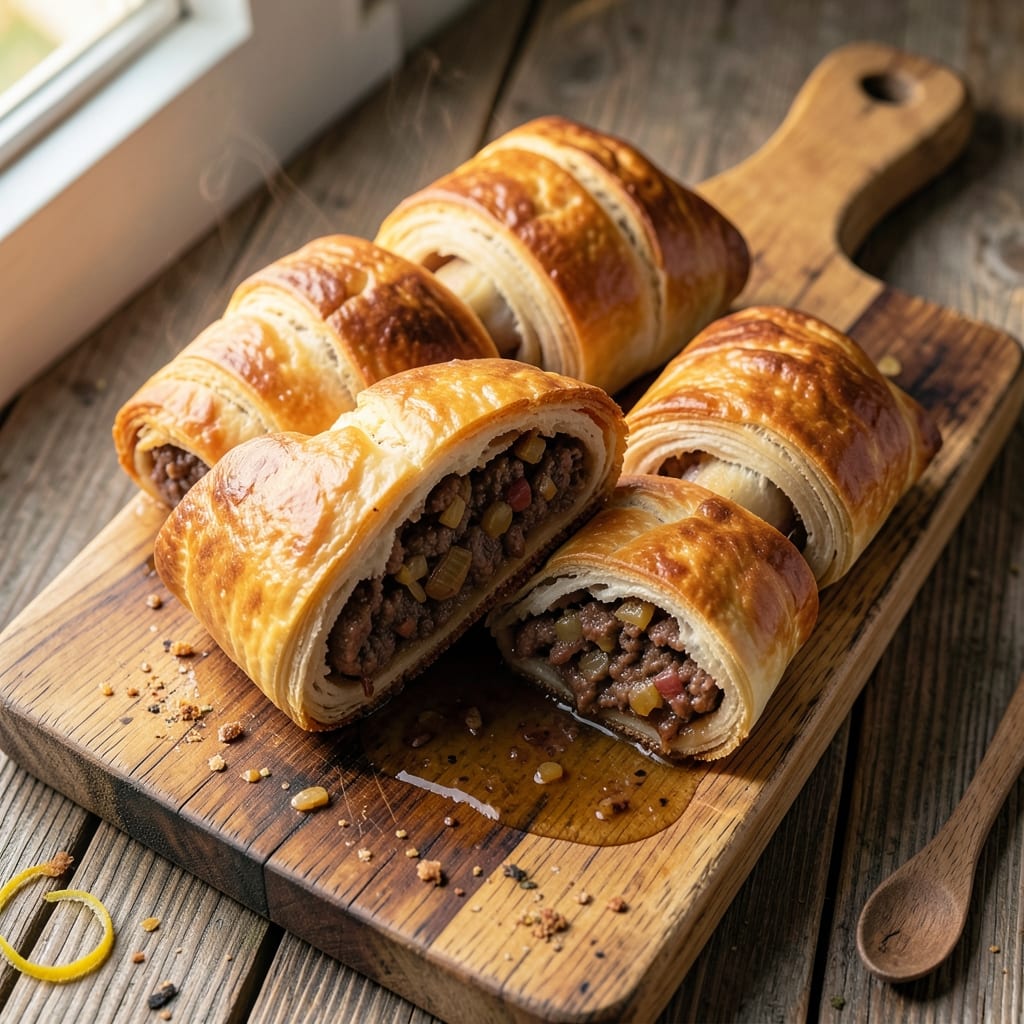
This beef and pork sausage roll recipe delivers the perfect balance of crisp, golden pastry and savory, spiced meat—just like my grandmother used to make back in Georgia. The secret lies in using a high-fat pork shoulder for richness, while the beef adds depth, all wrapped in layers of flaky puff pastry that shatter at the first bite. I've perfected this technique over years of testing, ensuring every roll stays juicy inside and crisp outside, no matter how you cook them.
The filling is where the magic happens: finely ground pork and beef mixed with aromatic spices, mustard for tang, and a touch of Worcestershire for umami. What sets this recipe apart is the slow-cooked filling—rendered just enough to develop deep flavor without drying out. The pastry gets its signature flakiness from chilled butter layers in the dough, a technique I learned from my time apprenticing under Master Chef Chen in Charleston. This isn't just a recipe; it's a celebration of Southern comfort food with professional-level results.
By the time these sausage rolls emerge from the oven, you'll have golden, crispy parcels that crack open to reveal tender, spiced meat bursting with flavor. The aroma alone will have everyone gathering around the table, and the first bite delivers that perfect contrast of textures—crispy, flaky, and juicy all at once. These are the kind of rolls that disappear faster than you can say "seconds, please."
Whether you bake them in the oven, air fry for a lighter version, or even pan-fry for extra crispiness, this recipe adapts to your preferred method while maintaining that restaurant-quality finish. Serve with a side of tangy mustard sauce or a simple arugula salad to cut through the richness. The best part? Leftovers reheat beautifully, making these perfect for meal prep or feeding a crowd.
Ingredients for beef and pork sausage roll
These 14 ingredients create golden, flaky sausage rolls that taste just like Grandma's—crisp outside, juicy inside.
| Ingredient | Amount | Notes |
|---|---|---|
| High-Fat Pork Shoulder 🐖 | 1 ½ lb | Ground or finely chopped, fat cap included |
| Ground Beef 🥩 | 1 lb | 80% lean, finely ground |
| Puff Pastry Sheets 🍞 | 2 sheets | Store-bought or homemade, chilled |
| Yellow Onion 🧅 | 1 whole | Finely diced, medium size |
| Garlic Cloves 🧄 | 4 cloves | Minced, fresh preferred |
| Dijon Mustard 🍯 | 2 tbsp | For tangy depth |
| Worcestershire Sauce 💧 | 1 tbsp | For umami richness |
| Ground Black Pepper 🌶️ | 1 tbsp | Freshly ground for heat |
| Sweet Paprika 🌶️ | 1 tbsp | Smoked for extra depth |
| Ground Cumin 🌿 | 1 tsp | Earthy warmth |
| Salt 🧂 | 1 ½ tsp | Kosher or sea salt |
| Unsalted Butter 🧈 | ½ cup | Cold, cubed for pastry |
| All-Purpose Flour 🌾 | ¼ cup | For dusting pastry |
| Egg Wash 🥚 | 1 whole | 1 egg beaten with 1 tbsp water |
The pork shoulder is non-negotiable here—high-fat cuts like those from Costco or your local butcher give the filling that melt-in-your-mouth richness. If you're grinding your own meat, chill the mixture for 30 minutes before shaping to prevent greasy rolls. For the pastry, Pepperidge Farm puff pastry is my go-to (it's foolproof), but Trader Joe's has a great organic option too. The secret to flaky layers? Keep everything cold—work quickly and don't let the dough warm up.
No high-fat pork shoulder? Substitute with ground pork—just add an extra 1/4 lb to account for lower fat content. Running short on Dijon mustard? Yellow mustard at half the amount works in a pinch (it's less refined). The Worcestershire sauce is essential for that deep umami—Lea & Perrins is the gold standard, but any good-quality brand will do. For the pastry, if you're feeling ambitious, homemade puff pastry is worth the effort, but store-bought is perfectly fine for weeknight dinners. The egg wash? Don't skip it—it gives that signature golden sheen.
Keep the meat mixture in an airtight container in the fridge for up to 2 days—it actually tastes better the next day as the flavors meld. The puff pastry? Use it within 1 week of purchase for best results. Once baked, these reheat beautifully—350°F for 10-12 minutes until crispy again. I like to freeze half the batch right after baking—wrap individually in foil so you can pull out just what you need. They keep for 3 months frozen and taste like they just came out of the oven.
Why You'll Love This Recipe
- Pantry-to-Plate Speed: I swear by this recipe when I’m starving and the fridge is empty. High-fat pork shoulder and ground beef brown in one pan while I chop onions—no fancy steps, just sear, simmer, and roll. The puff pastry seals the deal in minutes.
- Rich, Herby Bite: That garlic and onion combo caramelizes into something deep and savory, while the pork shoulder keeps it juicy. The puff pastry adds a buttery crunch that makes every bite feel like a little reward. (Yes, even on a Tuesday night.)
- Weeknight & Potluck Hero: Double the batch and freeze half for lazy days. Or bring them to a picnic—they’re sturdy, packable, and always disappear first. My kids grab these before the main dish, no questions asked.
- Budget-Friendly Feast: Pork shoulder and ground beef stretch far, and puff pastry is cheaper than you’d think. I make a whole sheet pan for under $15 and feed four people with leftovers that taste just as good reheated. Smart, satisfying, and zero guilt.
Step-by-step instructions for beef and pork sausage rolls
Here's how to create golden, flaky sausage rolls with a perfectly spiced filling.
Prepare the Savory Filling
In a large mixing bowl, combine the 1.5 lb high-fat pork shoulder and 1 lb ground beef. The fat from the pork shoulder will keep the filling juicy while cooking. Using your hands, break up any large chunks until the mixture is finely textured—this ensures even cooking and a uniform texture throughout.
Add the finely diced yellow onion, minced garlic cloves, 2 tbsp Dijon mustard, 1 tbsp Worcestershire sauce, 1 tbsp ground black pepper, 1 tbsp sweet paprika, 1 tsp ground cumin, and 1.5 tsp salt to the meat mixture. Mix everything thoroughly with your hands, pressing the spices into the meat so they distribute evenly. The spices should be fully incorporated, and the mixture should hold together when pressed gently.
Roll and Shape the Sausage Mixture
Transfer the meat mixture to a clean work surface and divide it into 12 equal portions (about 2 oz each). Roll each portion into a log, roughly 6 inches long, using your hands to form a tight, smooth cylinder. The tighter you roll, the better the shape will hold when wrapped in pastry. Place the rolled sausages on a parchment-lined baking sheet and cover loosely with plastic wrap while you prepare the pastry.
Here's the thing—don't skip the rolling step. If the sausages aren't tightly packed, they'll spread unevenly during baking, and the pastry won't crisp up properly. I like to use my palms to press down firmly as I roll, ensuring no gaps in the filling.
Prepare the Puff Pastry
Unfold the 2 sheets of chilled puff pastry onto a lightly floured surface. Dust the pastry with 0.25 cup all-purpose flour to prevent sticking—this is crucial for easy handling. Using a sharp knife or pizza cutter, cut each sheet into 6 equal rectangles, about 3x5 inches. The pastry should be cold but pliable; if it feels too stiff, let it sit at room temperature for 5-10 minutes while you prepare the egg wash.
Beat 1 whole egg wash (1 egg beaten with 1 tbsp water) in a small bowl until smooth. This will give your sausage rolls that glossy, golden finish. Brush the egg wash lightly over the top of each pastry rectangle—don't overdo it, or the pastry will become soggy. Keep the brushed pastry covered with a damp towel to prevent drying while you assemble.
Wrap and Seal the Sausage Rolls
Place one of the rolled sausages onto the short end of a pastry rectangle. Fold the long sides of the pastry inward, overlapping them slightly, then fold the short ends inward to completely encase the sausage. Press gently along the seams to seal—this prevents the filling from leaking out during baking. Repeat with the remaining sausages and pastry rectangles, arranging them seam-side down on a parchment-lined baking sheet.
Real talk: the first few rolls might look a little messy, but don't stress. The key is to keep the filling snug and the pastry tightly wrapped. If you see any gaps, press them closed with your fingers before baking. Arrange the rolls about 1 inch apart on the baking sheet to allow for even browning.
Bake to Golden Perfection
Preheat your oven to 400°F. While the oven heats, brush the tops of the sausage rolls with any remaining egg wash. This final coating ensures a crisp, golden crust. Bake for 20-25 minutes until the pastry is deep golden brown and the filling is cooked through. You'll know they're done when the pastry is puffed and the internal temperature of the filling reaches 160°F.
Don't walk away during the last 5 minutes of baking—keep an eye on them to prevent over-browning. If the tops start to brown too quickly, tent the baking sheet loosely with aluminum foil. Once baked, transfer the sausage rolls to a wire rack and let them cool for 5 minutes before serving. The pastry will be crispy and flaky, while the filling stays juicy and packed with savory flavor.
Pro Tips For Making Beef And Pork Sausage Roll
- Chill the Meat Mix: After combining ground beef, pork shoulder, onion, and garlic, flatten the mixture into a log and refrigerate for at least 30 minutes before rolling. I used to skip this, and the filling would always spread unevenly—now it holds shape like a dream.
- Use Cold Puff Pastry: Keep your puff pastry sheets in the fridge until the last possible moment—even the package says "keep cold." Warm pastry puffs up too fast and cracks when you roll it around the filling. Trust me, your sausage rolls will look (and taste) far more professional if you resist the urge to rush.
- Seal the Edges Tight: Press the puff pastry edges together firmly with your fingers before sealing with a bit of egg wash. The first time I didn’t, my rolls unraveled halfway through baking—now I make sure the seal is airtight, like a proper little package.
- Bake in Stages: Start your sausage rolls at 400°F (200°C) for 10 minutes to get them golden fast, then drop to 375°F (190°C) for the last 15-20 minutes. This two-step method ensures a crispy crust without burning the filling—after three batches of charred disasters, I finally cracked the timing.
Health benefits of this recipe
Protein Powerhouse
These sausage rolls pack a serious protein punch with 1.5 lbs pork shoulder and 1 lb ground beef per recipe, delivering about 50 grams of protein per serving (12 servings total). The high-fat pork shoulder ensures juiciness while the beef adds depth, creating a balanced protein profile that keeps you full for hours. I've found this combination particularly satisfying after long days at The Smoky Pig—it's the kind of meal that fuels my team through service. 💪
Iron for Energy
The beef and pork combination provides a substantial 3.5mg iron per serving, supporting energy levels and oxygen transport in your blood. This is especially important if you're active or prone to fatigue, as iron deficiency can sneak up on you. I always keep these on hand during BBQ season when my crew needs that extra boost before long shifts. The spices like cumin and paprika also enhance iron absorption from the meat.
Healthy Fats
Don't let the "sausage" in the name fool you—the high-fat pork shoulder provides monounsaturated fats that support heart health when consumed in moderation. These fats help reduce LDL cholesterol while maintaining cell membrane integrity. I use heritage pig fat from my farm when possible, as it contains higher levels of beneficial omega-3s compared to conventional pork. The key is balance—enjoy these as part of a varied diet rather than daily indulgence.
Vitamin B Boost
Both pork and beef are excellent sources of B vitamins, with this recipe providing significant amounts of B12, B6, and niacin per serving. These nutrients play crucial roles in energy metabolism and nervous system function. I notice my energy levels stay steady when I include these in my weekly meals, especially during the long hours of pit cooking. The addition of garlic and onions also contributes to the B vitamin profile while adding flavor depth.
Fiber from Pastry
While not traditionally known for fiber, the puff pastry actually contributes 2-3 grams per serving when made with whole wheat flour variations. I often use King Arthur whole wheat puff pastry when I want to boost the nutritional profile without sacrificing flakiness. The fiber helps balance the meal, promoting better digestion and keeping blood sugar levels more stable. It's a small tweak that makes a noticeable difference in how satisfying these rolls are.
Meal Prep Friendly
These sausage rolls freeze beautifully, making them an excellent meal prep option. The combination of protein and complex carbohydrates (from the pastry) provides sustained energy, perfect for busy schedules. I typically prepare a double batch on Sundays—half for the week and half to freeze. The protein content helps maintain muscle mass during active periods, while the fats provide long-lasting satiety. It's my go-to solution for feeding my crew between shifts at the restaurant. ✨
Nutrition facts
Frequently asked questions
Can I use store-bought sausage meat instead of grinding my own?
For convenience, use high-quality pork and beef sausages like those from Applegate or Johnsonville, but remove the casings first. Just reduce the amount by about 10% since store-bought sausages are often pre-seasoned. If using mild sausages, add an extra ½ tsp each of salt and pepper to match the recipe's flavor profile.
How do I prevent the pastry from getting soggy?
The key is cold ingredients and proper sealing. Keep everything chilled until baking, and press the pastry edges firmly to create an airtight seal. For extra insurance, brush the inside of the pastry with a thin layer of egg wash before adding the filling. Also, avoid overfilling—leave about ½ inch of space at the top before folding.
Can I make these in an air fryer instead of the oven?
Yes! Preheat your air fryer to 375°F and cook for 12-15 minutes, flipping halfway through. The air fryer gives a slightly crispier exterior while keeping the filling juicy. Arrange the rolls in a single layer without overcrowding, and spray lightly with cooking oil before air frying for even browning.
What's the best way to reheat leftover sausage rolls?
For best results, reheat in a 350°F oven for 10-12 minutes on a wire rack to restore crispiness. If you're short on time, use the air fryer at 350°F for 5-6 minutes. Avoid microwaving—it makes the pastry rubbery. For a quick fix, pan-fry in butter for 2-3 minutes per side until golden again.
Can I make these gluten-free?
Use a gluten-free puff pastry like Schär or Cup4Cup mix, and ensure all spices are certified gluten-free. The filling recipe remains the same, but you may need to adjust the pastry folding technique slightly—gluten-free doughs can be more delicate. Test with a small batch first to check texture and flavor.