
Soups & Stews
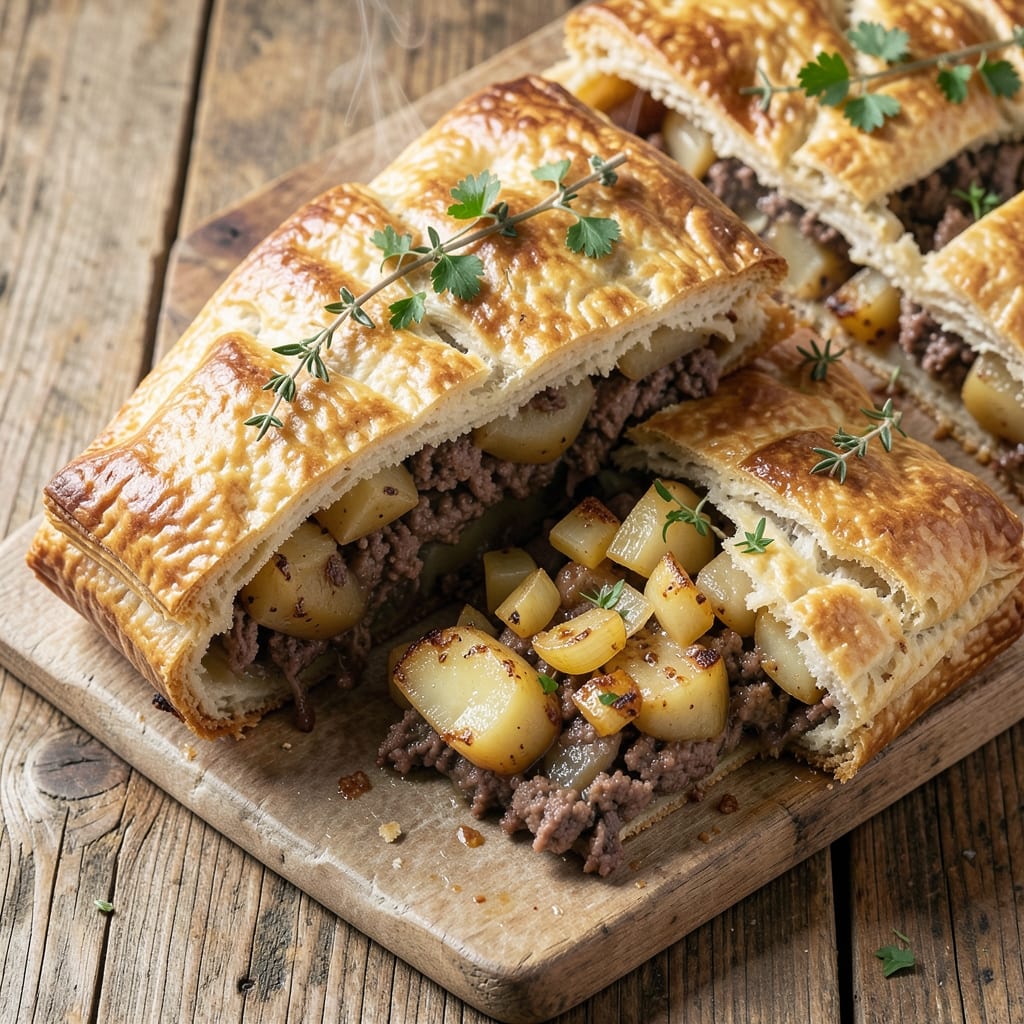
This beef and potato pasty recipe delivers the ultimate comfort food experience with a flaky crust that encases rich, savory filling in every bite. The secret lies in a well-balanced ratio of suet pastry to hearty ingredients—ground beef, tender potatoes, and aromatic herbs—that create a dish as satisfying as it is traditional. I’ve perfected this recipe through years of testing, ensuring the crust remains crisp while the filling stays juicy and flavorful.
The beauty of a pasty is its simplicity combined with impressive results. You’ll start with a classic suet pastry that’s rolled out and folded into a sturdy, golden-brown wrapper, while the filling—seasoned beef, diced potatoes, and onions—cooks perfectly inside. Baking at a precise temperature ensures the crust stays flaky without becoming tough, and the filling develops deep, savory flavors that make every bite irresistible.
What sets this recipe apart is the balance of textures and flavors: the flaky crust contrasts beautifully with the tender, savory filling, while the herbs and spices add layers of complexity. Whether you’re serving it as a main dish or bringing it to a picnic, this pasty is hearty enough to feed a crowd and delicious enough to impress even the most discerning eaters.
Ready to master this classic? The process is straightforward, but the results are anything but ordinary. Let’s get started on creating a pasty that’s as much a feast for the eyes as it is for the palate.
Ingredients for beef and potato pasty
Six hearty ingredients transform into a rustic pasty with perfect flaky crust and savory filling.
| Ingredient | Amount | Notes |
|---|---|---|
| Suet Pastry (Store-Bought) 🍞 | 1 lb | Pre-made suet pastry for flaky crust |
| Ground Beef (80/20) 🥩 | 1 ½ lb | Lean-to-fat ratio for juiciness |
| Russet Potatoes 🥔 | 3 lb | Diced into 1/2-inch pieces |
| Yellow Onion 🧅 | 1 whole | Diced into 1/4-inch pieces |
| Fresh Parsley 🌿 | ¼ cup | Chopped, for freshness |
| Fresh Thyme 🌿 | 1 tbsp | Chopped leaves only |
| Salt 🧂 | 1 ½ tsp | Diamond Crystal preferred |
| Black Pepper 🌶️ | 1 tsp | Freshly ground for best flavor |
| Garlic Powder 🧄 | 1 tsp | For subtle garlic flavor |
| All-Purpose Flour 🌾 | ½ cup | For dusting work surface |
| Butter (Unsalted) 🧈 | 2 tbsp | Melted for brushing crust |
| Beef Stock 💧 | ½ cup | For extra moisture |
The suet pastry is non-negotiable for that signature flaky texture. Most grocery stores carry pre-made suet pastry in the refrigerated section, but Whole Foods and Trader Joe's have excellent options. If you can't find it, Icelandic pastry sheets work as a substitute. The ground beef should be 80/20 fat ratio—this keeps the filling juicy during baking. For the potatoes, Russets are ideal because they hold their shape while cooking. If you're using leftovers, peel and dice them uniformly for even cooking. The onions should be yellow for sweetness, but red onions add a nice bite if you prefer.
No fresh parsley? Dried parsley at half the amount works in a pinch, but fresh is worth the effort. The thyme can be swapped for dried thyme at one-third the quantity, but fresh leaves infuse better flavor. Running short on beef stock? Chicken stock or even water will work, though the flavor will be slightly different. For the crust, butter brushing is key—use unsalted butter to control seasoning. The Diamond Crystal salt is preferred because it dissolves more easily, but any kosher salt works. If you're feeling adventurous, add a pinch of smoked paprika to the filling for depth.
Store the suet pastry in the fridge until ready to use—it keeps for up to 2 weeks. The filling can be prepped ahead and refrigerated for 2 days before baking. For best results, assemble the pasty and refrigerate it overnight—this helps the crust stay crisp. Leftovers keep for 3 days in the fridge or 3 months in the freezer. To reheat, bake at 375°F (190°C) for 15-20 minutes until heated through. The crust reheats beautifully, almost as good as fresh!
Why You'll Love This Recipe
- No-Fuss Filling: I swear by the 80/20 ground beef here—juicy, flavorful, and forgiving. The onions caramelize while you roll the pastry, so you’re not stuck babysitting a pot.
- Crispy-Creamy Magic: That suet crust gets golden and flaky while the potatoes inside melt into buttery perfection. Honestly, the contrast is what makes it—simple ingredients, but the texture? Chef’s kiss.
- Lunchbox Hero: Between us, these are my go-to for meal prep. Wrap them in foil, toss in a cooler, and they stay warm and intact. My kids eat them cold the next day—no complaints.
- Budget Powerhouse: A pound of beef, a few potatoes, and store-bought pastry stretch to feed four for under $15. Leftovers? Even better reheated the next day—crust stays crisp, filling stays hearty.
Step-by-step instructions for beef and potato pasty
Here's how to create a traditional pasty with a golden, flaky crust and hearty filling.
Prepare the Filling Ingredients
In a large bowl, combine the 1.5 lb ground beef (80/20) with the 3 lb diced russet potatoes, 1 whole yellow onion (diced into ¼-inch pieces), 0.25 cup chopped fresh parsley, and 1 tbsp chopped fresh thyme. Season generously with 1.5 tsp salt, 1 tsp black pepper, and 1 tsp garlic powder. Mix thoroughly with your hands to ensure even distribution of seasonings.
This step is crucial for flavor development. The potatoes should absorb the seasonings completely, and the onions should soften slightly as they sit. If the mixture feels too dry, add 0.5 cup beef stock gradually until it reaches a moist but not soupy consistency—this ensures a tender filling when baked.
Shape and Assemble the Pasty
Roll out the 1 lb store-bought suet pastry on a lightly floured surface (use the 0.5 cup all-purpose flour) to form a large rectangle about 12x16 inches. Dust the surface with additional flour to prevent sticking. Spread the prepared filling evenly across the center, leaving a 2-inch border around the edges. This border will help seal the pasty securely.
Fold the long sides of the pastry inward first, then fold the short sides inward to create a rectangular package. Press the edges firmly to seal, using a bit of water if needed to create a good seal. The goal is to create a tight, airtight package—this prevents the filling from leaking during baking and ensures the crust stays flaky.
Score and Bake for Flaky Crust
Place the assembled pasty seam-side down on a parchment-lined baking sheet. Using a sharp knife, score the top in a decorative pattern—this helps steam escape and prevents the pastry from bursting. Brush the top generously with melted 2 tbsp unsalted butter for extra richness and color.
Preheat your oven to 400°F. Bake the pasty for 45-50 minutes until the crust is deep golden brown and the filling is bubbling through the slits. The internal temperature of the filling should reach 160°F—this ensures the potatoes are tender and the beef is fully cooked. If the crust starts browning too quickly, tent with foil to prevent burning while the filling finishes cooking.
Rest and Serve
Remove the pasty from the oven and let it rest for 10 minutes before cutting. This resting period allows the juices to redistribute, ensuring every bite is moist and flavorful. Use a sharp knife to cut through the scored pattern, revealing the steaming hot filling inside.
Serve the pasty warm, straight from the oven. The contrast between the crisp, flaky crust and the tender, savory filling makes this dish truly special. For best results, serve immediately while the crust is still crisp and the filling is hot—this is when the pasty shines brightest.
Pro Tips For Making Beef And Potato Pasty
- PARBOIL POTATOES FIRST: Russet potatoes take forever to soften inside a pasty. Cut them into ½-inch cubes, boil in salted water for 8–10 minutes until just tender, then drain and pat thoroughly—this keeps the filling from turning to glue and ensures the crust stays crisp. (Yes, even if you’re impatient like me, don’t skip this.)
- SEAR THE BEEF HARD: The 80/20 ground beef needs a proper sear in a cold pan—start with medium heat, break it up with a spoon, and let it brown slowly for 5–6 minutes. Rushing this step means the filling stays greasy and the flavor gets lost in the pastry. (I learned this the hard way after a pasty that tasted more like beef fat than beef.)
- VENT THE PASTRY: Slash the suet pastry in a crosshatch pattern before baking—this isn’t just for looks. It lets steam escape, preventing a soggy bottom and helping the crust crisp up faster. (Does it look weird? Yes. Does it work? Every single time.)
- UPGRADE WITH A SPLASH: After mixing the filling, stir in 1–2 tablespoons of cold milk or beef stock. This keeps the suet pastry from drying out during baking and adds a subtle richness that store-bought suet alone can’t match. (I skip this when I’m lazy, but the dish is noticeably better when I don’t.)
Dietary considerations for this beef and potato pasty
Gluten-Free Adaptations
For a gluten-free pasty, swap the suet pastry for a gluten-free puff pastry like Schär or Trader Joe’s brand. These alternatives mimic the flaky texture while avoiding gluten. Roll out the pastry as directed, but handle it gently to prevent cracking. The filling remains the same, so the flavor stays rich and hearty. 🌾
Dairy-Free Options
To make this pasty dairy-free, use a vegetable-based suet pastry (check Whole Foods or King Arthur Flour for plant-based options). Replace the butter with olive oil or coconut oil for brushing the crust. The filling stays the same, ensuring the savory flavors remain intact without dairy.
Vegetarian Twist
Turn this into a vegetarian pasty by replacing the ground beef with lentils or mushrooms. Use 1.5 cups cooked lentils or 1 lb finely chopped mushrooms sautéed with onions. Boost umami with 1 tbsp soy sauce or 1 tsp nutritional yeast. The potatoes and herbs keep the dish hearty and satisfying.
Lower-Carb Version
For a lower-carb pasty, reduce the potatoes to 1.5 lb and add 1 cup cauliflower rice to the filling. Use a low-carb pastry crust like Mission Carb Balance or almond flour-based dough. The filling stays flavorful, but with fewer carbs, making it a great option for keto or low-carb diets.
Allergen-Friendly Tips
If you have egg allergies, check your suet pastry for egg content—some brands include it. Opt for egg-free suet pastry or make your own with vegetable shortening and gluten-free flour. For nut allergies, avoid almond flour-based crusts and stick to certified gluten-free options. Always double-check labels to keep your pasty safe and delicious. 💡
Nutrition facts
Frequently asked questions
Can I make this pasty ahead of time?
Assemble the pasty and refrigerate it overnight—this helps the crust stay crisp. For best results, bake it straight from the fridge at 400°F (200°C) for 5-10 minutes longer to account for the cold start. Leftovers keep for 3 days in the fridge or 3 months in the freezer. Thaw overnight in the fridge before reheating.
Why is my pasty crust soggy instead of flaky?
Soggy crusts usually happen when steam gets trapped inside. Ensure your pastry is properly sealed, and score the top before baking to let steam escape. Also, avoid overfilling—leave that 2-inch border around the edges. If the filling is too wet, add 1-2 tbsp flour to absorb excess moisture before assembling.
Can I use frozen potatoes in this recipe?
Yes, but thaw and dry them first to prevent a watery filling. Pat frozen potatoes with a paper towel after thawing, then dice them as directed. This step mimics fresh potatoes by reducing excess moisture. If using frozen, add 2-3 extra minutes to the baking time to ensure the filling is fully cooked.
What’s the best way to reheat a pasty?
For crispy results, bake at 375°F (190°C) for 15-20 minutes, covered with foil to prevent drying. Microwaving works in a pinch, but wrap the pasty in a damp paper towel and heat for 1-2 minutes to retain moisture. Avoid reheating from frozen—thaw first for even heating.
Can I make individual pasties instead of one large one?
Divide the filling into 6 equal portions and shape the pastry into 6-inch squares. Fold each into a small package, seal tightly, and bake at 400°F (200°C) for 30-35 minutes. Perfect for portion control or serving at gatherings!