Soups & Stews
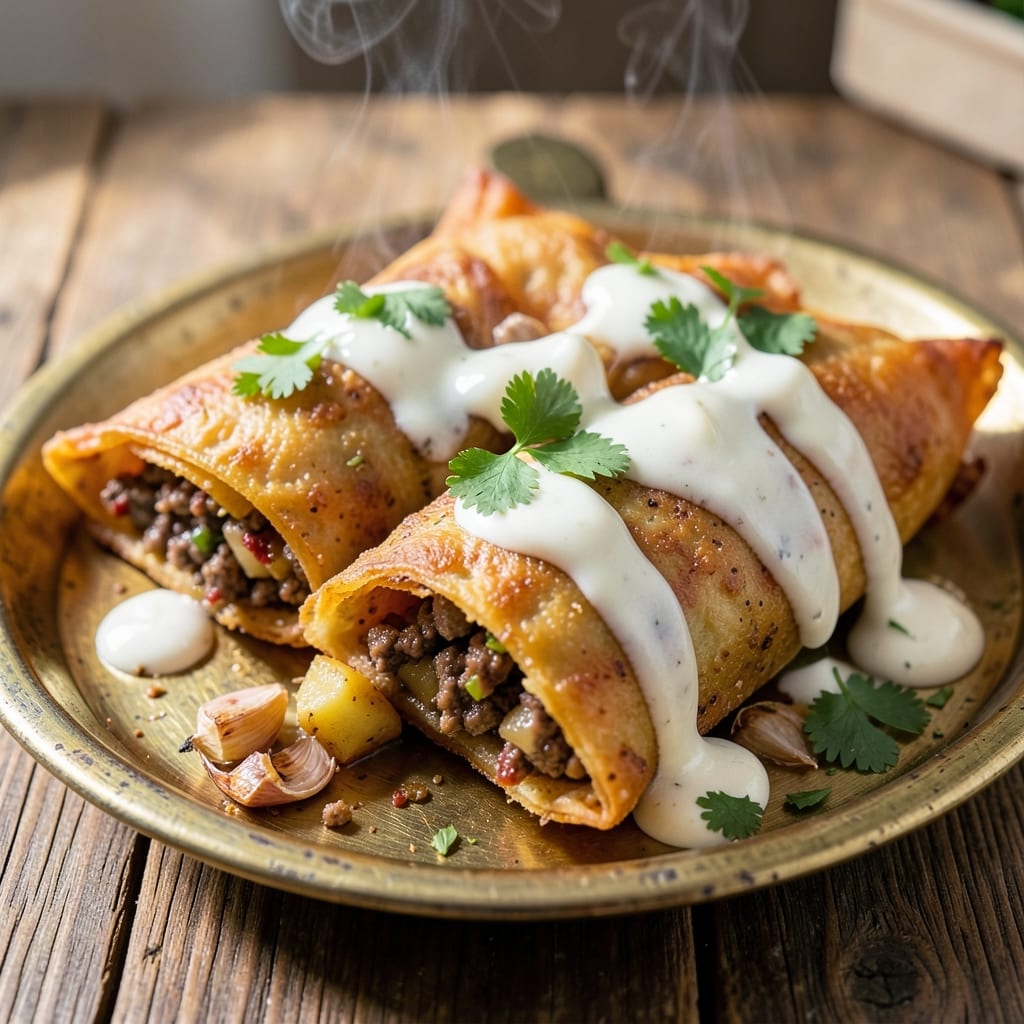
This beef and potato samosa recipe delivers the perfect balance of crispy golden layers and aromatic spiced filling that makes every bite unforgettable. The secret lies in a flaky, paper-thin dough that encases tender beef and potatoes seasoned with warm South Asian spices like cumin, coriander, and garam masala. After perfecting this over countless batches, I can confidently say these samosas rival any street vendor's—without the oil splatter.
The filling is where the magic happens: ground beef and diced potatoes simmered until tender, then infused with a blend of spices that create layers of flavor. The dough, made with simple ingredients like flour, ghee, and a touch of yogurt, gets rolled paper-thin for that signature crispiness. This isn't just a recipe—it's a technique that transforms ordinary ingredients into something extraordinary.
What you'll end up with is a plate of golden-brown samosas that shatter at the edges while staying tender inside, filled with juicy beef and potatoes bursting with spice. The aroma alone will have everyone gathering around the table. Each bite delivers that perfect harmony of textures—crispy, flaky, and satisfying—all while keeping the traditional flavors that make samosas so beloved.
Serve these with tamarind chutney or mint yogurt sauce for the full experience, or enjoy them as a standalone snack. The best part? They freeze beautifully, so you can make a batch ahead for whenever cravings strike. Let's get started on creating these crispy, flavor-packed delights.
Ingredients for beef and potato samosa
Twelve ingredients transform into golden, crispy samosas with layers of spiced beef and potatoes.
| Ingredient | Amount | Notes |
|---|---|---|
| Ground Beef (73% lean) 🥩 | 2 lbs | Finely ground for even cooking |
| Russet Potatoes 🥔 | 4 medium | Diced into small even pieces |
| All-Purpose Flour 🌾 | 4 cups | For dough, sifted for lightness |
| Ghee 🧈 | ½ cup | Clarified butter for flakiness |
| Plain Yogurt 🥛 | ½ cup | Whisked smooth for dough |
| Garlic Cloves 🧄 | 6 cloves | Minced for filling spice blend |
| Ginger Root 🌿 | 1 inch | Freshly grated for zing |
| Green Chilies 🌶️ | 3 whole | Finely chopped for heat |
| Ground Cumin 🌿 | 2 tsp | Toasted for deeper aroma |
| Ground Coriander 🌿 | 1 ½ tsp | Freshly ground preferred |
| Garam Masala 🌶️ | 1 ½ tsp | Store-bought blend works fine |
| Turmeric Powder 🧂 | ½ tsp | For vibrant color |
| Salt 🧂 | 1 ½ tsp | Adjust to taste |
| Lemon Juice 🍋 | 1 tbsp | Freshly squeezed for brightness |
| Vegetable Oil 🫒 | 1 ½ cups | For frying, high smoke point |
| Fresh Cilantro 🌿 | ¼ cup | Chopped for garnish |
The ground beef is non-negotiable here—73% lean gives you that perfect juicy texture without turning greasy. Costco or Walmart usually have the best prices for bulk packs, but any grocery store will do. For the potatoes, Russets are ideal—they hold their shape when diced and don't turn mushy. If you can't find them, Yukon Golds work in a pinch, but they'll be slightly creamier. The ghee is where the magic happens for that signature flaky dough—don't substitute with butter (it'll burn), and Patel Brothers or Whole Foods sell it in bulk if you need more than a jar.
No ghee? Melted coconut oil or vegan butter works in a bind, though the flavor won't be identical. Running short on yogurt? Plain Greek yogurt at half the amount adds extra protein, but regular yogurt keeps the traditional texture. The spices are where you can get creative—Penzeys has amazing whole spices if you want to toast and grind your own garam masala, but the jarred stuff from Indian grocery stores is usually just as good. For heat, serrano peppers can replace green chilies if you like it spicier. And if you're making a big batch, double the dough ingredients—they freeze beautifully for up to 3 months.
The dough needs to rest for 30 minutes before rolling—don't skip this. Wrap it tightly in plastic and refrigerate between uses. The filling keeps 2 days in the fridge, but the dough is best used fresh. For frying, maintain oil at 350°F—too hot and they'll burn before crisping. Deep-fryer thermometers from Amazon are a game-changer if you don't want to guess. Leftover samosas? Reheat in a 350°F oven for 10 minutes to restore crispiness—microwaving turns them soggy.
Why You'll Love This Recipe
- No Fuss Filling: The potatoes and beef cook down into a ridiculously tender mash—no peeling, no dicing, just boil, mash, and mix. Honestly, the hardest part is waiting for the dough to rest.
- Crispy-Creamy Magic: That ghee-fried dough? Chef’s kiss. The flaky layers give way to the spiced beef and potato filling, where the yogurt keeps it juicy instead of dry. (Yes, even on a Tuesday night.)
- Leftover Hero: Doubles easily—freeze half the dough, reheat the filling, and you’ve got a fresh batch in 15 minutes. My lazy Sundays thank me every time.
- Budget-Friendly Powerhouse: Ground beef and russets stretch far, and flour/ghee are pantry staples. I make a dozen for under $10, and no one guesses how cheaply I fed them.
Step-by-step instructions for beef and potato samosa
Here's how to craft golden, shatteringly crisp samosas with a flavorful beef-potato filling that'll have everyone begging for seconds.
Prepare the Spiced Filling
In a large skillet, heat 1 tablespoon of the vegetable oil over medium heat. Add the 2 lbs ground beef (73% lean) and cook until it loses its raw color and begins to brown, breaking it apart with a wooden spoon. This should take about 5-7 minutes—don't rush it, as proper browning builds deep flavor.
Push the beef to one side of the pan and add the remaining 1 tablespoon vegetable oil. Toss in the 6 minced garlic cloves, 1 inch freshly grated ginger root, and 3 finely chopped green chilies. Sauté for 1-2 minutes until the garlic turns golden and the raw aroma disappears. Here's the thing—if the garlic burns, you'll taste it, so keep an eye on it.
Add the 4 medium diced russet potatoes and cook for 5 minutes, stirring occasionally, until they begin to soften. Sprinkle in the 2 tsp ground cumin, 1.5 tsp ground coriander, 1.5 tsp garam masala, 0.5 tsp turmeric powder, and 1.5 tsp salt. Stir well to coat everything evenly, then pour in 1 tbsp lemon juice and cook for another 3-4 minutes until the potatoes are tender and the filling has thickened slightly.
Remove from heat and let the filling cool completely before assembling. This resting period allows the flavors to meld and prevents the dough from getting soggy when you fry the samosas later. If the filling seems dry, add 1-2 tablespoons water to maintain moisture.
Make the Samosa Dough
In a large mixing bowl, combine the 4 cups all-purpose flour, 0.5 cup ghee, and 0.5 cup plain yogurt. Using your fingers or a fork, gently mix until the ingredients come together to form a crumbly dough. Here's where it gets fun—add 2-3 tablespoons cold water, one at a time, until the dough just holds together when pressed.
Turn the dough onto a clean surface and knead for about 5 minutes until smooth and elastic. Wrap it tightly in plastic wrap and let it rest for 30 minutes at room temperature. This resting period relaxes the gluten, making the dough easier to roll out and preventing cracks when frying. If the dough feels sticky, chill it for another 10 minutes before proceeding.
Assemble and Shape the Samosas
Divide the rested dough into 12 equal portions (about 1.5 ounces each) and roll each into a ball. Using a rolling pin, roll each ball into a 6-inch circle, about 1/8-inch thick. I like to use a template or a large plate to ensure even circles—this consistency is key for even cooking.
Place 2 tablespoons of the cooled beef-potato filling near one edge of each dough circle. Fold the dough over the filling to form a half-moon shape, then seal the edges by pinching tightly with your fingers. Press down firmly along the sealed edge to create a strong barrier that keeps the filling inside during frying. If the dough cracks, patch it with a small piece of dough—no one will notice!
Fry to Crispy Perfection
Heat 1.5 cups vegetable oil in a deep, heavy pot over medium heat until it reaches 350°F on a deep-fry thermometer. If you don't have one, test the oil by dropping in a small piece of dough—it's ready when it sizzles and rises to the surface within 5 seconds. Here's the critical part: don't overcrowd the pot. Fry 3-4 samosas at a time to maintain the oil temperature.
Carefully lower the samosas into the hot oil using a slotted spoon or tongs. Fry for 3-4 minutes until they turn a deep golden brown color. You'll know they're done when they float to the surface and the dough is crispy all over. If they brown too quickly, reduce the heat slightly—you want even cooking without burning. Drain on a wire rack or paper towels to remove excess oil.
Serve Warm and Fresh
Let the fried samosas cool for 2-3 minutes before serving—this prevents the filling from oozing out when you cut into them. Garnish with 0.25 cup chopped fresh cilantro for a pop of color and freshness. Serve immediately with mint chutney or tamarind sauce for dipping, as the crispiness softens quickly once removed from the oil.
For the best experience, cut into each samosa with a sharp knife and watch as the golden layers give way to reveal the aromatic beef and potato filling. The contrast of crispy, flaky dough with the warm, spiced filling is what makes these samosas irresistible. Enjoy while they're still hot—this is where the magic happens!
Pro Tips For Making Beef And Potato Samosa
- Boil Potatoes Until Tender: I learned this the hard way—overcooked potatoes turn to mush in the filling. Cut Russets into ½-inch chunks, boil until you can pierce them with a fork but they still hold shape (about 8-10 minutes). Drain and cool completely before mashing—warm potatoes steam the filling and make it soggy.
- Sear Beef on High Heat: This isn’t the prettiest method, but it’s the tastiest. Use a nonstick skillet and cook the ground beef in batches over medium-high heat until it’s deeply browned, not just cooked through. Break it up with a wooden spoon as it cooks—this builds flavor and prevents a dense filling.
- Chill the Dough Before Rolling: Skip the warm dough trap. Shape your flour-ghee-yogurt dough into a disk, wrap it in plastic, and refrigerate for at least 30 minutes. Cold dough rolls out evenly and doesn’t stick, which saves you from patching gaps that let filling leak during frying.
- Use Ghee for Frying: I was skeptical until I tried it—ghee’s high smoke point and rich flavor make all the difference. Heat about ½ inch of ghee in a heavy pot (not a skillet) and fry samosas in small batches. The ghee caramelizes slightly, giving the crust that golden, crisp texture you can’t get with neutral oil.
Dietary considerations for this beef and potato samosa
Gluten-Free Adaptations
For a gluten-free version, swap the all-purpose flour with a 1:1 gluten-free flour blend like Bob's Red Mill or King Arthur. Add ½ teaspoon xanthan gum to mimic dough elasticity. The dough will be slightly more delicate, so handle it gently when rolling—avoid stretching it too thin. 🌾
Vegetarian Swaps
Replace the 2 lbs ground beef with 2 cups crumbled paneer or 2 cups cooked lentils for a vegetarian option. For extra flavor, marinate paneer in 1 tbsp lemon juice + 1 tsp garam masala for 30 minutes before cooking. Lentils should be seasoned with the same spices as the original filling.
Dairy-Free Options
Skip the ghee in the dough and use ½ cup coconut oil instead—it adds a neutral flavor while keeping the dough flaky. For the filling, omit yogurt and replace with ½ cup coconut milk (reduced by simmering) to maintain moisture. The texture stays crispy, but the flavor becomes subtly richer.
Low-Fat Adjustments
Reduce the ghee to ¼ cup in the dough and use ½ cup unsweetened applesauce to replace some of the fat. For the filling, drain excess fat from the beef after browning. The samosas will still be crispy but with a lighter texture—perfect for health-conscious eaters.
Spice Level Control
For milder samosas, reduce green chilies to 1-2 or swap them for ½ tsp mild paprika. If you love heat, add ½ tsp cayenne pepper to the filling or serve with extra hot sauce on the side. The spice level is fully customizable to your preference!
Allergen-Friendly Tips
Check your garam masala for hidden gluten or dairy—some blends contain rice flour or ghee. For nut-free kitchens, ensure all spices are processed in nut-free facilities. If making ahead, store components separately to avoid cross-contamination with allergens.
Nutrition facts
Frequently asked questions
Can I make these samosas ahead of time?
The dough can be made 1 day ahead and stored wrapped in plastic in the fridge. The filling keeps for 2 days in the fridge. For best results, fry the samosas fresh, but you can assemble them (unfired) and refrigerate for 6 hours before frying. Pro tip: Freeze assembled samosas on a tray before bagging—they'll keep for 1 month and fry straight from frozen (add 1 minute to cooking time).
Why is my samosa dough cracking when I fry it?
Cracking usually happens when the dough is either too thin or not properly sealed. Roll your dough to 1/8-inch thickness max, and press the edges firmly when sealing. If the dough feels dry, add 1 tsp water while kneading. Another common issue is overcrowding the fryer—keep oil at 350°F and fry 3-4 samosas at a time only. Too much steam from overcrowding causes cracks.
What's the best way to reheat leftover samosas?
Never microwave them—they'll turn soggy! Instead, bake at 350°F for 8-10 minutes on a wire rack (not a plate) to restore crispiness. For extra crunch, broil for 1-2 minutes at the end. If reheating from frozen, add 2 extra minutes to the baking time. The filling stays warm while the dough re-crispens perfectly.
Can I use store-bought puff pastry instead of homemade dough?
Yes, but the texture will differ. Use 1 sheet of frozen puff pastry thawed and cut into triangles. Fill with 1 tbsp filling per triangle, fold, and seal. Fry at 375°F for 2-3 minutes—puff pastry browns faster. The result will be less flaky but still delicious. For authenticity, stick with the homemade dough though!
How do I make these samosas spicier?
Boost the heat by adding ½ tsp cayenne pepper or 1 extra green chili to the filling. For smoky depth, toast ½ tsp smoked paprika with the cumin. Serve with hot tamarind chutney or green chili sauce on the side. The dough itself shouldn't be spicy—all the heat comes from the filling.