
Soups & Stews
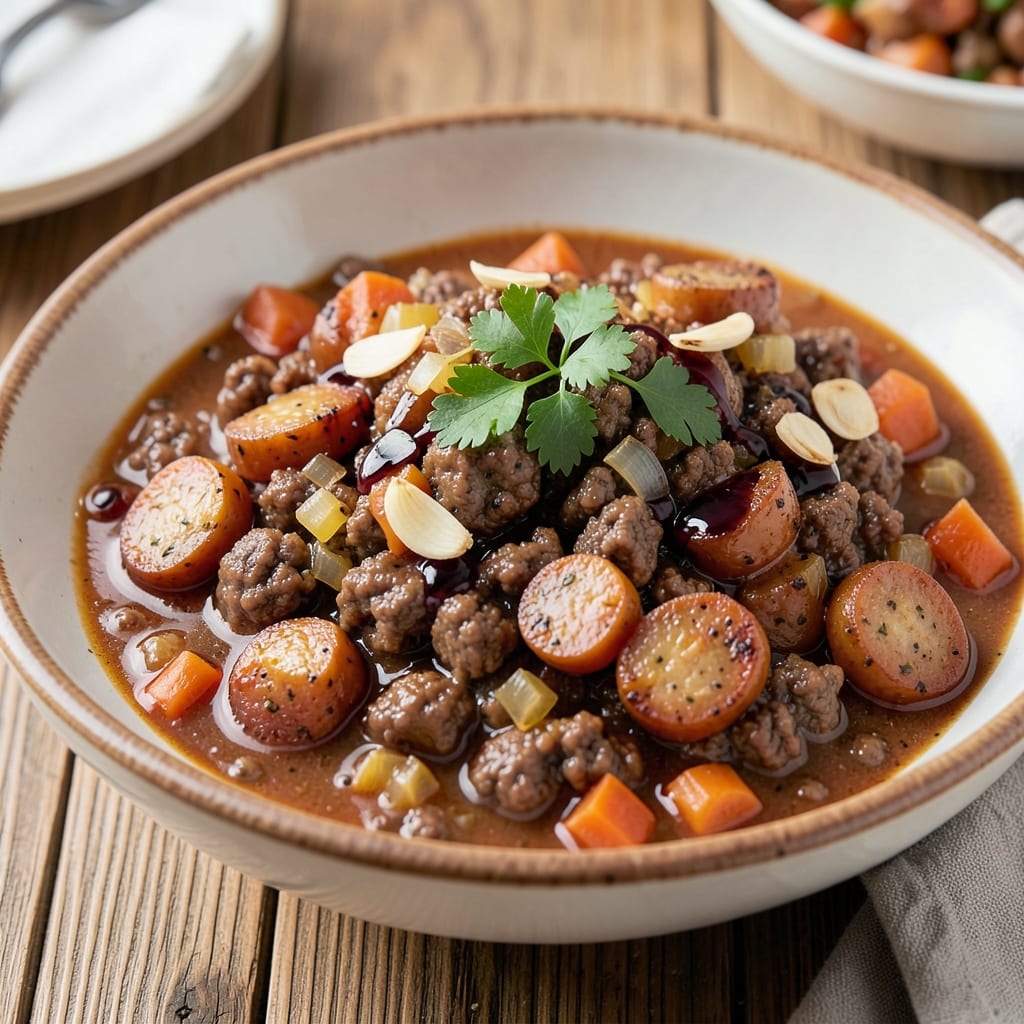
This beef and sausage bolognese recipe transforms humble pantry ingredients into a restaurant-worthy simmer that builds layers of umami and tomato depth over hours. The secret lies in slow-cooked meat—ground beef and Italian sausage—that develops rich, caramelized flavors while absorbing aromatic herbs and a carefully reduced tomato base. I've perfected this version to balance traditional techniques with modern convenience, whether you're using a Dutch oven on the stove or the slow-cooker method for hands-off cooking.
The process begins with searing the meat to deepen its flavor before deglazing the pan with wine, a technique that forms the foundation of the sauce. As it simmers, the meat releases juices that meld with crushed tomatoes, garlic, and fresh herbs, creating a sauce that clings to pasta like a second skin. The sausage adds a subtle heat and fat content that rounds out the dish, while a touch of red wine and Parmesan elevate it from ordinary to extraordinary.
What you'll end up with is a bolognese so deeply flavorful it transforms simple pasta into a hearty, comforting meal that tastes even better the next day. The sauce is velvety yet robust, with just enough acidity from the tomatoes to cut through the richness of the meat. This recipe delivers the kind of depth that makes weeknight dinners feel like an Italian trattoria experience.
Serve it over al dente pappardelle or tagliatelle, garnished with fresh basil and extra Parmesan, for a dish that's both impressive and satisfying. The beauty of this recipe is its versatility—it works equally well as a weeknight staple or a showstopper for dinner guests. Here's how to make it perfectly every time.
Ingredients for beef and sausage bolognese
These rich, meaty ingredients create a bolognese so deeply flavorful it transforms simple pasta into an Italian trattoria experience.
| Ingredient | Amount | Notes |
|---|---|---|
| Ground Beef 🥩 | 1 ½ lb | 80% lean for best flavor |
| Italian Sausage 🌭 | 1 lb | Sweet or spicy, casings removed |
| Yellow Onion 🧅 | 1 whole | Medium-sized, finely chopped |
| Carrot 🥕 | 1 whole | Medium-sized, finely diced |
| Garlic Cloves 🧄 | 4 cloves | Freshly minced for aroma |
| Red Wine 🍷 | ½ cup | Bold dry variety like Cabernet |
| Crushed Tomatoes 🍅 | 2 cups | San Marzano preferred |
| Tomato Paste 🍅 | 2 tbsp | High-quality, no sugar added |
| Dried Oregano 🌿 | 1 tsp | Italian variety preferred |
| Dried Basil 🌿 | 1 tsp | Or 0.25 cup fresh basil |
| Ground Black Pepper 🌶️ | ½ tsp | Freshly cracked preferred |
| Kosher Salt 🧂 | 1 ½ tsp | Diamond Crystal preferred |
| Extra-Virgin Olive Oil 🫒 | 2 tbsp | For searing and finishing |
| Parmesan Cheese 🧀 | ½ cup | Freshly grated from block |
| Fresh Basil Leaves 🌿 | ¼ cup | For garnish, torn by hand |
The meat is the foundation—ground beef should be 80% lean for that perfect balance of flavor and fat. Italian sausage adds depth, and I always grab sweet or spicy from the deli counter at Whole Foods or Costco for the best quality. Look for bright red meat with visible fat marbling. The onions and carrots are your aromatic base, so don't skip chopping them finely. Trader Joe's has pre-diced sets that save time, but fresh is always better. For the tomatoes, San Marzano cans make all the difference—they're sweeter and less acidic, which is key for this rich sauce.
No red wine? Dry white wine or beef broth works in a pinch, but the depth of red is ideal. Fresh basil is best, but dried basil at one-third the amount gets you close. The tomato paste is non-negotiable—no sugar added versions keep the sauce from tasting overly sweet. If you're using pre-minced garlic, toast it first in olive oil for 30 seconds to deepen the flavor. The Parmesan should be freshly grated from a wedge—pre-grated gets clumpy and lacks the same punch. For the sausage, remove the casings before cooking to distribute the flavor evenly throughout the sauce.
This sauce tastes even better the next day as flavors meld. Store leftovers in an airtight container in the fridge for up to 5 days, or freeze for 3 months. I always make a double batch—one for dinner and one to freeze for lazy weeknights. The pasta? Pappardelle or tagliatelle works best, but any wide noodle holds the sauce beautifully. Garnish with fresh basil and extra Parmesan right before serving—that last-minute touch makes all the difference.
Why You'll Love This Recipe
- One-Pot Magic: I swear by this recipe—just toss everything in one pot, stir, and walk away. The onions and carrots soften while the sausage renders its own fat, so you’re not left with a greasy mess or a sink full of dishes.
- Umami Bomb: Between the rich, herby Italian sausage and the deep caramelized garlic, this isn’t just bolognese—it’s flavor. The ground beef stays juicy, and the carrots add a subtle sweetness that balances everything perfectly.
- Leftover Heaven: This recipe doubles (or triples) beautifully, and the flavors only get better the next day. I freeze half for lazy nights, and it reheats like it was just made—no dry, sad pasta here.
- Budget Win: Ground beef and bulk sausage stretch this into a full meal without breaking the bank. Honestly, I make it when I’m pinching pennies, and no one ever guesses it’s not a fancy restaurant dish.
Step-by-step instructions for beef and sausage bolognese
This rich meat sauce delivers deep umami flavor through proper technique and patience.
Sear the Meat for Maximum Flavor
Heat a large Dutch oven over medium-high heat until hot. Add 1 tablespoon of the extra-virgin olive oil and swirl to coat the bottom. Add the 1.5 lb ground beef and cook, breaking it apart with a wooden spoon, until it loses its raw color and begins to brown—about 5-6 minutes. This step develops deep meaty flavor through the Maillard reaction.
Push the beef to one side of the pan and add the remaining 1 tablespoon olive oil. Add the 1 lb Italian sausage and cook until browned and crumbly, about 4-5 minutes. Combine both meats and remove from the pot, setting aside. You want the meat to be well-browned but not charred—this ensures rich flavor without bitterness.
Sauté the Aromatics
In the same Dutch oven, reduce heat to medium and add the finely chopped 1 whole yellow onion and 1 whole carrot. Cook for 5-6 minutes until softened and beginning to caramelize. This step builds sweetness and depth in the sauce.
Add the 4 cloves minced garlic cloves and cook for 30 seconds until fragrant. Be careful not to burn the garlic—it should smell sweet and pungent, not bitter. Stir constantly to prevent browning. The garlic will mellow as the sauce simmers, but this initial aroma is crucial for flavor development.
Deglaze and Build the Sauce Base
Pour in the 0.5 cup red wine and scrape up any browned bits from the bottom of the pot with a wooden spoon. This deglazing step captures all the meaty flavor that would otherwise stick to the pan. Let the wine simmer for 2-3 minutes until reduced by half.
Add the 2 tbsp tomato paste, 2 cups crushed tomatoes, 1.5 tsp kosher salt, 0.5 tsp ground black pepper, 1 tsp dried oregano, and 1 tsp dried basil. Stir well to combine all ingredients thoroughly. The tomato paste will help thicken the sauce naturally as it simmers.
Simmer for Deep Flavor Development
Return the browned meat mixture to the pot and stir to combine. Bring to a gentle simmer over low heat—the sauce should bubble softly but not vigorously. Partially cover the pot and let it cook for 45-60 minutes, stirring occasionally. This long simmering time is crucial for developing the sauce's rich, complex flavors.
Check the sauce periodically and add 2-3 tablespoons of water if it becomes too thick. The sauce should coat the back of a spoon but still be spoonable. You want it to be thick enough to cling to pasta but still have a silky texture. The longer it simmers, the deeper the flavors will become.
Finish and Serve
Once the sauce has reached your desired consistency and flavor depth, remove it from heat. Stir in the 0.5 cup freshly grated Parmesan cheese until melted and smooth. Taste and adjust seasoning with additional kosher salt or black pepper if needed.
Ladle the finished Bolognese over cooked pasta and garnish with 0.25 cup fresh basil leaves, torn by hand. Serve immediately while the sauce is still hot. The fresh basil adds a bright contrast to the rich, meaty sauce, balancing the flavors beautifully. This dish tastes even better the next day as the flavors continue to meld.
Pro Tips For Making Beef And Sausage Bolognese
- CRANK THE HEAT FIRST: Brown the meat fast—no simmering yet—on high heat until the beef and sausage lose their raw color and start crisping at the edges. I used to low-and-slow this part, and my bolognese ended up greasy instead of rich; high heat renders the fat properly before you even think about adding tomatoes.
- DICE THE CARROT SMALL: Cut the carrot into tiny, almost rice-sized pieces—no bigger than a pea. Big chunks stay tough and turn to mush; small pieces soften into the sauce and add natural sweetness without needing extra sugar. (Yes, even if the recipe says "chopped," it’s not the same.)
- DON’T SKIP THE SWEAT: Cook the onions and garlic until they’re translucent and the onions release their moisture, then let that evaporate completely before adding the meat. Wet ingredients in the pan will steam the meat instead of browning it, and you’ll end up with a watery sauce. (Trust me, your nose will know when it’s ready.)
- USE COLD MEAT: Take the ground beef and sausage out of the fridge 10 minutes before cooking, but don’t let them warm up—add them straight from the cold. Cold meat sears more evenly and doesn’t release fat all at once, so you avoid a greasy mess. (I learned this after one disastrous batch where the pan looked like a deep fryer.)
Best sauces and condiments for this dish
Classic Tomato Sauce
The foundation of any great bolognese is the San Marzano crushed tomatoes—their natural sweetness and low acidity create the perfect balance. I always start with 2 cups of these tomatoes, combined with 2 tablespoons of tomato paste for thickness. The key is to simmer this base uninterrupted for at least 45 minutes—this slow reduction concentrates the flavors and creates that velvety texture we all love. Don’t skip the red wine deglaze either; it adds depth that store-bought sauces can’t match. 🍷
Creamy Parmesan Finish
For that signature richness, stir in ½ cup freshly grated Parmesan at the end. I use a microplane to get fine, even shavings that melt smoothly into the sauce. The cheese adds a nutty umami that rounds out the dish, and it’s the perfect vehicle for extra flavor. Pro tip: If your sauce is too thick, loosen it with 1-2 tablespoons of pasta water—this keeps the texture silky without diluting the flavor. 🧀
Herb-Infused Olive Oil
Brighten the dish with 2 tablespoons of extra-virgin olive oil infused with 1 teaspoon dried oregano and ½ teaspoon dried basil. Heat the oil gently until fragrant, then swirl it into the finished sauce just before serving. This adds a fragrant, aromatic layer that cuts through the richness. For an extra touch, finish with ¼ cup fresh basil leaves torn by hand—it’s the freshest way to elevate the dish. ✨
Spicy Red Pepper Flakes
If you love a little heat, add ½ teaspoon crushed red pepper flakes during the simmering phase. The sausage already brings some spice, but this gives an extra kick that pairs beautifully with the meaty depth. For a smoky twist, swap in ½ teaspoon smoked paprika instead. Balance is key—start with a pinch and adjust to taste. 🌶️
Balsamic Glaze Drizzle
For a sophisticated touch, drizzle 1 tablespoon of high-quality balsamic glaze over the finished dish. The sweet-tart contrast enhances the umami flavors and adds a restaurant-quality finish. I like Giovanni Rossi or Colavita for their rich, balanced profiles. A few drops of white truffle oil also work wonders if you’re feeling fancy. 🍷
Garlic-Infused Broth Boost
For extra depth, infuse 1 cup of beef broth with 2 minced garlic cloves and 1 sprig of rosemary while the sauce simmers. Strain and add it back in during the final 10 minutes of cooking. This adds a subtle herbal complexity that makes the sauce even more layered. It’s a trick I picked up from Italian nonnas—small details make all the difference! 🌿
Nutrition facts
Frequently asked questions
Can I substitute ground turkey or chicken for the beef?
While you can use ground turkey or chicken, the flavor and texture will differ significantly. Beef provides the deep, rich umami that's essential for authentic Bolognese. If you must substitute, use 93% lean ground turkey and add 1 teaspoon of Worcestershire sauce to compensate for the lost flavor. Chicken will make the sauce lighter, but it won't have the same hearty quality.
How do I make this in a slow cooker?
Brown the meat in a skillet first, then transfer everything to your slow cooker. Cook on low for 6-7 hours or high for 3-4 hours, stirring occasionally. The slow cooker method is perfect for hands-off cooking and actually enhances the flavors. The sauce will be even more tender and deeply infused. Just add a splash of water if it gets too thick.
What's the best pasta to serve with this?
Wide, flat noodles work best as they hold the rich sauce beautifully. Pappardelle or tagliatelle are classic choices, but fettuccine or even rigatoni will work well too. Cook your pasta 1 minute less than package instructions—it will finish cooking in the hot sauce. Avoid thin noodles like spaghetti as they won't hold up to the hearty sauce.
Why did my sauce turn out too acidic?
This usually happens when using tomatoes that are too acidic or not reducing the sauce long enough. For better balance, use San Marzano tomatoes and simmer uncovered for at least 45 minutes. Add a pinch of sugar (½ teaspoon) if needed, but better yet, reduce longer to concentrate flavors. The wine also contributes acidity—if it's too sharp, use a drier variety like Cabernet.
Can I make this ahead of time?
This sauce tastes even better the next day as flavors meld. Store in an airtight container in the fridge for up to 5 days or freeze for 3 months. Reheat gently on the stove with a splash of water or broth. For serving, simply reheat and toss with freshly cooked pasta. The flavors will be more developed and harmonious.