
Soups & Stews
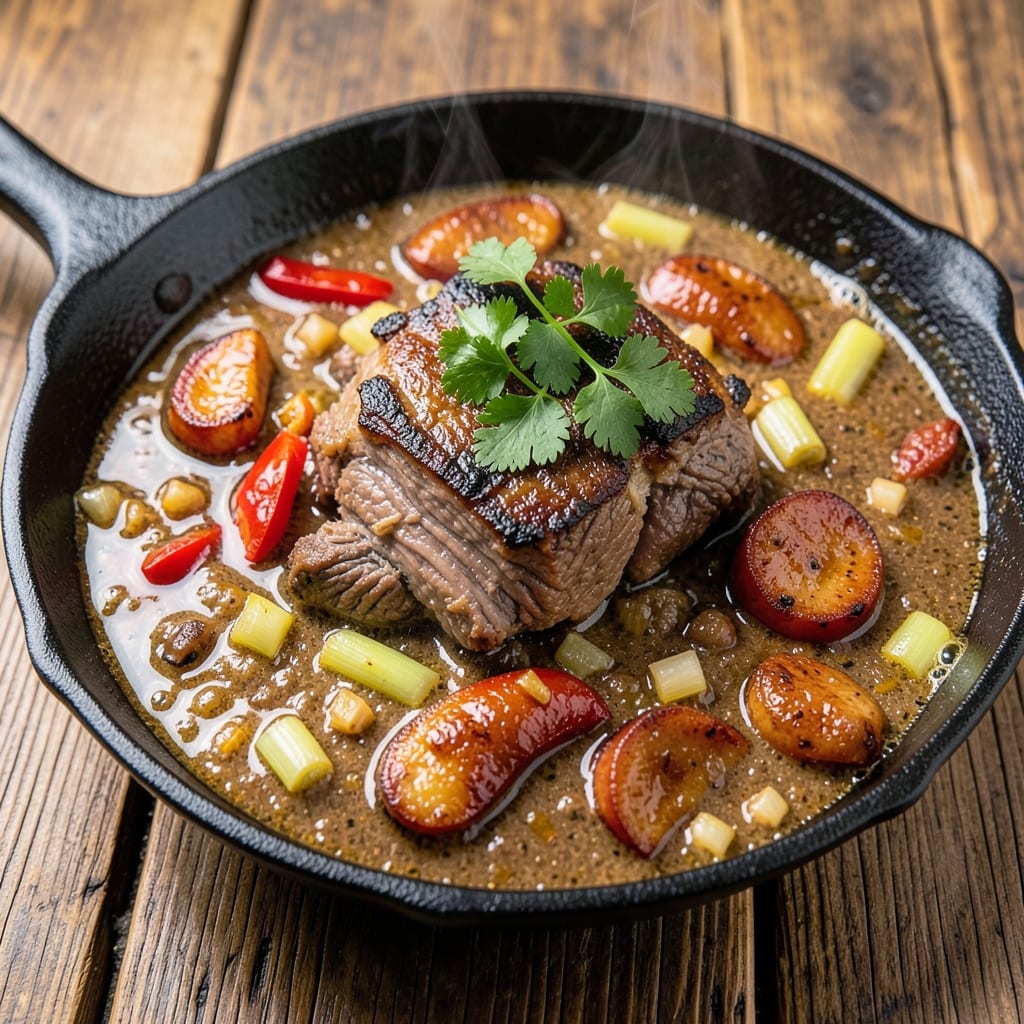
This beef and sausage gumbo recipe delivers the rich, smoky depth of Louisiana tradition in every spoonful. The foundation? A perfect dark roux that transforms simple ingredients into a velvety stew where flavors meld over hours of slow simmering. I've perfected this version after years of testing—balancing authentic techniques with modern shortcuts for home cooks.
The secret lies in the layers: crispy browned sausage and beef, the Holy Trinity of onions, bell peppers, and celery, and a roux so rich it carries every spice and herb. Whether you use okra or filé powder for thickening, this gumbo develops complex flavors that only improve with time. The key is patience—letting the roux cook until it reaches that perfect mahogany color before adding liquids.
What you'll end up with is a steaming bowl of gumbo where tender beef and smoky sausage float in a thick, flavorful broth. The aroma alone will have everyone gathered at your table, and each bite delivers that perfect balance of smoky, savory, and slightly spicy. This is comfort food at its finest—heartier than any restaurant version.
Serve it over buttery white rice with hot sauce on the side for those who crave extra heat. The leftovers taste even better the next day, making this the ultimate meal for feeding a crowd or prepping ahead. Let's get cooking with this classic recipe that brings Louisiana flavor to your kitchen.
Ingredients for beef and sausage gumbo
Rich, smoky flavors start with these 18 essential ingredients for a gumbo that tastes like Louisiana tradition.
| Ingredient | Amount | Notes |
|---|---|---|
| Beef Chuck Roast 🥩 | 2 lb | Cut into 1-inch cubes, boneless |
| Andouille Sausage 🌭 | 1 lb | Smoked, sliced into half-moons |
| Yellow Onion 🧅 | 2 whole | Medium-sized, diced |
| Green Bell Pepper 🌶️ | 1 whole | Medium, diced |
| Celery Stalk 🧅 | 3 whole | Medium, diced |
| All-Purpose Flour 🌾 | ½ cup | For dark roux |
| Vegetable Oil 🫒 | ½ cup | For roux cooking |
| Garlic Cloves 🧄 | 4 cloves | Minced for roux |
| Dried Thyme 🌿 | 1 tbsp | Or 1 tbsp fresh thyme |
| Dried Oregano 🌿 | 1 tbsp | Mexican oregano preferred |
| Smoked Paprika 🌶️ | 1 tbsp | For authentic smokiness |
| Ground Black Pepper 🌶️ | 1 tsp | Freshly ground |
| Salt 🧂 | 1 ½ tsp | Kosher salt, adjust to taste |
| Filé Powder 🌾 | 2 tbsp | Or 1 cup sliced okra |
| Chicken Broth 💧 | 6 cups | Low-sodium preferred |
| Tomato Paste 🍅 | 2 tbsp | For depth of flavor |
| Bay Leaves 🌿 | 2 whole | For aromatic depth |
| Hot Sauce 🌶️ | 2 tbsp | For serving, optional |
The roux is non-negotiable here. All-purpose flour and vegetable oil are your base—no shortcuts. For the best flavor, grab Andouille sausage from the meat counter (not the pre-packaged kind). Look for chuck roast with good marbling—it stays tender while the sausage adds smoky depth. The Holy Trinity (onion, bell pepper, celery) should be diced uniformly—Trader Joe's sells pre-chopped veggie mixes that save time. Fresh thyme and oregano make all the difference, but dried works in a pinch.
No filé powder? Fresh okra works just as well—just slice it thin. Running short on smoked paprika? Regular paprika plus a pinch of cayenne gets you close. The chicken broth can be homemade (better) or store-bought (still delicious). For the roux, stir constantly—this isn't the time to walk away. Want extra heat? Add Cajun seasoning (about 1 tbsp) to the roux. The tomato paste adds depth without overpowering—Rao's brand is my go-to for quality.
This gumbo tastes even better the next day—double the batch if you can. Store in airtight containers for 4-5 days or freeze for up to 3 months. The roux can be made ahead (up to 3 days) and refrigerated. For serving, keep hot sauce and white rice on hand. The filé powder or okra should be added just before serving—it thickens quickly.
Why You'll Love This Recipe
- One-Pot Magic: I swear by this recipe—just dump everything into a Dutch oven, let it simmer, and walk away. No fancy techniques, no last-minute shopping runs. The beef chuck roast practically melts into tender shreds while the andouille sausage adds smoky depth without extra effort.
- Smoky-Rich Depth: That first bite? Pure satisfaction. The andouille’s spiced, charred flavor cuts through the beef’s richness, while the bell pepper and celery add just enough freshness to balance it out. Honestly, the roux alone makes it worth it—deep, nutty, and impossible to resist.
- Leftover Goldmine: This gumbo tastes better the next day, and it keeps for ages in the fridge. I make a double batch on Sundays because it’s my go-to for lunches, potlucks, or even freezing for those nights when I don’t feel like cooking. (Yes, even on a Tuesday night.)
- Budget-Friendly Feast: A chuck roast and a pack of andouille stretch farther than you’d think, especially when paired with onions and peppers. It’s the kind of hearty, filling meal that makes grocery bills feel less painful—and leaves everyone at the table happy. My secret weapon for feeding a crowd without breaking the bank.
Step-by-step instructions for beef and sausage gumbo
This gumbo delivers rich, smoky depth through a perfect dark roux—here's how to build it layer by layer.
Build the Dark Roux Foundation
Heat the 0.5 cup vegetable oil in a large Dutch oven over medium-low heat. Add the 0.5 cup all-purpose flour and stir constantly with a wooden spoon. This is where patience pays off—you're making a dark roux that gives gumbo its soulful flavor.
Cook for 30-45 minutes, stirring every 3-5 minutes, until the roux reaches a deep chocolate-brown color. It should smell nutty and toasty, not burnt. If it starts to smoke excessively, lower the heat. This roux is your flavor anchor—don't rush it. The color should be like melted milk chocolate, not lighter than peanut butter.
Sauté the Holy Trinity
Once your roux is perfect, add the 2 whole diced yellow onion, 1 whole diced green bell pepper, and 3 whole diced celery stalks. Stir to coat everything in the roux and cook for 5-7 minutes until the vegetables soften slightly but still hold their shape.
This classic "holy trinity" of onion, pepper, and celery forms the aromatic base. You'll know it's ready when the vegetables release their moisture and the roux clings to them like a glossy coating. Keep the heat at medium-low—too high and you'll burn the vegetables before they soften properly.
Brown the Meat
Push the vegetables to one side of the Dutch oven and add the 2 lb beef chuck roast cut into 1-inch cubes and 1 lb andouille sausage sliced into half-moons. Cook until the beef is deep brown on all sides and the sausage is lightly charred in spots. This should take about 8-10 minutes total.
Don't crowd the pan—work in batches if needed. Browning develops meaty depth through the Maillard reaction. Once everything is nicely browned, stir to combine with the vegetables. The beef should be golden brown and the sausage should have crispy edges where it touches the pan.
Deglaze and Simmer
Add the 4 minced garlic cloves, 1 tbsp dried thyme, 1 tbsp dried oregano, 1 tbsp smoked paprika, 1.5 tsp salt, and 1 tsp ground black pepper. Stir for 1 minute until fragrant. Pour in the 6 cups chicken broth and 2 tbsp tomato paste, scraping up any browned bits from the bottom of the pot.
Bring to a gentle boil, then reduce heat to low and cover partially. Let it simmer for 1.5 hours, stirring occasionally. You want the beef to become fork-tender and the flavors to meld beautifully. The gumbo should reduce slightly but still have a saucy consistency. If it gets too thick, add a splash of water or broth.
Finish and Serve
Remove the 2 whole bay leaves and stir in the 2 tbsp filé powder just before serving. This thickening agent will create a slightly cloudy, velvety texture—add it slowly while stirring constantly to avoid clumping. Serve immediately with 2 tbsp hot sauce on the side for those who like extra heat.
Each bowl should deliver tender beef, smoky sausage, and a rich, dark roux that coats every bite. The gumbo will thicken as it sits, so serve it while it's still saucy and warm. This is the kind of gumbo that tastes even better the next day—just reheat gently and add a splash of broth if needed.
Pro Tips For Making Beef And Sausage Gumbo
- Sear the Chuck Roast First: I learned this the hard way—skipping the sear means flavorless beef. Pat the chuck roast very dry, then hit it with high heat in your Dutch oven until deep brown (about 5-7 minutes per side). That crust locks in juices and builds the gumbo’s foundation.
- Slice the Andouille Thin: Sounds weird, but it works: cut the sausage into ¼-inch slices before browning. Thinner pieces cook faster, preventing them from turning rubbery while the beef slows down. Plus, they blend better into the roux later—no big chunks to fish out.
- Deglaze with Beer, Not Water: After browning the meat, splash in ½ cup of dark beer (like a stout or porter) instead of broth. The alcohol burns off, but the maltiness deepens the roux flavor. Skip this, and your gumbo tastes like it’s missing something—trust me, it does.
- Simmer the Roux Low and Slow: The holy grail of gumbo is a peanut-butter-colored roux, not a burnt one. Once the oil and flour darken to a deep amber, reduce the heat to lowest and stir constantly for 20-30 minutes. Walk away if you have to—better to wait than to salvage a scorched mess.
Essential equipment for perfect results
Dutch Oven Essentials
A heavy-duty Dutch oven is non-negotiable for gumbo—it needs to handle the roux's high heat without burning. I swear by a Lodge 5.5-quart cast iron Dutch oven—it distributes heat evenly and develops that deep, smoky flavor. If you're on a budget, the Le Creuset Stoneware Dutch Oven is a great alternative with better heat retention. Avoid non-stick pans; they can't handle the roux's cooking time. 🔥
Wooden Spoons
You'll need two wooden spoons—one for stirring the roux and another for the gumbo itself. The Oxo Good Grips Wooden Spoon is my go-to because it's heat-resistant and won't warp. Avoid metal utensils when stirring the roux; they can scratch the pan and release harmful chemicals. Keep one spoon dedicated to the roux to prevent cross-contamination with other dishes. 🌾
Meat Thermometer
A meat thermometer ensures your beef reaches 203°F for perfect tenderness. The Thermoworks Smoke is my top pick—it's accurate, durable, and has a long probe for deep pots. For a budget option, the Taylor Precision Digital Thermometer works just as well. Insert it into the thickest piece of beef to avoid overcooking. 🌡️
Fine-Mesh Skimmer
A fine-mesh skimmer helps remove foam and impurities from the simmering gumbo without breaking the sauce. The OXO Good Grips Skimmer is lightweight and easy to handle. Use it to skim off any scum that rises to the surface during the 1.5-hour simmer. This keeps your gumbo clean and prevents bitterness. ✨
Chef's Knife Set
For the Holy Trinity and meat prep, a sharp chef's knife is a must. I recommend the Wüsthof Classic 8-inch for precision and durability. A sharpener (like the Mercer Culinary Genius) keeps your knives in top shape. Dull knives make chopping vegetables tedious and uneven—always keep them honed for clean cuts. 🔪
Lid with Vent
Your Dutch oven lid should have a vented top to allow steam to escape while simmering. The Lodge Cast Iron Cover fits perfectly and helps regulate heat. If yours doesn't have a vent, prop the lid slightly ajar with a wooden spoon to prevent overboiling. This keeps the gumbo at a steady simmer for even cooking. 💨
Nutrition facts
Frequently asked questions about beef and sausage gumbo
Why does gumbo need such a long cooking time?
The 1.5-hour simmer is essential for developing deep, complex flavors. This slow cooking breaks down collagen in the beef for tender texture while allowing the roux, spices, and vegetables to meld into a harmonious broth. The longer it simmers, the more the flavors intensify—this is what makes restaurant-quality gumbo taste so rich and satisfying.
Can I substitute andouille sausage with another type?
Yes, but the flavor will change. For a smoky alternative, use kielbasa or smoked turkey sausage. If you prefer a milder taste, Italian sausage works, though it lacks the traditional Cajun character. The key is to slice it into half-moons to maintain the right texture in the gumbo.
What's the difference between gumbo and stew?
Gumbo is defined by its dark roux base and the "Holy Trinity" of vegetables, while stews typically use a simpler broth. Gumbo also features a thickener like filé powder or okra that creates a unique cloudy texture. The cooking method differs too—gumbo simmers uncovered to develop its rich flavor, while stews often cook covered.
How do I fix a gumbo that's too thick or too thin?
For too thick gumbo, stir in 2-3 tablespoons of broth at a time until you reach the right consistency. If it's too thin, add 1 tablespoon of filé powder or cornstarch slurry while stirring constantly. Remember, gumbo thickens as it cools, so serve it while it's still saucy.
Can I make gumbo in a slow cooker?
Yes, but with adjustments. First, make the roux on the stovetop, then transfer everything to the slow cooker and cook on low for 6-8 hours. The meat may become slightly softer, but the flavors will still develop beautifully. For best results, use a 6-quart slow cooker and stir occasionally.