
Main Courses
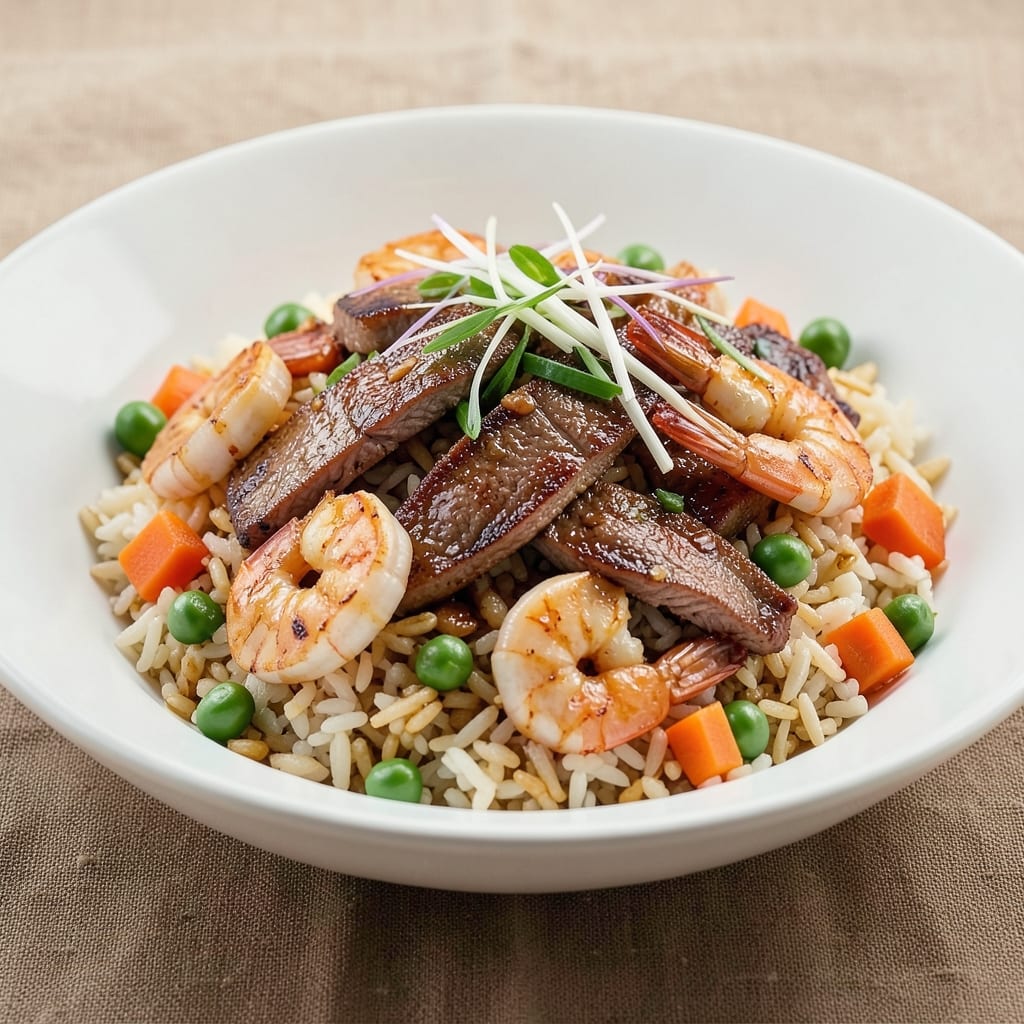
This beef and shrimp fried rice recipe delivers the perfect balance of wok-hei crispy grains and juicy proteins that make every bite irresistible. The secret lies in high-heat stir-frying, where beef and shrimp develop rich caramelized edges while absorbing aromatic spices. I've refined this recipe over years of testing—it's restaurant-quality without requiring a wok, just a sturdy skillet and precise timing.
The foundation starts with day-old rice (never fresh!) that gets tossed with a savory sauce blend of soy sauce, oyster sauce, and a touch of sesame oil for depth. Meanwhile, the beef gets seared to medium-rare perfection before slicing, while shrimp stays juicy thanks to a quick sear in hot oil. The vegetables—carrots, peas, and scallions—add color and texture that keep every bite interesting.
What you'll end up with is a fragrant, textured dish where crispy rice edges contrast with tender beef and plump shrimp, all bound together by a glossy sauce. The aroma alone will have everyone gathering at the table—it's the kind of meal that transforms a simple weeknight into something special. Serve with cucumber salad or scallion pancakes for the full experience.
This recipe isn't just about technique—it's about creating that restaurant-quality "breath of the wok" flavor at home. The key is working quickly over high heat while keeping all components hot until the very end. Let's get cooking—your taste buds won't regret it.
Ingredients for beef and shrimp fried rice
Four cups of crispy grains meet juicy proteins in this restaurant-style wok-hei dish.
| Ingredient | Amount | Notes |
|---|---|---|
| Day-Old Cooked White Rice 🍚 | 4 cups | Cold rice preferred for texture |
| Ribeye Steak 🥩 | 8 oz | Thinly sliced against grain |
| Large Shrimp 🦐 | 1 lb | Peeled, deveined, tails off |
| Carrots 🥕 | 1 cup | Diced into small pieces |
| Frozen Peas 🌱 | ½ cup | Thawed before use |
| Green Onions 🧅 | ½ cup | Sliced into 1-inch pieces |
| Soy Sauce 🥢 | 3 tbsp | Light or regular variety |
| Oyster Sauce 🍶 | 1 ½ tbsp | For depth of flavor |
| Sesame Oil 🫒 | 1 tbsp | Toasted for aroma |
| Vegetable Oil 🫒 | ½ cup | High smoke point preferred |
| Garlic Cloves 🧄 | 4 cloves | Minced finely |
| Fresh Ginger 🌿 | 1 tbsp | Grated finely |
| Salt 🧂 | ½ tsp | Adjust to taste |
| Black Pepper 🌶️ | ¼ tsp | Freshly ground |
| White Pepper 🌶️ | ¼ tsp | For subtle heat |
The rice is non-negotiable—it must be day-old for that perfect texture. Cook extra rice the night before so you always have it on hand. For the beef, ribeye delivers the best flavor, but flank steak works too if you're on a budget. The shrimp should be large, 51-60 count per pound—they stay juicier. Costco or Trader Joe's are great for quality seafood. Look for bright, translucent shrimp with a mild ocean scent—never a strong fishy smell. The vegetables? Baby carrots save time, or grab a bag of pre-diced mix if you're short on prep time.
No soy sauce? Coconut aminos work in a pinch, though the flavor will be slightly different. Oyster sauce unavailable? Substitute with hoisin sauce at half the amount. The sesame oil is where the magic happens—toast it in the pan first to release those nutty aromas. Shrimp too expensive? Scallops or extra beef keep the dish hearty. The garlic and ginger should be freshly grated or minced—pre-minced jars lose potency fast. For extra crispiness, pat the rice dry before stir-frying.
Rice keeps 3-4 days in the fridge, but it'll lose some texture. Freeze portions for up to 3 months—thaw and reheat gently. The shrimp and beef can be prepped ahead, but cook them just before stir-frying to maintain juiciness. Store sesame oil in a cool, dark place—it goes rancid fast. This dish reheats beautifully in a skillet over medium heat with a splash of water to steam. For meal prep, portion into containers with a thin layer of oil on top to keep it crispy.
Why You'll Love This Recipe
- I swear by this trick: just dice the ribeye and shrimp while the wok heats up—no pre-marinating, no fancy prep. The frozen peas? Toss them straight from the bag, no thawing, no fuss.
- No Chopping Needed: I swear by this trick: just dice the ribeye and shrimp while the wok heats up—no pre-marinating, no fancy prep. The frozen peas? Toss them straight from the bag, no thawing, no fuss.
- Two Proteins, Zero Guilt: That ribeye adds rich, beefy depth while the shrimp bring bright, briny pop—like a flavor party in every bite. Honestly, I’ve never convinced my picky husband to eat shrimp until I added it to this dish.
- Leftover Hero: This is my secret weapon for busy mornings. Reheat a portion, add a fried egg, and boom—breakfast for dinner (or lunch). The rice stays fluffy, the beef stays tender, and no one complains.
Step-by-step instructions for beef and shrimp fried rice
Master the wok-hei technique with these precise steps for restaurant-quality fried rice.
Prepare the Protein and Vegetables
Thinly slice the 8 oz ribeye steak against the grain into ¼-inch strips using a sharp knife. Pat the 1 lb large shrimp completely dry with paper towels and season lightly with 0.25 tsp salt and 0.25 tsp white pepper. Dice the 1 cup carrots into small, even pieces—about ¼-inch cubes—so they cook quickly and evenly.
Thaw the 0.5 cup frozen peas by placing them in a colander under warm running water for 1 minute. Slice the 0.5 cup green onions into 1-inch pieces, separating the white and green parts. Finely mince the 4 cloves garlic and grate the 1 tbsp fresh ginger using a microplane or fine grater. These aromatics will form the flavor base of your dish.
Sear the Beef and Shrimp
Heat 0.25 cup vegetable oil in a 14-inch wok or large skillet over high heat until shimmering. Add the ribeye strips in a single layer and sear undisturbed for 30 seconds until they develop a deep brown crust. Stir-fry for another 1 minute until 75% cooked, then remove and set aside.
Add the shrimp to the same wok and cook for 1-2 minutes per side until they turn pink and opaque. Remove and set aside with the beef. The high heat ensures the shrimp remain juicy while developing a crispy exterior. If the oil starts to smoke excessively, reduce heat slightly but maintain a vigorous sizzle.
Stir-Fry the Aromatics and Vegetables
Add the remaining 0.25 cup vegetable oil to the wok and increase heat to high. Add the minced garlic and grated ginger, stirring constantly for 15 seconds until fragrant. Immediately add the diced carrots and stir-fry for 1 minute until they begin to soften but still retain some bite.
Add the thawed peas and stir-fry for 30 seconds until heated through. Pour in 3 tbsp soy sauce and 1.5 tbsp oyster sauce, stirring to combine. The vegetables should be tender-crisp with a glossy sheen from the sauces. If the mixture looks dry, add 1-2 tablespoons water to maintain moisture.
Combine Rice and Protein
Add the 4 cups day-old cooked white rice to the wok, breaking up any clumps with a spatula. Stir-fry vigorously for 2-3 minutes until the rice is heated through and begins to develop golden brown spots—this is your wok-hei texture. The rice should be crispy on the edges while remaining tender in the center.
Return the seared beef and shrimp to the wok, tossing everything together for 1-2 minutes until evenly coated. Drizzle with 1 tbsp sesame oil and sprinkle with 0.25 tsp black pepper. The sesame oil adds a nutty aroma that elevates the dish. Taste and adjust seasoning with additional soy sauce or salt if needed.
Finish and Serve Immediately
Garnish with the sliced green onions, focusing on the white parts for color contrast and the green parts for freshness. Serve immediately while the rice is still hot and crispy. The dish should have a balance of textures—crispy rice edges, tender vegetables, and juicy protein—with a savory, umami-rich sauce.
For best results, serve family-style in a large bowl so everyone can scoop their portion. The fried rice continues to crisp up as it sits, so enjoy it within 10-15 minutes of cooking while the wok-hei texture is at its peak. Pair with a simple cucumber salad or steamed greens for a complete meal.
Pro Tips For Making Beef And Shrimp Fried Rice
- CUT STEAK THIN BEFORE COOKING: Ribeye’s got fat and chew—slice it against the grain into ¼-inch strips before tossing it in. I used to sear chunks and end up with rubbery bits. Thin slices cook faster and stay tender, even when mixed with shrimp that overcooks in seconds.
- PEEL SHRIMP RIGHT AWAY: Pop those shrimp out of their shells immediately after thawing or buying. Peeling later means wasted time and soggy tails. Run a knife along the curve of each shrimp, then pinch the head off—no need to stress over perfect curves, just get them clean.
- STIR-FRY PEAS LAST: Toss frozen peas in after the rice is mostly done. They’ll release moisture and turn mushy if you add them too early. Drop them in the last 30 seconds, then give the whole pan a quick toss—bright green peas make the dish look (and taste) fresh.
- USE DAY-OLD RICE—REALLY: Cold, dry rice fries better than warm, sticky rice. Spread freshly cooked rice on a tray, let it cool completely, then refrigerate overnight. The grains will separate, and you’ll avoid that sad, clumpy texture that ruins fried rice every time. (Yes, even if you’re impatient like me.)
Flavor customization for this dish
Spicy Heat Boost
Transform your fried rice into a fiery sensation by adding 1-2 teaspoons of chili crisp or ½ teaspoon of red pepper flakes when tossing everything together. For extra depth, stir in 1 tablespoon of gochujang (Korean chili paste) with the soy and oyster sauces. I love adding a sprinkle of Sichuan peppercorns (toasted and crushed) for a numbing, citrusy kick that pairs perfectly with the shrimp. 🌶️
Sweet and Tangy Twist
Balance the savory flavors with a touch of sweetness by adding 1 tablespoon of honey or ½ teaspoon of sugar to the sauce mixture. For tanginess, stir in 1 teaspoon of rice vinegar or a splash of lime juice at the end. I often use 2 teaspoons of fish sauce for umami depth—it enhances the shrimp flavor without overpowering. The contrast creates a restaurant-quality depth that keeps every bite exciting.
Herbaceous Freshness
Brighten the dish with fresh herbs like cilantro or Thai basil. Chop ¼ cup cilantro and stir it in at the very end, or add 10-12 Thai basil leaves> (torn, not chopped) for a fragrant, slightly peppery note. For a more complex flavor, try ½ teaspoon of lemongrass paste> (found in Asian markets) mixed into the sauce. The herbs add a refreshing contrast to the rich, savory components.
Umami Depth
Elevate the dish with extra umami by adding 1 tablespoon of mushroom powder> or 2 dried shiitake mushrooms> (finely chopped) to the stir-fry. For a smoky touch, stir in ½ teaspoon of smoked paprika> or a dash of liquid smoke>. I also love adding 1 tablespoon of miso paste> (white or red) to the sauce for a deeper, fermented richness. These additions make the fried rice feel even more complex and satisfying.
Creamy Luxe
Add a velvety texture by stirring in 2 tablespoons of sour cream> or 1 tablespoon of crème fraîche> at the end. For a dairy-free option, use ½ cup silken tofu> (blended until smooth) or 2 tablespoons of coconut cream>. The creaminess balances the crispy rice and juicy shrimp beautifully. Garnish with a sprinkle of toasted sesame seeds> for extra crunch and visual appeal.
Global Fusion Twists
Give your fried rice a fusion twist by adding ½ cup diced bell peppers> (for sweetness) or ¼ cup pineapple tidbits> (for tropical brightness). For a Mexican-inspired version, stir in ½ teaspoon of cumin> and ¼ teaspoon of smoked salt> with the shrimp. A dash of Tajín**> sprinkled on top adds a tangy, spicy finish. These global flavors keep the dish exciting and adaptable to any craving.
Nutrition facts
Frequently asked questions
Why does the recipe specify day-old rice instead of fresh?
Day-old rice is crucial because it's drier and more separate, preventing a mushy texture when stir-fried. Fresh rice contains too much moisture, which steams the rice instead of creating those coveted crispy edges. Pro tip: Cook extra rice the night before and store it in an airtight container to always have it ready.
Can I substitute ribeye with another type of beef?
Flank steak or sirloin work beautifully—they're more budget-friendly while still delivering great flavor. For extra tenderness, slice against the grain into ¼-inch strips and sear just until 75% cooked (it'll finish cooking in the wok). Avoid fatty cuts like brisket, as they can make the dish greasy.
How do I prevent the shrimp from turning rubbery?
Rubbery shrimp happen when overcooked. Pat them completely dry before searing and cook over high heat for only 1-2 minutes per side until just opaque. The key is using large shrimp (51-60 count per pound) and removing them immediately when done. Never overcrowd the pan—cook in batches if needed.
What's the best way to reheat leftovers?
Reheat in a skillet over medium heat with a splash of water to steam, stirring constantly for 3-4 minutes until crispy again. Microwaving works but destroys the wok-hei texture. For extra crispiness, spread leftovers on a baking sheet and broil for 2-3 minutes at the end.
Can I make this gluten-free?
Yes! Replace soy sauce with 3 tbsp gluten-free tamari and oyster sauce with 1.5 tbsp coconut aminos. Check labels on sesame oil and other sauces to ensure they're certified gluten-free. The flavor will be slightly different but still delicious.