
Soups & Stews
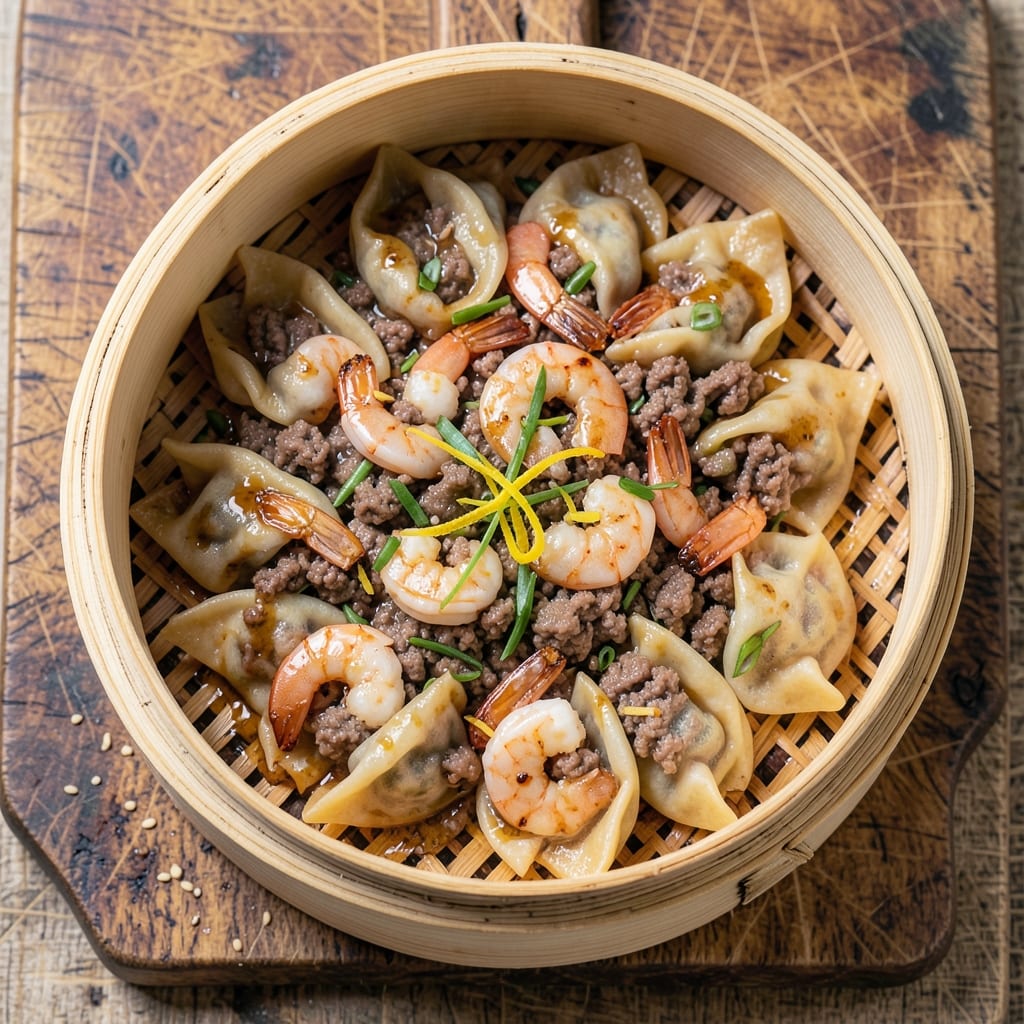
This beef and shrimp siomai recipe delivers restaurant-quality dumplings with a perfect balance of tender pork, sweet shrimp, and aromatic seasonings. The key lies in the filling—finely ground beef and chopped shrimp bound with ginger, garlic, and scallions, then wrapped in delicate wrappers and steamed to golden perfection. I've perfected the pleating technique to ensure every dumpling holds its shape while steaming, creating those signature half-moon pleats that make them irresistible.
The beauty of siomai is their versatility—steam them for a light, healthy meal or pan-fry for crispy edges and extra flavor. The filling's secret is a blend of soy sauce, oyster sauce, and a touch of sugar that creates deep umami and sweetness in every bite. These dumplings are perfect for appetizers, lunch, or even a light dinner when paired with a tangy soy-vinegar dipping sauce.
What makes this recipe special is the harmony of textures and flavors—tender beef, sweet shrimp, and the subtle bite of fresh ginger all come together in a cohesive filling. The wrappers stay soft and pliable when steamed, creating a delicate bite that contrasts perfectly with the rich filling. Whether you're serving them as an appetizer or a main course, these dumplings will impress with their restaurant-quality taste.
Once you master the pleating technique, you can experiment with different fillings or cooking methods—steamed, pan-fried, or even air-fried for a crispy exterior. The possibilities are endless, but the foundation of a well-seasoned filling and proper steaming technique remains the same. Let's get started on creating these delicious dumplings!
Ingredients for beef and shrimp siomai
Restaurant-quality siomai begins with this precise ingredient blend—where tender beef meets sweet shrimp in aromatic harmony.
| Ingredient | Amount | Notes |
|---|---|---|
| Ground Beef (Chuck) 🥩 | ¾ lb | Lean ground beef, 80/20 fat ratio |
| Large Shrimp (Peeled & Deveined) 🦐 | ½ lb | Tail-on for presentation |
| Fresh Ginger 🧄 | 2 tbsp | Finely minced, aromatic |
| Garlic Cloves 🧄 | 4 cloves | Minced into fine paste |
| Scallions 🧅 | 4 whole | White and green parts, chopped |
| Light Soy Sauce 🥢 | 2 tbsp | Kikkoman preferred |
| Oyster Sauce 🥢 | 1 ½ tbsp | High-quality, dark color |
| Sesame Oil 🫒 | 1 tbsp | Toasted, aromatic |
| White Sugar 🍚 | 1 ½ tbsp | Fine granulated |
| Cornstarch 🌾 | 1 tbsp | For binding filling |
| Siomai Wrappers 🧃 | 16 whole | Square, 3.5-inch size |
| Vegetable Oil 🫒 | 1 tbsp | For pleating |
| Water 💧 | 1 cup | For steaming |
| Salt 🧂 | ½ tsp | Diamond Crystal preferred |
| White Pepper 🌶️ | ¼ tsp | Freshly ground |
The shrimp should be freshly peeled and deveined—Whole Foods or Asian markets carry the best quality, often pre-sized for dumplings. For the beef, chuck roast ground in-house delivers superior flavor over pre-packaged ground beef. The ginger and garlic must be finely minced—a microplane or food processor ensures even distribution in the filling. Scallions add freshness, but their green parts should be chopped separately to maintain color contrast. Kikkoman soy sauce and Lee Kum Kee oyster sauce are industry standards for authentic flavor, though any quality brand suffices. Toasted sesame oil adds depth—look for dark bottles in the international aisle for maximum aroma.
No fresh shrimp? Frozen, thawed thoroughly works, but texture suffers slightly. Substitute beef with pork shoulder ground fine for a traditional option. The cornstarch is non-negotiable—it binds the filling without altering texture. Pre-made wrappers from Golden Gate or T&T brands are ideal, but homemade wheat wrappers work if you're ambitious. For the pleating oil, avocado oil has a neutral taste that won't overpower the filling. The sugar can be swapped for honey or maple syrup at a 1:1 ratio, though white sugar creates the classic balance. Always taste the filling before wrapping—adjust soy sauce for saltiness or sugar for sweetness.
Store raw filling in an airtight container for up to 2 days in the fridge. Wrappers lose pliability after 1 day—keep them sealed with a damp paper towel to maintain moisture. Assemble dumplings just before steaming for best texture. Once steamed, they reheat beautifully—5 minutes in a steamer basket restores perfect doneness. For long-term storage, freeze unsteamed dumplings on a tray before transferring to bags—3 months frozen with no texture loss. The filling freezes even better than the assembled dumplings, allowing you to prep ahead and assemble as needed.
Why You'll Love This Recipe
- No-Fuss Filling: The shrimp and ground beef mix comes together in minutes—just pulse, season, and roll. No finicky blending or overworking the meat, and those scallions add freshness without fuss.
- Umami Bomb: That ginger-garlic base? It’s the secret weapon. The chuck beef keeps it rich, but the shrimp bring brightness—like a little burst of ocean in every bite.
- Party or Pantry: Steam a batch for potlucks (they’re always a hit) or freeze half for lazy Mondays. The wrappers seal in flavor, so reheating feels like eating fresh.
- Budget Flex: Ground chuck and shrimp stretch further than you’d think. I’ve fed four people for under $15, and the leftovers? Even better the next day with a quick pan-fry.
Step-by-step instructions for beef and shrimp siomai
Master these precise techniques for perfectly balanced dumplings with tender shrimp and rich beef filling.
Prepare the Filling Ingredients
In a medium bowl, combine the 0.75 lb ground beef (chuck) and 0.5 lb large shrimp (peeled & deveined). Set aside while you prepare the aromatics. For the ginger, use a microplane or fine grater to create 2 tbsp finely minced fresh ginger—this ensures even distribution and maximum flavor extraction. Mince the 4 cloves garlic into a fine paste using a garlic press or knife, then finely chop the 4 whole scallions, keeping the white and green parts separate for visual contrast.
Real talk: The shrimp should be completely deveined and peeled, with tails left on for presentation. If any tails remain attached after peeling, trim them to uniform lengths now. This step prevents uneven cooking and ensures all dumplings have consistent texture and appearance.
Cook the Aromatics and Build the Filling
Heat a non-stick skillet over medium-high heat and add 1 tbsp vegetable oil. Once shimmering, add the ground beef and shrimp, breaking up the meat with a wooden spoon. Cook for 3-4 minutes until the beef loses its raw color and begins to brown. Add the minced ginger and garlic, cooking for another 30 seconds until fragrant—this is where the foundation flavors develop.
Push the meat mixture to one side of the pan and add the white parts of the scallions, cooking for 1 minute until softened. Return everything to the center and stir in the 2 tbsp light soy sauce, 1.5 tbsp oyster sauce, 1 tbsp sesame oil, 1.5 tbsp white sugar, 0.5 tsp salt, and 0.25 tsp white pepper. Cook for 2 minutes until the mixture thickens slightly and the raw shrimp smell disappears completely.
Bind and Cool the Filling
Remove the pan from heat and stir in the 1 tbsp cornstarch. The mixture should immediately thicken to a spreadable consistency—this is crucial for proper dumpling texture. Transfer the filling to a medium bowl and let it cool completely to room temperature. I know it's tempting to start assembling right away, but cold filling prevents the wrappers from steaming unevenly and ensures clean edges when pleating.
While the filling cools, prepare your workspace by laying out the 16 whole siomai wrappers on a clean surface. Keep them covered with a damp towel to prevent drying. This step maintains their pliability for perfect pleating.
Assemble the Siomai Dumplings
Place 1 tbsp of cooled filling in the center of each wrapper. For even distribution, use a small spoon or cookie scoop. Fold the wrapper diagonally to form a triangle, then pleat the sides by folding each corner inward twice—this creates the classic siomai shape. Press gently along the folded edges to seal. The pleats should be tight but not so tight that they tear the wrapper.
Here's the thing—if the filling is too wet, the wrappers will stick together. To prevent this, lightly brush any sticking areas with water and press again. Arrange the assembled dumplings on a plate, seam-side down, and cover with a damp towel to maintain moisture until steaming.
Steam to Perfection
Set up a steamer by filling a wok or large pot with 1 cup water and bringing it to a rolling boil. Place a heatproof plate or steamer basket above the water, ensuring it doesn't touch the surface. Arrange the dumplings in a single layer, leaving ½ inch between each for even steaming. Cover with a lid and steam over medium-high heat for 8-10 minutes until the wrappers are translucent and the filling is heated through.
You'll know they're done when steam rises steadily and the dumplings puff slightly at the edges. Avoid overcrowding the steamer—this prevents proper heat circulation and leads to uneven cooking. Serve immediately with a dipping sauce of your choice, preferably one that complements the savory-sweet filling.
Pro Tips For Making Beef And Shrimp Siomai
- Freeze Shrimp First: Toss those peeled shrimp in ice water for 10 minutes before cooking—it tightens the flesh so they hold shape better when steamed. I used to skip this and ended up with mushy shrimp in my dumplings. Trust me, the texture difference is noticeable.
- Pulse Ginger-Garlic Paste: Use a food processor to make a fine paste with ginger, garlic, and a splash of water—no chunks, no fuss. I learned this after finding uneven bits in my filling that made the siomai taste uneven. Aim for a smooth, sticky consistency.
- Don’t Overmix the Filling: Mix the beef, shrimp, and seasonings just until combined—overworking makes the filling dense and tough. I used to knead it like dough, and the siomai turned into a chewy brick. Gentle folds are key.
- Steam in Batches: Crowd the steamer, but don’t overfill—leave space between dumplings so steam circulates. I once packed them too tight, and the bottoms stuck together like glue. A quick mist of water before steaming helps too.
Serving suggestions for this recipe
Classic Dipping Sauces
Start with a simple soy-vinegar sauce—mix 3 tbsp soy sauce (Kikkoman preferred), 1 tbsp rice vinegar, 1 tsp sesame oil, and a pinch of white pepper. Thin with 1 tsp warm water if needed. This bright, tangy sauce cuts through the richness of the filling beautifully. For extra depth, add ½ tsp grated ginger or a dash of chili oil for heat. 🥢
For a creamy option, blend ¼ cup Greek yogurt with 1 tbsp chopped scallions, 1 tsp lime juice, and ½ tsp salt. This cooling contrast balances the savory-sweet dumplings, especially during warm weather. Garnish with a sprinkle of toasted sesame seeds for texture.
Crispy Pan-Fry Finish
After steaming, pan-fry the dumplings for extra flavor and texture. Heat ½ inch vegetable oil in a non-stick skillet over medium heat until shimmering. Add the steamed dumplings seam-side down and cook for 2-3 minutes until golden brown. Flip carefully and cook another 1-2 minutes until crispy. Serve immediately with a side of spicy chili sauce or sriracha mayo for dipping. This technique adds a satisfying crunch that contrasts the soft steamed centers.
Side Dish Pairings
A light cucumber salad with ½ cup thinly sliced cucumbers, 2 tbsp rice vinegar, 1 tsp sugar, and ½ tsp salt refreshes the palate. Toss in 1 tbsp chopped cilantro for brightness. Alternatively, serve with stir-fried bok choy—sauté 2 cups baby bok choy in 1 tbsp sesame oil for 2 minutes until wilted, then finish with a splash of oyster sauce. Both sides complement the rich dumplings without overpowering them. 🥗
Garnish Like a Pro
Elevate your presentation with simple garnishes. Sprinkle each dumpling with toasted sesame seeds or finely chopped green onions before serving. For a pop of color, add a tiny dollop of red chili bean paste or a drizzle of chili oil alongside the dipping sauce. These finishing touches not only look stunning but also enhance the flavors with each bite.
Make-Ahead Serving
Steamed siomai reheat beautifully—store leftovers in an airtight container in the fridge for up to 2 days. To serve, steam for 3-4 minutes over boiling water until heated through. For a quick meal, assemble dumplings ahead and freeze them on a tray before transferring to a bag. Steam frozen dumplings for 10-12 minutes from frozen, adding 2 extra minutes if pan-frying afterward. This makes them perfect for busy weeknights or meal prep. ⏰
Nutrition facts
Frequently asked questions
Can I substitute pork for the beef in this recipe?
Traditional siomai often uses pork, and it works beautifully here. For best results, use 0.75 lb ground pork shoulder instead of beef—it stays juicier when steamed. If you want to keep the beef but reduce fat, choose a 90/10 lean ground beef and add ½ tsp extra cornstarch to bind the filling.
How do I fix dumplings that stick together after steaming?
This usually happens when the filling is too wet or the wrappers weren't sealed properly. First, gently separate stuck dumplings with a fork or chopsticks. For future batches, ensure your filling is fully cooled before wrapping, and press the pleats firmly to seal. If they stick after cooking, lightly brush with 1 tsp melted butter before serving to add a protective layer.
What's the best way to reheat leftover siomai?
Steamed siomai reheat best in a steamer basket over boiling water for 3-4 minutes—this restores their original texture without drying them out. For extra crispiness, pan-fry reheated dumplings in ½ inch oil for 2 minutes per side. Never microwave them, as this makes the wrappers rubbery. Store leftovers in an airtight container for up to 2 days.
Can I make these dumplings ahead of time?
Yes! Assemble the dumplings up to 1 day ahead and refrigerate them, unsteamed, on a tray lined with parchment paper. For longer storage, freeze them raw for up to 3 months (steam from frozen for 10-12 minutes). The filling can also be prepped 2 days ahead—just wrap it tightly and refrigerate before assembling. This makes batch cooking a breeze!
Why are my wrappers tearing when I pleat them?
This usually means the wrappers are too dry or the filling is too wet. Keep wrappers covered with a damp towel while working, and ensure your filling is fully cooled before wrapping. If the filling is too wet, add ½ tsp extra cornstarch to absorb moisture. Also, use a light touch when pleating—press gently rather than pulling the wrapper.