
Soups & Stews
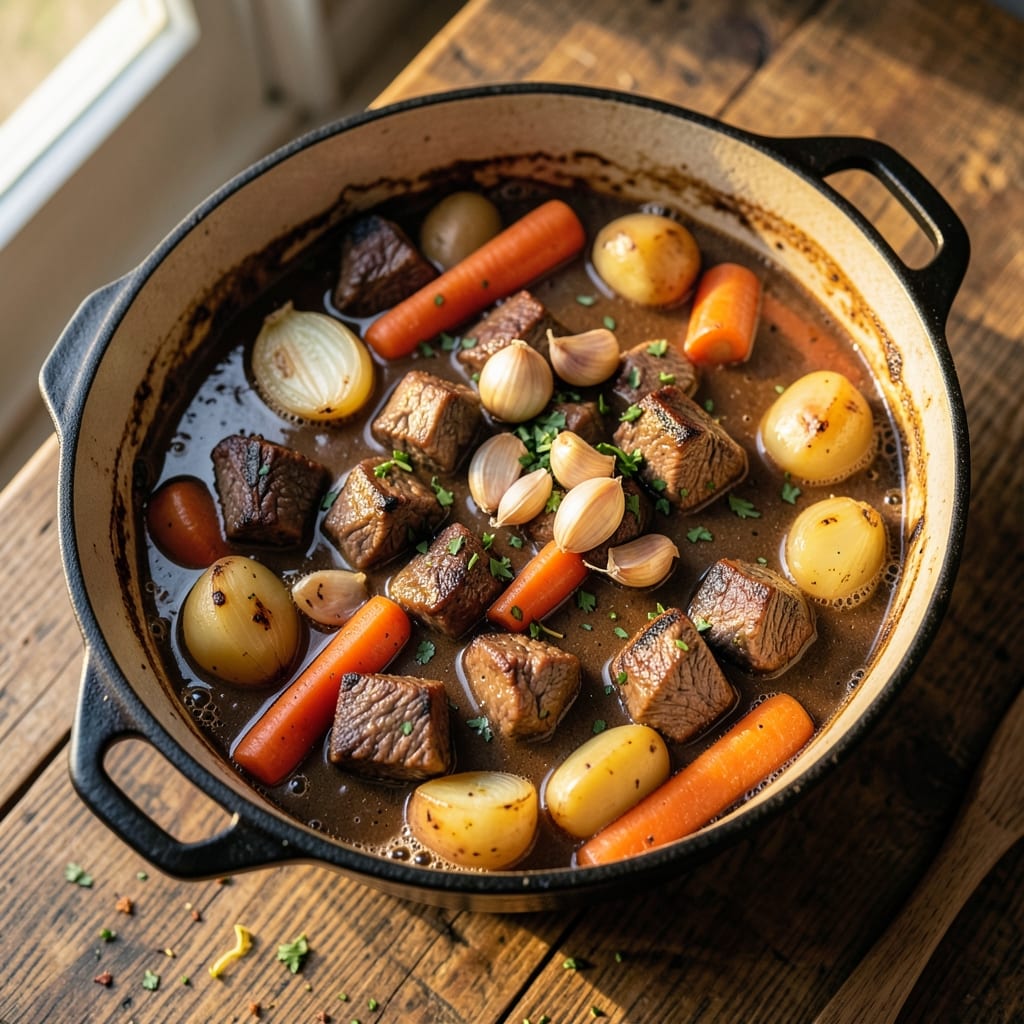
This beef and stout stew recipe transforms tough cuts into melt-in-your-mouth perfection through slow braising. The stout beer isn't just an ingredient—it's the secret weapon that deepens umami, balances richness, and creates a velvety texture that makes every spoonful unforgettable. I've perfected this technique over years of testing, ensuring the beef becomes tender while the stew develops complex layers of flavor that only come from patience and proper technique.
The foundation begins with properly searing the beef to develop a rich, caramelized crust that forms the base of the stew's depth. Stout beer, with its malty sweetness and roasted notes, cuts through the richness while enhancing the meat's natural flavors. Aromatics like onions, garlic, and thyme build the flavor framework, while root vegetables like carrots and potatoes absorb the stew's essence, becoming tender and infused with every sip-worthy bite.
By the time you're done, you'll have a stew so rich and satisfying it feels like a hug in a bowl—deeply flavorful with just the right balance of hearty meat, caramelized vegetables, and that signature stout-infused sauce. The slow cooking process ensures the beef falls apart easily, while the vegetables remain perfectly tender. This isn't just comfort food; it's a restaurant-quality dish that belongs at your dinner table.
Perfect for chilly evenings or special gatherings, this stew scales beautifully and tastes even better the next day. The aroma alone will have everyone gathering around the table, and the first bite will silence any doubters. Let's get cooking—your taste buds will thank you.
Ingredients for beef and stout stew
Sixteen ingredients that transform tough beef into restaurant-worthy stew with deep umami richness.
| Ingredient | Amount | Notes |
|---|---|---|
| Chuck Roast 🥩 | 3 lb | Well-marbled, cut into 1.5-inch cubes |
| Dark Stout Beer 🍺 | 2 cups | Guinness or similar malty stout preferred |
| Yellow Onions 🧅 | 2 whole | Thickly sliced, about 3 cups total |
| Carrots 🥕 | 4 whole | Cut into 1-inch chunks, baby carrots work |
| Russet Potatoes 🥔 | 3 lb | Cut into 2-inch chunks, skin on preferred |
| Garlic Cloves 🧄 | 6 cloves | Smashed, skin on for extra flavor |
| Fresh Thyme 🌿 | 2 sprigs | Or 2 tsp dried thyme if fresh unavailable |
| Tomato Paste 🍅 | ½ cup | High-quality, no sugar added |
| Beef Broth 💧 | 2 cups | Low-sodium preferred, homemade if possible |
| Olive Oil 🫒 | ½ cup | Extra-virgin for searing, high smoke point |
| Worcestershire Sauce 🍶 | 1 tbsp | Anchovy-free version if needed |
| Salt 🧂 | 1 ½ tsp | Diamond Crystal kosher salt preferred |
| Black Peppercorns 🌶️ | 1 tsp | Freshly cracked for best flavor |
| Bay Leaves 🌿 | 2 whole | Remove before serving |
| All-Purpose Flour 🌾 | 2 tbsp | For dusting beef cubes |
The chuck roast is non-negotiable here—look for well-marbled cuts at Whole Foods or your butcher shop. The fat renders down during cooking, creating a silky sauce. If you're buying pre-cubed, Costco has great prices, but check for even-sized pieces. For the stout beer, Guinness is my go-to, but any dark stout with malty sweetness works. Avoid lagers or light beers—they won't deliver that rich, roasted depth. The tomato paste? San Marzano is ideal, but any quality paste in a tube will do. Fresh thyme is worth seeking out at Trader Joe's—it's brighter than dried and makes all the difference.
No dark stout? Substitute with beef broth plus 1 tbsp molasses for similar depth. Fresh thyme unavailable? Dried works at one-third the amount, but toast it first in a dry pan for 30 seconds to wake up the flavor. The potatoes can be swapped for Yukon Golds if you prefer creamier texture. For extra richness, add 1/2 cup red wine with the beer. The Worcestershire sauce adds complexity—if you can't find anchovy-free, soy sauce at half the amount works in a pinch. And yes, you can use baby carrots—they're just as sweet and cut faster.
This stew tastes even better the next day as flavors meld. Portion into containers for easy lunches—keeps 5 days refrigerated or 3 months frozen. For freezing, cool completely first to prevent ice crystals. The beef cubes reheat beautifully—just add a splash of water or broth if it's too thick. Make a double batch and freeze half; you'll thank yourself on busy nights. The vegetables stay tender when reheated gently over low heat—no microwaving here.
Why You'll Love This Recipe
- One-Pot Magic: I swear by this—just dump everything in a Dutch oven, walk away, and let the stout beer and onions work their flavor magic. No chopping boards to clear, no extra pans, and honestly? That’s my kind of cooking.
- Deep, Rich Taste: The dark stout beer doesn’t just add depth—it caramelizes into something almost smoky, while the chuck roast turns fork-tender. Between us, that’s the kind of flavor you’ll want to linger over, even if it’s just a weeknight dinner.
- Leftovers That Shine: This stew actually improves the next day. The potatoes soak up all the beefy, beer-infused juices, and the carrots get even sweeter. I make a double batch on Sundays because reheating it is basically a free meal—no takeout needed.
- Budget-Friendly Feast: A chuck roast stretches for days, and stout beer adds luxury without breaking the bank. Plus, onions and potatoes are the ultimate pantry staples. It’s the kind of recipe that makes grocery day feel like a win.
Step-by-step instructions for beef and stout stew
Here's how to transform tough chuck roast into melt-in-your-mouth beef with deep, malty richness.
Sear the Beef for Maximum Flavor
Pat the 3 lb chuck roast dry with paper towels and cut into 1.5-inch cubes. In a large Dutch oven, heat 0.5 cup olive oil over medium-high heat until shimmering. Working in batches, add the beef cubes and sear for 2-3 minutes per side until deeply browned. This step develops the Maillard reaction, creating that irresistible caramelized crust that forms the stew's flavor foundation.
As you sear, place the browned beef in a bowl and set aside. The residual fat in the pot will become your sauce base later. If the oil starts smoking excessively, reduce the heat slightly—you want a golden sear, not burnt beef. I like to press down gently on the cubes during the first minute to prevent curling, which ensures even contact with the hot oil.
Build the Flavor Base with Aromatics
In the same Dutch oven, add 2 whole yellow onions (thickly sliced) and 4 whole carrots (cut into 1-inch chunks). Cook for 5-6 minutes until the onions soften and begin to caramelize. Add the 6 cloves garlic (smashed with skin on) and 2 sprigs fresh thyme, cooking for another 1-2 minutes until fragrant.
Stir in 0.5 cup tomato paste and cook for 1 minute to deepen its flavor. Here's the thing—don't rush this step. The longer you cook the vegetables, the more complex flavors you'll develop. If the mixture starts sticking, add a splash of beef broth to deglaze, scraping up all those flavorful browned bits from the bottom of the pot.
Deglaze and Combine All Ingredients
Pour in the 2 cups dark stout beer and 1 tbsp Worcestershire sauce, scraping up any browned bits with a wooden spoon. This deglazing step captures all the meaty flavor that would otherwise stick to the pot. Let the mixture simmer for 3-4 minutes until the beer reduces slightly and becomes slightly syrupy.
Return the seared beef to the pot. Add the 3 lb russet potatoes (cut into 2-inch chunks), 2 cups beef broth, 1.5 tsp salt, 1 tsp black peppercorns, and 2 whole bay leaves. The potatoes should be mostly submerged but not completely covered. Bring to a gentle simmer, then reduce heat to low—this is where the magic happens.
Slow-Braise for Tender Perfection
Cover the Dutch oven and transfer to a 325°F oven. Braise for 3-4 hours until the beef is fork-tender and pulls away from the bone easily. The potatoes should be soft enough to pierce with a fork but still hold their shape. I know it's tempting to check frequently, but every time you open the lid, you release steam and extend cooking time.
About 30 minutes before the stew is done, sprinkle 2 tbsp all-purpose flour over the top. This helps thicken the sauce slightly and adds a subtle richness. The flour will dissolve into the stew, creating a velvety texture without making it gluey. Taste and adjust seasoning if needed—you might need a bit more salt to balance the malty beer.
Finish and Serve with Crispy Potatoes
Remove the stew from the oven and let it rest for 10-15 minutes before serving. This resting period allows the flavors to meld and the juices to redistribute throughout the stew. Skim off any excess fat that has risen to the surface if desired.
For extra drama, transfer the stew to a serving dish and broil for 2-3 minutes until the potatoes are crispy on top. This final step adds a delightful textural contrast to the otherwise creamy stew. Serve hot with crusty bread to soak up every last bit of that rich, umami-packed sauce. Each spoonful should deliver layers of beefy richness, malty depth from the stout, and caramelized sweetness from the slow-cooked vegetables.
Pro Tips For Making Beef And Stout Stew
- SEAR THE ROAST FIRST: I learned this the hard way—skipping the sear means flavorless beef. Hit the chuck roast with a hot pan (no oil needed, the fat renders out) until it’s deep brown all over before adding beer. That crust locks in taste and makes the stew taste like it simmered all day, not just a few hours.
- CUT POTATOES UNIFORM: Russets break down fast, and you don’t want mushy potatoes ruining the stew. Cut them into 1.5-inch chunks—big enough to stay intact but small enough to absorb the stout’s richness. (Yes, even if you’re impatient like me, resist the urge to make them smaller.)
- DON’T BOIL THE BEER: After burning three batches, I finally figured out: dark stout beer should simmer, not boil. If it’s rolling hard, turn down the heat—you’re killing the maltiness and the depth of flavor. A gentle bubble is all you need to build that rich, caramelized base.
- ADD CARROTS LAST: Sounds weird, but it works: toss the carrots in just 20 minutes before serving. Onions and potatoes can take the long haul, but carrots stay crisp and bright when they don’t overcook. (Your future self will thank you for not serving orange mush.)
Flavor customization for this dish
Spice Level Control
Balance the rich stout flavors with heat by adding 1-2 tsp smoked paprika during the searing stage—it enhances the beer's roasted notes while adding subtle warmth. For extra kick, stir in ½ tsp cayenne pepper with the Worcestershire sauce or finish with hot honey (mix 2 tbsp honey with ½ tsp red pepper flakes) before serving. 🌶️
Sweetness Adjustments
If your stout is particularly bitter, offset it by adding 1 tbsp brown sugar with the tomato paste or swapping in ½ cup apple cider for ½ cup of the beer. For caramelized sweetness, toss 1 cup sliced pearl onions with the carrots—they'll soften beautifully while adding a natural sweetness that pairs perfectly with the malty beer.
Herb Variations
Swap thyme for rosemary (add 2 sprigs with the garlic) for a piney, earthy depth that complements stout's roasted character. Or try fresh sage (3 leaves) for a slightly peppery note. For a Mediterranean twist, add 1 tsp dried oregano with the bay leaves—it brightens the stew without overpowering the beer's richness.
Umami Boosters
Deepening the umami is key with stout stew. Stir in 1 tbsp soy sauce (or 1 tsp fish sauce for extra punch) with the Worcestershire sauce. For a smoky depth, add ½ tsp liquid smoke or 1 smoked paprika with the flour at the end. Mushrooms work wonders too—sauté 8 oz cremini mushrooms with the onions for an earthy, meaty texture.
Vegetable Swaps
Replace potatoes with 3 cups butternut squash cubes for a naturally sweet, velvety texture that absorbs the stew's flavors beautifully. Or add 2 cups green beans (trimmed) for a fresh, crisp contrast. For heartier texture, include 1 lb fingerling potatoes alongside the russets—their waxy texture holds up better during long braising.
Cheese Finishing
Top servings with grated Gruyère (about ¼ cup) or crumbled blue cheese (2 tbsp) for a luxurious finish. The Gruyère melts slightly into the stew, adding nutty depth, while blue cheese provides a bold, tangy contrast. For a lighter option, sprinkle with toasted breadcrumbs mixed with 1 tsp garlic powder right before serving.
Nutrition facts
Frequently asked questions
Can I substitute regular beer for stout in this recipe?
The stout's malty sweetness and roasted notes are key to balancing the beef's richness. For a lighter beer, add 1 tbsp molasses or 1 tsp coffee granules to mimic stout's depth. Avoid lagers—they lack the body and complexity this dish needs. The flavor profile will be noticeably different, but still delicious.
How do I know when the beef is fully tender?
Use a fork to test a beef cube—it should pierce easily with minimal resistance. The meat should also pull away from the bone cleanly. If it's still slightly chewy after 3-4 hours, return it to the oven for 30-60 more minutes. Overcooking can make it mushy, so aim for tender but not falling-apart texture.
Can I make this stew in a slow cooker instead of oven?
Follow the same steps up to deglazing, then transfer everything to a 6-quart slow cooker. Cook on low for 8-10 hours or high for 5-6 hours. The slow cooker's gentle heat works perfectly for tenderizing the beef. Just check the potatoes don't overcook—they should be tender but still hold their shape.
Why does my stew taste too bitter?
Bitter flavors often come from over-reducing the beer or using too much tomato paste. Balance it by adding 1 tbsp brown sugar or ½ cup apple cider to sweeten the sauce. Also ensure you're using a malty stout (like Guinness) rather than a bitter IPA. Taste as you go—adjust seasoning gradually rather than all at once.
Can I prepare this ahead of time?
This stew tastes even better the next day! Let it cool completely, then refrigerate for up to 5 days or freeze for 3 months. Reheat gently on the stove over medium-low heat, adding a splash of beef broth if needed. The flavors deepen overnight, making it perfect for meal prep.