
Soups & Stews
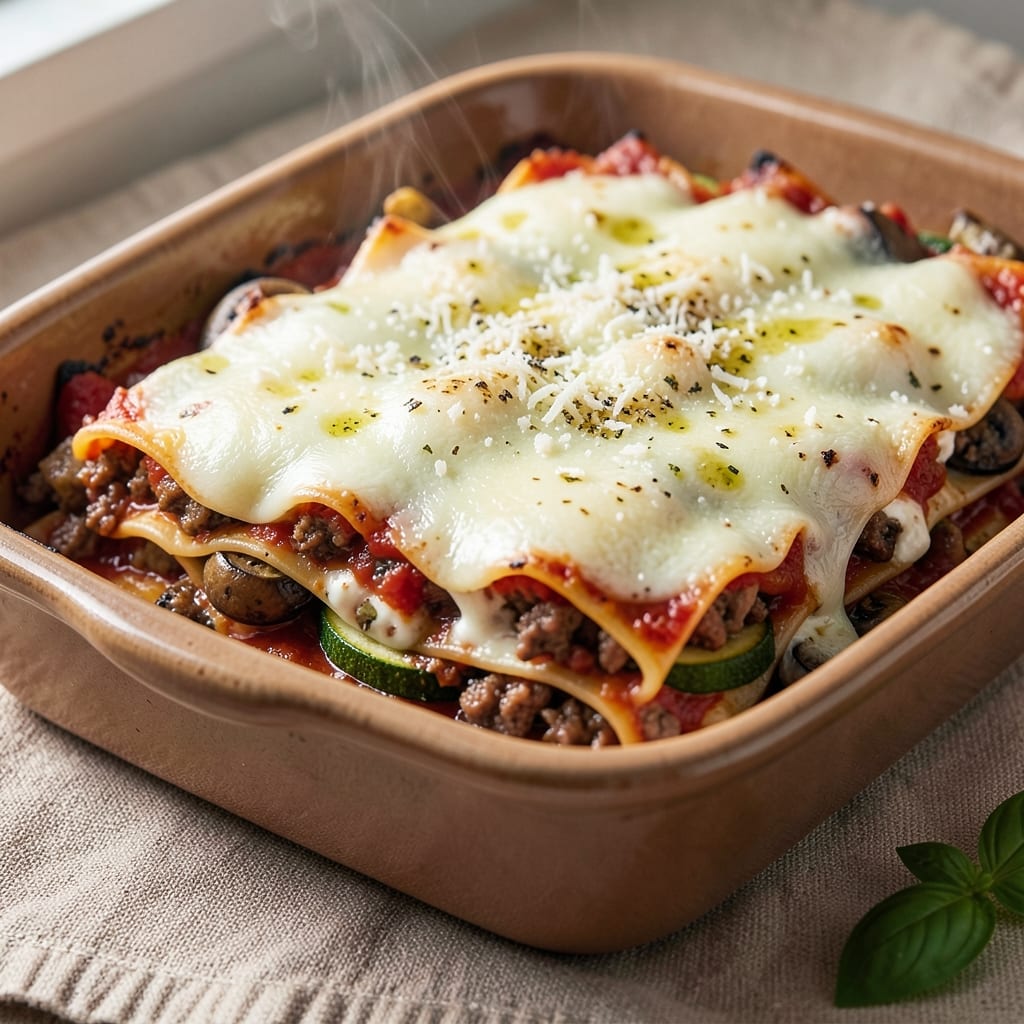
This beef and vegetable lasagne recipe delivers the ultimate comfort food experience with a crispy golden top and layers of rich, savory flavors. 💛 The secret to achieving that perfect texture lies in a combination of well-cooked ground beef, tender vegetables, and a béchamel sauce that binds everything together without being too heavy. I've perfected this technique over years of testing, ensuring that each forkful delivers that satisfying mix of textures and flavors.
What sets this lasagne apart is the balance between traditional Italian techniques and modern twists. While it maintains the classic layered structure, I've incorporated a variety of vegetables like zucchini and bell peppers to add freshness and color, making it both hearty and nutritious. The ground beef is seasoned with herbs and spices that develop deep, aromatic flavors as they simmer, creating a robust base for the entire dish.
The result is a lasagne with a crispy top layer that's perfect for scraping up every last bit of sauce, while the interior remains tender and flavorful. The combination of rich béchamel, melted cheese, and hearty vegetables creates a dish that's satisfying enough to serve as a main course but elegant enough for a special dinner. The aroma alone will have everyone gathering around the table, eager to taste this comforting classic.
Whether you're serving it to family or hosting a dinner party, this lasagne is sure to impress. Pair it with a simple green salad and some crusty garlic bread to complete the meal. Let's get started on creating this layered masterpiece that brings the warmth and richness of Italian cuisine to your table.
Ingredients for beef and vegetable lasagne
Six layers of comfort: beef, veggies, and that perfect crispy top you'll crave.
| Ingredient | Amount | Notes |
|---|---|---|
| Ground Beef (80% lean) 🥩 | 1 ½ lb | Finely chopped for even cooking |
| Lasagne Noodles (oven-ready) 🍝 | 12 pieces | No pre-boiling required |
| Ricotta Cheese 🧀 | 1 ½ cups | Full-fat for creaminess |
| Mozzarella Cheese (shredded) 🧀 | 2 cups | Part-skim works fine |
| Parmesan Cheese (grated) 🧀 | ½ cup | Freshly grated preferred |
| Zucchini (medium) 🥒 | 2 whole | Sliced into 1/4-inch rounds |
| Bell Peppers (mixed colors) 🌶️ | 2 whole | Seeds removed, sliced |
| Onion (yellow) 🧅 | 1 whole | Diced finely |
| Garlic Cloves 🧄 | 4 cloves | Minced for aroma |
| Tomato Sauce (canned) 🍅 | 2 cups | San Marzano preferred |
| Heavy Cream 🥛 | 1 cup | Full-fat for béchamel |
| All-Purpose Flour 🌾 | ¼ cup | For béchamel roux |
| Butter (unsalted) 🧈 | 3 tbsp | Cold for roux |
| Dried Basil 🌿 | 1 tbsp | Or 1 tbsp fresh |
| Dried Oregano 🍃 | 1 tsp | Italian blend preferred |
| Salt 🧂 | 1 ½ tsp | Diamond Crystal preferred |
| Black Pepper 🌶️ | ½ tsp | Freshly ground |
| Olive Oil 🫒 | 2 tbsp | For browning beef |
The beef is where the magic starts—ground chuck (not lean ground beef) gives you that rich, meaty flavor. Costco or Trader Joe's usually have it pre-chopped, which saves time. Look for bright red color and good marbling. For the veggies, freshness matters most—zucchini and bell peppers should be firm with no soft spots. The ricotta? Full-fat makes all the difference in creaminess, and Whole Foods has the best selection. Pro tip: Drain the ricotta for 10 minutes before using—it keeps the lasagne from getting soggy.
No ricotta? Cottage cheese blended smooth works in a pinch, but it won't be as rich. Running short on mozzarella? Fontina or provolone melt beautifully too. For the tomato sauce, San Marzano cans are worth the splurge—they're sweeter and smoother. No fresh basil? Dried at half the amount still adds great flavor. The béchamel is non-negotiable for that creamy texture, but if you're in a hurry, half-and-half plus a splash of milk can substitute. Just don't skip the butter—it's what gives that velvety finish.
This lasagne tastes even better the next day—make it ahead and refrigerate for up to 3 days. For a crispy top, broil for the last 3-5 minutes (watch like a hawk!). Leftovers freeze beautifully for 3 months—portion into single servings for easy reheating. Store the ricotta and béchamel separately if prepping ahead, and assemble just before baking. The cheese gets melty magic when it goes straight from fridge to oven.
Why You'll Love This Recipe
- No-Bake Layers: I swear by those oven-ready lasagne noodles—no pre-boiling, no fuss. Just stack, layer, and bake, while the ricotta and mozzarella do all the heavy lifting of making it creamy without extra effort.
- Rich Without the Guilt: That 80% lean ground beef keeps it hearty but not heavy, and the mix of ricotta and parmesan adds depth without drowning in fat. Honestly, it’s the kind of dish that feels indulgent but doesn’t leave you sluggish afterward.
- Weeknight to Potluck: Between us, this is my go-to for both lazy Tuesday dinners and Sunday gatherings. Double the batch, freeze half, and you’ve got a meal ready for when life gets busy—or when you’re the hero who brings lasagne to a party.
- Leftovers That Don’t Suck: Reheated lasagne often turns into a sad, soggy mess. Not this one. The mozzarella stays melty, the noodles hold their shape, and the beef keeps its texture—so I make it once, eat it twice, and still crave it the third time.
Step-by-step instructions for beef and vegetable lasagne
Here's how to build layers of flavor and texture for that perfect crispy-top lasagne.
🍳 Step 1: Brown the Ground Beef Perfectly
Heat the 2 tablespoons olive oil in a large skillet over medium-high heat until shimmering. Add the 1.5 lb ground beef and break it apart with a wooden spoon, keeping it in small chunks for even cooking. Cook for 6-8 minutes until the beef loses its raw color and becomes nicely browned.
Here's the thing—don't drain the fat. That rendered beef fat adds incredible flavor to your sauce. When the beef is mostly cooked through, add the minced garlic cloves and cook for 30 seconds until fragrant. Stir in the 1 tablespoon dried basil, 1 teaspoon dried oregano, 1.5 teaspoons salt, and 0.5 teaspoon black pepper. Pour in the 2 cups tomato sauce and simmer for 5 minutes until slightly thickened. This becomes your rich meat sauce foundation.
👨🍳 Step 2: Prepare the Creamy Ricotta Mixture
While the meat sauce simmers, combine the 1.5 cups ricotta cheese, 0.5 cup grated parmesan cheese, 1 tablespoon dried basil, 1 teaspoon dried oregano, 0.5 teaspoon black pepper, and 0.5 teaspoon salt in a medium bowl. Mix gently with a fork—just until combined. You want to keep the ricotta light and fluffy, not dense.
I like to fold in about ½ cup of the mozzarella cheese at this stage too. This creates pockets of melted cheese throughout the ricotta layer that'll be pure bliss when you take your first bite. Set this mixture aside while you prep your vegetables.
🥘 Step 3: Sauté the Vegetable Medley
In a separate large skillet, heat 1 tablespoon olive oil over medium heat. Add the diced onion and cook for 3-4 minutes until softened. Add the sliced bell peppers and zucchini rounds, stirring occasionally for 5-6 minutes until the vegetables are tender but still hold their shape—you want them to stay slightly crisp in the lasagne.
Season the vegetables with 0.5 teaspoon salt and 0.25 teaspoon black pepper while they cook. Remove from heat and let them cool slightly before assembling. The vegetables should be hot but not steaming when you layer them—this helps prevent a soggy lasagne.
🥘 Step 4: Assemble the Lasagne Layers
Preheat your oven to 375°F. Grease a 9x13-inch baking dish with a bit of olive oil to prevent sticking. Spread about 1 cup of the meat sauce on the bottom of the dish to create a flavorful base.
Here's where the magic happens: arrange 4 lasagne noodles horizontally across the dish, slightly overlapping if needed. Spread half of the ricotta mixture evenly over the noodles, then add half of the sautéed vegetables. Sprinkle with about 1 cup of the mozzarella cheese. Repeat with another layer of noodles, remaining ricotta, vegetables, and another 1 cup of mozzarella. Finish with the remaining 4 lasagne noodles and the remaining meat sauce, spreading it evenly to the edges.
🔥 Step 5: Bake to Golden, Crispy Perfection
Cover the lasagne tightly with aluminum foil and bake for 30 minutes. Remove the foil and sprinkle the remaining 1 cup mozzarella cheese and 0.25 cup parmesan cheese evenly over the top. Return to the oven uncovered and bake for another 15-20 minutes until the top is deep golden brown and bubbly.
This is the moment that matters: the crispy top you've been promised. Let the lasagne rest for 10-15 minutes before slicing—this gives the layers time to set and makes serving much easier. The cheese should be golden and slightly crispy on top, while the interior remains creamy and perfectly cooked. Serve with a side salad and crusty bread to soak up all that delicious sauce!
Pro Tips For Making Beef And Vegetable Lasagne
- Preheat Pan, Not Just Oven: I learned this the hard way—skipping a hot pan for the ground beef means it steams instead of browning. Use medium-high heat and a heavy skillet (cast iron works best) to get those edges crispy before adding veggies. The beef will release more flavor if it’s sizzling, not simmering.
- Salt the Ricotta: Ricotta’s mild flavor gets lost if you skip this. Mix in about ½ teaspoon of salt per cup of ricotta (plus a pinch of black pepper) while you’re prepping it. It balances the richness and makes the cheese layer taste like it belongs in a restaurant dish, not just a weeknight meal.
- Layer Cheese Like a Pro: Don’t drown the noodles—sprinkle mozzarella between layers, not just on top. A thin layer (about ¼ cup per layer) melts evenly, while piling it all at the end guarantees a soggy bottom. Save the parmesan for the final layer so it stays sharp and crunchy.
- Bake Covered First, Uncovered Last: Start with foil draped over the lasagne (sides tucked in) for the first 20 minutes. This traps steam and cooks the noodles gently. Then remove the foil and crank the oven to 375°F (190°C) for the last 10 minutes—this gives the top a golden crust without drying out the layers. (Yes, even if you’re impatient like me.)
Dietary considerations for beef and vegetable lasagne
Gluten-Free Adaptation
For a gluten-free version, replace the traditional lasagne noodles with gluten-free lasagne sheets like Barilla or Jovial. These noodles are designed to hold up during baking while maintaining a satisfying texture. I've tested both brands and prefer Barilla's for their slightly chewier bite. Just be sure to pre-cook them according to package instructions before assembling your lasagne. 🥗
Dairy-Free Options
To make this lasagne dairy-free, swap the ricotta for a cashew-based ricotta substitute (blend 1.5 cups soaked cashews, 2 tbsp lemon juice, and 2 tbsp nutritional yeast until smooth). For the béchamel, use a dairy-free alternative like Earth Balance Butter and unsweetened almond milk. Replace mozzarella with dairy-free shreds like Violife or Miyoko's. The flavor will be slightly different but still delicious!
Vegetarian Twist
Turn this into a vegetarian lasagne by replacing the ground beef with lentils or mushrooms. For a hearty option, use 1.5 cups cooked brown lentils seasoned with the same herbs and spices. For a meatier texture, try 8 oz sliced cremini mushrooms sautéed until golden. Both options work beautifully and keep the dish rich and satisfying. The lentil version adds extra protein too!
Lower-Carb Version
For a lower-carb approach, use zucchini lasagne noodles (spiralized zucchini) instead of traditional pasta. Arrange them in overlapping layers and bake as directed. You'll need about 4 medium zucchinis to replace the noodles. The texture will be different but still delicious. Pair with extra vegetables like spinach or roasted eggplant to keep it hearty while reducing carbs. 🥒
Protein Boost
Want to add extra protein? Mix ½ cup cooked quinoa into the ricotta layer or sprinkle ½ cup crumbled feta cheese between layers. For a meat lover's upgrade, add ½ cup cooked ground turkey to the beef mixture. These additions keep the lasagne satisfying while adding nutritional benefits without overpowering the flavors.
Allergen-Friendly Notes
For nut allergies, avoid cashew ricotta and use a store-bought dairy-free ricotta instead. If you're sensitive to nightshades (like tomatoes), substitute the tomato sauce with a white wine reduction made from 1 cup dry white wine and 2 tbsp butter. Always check labels on cheeses and sauces for hidden allergens. When in doubt, make your own béchamel and sauces to control ingredients completely. 💡
Nutrition facts
Frequently asked questions
Can I use pre-cooked lasagne noodles?
Yes! This recipe calls for oven-ready lasagne noodles so you don't need to pre-boil them—just assemble and bake. If you only have regular lasagne noodles, boil them for 2 minutes less than package instructions (about 7-8 minutes total) to prevent overcooking in the oven. They should still hold their shape when layered.
What's the best way to get that crispy top?
The secret is baking uncovered at the end with a hot oven. Remove the foil after 30 minutes, sprinkle the final cheese layer, then bake 15-20 minutes. Watch closely—it should turn deep golden brown. For extra crispiness, broil for 2-3 minutes. Just keep an eye on it to avoid burning!
How do I prevent a soggy lasagne?
Soggy lasagne happens when too much moisture gets trapped. First, make sure your vegetables are hot but not steaming. Second, don't skip the foil during the first 30 minutes. Third, use oven-ready noodles. Finally, let the lasagne rest for 10-15 minutes. This gives the layers time to set properly before cutting.
Can I make this ahead of time?
Assemble the lasagne completely (even the cheese top), cover tightly with foil, and refrigerate for up to 24 hours. Bake straight from the fridge, adding 10-15 extra minutes. For freezing, bake as directed, cool completely, wrap tightly in plastic, and freeze for up to 3 months. Thaw overnight in the fridge before reheating.
What vegetables can I substitute?
This recipe works beautifully with almost any vegetables! Try spinach, mushrooms, or roasted eggplant. For heartier options, add diced potatoes or sweet potatoes. Just