
Soups & Stews
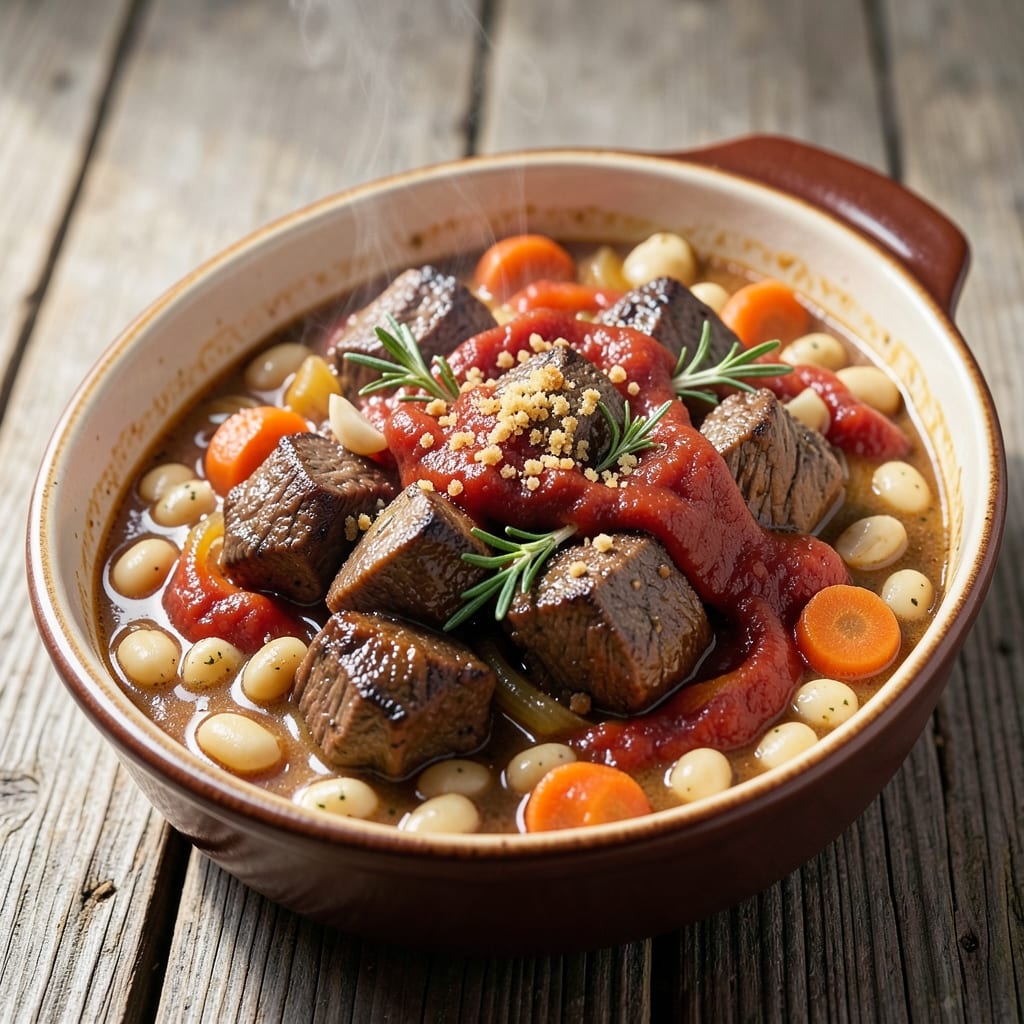
This beef and white beans recipe delivers rich, slow-simmered flavors in a single pot—where tender beef meets hearty beans in a sauce that builds umami depth with every spoonful. The secret lies in browning the beef first to develop deep caramelized notes, then letting it meld with white beans, garlic, and herbs over low heat for hours. What starts as a simple combination transforms into a restaurant-worthy stew that feels like a warm embrace on cold nights.
The beauty of this dish is its balance: tender beef that practically melts in your mouth, creamy white beans that soak up the savory broth, and a sauce thickened just enough to coat every bite without being heavy. No fancy techniques are required—just patience and a few key ingredients that come together effortlessly. The result is a meal that feels indulgent yet satisfying, perfect for feeding a crowd or enjoying with crusty bread on a quiet evening.
What makes this recipe stand out is its versatility—serve it with a simple green salad to lighten the meal or alongside roasted vegetables for added texture. The flavors only deepen as it sits, making it ideal for meal prep. By the time you're done, you'll have a pot of hearty, comforting stew that's impossible to resist. Let's get cooking.
This dish works equally well as a weeknight dinner or a special occasion meal, proving that simple ingredients can create something extraordinary. The slow simmering process ensures the beef stays fork-tender while the beans absorb all the rich flavors, creating a harmonious blend of textures and tastes. Trust me—once you try this, it'll become a staple in your recipe rotation.
Ingredients for beef and white beans
Six ingredients transform into a hearty stew that tastes like home cooking magic.
| Ingredient | Amount | Notes |
|---|---|---|
| Chuck Roast 🥩 | 2 lb | Cut into 1-inch cubes |
| Great Northern White Beans 🥜 | 2 cups | Canned, drained and rinsed |
| Yellow Onion 🧅 | 1 whole | Diced into small pieces |
| Carrots 🥕 | 4 medium | Peeled and chopped into chunks |
| Garlic Cloves 🧄 | 6 cloves | Minced finely |
| Tomato Paste 🍅 | ½ cup | Smooth, not chunky |
| Dry Red Wine 🍷 | 1 cup | Bold variety like Cabernet |
| Beef Broth 💧 | 4 cups | Low-sodium preferred |
| Fresh Thyme Leaves 🌿 | 1 tbsp | Or 1 tsp dried thyme |
| Fresh Rosemary 🌿 | 1 tbsp | Chopped finely |
| Olive Oil 🫒 | 2 tbsp | Extra-virgin preferred |
| Salt 🧂 | 1 ½ tsp | Kosher or sea salt |
| Black Pepper 🌶️ | 1 tsp | Freshly ground |
| Bay Leaves 🍃 | 2 whole | Removed before serving |
The chuck roast is your flavor anchor here—Costco or Walmart usually have it pre-cut, but if you're buying a whole roast, ask the butcher to cube it for you. Look for good marbling (those little white streaks of fat) because that's what keeps the meat tender during the long simmer. Great Northern beans are the creamier option compared to cannellini, but either works. I grab the canned ones for convenience, but dried beans cut costs if you've got time to soak overnight. The carrots can be baby carrots if that's what's in your fridge—no need to peel them unless they're super dirty.
No red wine? Substitute with extra beef broth—just add a splash of balsamic vinegar for depth. Fresh herbs make all the difference, but dried thyme and rosemary work at one-third the amount. If tomato paste feels like too much, use 1 cup crushed tomatoes instead. The beef broth should be low-sodium—Pacific Foods or Swanson are solid choices. For extra richness, add a splash of Worcestershire sauce (check for vegetarian version if needed). The bay leaves add subtle earthiness but disappear once removed—don't skip them.
This stew gets better overnight, so make a double batch if you can. Store in airtight containers for 5-6 days in the fridge, or freeze for up to 3 months. I always make extra portions because it reheats beautifully—just add a splash of water or broth if it gets too thick. The flavors meld even more after the first night, so leftovers are basically a free upgrade. For serving, a sprinkle of fresh parsley brightens it up if you've got any growing in your kitchen.
Why You'll Love This Recipe
- One-Pot Magic: I swear by this—dump everything in one pot, walk away, and let the beef and beans slow-cook into something rich and tender. No chopping stress, no extra pans, just pure, hands-off satisfaction.
- Deep Umami Bomb: The chuck roast turns impossibly tender while the white beans soak up all the caramelized onion, garlic, and carrot sweetness. That first bite? It’s like a hug for your taste buds—earthy, savory, and just a little bit meaty.
- Weeknight to Potluck: Between us, this recipe works for everything. Toss it into a slow cooker for a lazy Tuesday, serve it over crusty bread for a dinner party, or pack it for lunch—it’s the ultimate crowd-pleaser that never feels like a chore.
- Budget-Friendly Feast: A big cut of chuck roast and a can of beans stretch into meals for days. I’ll be real: my grocery bill thanks me, and my freezer is always stocked with leftovers that taste even better the next day.
Step-by-step instructions for slow-simmered beef and white beans
Here's how to build rich, hearty flavor with minimal effort—just one pot and patience.
Sear the Chuck Roast for Deep Flavor
Heat the 2 tablespoons olive oil in a large Dutch oven over medium-high heat until shimmering. Add the 2 lb chuck roast cut into 1-inch cubes, working in batches if needed so they don't overcrowd the pan. Let them sear undisturbed for 3-4 minutes until deep golden brown on all sides—this creates the Maillard reaction that forms the base of your dish's umami depth.
As the meat browns, you'll see those beautiful crusty edges form. Don't rush this step—if the pan gets too crowded, reduce heat slightly to prevent steaming. Once all the meat is browned, transfer it to a plate and set aside. You'll notice the pan will look darker now, which means all that flavor is stuck to the bottom—we'll scrape it up later.
Build the Aromatic Base
In the same Dutch oven, add the 1 whole yellow onion diced into small pieces and the 4 medium carrots chopped into chunks. Cook for 5 minutes until the onions soften and begin to caramelize slightly. Stir occasionally to prevent burning—you're looking for a sweet, golden color here.
Add the 6 cloves garlic cloves that have been minced finely and the 0.5 cup tomato paste. Stir well to combine with the onions and carrots. Cook for another 2 minutes until the raw garlic smell disappears and you can detect that rich tomato aroma developing. This aromatic base forms the flavor foundation for your entire dish.
Deglaze and Combine All Ingredients
Pour in the 1 cup dry red wine and scrape up all those browned bits from the bottom of the pan with a wooden spoon. This deglazing step captures all the meaty flavor that would otherwise go down the drain. Let the wine simmer for 3-4 minutes until it reduces by about half and the alcohol smell dissipates.
Add the 2 cups great northern white beans (drained and rinsed), 4 cups beef broth, 1 tablespoon fresh thyme leaves, 1 tablespoon fresh rosemary, 1.5 teaspoons salt, 1 teaspoon black pepper, and the 2 whole bay leaves. Stir everything together until well combined. Now return the browned chuck roast cubes to the pot, making sure they're fully submerged in the liquid.
Slow-Simmer for Tender Perfection
Bring the mixture to a gentle boil, then immediately reduce heat to low so it maintains just a bare simmer. Cover the pot with a lid and let it cook for 2.5 to 3 hours. This slow cooking time is crucial—it allows the tough chuck roast to break down into tender, fork-tender pieces while the beans absorb all that rich beef flavor.
Every 30 minutes, give the pot a gentle stir to prevent the meat from sticking to the bottom. You'll notice the liquid will gradually reduce and thicken, creating a luscious sauce that coats the beans and meat. The dish is ready when the beef easily pulls apart with a fork and the flavors have melded together beautifully.
Finish and Serve Warm
Remove the 2 whole bay leaves before serving. Taste the stew and adjust seasoning if needed—you might want to add a pinch more salt or a crack of black pepper to enhance the flavors. This dish tastes even better the next day as the flavors continue to develop, but it's delicious immediately too.
Serve the beef and white beans hot, straight from the pot, with crusty bread to soak up all that rich sauce. The combination of tender beef, creamy beans, and aromatic vegetables creates a satisfying, comforting meal that's perfect for chilly evenings or family gatherings.
Pro Tips For Making Beef And White Beans
- SEAR THE ROAST FIRST: I learned this the hard way—skipping the sear means bland beef. After browning the chuck roast in a hot pot with oil (3-4 minutes per side), the flavor jumps off the plate. The Maillard reaction here is non-negotiable for depth, especially when slow-cooking later.
- SOAK BEANS OVERNIGHT: Great Northerns stay stubbornly tough if you don’t soak them. Toss them in cold water for 8+ hours (or quick-soak: 2 hours in hot water, then 1 hour cold). This isn’t just about texture—it cuts cooking time by 45 minutes and keeps them from turning mushy.
- DON’T SKIP THE CARROT PREP: Julienne the carrots into ¼-inch sticks, not chunks. Thin slices soften faster and blend into the sauce instead of sitting as chewy afterthoughts. I used to cut them thick, and they’d always feel undercooked—this change makes them disappear into the dish perfectly.
- USE A DUTCH OVEN FOR LOW HEAT: If you’re slow-cooking, a Dutch oven guarantees even heat without hot spots. Fill it halfway with beans/liquid, then add the roast and veggies. The tight lid traps moisture, and the heavy base prevents burning—my grandmother’s trick for foolproof tenderness. (Yes, even if you’re impatient like me.)
Troubleshooting perfect results
Meat Stuck to Pot
If your beef clings stubbornly to the Dutch oven during simmering, it's usually from insufficient liquid or sticking during the sear. First, ensure your pot has enough liquid—aim for at least 4 cups total (broth + wine). When browning the beef, resist the urge to overcrowd the pan; cook in batches if needed. After simmering, if pieces stick, carefully add ½ cup hot water or broth and let it dissolve the stuck bits. Stir gently to release them before serving. 💡
Mushy Beans
Overcooking transforms creamy white beans into a mushy texture. The key is timing—beans should be tender but still hold their shape. If your beans turn to mush after 2.5 hours, reduce simmering time to 2 hours and check for doneness earlier. Alternatively, add 1 extra cup broth to dilute the cooking liquid slightly, which helps preserve texture. Avoid stirring too aggressively during simmering, as this can break down the beans faster. ✨
Weak or Bland Flavor
Blandness often comes from skipping the sear or using low-quality broth. Always brown the beef thoroughly for deep flavor, and use high-quality beef broth (like Pacific Foods or Swanson)—never watered-down versions. If the dish tastes flat, boost umami by adding 1 teaspoon soy sauce or ½ teaspoon Worcestershire sauce during the final 30 minutes of cooking. A splash of balsamic vinegar also adds complexity. 🌟
Sauce Too Thin
If your sauce is watery, it likely needs more reduction time. After the initial simmer, uncover the pot and let the liquid reduce over low heat for 10-15 minutes, stirring occasionally. For an instant fix, mix 1 tablespoon cornstarch with 2 tablespoons cold water, stir into the pot, and simmer for 2-3 minutes until thickened. Avoid adding flour directly, as it can make the sauce grainy. 🔥
Beef Too Tough
Tough beef usually means insufficient cooking time or incorrect cut. Chuck roast needs 2.5-3 hours at a gentle simmer—any less, and it won’t break down. If your beef is still chewy, return it to the pot with an additional ½ cup broth and simmer for another 30-45 minutes. For future attempts, ensure you’re using a well-marbled chuck roast (ask your butcher to confirm). 💪
Herbs Too Strong
Fresh herbs like thyme and rosemary can overpower if used too liberally. Start with 1 tablespoon each and taste as you go—you can always add more, but removing excess is tricky. If your stew tastes herbal, balance it with a pinch of sugar (½ teaspoon) or a splash of lemon juice to brighten the flavors. Dried herbs are milder, so use ⅓ the amount if substituting. 🌿
Nutrition facts
Frequently asked questions
Can I use dried white beans instead of canned?
Yes, but you'll need to soak them first! Use 1 cup dried Great Northern beans per 2 cups canned—soak overnight in plenty of water (at least 8 cups per cup of beans), then drain and rinse before adding to your stew. Dried beans add more texture and earthy flavor, but they require 1-2 extra hours of simmering time.
What's the best cut of beef for this recipe?
Chuck roast is ideal because it's flavorful and breaks down beautifully during slow cooking. For a leaner option, try stew meat (often sold pre-cut), or use brisket if you prefer a slightly firmer texture. Avoid tender cuts like sirloin—they'll turn tough when simmered for hours.
How do I make this dish vegetarian?
Swap the beef for 1 lb mushrooms (like cremini or portobello) and 1 cup lentils or chickpeas instead of white beans. Use vegetable broth and add 1 teaspoon smoked paprika for depth. The mushrooms should be sautéed until golden before adding to the pot.
Can I make this in a slow cooker?
Brown the beef first, then transfer everything to your slow cooker and cook on low for 7-8 hours or high for 4-5 hours. The slow cooker's gentle heat works perfectly for tenderizing the beef. Just add a splash of water if the mixture gets too thick during cooking.
What are the best sides to serve with this?
Crusty bread is a must for soaking up the sauce, but you could also serve it with: roasted Brussels sprouts, a simple green salad, or mashed potatoes. For extra heartiness, add a side of polenta or cornbread—the creamy texture balances the rich stew beautifully.