
Main Courses
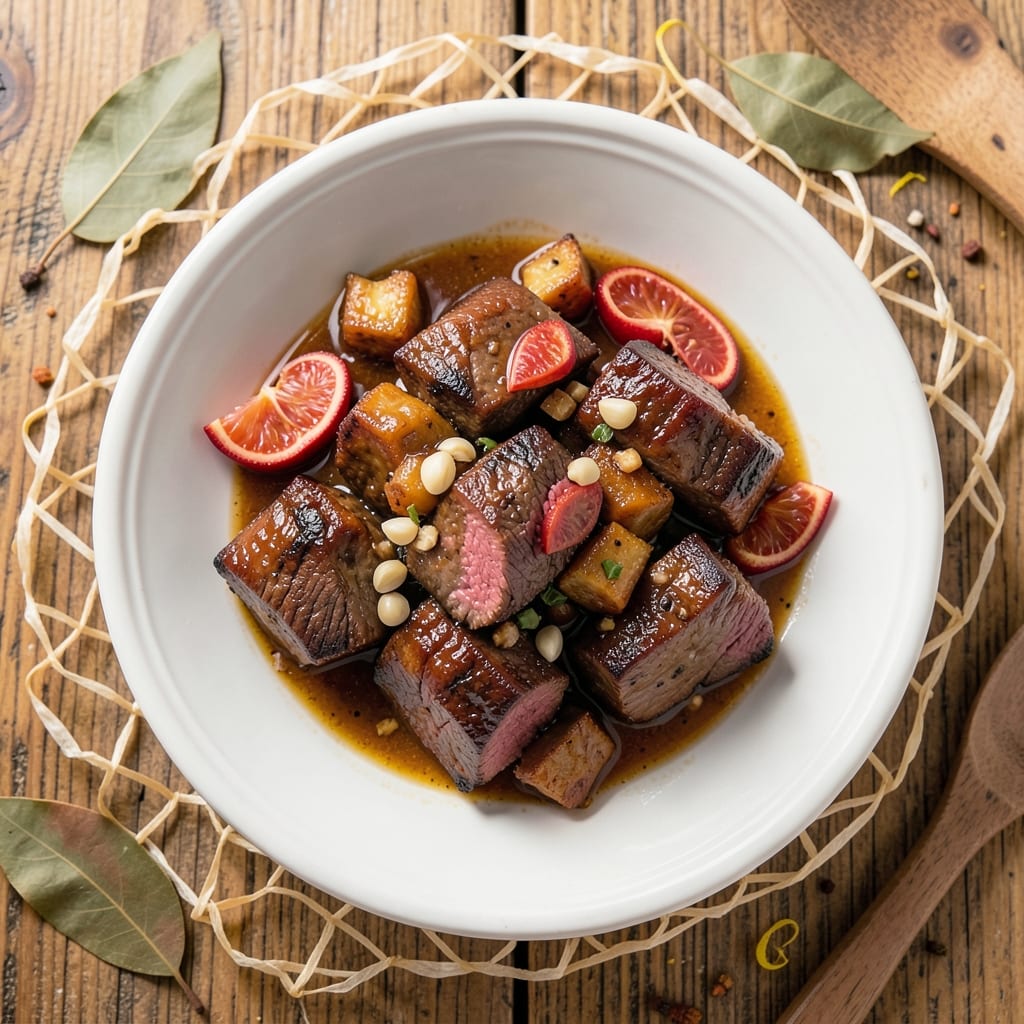
This beef asado Filipino style recipe brings the smoky, charred flavors of traditional Filipino barbecue straight to your grill or stovetop. The secret lies in the tangy marinade—soy sauce, calamansi (or lime), and garlic—paired with the unmistakable char marks that make every bite unforgettable. I perfected this recipe after years of experimenting with Filipino flavors, ensuring the beef stays tender yet develops that signature crispy crust. The marinade transforms tough cuts into melt-in-your-mouth perfection, while grilling over high heat creates those coveted grill marks. Filipino asado isn’t just about the meat—it’s about the experience. Serve it with classic sides like sinigang (sour tamarind soup) or atchara (pickled papaya) to complete the meal. The tangy, slightly sweet profile of the marinade pairs beautifully with these traditional accompaniments. What you’ll end up with is beef that’s juicy, flavorful, and packed with that smoky charred aroma that fills your kitchen. The marinade’s acidity tenderizes the meat while adding depth, and the grill marks give it that authentic Filipino BBQ look. This recipe is foolproof—even if you’re new to grilling, you’ll achieve restaurant-quality results. For an extra touch, drizzle with banana ketchup (a Filipino staple) before serving. It’s the perfect balance of sweet, tangy, and smoky flavors that will have everyone asking for seconds. Let’s get started!
Ingredients for beef asado recipe filipino style
Pantry staples plus a few specialty finds—Filipino flavors come alive with these ingredients.
| Ingredient | Amount | Notes |
|---|---|---|
| Beef Chuck Roast 🥩 | 2 lb | Cut into 1.5-inch cubes |
| Soy Sauce 🥫 | ½ cup | Light or regular, not low-sodium |
| Calamansi Juice 🍋 | ¼ cup | Substitute lime juice if unavailable |
| Garlic Cloves 🧄 | 8 cloves | Minced for marinade |
| White Vinegar 💧 | ¼ cup | For tangy depth |
| Brown Sugar 🍚 | 2 tbsp | Light or dark variety |
| Black Peppercorns 🌶️ | 1 tsp | Freshly cracked preferred |
| Bay Leaves 🌿 | 2 whole | For aromatic base |
| Olive Oil 🫒 | 2 tbsp | For searing beef |
| Banana Ketchup 🍯 | ¼ cup | Filipino staple for serving |
| Green Onions 🧅 | 4 whole | Sliced for garnish |
| Salt 🧂 | 1 tsp | Kosher or sea salt |
The beef is everything here. Chuck roast is ideal—it stays tender while developing that signature crispy crust. Look for good marbling at Filipino markets or your local butcher. If you can't find chuck, sirloin or flank steak works in a pinch, but cut it thinner. Calamansi juice is the magic ingredient—it’s that bright, citrusy Filipino lime. Filipino stores or Asian markets carry it, but lime juice in a squeeze works too. The marinade needs to sit for at least 4 hours, but overnight is best for maximum flavor.
No calamansi? Lime juice plus a pinch of salt mimics the tang. Soy sauce substitutes? Tamari or coconut aminos work in a pinch, but the umami depth isn’t quite the same. Brown sugar can be swapped for white sugar or honey, though the molasses notes are part of the charm. For extra authenticity, add 1 tsp fish sauce (optional)—it’s a Filipino secret weapon. The beef cubes should be 1.5 inches max so they cook evenly. If they’re too big, slice them thinner. And trust me, don’t skip the banana ketchup—it’s the sweet-tangy finish that ties everything together.
Marinade leftovers? Store in an airtight jar in the fridge for up to 5 days. The beef keeps 3 days in the fridge, but it’s best served fresh off the grill. For leftovers, reheat in a skillet with a splash of water to keep it juicy. Grilled beef reheats beautifully—just hit it with high heat for 2-3 minutes per side. The banana ketchup? Keep it refrigerated and it’ll last 2 months. Freeze the beef marinade if you’re prepping ahead—just thaw it overnight before using.
Why You'll Love This Recipe
- One-Pan Magic: I swear by this—just the beef, a few pantry staples, and 30 minutes on the stove. No chopping vegetables, no extra pots, no stress. The vinegar and calamansi juice do all the work while you sip your coffee.
- Tangy-Tangy Goodness: That bright calamansi cut through the richness of the beef, and the garlic? It’s like a little flavor bomb every bite. Honestly, the first time I tasted it, I immediately texted my mom to ask if she used the same trick for her asado.
- Budget Beef That Feeds: A chuck roast is cheap, and this recipe stretches it far without sacrificing flavor. Between us, I’ve fed six people for under $15, and they all thought it was a restaurant dish. (Yes, even on a Tuesday night.)
Step-by-step instructions for beef asado Filipino style
Here's how to achieve that perfect balance of smoky char, tender beef, and tangy Filipino flavors.
Marinate the Beef for Maximum Flavor
In a large bowl, combine the 2 lb beef chuck roast cut into 1.5-inch cubes, the 0.5 cup soy sauce, 0.25 cup calamansi juice, 0.25 cup white vinegar, 2 tbsp brown sugar, 1 tsp black peppercorns, 2 whole bay leaves, and 8 cloves minced garlic. I like to use my hands to mix everything thoroughly, making sure the beef absorbs all those wonderful marinade flavors.
Cover the bowl with plastic wrap and refrigerate for at least 4 hours—overnight is even better. This long marinating time breaks down the tough beef fibers and infuses it with that signature Filipino tanginess. The longer it marinates, the more tender and flavorful your beef will be.
Sear the Beef for Perfect Charred Marks
Heat a large skillet or grill pan over medium-high heat and add 2 tbsp olive oil. Once the oil is shimmering, add the marinated beef in a single layer, leaving space between each piece. Let the beef sear undisturbed for 3-4 minutes per side until you see beautiful golden brown grill marks forming.
Don't crowd the pan or you'll steam the beef instead of searing it. I press down gently on the beef with a spatula during the first minute to prevent it from curling and ensure even contact with the hot surface. This step is crucial for developing that authentic asado flavor and texture.
Simmer the Beef with the Marinade
After searing, transfer the beef to a large pot or Dutch oven. Pour in the marinade from the bowl (strain it if you want a smoother sauce) and bring it to a gentle boil. Once boiling, reduce the heat to low and let it simmer uncovered for 1.5 to 2 hours, stirring occasionally.
You'll know it's done when the beef is fork-tender and the sauce has reduced to a glossy consistency. The beef should be falling apart easily when pierced with a fork. If the sauce reduces too quickly, add a splash of water to maintain the proper consistency. Here's where that tangy vinegar magic really comes through.
Finish with Banana Ketchup and Garnish
Once the beef is perfectly tender, remove it from the pot and transfer it to a serving platter. Stir the 0.25 cup banana ketchup into the remaining sauce in the pot and let it simmer for 2-3 minutes to thicken slightly. This adds that sweet, tangy Filipino touch that makes this dish so special.
Garnish the beef with 4 whole green onions sliced into rounds and serve immediately with the banana ketchup sauce spooned over the top. The contrast of the sweet, tangy sauce with the tender, charred beef is what makes this dish so irresistible. Enjoy with steamed rice for the full Filipino experience!
Pro Tips For Making Beef Asado Recipe Filipino Style
- SEAR THE MEAT FIRST: Hit the beef chuck roast with a quick sear in a hot pan before braising—3-4 minutes per side until deep brown. That crust locks in flavor and prevents the meat from turning mushy later. I used to skip this and wondered why my asado tasted more like stew than caramelized beef.
- USE FRESH CALAMANSI (OR SUB WELL): Fresh calamansi juice is non-negotiable for that bright, tangy kick, but if you can’t find it, mix lime + lemon (1:2 ratio) and add a pinch of sugar to mimic the balance. Strain the juice through a fine sieve—bits make the sauce gritty, and nobody wants that.
- LOW AND SLOW WINS: After searing, cover the pot and simmer on low heat—around 170°F (75°C)—for at least 2.5 hours. Rushing it turns the chuck into shoe leather. I learned this the hard way when my first attempt came out chewy instead of fork-tender.
- DEGLAZE WITH VINEGAR LAST: Add the white vinegar after the beef is nearly done cooking—it brightens the sauce but can toughen the meat if introduced too early. Let it bubble for just 2-3 minutes, then reduce to thicken. Sounds weird, but it works: the acid cuts through the richness without overpowering.
Troubleshooting this recipe
Marinade Not Penetrating
If your beef isn’t absorbing the marinade, try poking holes with a fork first—this helps the tangy soy-calamansi mixture reach deeper. For tough cuts like chuck roast, I also recommend massaging the marinade into the meat with clean hands. If you’re short on time, submerge the beef in the marinade in a sealed bag for at least 4 hours—this ensures even distribution. 💡
Beef Too Tough After Cooking
Overcooking is the usual culprit here. Use a meat thermometer and pull the beef at 195°F internal temp—this ensures tenderness without drying it out. If your beef is still tough, try braising it for 1.5 hours after searing instead of simmering. For extra insurance, add 1 tsp baking soda to the marinade (rinse before cooking) to break down fibers. 🥩
Sauce Too Thin or Watery
A thin sauce usually means the vinegar and calamansi overpowered the sugar. To fix this, simmer uncovered on medium heat for 10-15 minutes to reduce it naturally. If it’s still too thin, mix 1 tbsp cornstarch with 1 tbsp water, stir into the sauce, and cook until thickened. For next time, reduce the vinegar by 1 tbsp or add 1 extra tbsp brown sugar to balance the acidity. ✨
Grill Marks Not Forming
Low heat or crowded beef prevents those coveted char marks. Preheat your grill or skillet to medium-high heat (test with a drop of water—it should sizzle immediately). Work in small batches and avoid moving the beef too soon—let it sear undisturbed for 3-4 minutes per side. For stovetop grilling, a cast-iron skillet works best—it retains heat better than nonstick. 🔥
Banana Ketchup Too Sweet
If the banana ketchup overpowers the beef, balance it by adding 1 tbsp soy sauce or 1 tsp white vinegar to the sauce before serving. For a tangier finish, stir in 1 tsp calamansi juice or even a pinch of black pepper. I also like to reduce the banana ketchup by simmering it alone for 2-3 minutes to concentrate its sweetness. 🍯
Leftovers Too Dry
Reheating asado beef can turn it dry, but a few tricks fix this. Sear the beef in a hot skillet with 1 tbsp olive oil for 2-3 minutes per side before adding any sauce. For extra moisture, add 2 tbsp beef broth or water to the pan while reheating. If using leftovers, reheat in the microwave on 50% power for 1-2 minutes, then finish with a quick sear in a pan. 💫
Nutrition facts
Frequently asked questions
Can I use regular lime instead of calamansi?
Yes! Calamansi is hard to find outside Filipino markets, but lime juice works perfectly. For extra authenticity, add a pinch of salt to mimic calamansi's saltier profile. Use the same amount (¼ cup) and adjust the marinade time by 30 minutes if needed.
What's the best cut of beef for Filipino asado?
Chuck roast is ideal for its marbling and tenderness, but flank steak or sirloin work too. For tougher cuts like chuck, marinate for overnight—the acidity breaks down fibers perfectly. If using sirloin, cut it thinner (½-inch cubes) and reduce marinating to 4 hours.
How do I make this on a stovetop without a grill?
Use a cast-iron skillet for that authentic char! Heat on medium-high until smoking hot, then sear beef in batches for 3-4 minutes per side. For extra grill marks, use a grill pan or press beef with a spatula during searing. The remaining steps (simmering) stay the same.
What are traditional Filipino sides for asado?
Classic pairings include sinigang (sour tamarind soup), atchara (pickled papaya), or steamed rice. For a complete meal, add ensaladang talong (eggplant salad) or ginataang gulay (coconut veggie stew). The tangy sides balance the beef's richness perfectly.
Can I make this ahead of time?
Marinate the beef 2 days ahead and store it in the fridge. Cook it 1 day before serving and refrigerate with sauce. Reheat gently in a skillet with a splash of water. The flavors actually deepen overnight—just avoid reheating dry!