
Soups & Stews
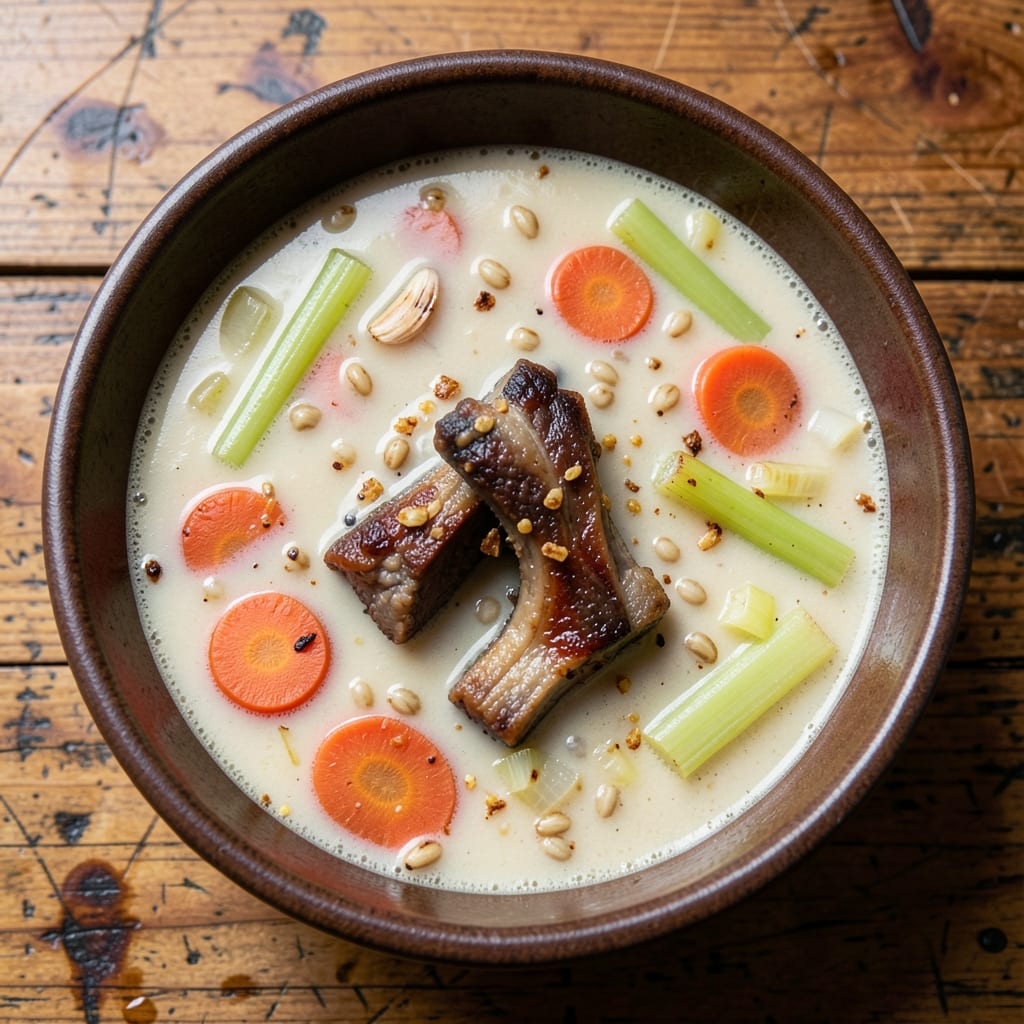
This beef barley soup recipe with soup bones transforms tough cuts into a deeply flavorful, one-pot masterpiece that simmers for hours to extract every ounce of richness from the bones. The result? A velvety broth so packed with umami depth it turns even the simplest meal into a comforting centerpiece. I developed this version after years of testing—each ingredient plays a precise role in building layers of savory complexity that keep you reaching for seconds.
The secret lies in the bones themselves: beef soup bones, simmered low and slow until they yield a broth so rich it practically melts into the barley and tender beef. Carrots and celery form the aromatic base, while fresh thyme and bay leaves infuse subtle herbal notes. Unlike quick soups, this one rewards patience with a texture that's impossibly tender—barley perfectly al dente, beef falling apart, and a broth thick enough to coat a spoon.
What you'll end up with is a soup that tastes like home—warm, hearty, and deeply satisfying in every spoonful. The barley absorbs the broth's richness while maintaining its satisfying bite, and the beef becomes so tender it practically dissolves. This isn't just soup; it's a flavor experience that transforms ordinary weeknights into moments of pure comfort.
The best part? It gets better with time. The flavors deepen as it sits, making it perfect for meal prep or feeding a crowd. Each bowl delivers that perfect balance of savory, herby, and slightly sweet notes that make this more than just soup—it's a tradition. Let's get started on creating this one-pot masterpiece that'll have everyone asking for the recipe.
Ingredients for beef barley soup recipe with soup bones
The bones make this soup extraordinary—rich, deep, and impossibly tender when simmered low and slow.
| Ingredient | Amount | Notes |
|---|---|---|
| Beef Soup Bones 🦴 | 3 lb | Raw, marrowbones preferred |
| Yellow Onion 🧅 | 1 whole | Chopped, medium size |
| Carrots 🥕 | 4 whole | Medium size, peeled |
| Celery Stalks 🧄 | 4 whole | Fresh, trimmed |
| Pearl Barley 🌾 | 1 cup | Rinsed before cooking |
| Garlic Cloves 🧄 | 6 cloves | Peeled, smashed |
| Fresh Thyme 🌿 | 2 tbsp | Leaves only, chopped |
| Bay Leaves 🍃 | 2 whole | Dried, standard size |
| Tomato Paste 🍅 | 2 tbsp | Canned, unsweetened |
| Beef Broth 💧 | 8 cups | Low-sodium preferred |
| Red Wine 🍷 | 1 cup | Dry, bold variety |
| Salt 🧂 | 2 tsp | Kosher or sea salt |
| Black Pepper 🌶️ | 1 tsp | Freshly ground |
| Olive Oil 🫒 | 2 tbsp | Extra-virgin preferred |
The beef soup bones are non-negotiable here. Look for marrowbones at your local butcher shop—they yield the most flavorful broth. If you're at a big-box store, Costco's beef soup bone packs are my go-to. Fresh thyme is ideal, but dried works at one-third the amount. For tomato paste, skip the squeeze tubes—San Marzano canned paste has the best flavor. The red wine should be bold and dry—Cabernet Sauvignon or Merlot work perfectly. If you can't find pearl barley, pot or hulled barley will do, though it may need slightly longer cooking time.
No red wine? Extra beef broth with a splash of balsamic vinegar gets you close. Running low on thyme? Rosemary at half the amount adds a nice earthiness. The carrots and celery can be swapped for leeks or fennel if you're feeling adventurous. For extra richness, add 1 tbsp of Worcestershire sauce (ensure it's vegetarian if needed). If your soup seems too thin after simmering, mash a few barley pieces to thicken it naturally. The marrow from the bones? Scoop it out and spread on toast—it's pure umami gold.
This soup tastes even better the next day as the flavors meld. Store in an airtight container in the fridge for up to 5 days. For freezing, portion into ziplock bags and it keeps for 3 months. I always make a double batch—one for dinner, one to freeze for lazy weeknights. The barley holds up beautifully when reheated, and the broth becomes even more concentrated. If you're prepping ahead, skip adding the barley until reheating so it doesn't get mushy.
Why You'll Love This Recipe
- Soup Bones Shortcut: Honestly, the bones do 90% of the work for you. Toss them in cold water, bring to a boil, and walk away—no pre-browning, no fancy techniques. That deep, slow-simmered broth builds itself while you chop the onions and celery (which, between us, is basically the hardest part).
- Umami Bomb: Here’s what sold me—the way the beef bones melt into the broth, turning it from clear to rich and golden. Add the barley and carrots later, and you’ve got that perfect balance: tender meat, chewy barley, and sweet carrots all swimming in flavor so bold it’ll make your taste buds sit up and take notice.
- Leftovers That Shine: Between us, this soup only gets better after day two. The barley softens just right, the broth deepens, and suddenly you’ve got a freezer-friendly meal that feels like a restaurant dish. I’ve reheated mine three times, and each batch tastes like the first.
- Budget Meal Magic: Not the prettiest, but the taste makes up for it—and the price doesn’t. A few soup bones, a bag of barley, and a handful of veggies stretch into six servings without breaking the bank. My college self would’ve cried happy tears over this. (Yes, even on a Tuesday night.)
Step-by-step instructions for beef barley soup with soup bones
This rich, one-pot soup builds deep flavor through slow cooking—here's how to unlock that bone broth magic.
Sear the Bones and Build the Flavor Base
Preheat your oven to 325°F. Heat the 2 tablespoons olive oil in a large Dutch oven over medium-high heat. Place the 3 lb beef soup bones in the pot and sear for 8-10 minutes on each side until deeply browned. This step caramelizes the proteins and creates a rich foundation for the broth.
Once browned, remove the bones and set them aside. In the same pot, add the 1 whole chopped yellow onion, 4 whole peeled carrots, and 4 whole trimmed celery stalks. Cook for 5 minutes until the vegetables begin to soften. Here's where the magic starts—those browned bits sticking to the bottom will dissolve into the broth, adding depth of flavor.
Toast the Barley and Add Aromatics
Add the 1 cup rinsed pearl barley to the pot and toast for 2 minutes over medium heat, stirring constantly. This step enhances the nutty flavor of the barley and prevents it from turning mushy later. Remove the pot from heat and stir in the 6 peeled and smashed garlic cloves, 2 tablespoons chopped fresh thyme, and 2 whole bay leaves.
Return the seared beef bones to the pot. Add the 2 tablespoons tomato paste and stir to coat the bones and vegetables. The tomato paste adds a subtle sweetness that balances the richness of the broth. Pour in the 8 cups beef broth and 1 cup red wine, scraping up any browned bits from the bottom of the pot. This ensures you capture all the flavor you've built so far.
Simmer for Deep Flavor Development
Bring the soup to a gentle boil, then reduce heat to low and cover. Let it simmer for 2 hours, stirring occasionally. This slow cooking time is crucial—it allows the collagen in the bones to break down into gelatin, creating a thick, velvety broth. You'll know it's ready when the barley is tender and the broth has a rich, golden color.
After 2 hours, check the barley for doneness. It should be tender but still have a slight bite. If it's not quite there, continue simmering for another 30 minutes. Here's the thing—don't rush this step. The longer the soup simmers, the deeper and more complex the flavors become. The bones should be falling off the bone by this point, releasing all their gelatinous goodness into the broth.
Season and Finish the Soup
Remove the beef bones and strain the soup through a fine-mesh sieve into a clean pot. Discard the solids. Return the strained broth to the pot and stir in the 2 teaspoons salt and 1 teaspoon freshly ground black pepper. Taste and adjust the seasoning if needed—this is your chance to balance the flavors before serving.
Return the soup to a gentle simmer and cook for an additional 10 minutes to ensure everything is heated through. The soup should be thick and rich, with a beautiful golden hue. If it's too thick, you can thin it with a little water or additional beef broth. Serve the soup hot, garnished with extra fresh thyme if desired. Each spoonful should deliver a perfect balance of hearty beef, nutty barley, and deep, comforting broth.
Pro Tips For Making Beef Barley Soup Recipe With Soup Bones
- Brown the Bones First: Don’t skip the sear—get those soup bones blistering in the pot for 10-15 minutes until deep brown. I learned this the hard way: skipping this step means flavor that’s more watery than rich. The crust releases collagen and caramelized depth that turns your broth from "meh" to "wow."
- Cut Onions Roughly: Dice those yellow onions into ½-inch chunks instead of tiny cubes. They’ll soften faster and blend into the soup without turning mushy or leaving chunks that scream "rushed prep." (Yes, even if you’re impatient like me.)
- Parboil the Barley: Toast the pearl barley in the pot for 2 minutes before adding liquid—just until fragrant. Then rinse it cold to stop cooking. This prevents gummy texture later. I was skeptical until I tried it: the barley stays firm and absorbs flavor like a sponge.
- Simmer, Don’t Boil: Keep the heat low enough that bubbles barely break the surface—no rolling boil. High heat turns barley to mush and makes carrots/celery turn to sludge. Sounds weird, but it works: your soup stays thick and hearty, not soupy and sad.
Flavor customization for this recipe
Spice Level Boost
For a kick, stir in 1 tsp smoked paprika with the tomato paste or add ½ tsp cayenne pepper at the end. I love finishing with a sprinkle of crushed red pepper flakes—just ¼ tsp adds warmth without overpowering. If you want smoky depth, swap one bay leaf for a ½-inch piece of chipotle in adobo (remove before serving). 🌶️
Herbal Variations
Swap thyme for 1 tbsp fresh rosemary or 1 sprig fresh sage for an earthier profile. For brightness, add 2 tbsp fresh parsley at the end. I once made a version with 1 tsp dried tarragon—it added an anise-like note that surprised everyone at the table. Always taste before serving to balance flavors.
Umami Enhancers
Boost depth with 1 tbsp soy sauce or 1 tsp fish sauce (if vegetarian, use ½ cup coconut aminos). For extra richness, stir in 1 tbsp Worcestershire sauce after simmering. I also like adding 1 oz dried porcini mushrooms to the broth for a forest-like umami—just remove them before serving.
Sweet-Savory Balance
Add 1 tbsp honey or 1 tbsp maple syrup with the tomato paste to mellow the acidity. For caramelized sweetness, cook 1 diced apple with the onions. I once added ½ cup diced pear in the last 30 minutes—it softened beautifully and added natural sweetness that complemented the barley.
Global Twists
For a French bistro vibe, add 1 cup white wine instead of red and finish with 1 tsp Dijon mustard. For Italian flair, stir in ½ cup canned diced tomatoes with the tomato paste. My favorite fusion version uses 1 tsp ground coriander and ½ tsp turmeric for a Middle Eastern-inspired twist—just add them with the barley.
Texture Play
Add ½ cup cooked lentils for extra protein or ½ cup diced potatoes for heartiness. For crunch, top with toasted breadcrumbs or crumbled feta cheese. I sometimes add 1 cup shredded cabbage** in the last 15 minutes—it softens perfectly and adds a satisfying bite. 💫
Nutrition facts
Frequently asked questions
Why do I need to use soup bones specifically instead of regular beef bones?
Soup bones are cut from beef joints with high collagen content—like knuckles, marrowbones, or shanks—which break down into gelatin during long simmering, creating that signature velvety texture. Regular beef bones (like rib or short ribs) lack this collagen and won't yield the same rich, thick broth. The marrow inside soup bones also adds natural richness that's impossible to replicate with other cuts.
Can I substitute pearl barley with another grain?
Yes! For a nuttier flavor, try pot barley (same cooking time). If you prefer a softer texture, use wheat berries (simmer 45-60 minutes) or farro (simmer 30-40 minutes). Just remember: barley's chewy texture is key to this soup's character. For gluten-free, use quinoa (cook separately, as it needs less liquid).
How do I know when the soup is done and not overcooked?
Your soup is perfect when the barley is tender but still has a slight bite (2-2.5 hours simmering), and the beef is falling apart. Overcooked soup will have mushy barley and stringy meat. Check doneness by tasting a barley grain—it should be soft but not falling apart. If the broth reduces too much, add ½ cup water or broth at the end to restore balance.
What can I do with leftover bones after making the soup?
Don't throw them out! Rinse the bones, place them in a pot with fresh water, and simmer for 8-12 hours to make a second batch of bone broth. The flavor will be milder but still delicious. Alternatively, roast the bones at 400°F for 30 minutes, then use them in tacos or salads for extra crunch and flavor. Every part of the bone has potential!
Can I make this soup in a slow cooker or Instant Pot?
For a slow cooker, sear the bones first, then add all ingredients and cook on low for 8 hours or high for 5 hours. For an Instant Pot, sear the bones, then pressure cook on high for 60 minutes (natural release). The Instant Pot version will be slightly thinner—thicken it by mashing some barley or adding a cornstarch slurry. Both methods work, but the stovetop version gives you more control over the simmering process.