
Main Courses
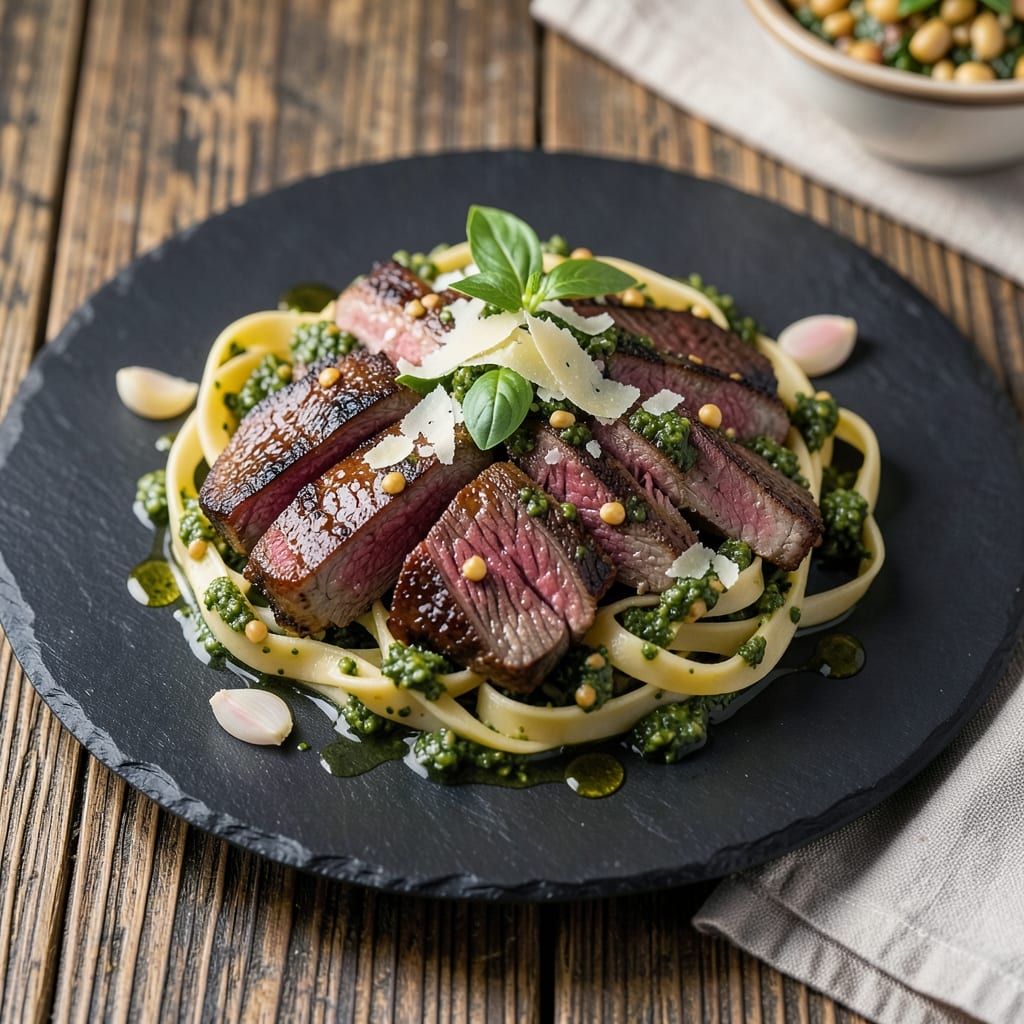
This beef basil pesto pasta recipe transforms a classic Italian dish into a rich, meaty masterpiece where tender beef meets vibrant pesto in a single, satisfying bowl. The secret lies in searing the beef to perfection—juicy yet firm—while balancing the bright, herby pesto with a touch of tomato for depth. Every bite delivers a harmonious blend of savory, tangy, and fresh flavors, making it a standout weeknight dinner or special occasion meal.
The process is straightforward but packed with professional techniques: browning the beef in batches for maximum flavor, cooking the pasta al dente so it holds up to the hearty sauce, and assembling everything just before serving to keep the noodles from getting soggy. Fresh basil pesto is ideal, but a high-quality store-bought version works in a pinch—just adjust the seasoning to taste. This dish proves you don’t need fancy ingredients to create restaurant-quality results at home.
What you’ll end up with is a plate of perfectly al dente pasta coated in a luscious, meat-infused pesto sauce, where each strand of beef is tender and packed with flavor. The bright green pesto cuts through the richness of the meat, while the tomato adds a subtle tang that ties everything together. Serve with a simple arugula salad or warm garlic bread to soak up every last drop of that velvety sauce.
This recipe is designed for flexibility—use ground beef, thinly sliced steak, or even leftover roast beef for a quick meal. The key is balancing the flavors: start with a tablespoon of pesto, then adjust to taste, and always finish with a sprinkle of fresh basil and a crack of black pepper. Let’s get cooking!
Ingredients for beef basil pesto pasta
Fresh basil and tender beef create this restaurant-worthy pasta with vibrant tomato-meat fusion.
| Ingredient | Amount | Notes |
|---|---|---|
| Beef (Thinly Sliced Steak or Ground) 🥩 | 1 lb | Thinly sliced for even cooking |
| Fresh Basil Leaves 🌿 | 2 cups | Packed, stems removed |
| Pine Nuts 🥜 | ½ cup | Toasted for enhanced flavor |
| Garlic Cloves 🧄 | 4 cloves | Peeled and minced |
| Parmesan Cheese 🧀 | ¾ cup | Freshly grated from block |
| Extra-Virgin Olive Oil 🫒 | ½ cup | High-quality for richness |
| Lemon Juice 🍋 | 1 tbsp | Freshly squeezed |
| Cherry Tomatoes 🍅 | ½ lb | Diced for tomato depth |
| Pasta (Fettuccine or Penne) 🍝 | 12 oz | Al dente cooking preferred |
| Salt 🧂 | 1 tsp | Kosher or sea salt |
| Black Pepper 🌶️ | ½ tsp | Freshly ground preferred |
| Red Wine (Optional) 🍷 | ¼ cup | Dry red for deglazing |
| Vegetable Oil 🫒 | 2 tbsp | For searing beef |
| Fresh Mozzarella (Optional) 🧀 | ½ cup | Shredded for extra creaminess |
The beef is the foundation—thinly sliced steak or ground beef both work, but ribeye or sirloin stays juicier when sliced against the grain. Costco or Whole Foods often carry pre-sliced beef for convenience, but if buying whole, ask the butcher to cut it thin. For the pesto, fresh basil is non-negotiable; the bright green leaves at Trader Joe's or local farmers markets have the best flavor. Toast the pine nuts in a dry pan until golden—this step makes all the difference. The cherry tomatoes add natural sweetness that balances the richness, so grab the heirloom variety if you want extra flavor.
No fresh basil? Dried basil at half the amount works in a pinch, but the texture won’t be the same. Swap pine nuts for walnuts or cashews if you’re watching costs—just toast them first. The red wine is optional but recommended; if you skip it, use an extra splash of beef broth. For the pasta, bronze-die fettuccine holds up best to the sauce, but any shape works. If you’re adding mozzarella, use fresh—pre-shredded gets watery. The Parmesan should be real Parmigiano-Reggiano; grate it yourself for the best results.
This dish reheats beautifully—just add a splash of water or broth to loosen the sauce. Store leftovers in an airtight container for 3-4 days in the fridge. For longer storage, freeze portions for up to 3 months. I like to portion it into individual containers so I can grab a meal on busy days. The pesto sauce can be made ahead and stored separately for 2 days in the fridge, covered with a thin layer of olive oil to preserve freshness.
Why You'll Love This Recipe
- No-Fuss Assembly: I swear by this recipe when I’m too tired to measure. Toss the cooked pasta, seared beef, and basil-pine nut pesto together—no fancy plating, no stress. That’s the magic: the garlic and Parmesan melt into the warm pasta while you’re still scraping the last bits of pesto from the bowl.
- Umami Bomb: The beef adds depth the pesto alone can’t match—whether you use thinly sliced steak for chew or ground beef for richness. Fresh basil brightens it up, but the real star? That crispy edge on the beef when it hits the stovetop. (Yes, even on a Tuesday night.)
- Lunchbox Hero: Between us, this is my go-to for meal prep. Toss leftover portions into containers with a sprinkle of extra Parmesan, and it still tastes fresh the next day. Honestly, my kids grab it over sandwiches—probably because it feels fancy but isn’t.
- Budget Flex: Ground beef keeps costs low, but you can splurge on steak if you’re feeling it. Pine nuts are pricey, but a little goes a long way—plus, I’ve swapped them for walnuts in a pinch. The Parmesan stretches further than you’d think, and basil? A handful lasts forever if you store it right.
Step-by-step instructions for beef basil pesto pasta
Master this rich tomato-meat fusion with vibrant herb flavors in just 30 minutes.
Prepare the Beef and Pesto Base
Heat the 2 tablespoons vegetable oil in a large skillet over medium-high heat. Add the 1 pound thinly sliced beef and cook for 3-4 minutes until it loses its raw color and begins to brown. I press down gently on the slices during the first minute to prevent curling, which ensures even contact with the pan.
Remove the beef and set aside. In the same skillet, add 4 cloves minced garlic and sauté for 30 seconds until fragrant. Add the 0.5 pound diced cherry tomatoes and cook for 2 minutes until they soften slightly. This step builds the tomato depth that anchors the dish.
Transfer the garlic-tomato mixture to a food processor along with the 2 cups packed fresh basil leaves, 0.5 cup toasted pine nuts, 0.75 cup freshly grated Parmesan cheese, and 1 tablespoon fresh lemon juice. Pulse until smooth but still slightly textured. With the processor running, slowly drizzle in the 0.5 cup extra-virgin olive oil to emulsify the pesto.
Cook the Pasta Al Dente
Bring a large pot of salted water to a rolling boil. Add the 12 ounces pasta and cook until 1 minute shy of package directions for al dente texture. Reserve 1 cup pasta water before draining, as this starchy liquid helps emulsify the pesto sauce.
While the pasta cooks, return the beef to the skillet and add 0.25 cup red wine (if using). Simmer for 1 minute to deglaze the pan, scraping up any browned bits. This step captures all the beefy flavor that would otherwise be lost.
Combine Everything for Maximum Flavor
Add the cooked pasta to the skillet with the beef and wine mixture. Pour in the pesto and toss vigorously to coat. If the sauce seems too thick, add pasta water 1 tablespoon at a time until it reaches a creamy consistency that clings to the noodles.
Stir in the 0.5 cup shredded fresh mozzarella (if using) and season with 1 teaspoon salt and 0.5 teaspoon black pepper. The mozzarella adds a luxurious creaminess that balances the herby pesto. Taste and adjust seasoning if needed—this is the moment to ensure perfect harmony of flavors.
Serve Immediately for Best Results
Transfer the pasta to serving plates and garnish with additional fresh basil leaves if desired. The dish should be vibrant green from the basil, with visible chunks of pine nuts and melted mozzarella. Serve immediately while the pasta is hot and the sauce is silky.
Each bite should deliver a perfect balance of tender beef, rich tomato flavor, herby pesto, and creamy mozzarella. The pasta should be al dente with a velvety sauce clinging to every strand. This dish comes together quickly but delivers restaurant-quality results every time.
Pro Tips For Making Beef Basil Pesto Pasta
- SEAR STEAK IN BATCHES: If using sliced steak, cook it in 2-3 batches over high heat—crowding the pan steams the meat instead of searing. I learned this the hard way when my first batch turned out soggy and gray. Let the pan cool slightly between batches, or your kitchen will feel like a sauna.
- TOAST PINE NUTS LOW: Pine nuts burn faster than you’d think. Toast them in a dry pan over medium-low heat, stirring constantly, until just golden—about 3-4 minutes. Overcooking turns them bitter, and that’s a flavor crime in pesto. Keep a lid nearby to smother any flames if they pop.
- SALT THE PASTA WATER: Yes, even if your pasta has salt on the package. Add 1 tablespoon of salt per 4 quarts of water—this guarantees the pasta absorbs flavor, not just starch. I skip this sometimes, and the dish always feels flat afterward. Trust me, the salt matters more than you’d guess.
- PULSE BASIL GARLIC GARLIC: When blending the pesto, add the garlic after most of the basil—about 2-3 cloves—then pulse just until combined. Too early, and the garlic overpowers; too late, and you get uneven texture. My grandmother swore by this, and she was right: balance is everything in pesto.
Essential equipment for this dish
Skillet Essentials
Start with a 12-inch cast-iron skillet—it retains heat beautifully and creates that perfect sear on the beef. I swear by the Lodge Pre-Seasoned Cast Iron Skillet because it’s affordable and develops a natural non-stick patina over time. If you don’t own one, a stainless steel skillet like the All-Clad Stainless works too, but you’ll need to use a little more oil to prevent sticking. 🔥
Pesto Processing
A high-quality food processor is a must for blending the pesto—it needs to handle the nuts and cheese without overheating. My go-to is the Cuisinart Food Processor because it’s powerful yet easy to clean. If you’re making pesto frequently, consider a mini chopper like the Ninja BN601 for smaller batches. Avoid blenders—they can’t handle the texture properly.
Pasta Cooking Tools
Use a large, deep pot with a tight-fitting lid for cooking the pasta—it should hold at least 8 quarts of water. I recommend All-Clad Stainless Steel or Cuisinart MultiClad for durability. A pasta fork or tongs helps toss the noodles evenly, and a fine-mesh strainer ensures you don’t lose any pasta water. Pro tip: A laser thermometer like the Thermoworks Thermapen helps monitor water temperature for perfect al dente pasta.
Optional Extras
For the optional mozzarella, a mandoline slicer makes quick work of thin, even shreds. If you’re deglazing with wine, a small whisk helps scrape up those flavorful browned bits from the pan. And don’t skip a good chef’s knife—it’s essential for mincing garlic and dicing tomatoes efficiently. A sharp 8-inch knife like the Wüsthof Classic is my favorite for precision.
Storage Containers
Leftovers deserve a high-quality airtight container to keep the pesto from turning brown and the pasta from drying out. I use glass Pyrex containers with snap-on lids—they’re microwave-safe and won’t absorb odors. For freezing, quart-sized silicone freezer bags work great because they’re stackable and prevent freezer burn. Label everything with the date to keep track of freshness. ❄️
Nutrition facts
Frequently asked questions
Can I use ground beef instead of sliced steak?
Ground beef works beautifully and actually simplifies the cooking process. Use 80/20 lean-to-fat ratio for maximum flavor, and brown it thoroughly in the skillet for 5-6 minutes until it develops a rich crust. The texture will be slightly different but equally delicious—just be sure to drain excess fat before combining with the pasta.
How do I prevent the pesto from turning brown or separating?
Fresh pesto oxidizes quickly, so add a thin layer of extra-virgin olive oil directly on its surface when storing. For separation, ensure all ingredients are at room temperature before blending, and pulse the food processor in short bursts. The key is emulsifying the oil last while the processor is running. If it separates later, whisk in a splash of warm pasta water to restore creaminess.
What's the best way to reheat leftovers?
Reheat in a skillet over medium-low heat with 2 tablespoons water or broth to prevent drying. Stir frequently for 3-4 minutes until warmed through. Microwaving works in a pinch, but the sauce may thin out—cover with a damp paper towel and heat in 30-second intervals, stirring between each. For best texture, reheat only what you'll eat immediately.
Can I make this dish ahead of time?
Prepare the components separately for maximum freshness: cook the beef and pesto sauce 1 day ahead, store them separately in airtight containers, and cook the pasta fresh. Reheat the beef gently, then toss with freshly cooked pasta and warmed pesto. The flavors actually improve overnight as they meld together! Avoid pre-cooking the pasta—it becomes mushy when reheated.
What wine pairs best with this dish?
A medium-bodied Chianti or Pinot Noir complements the herby pesto and rich beef beautifully. For non-wine drinkers, a sparkling sparkling water with lemon or iced hibiscus tea cuts through the richness. The acidity in both balances the creamy mozzarella and bold flavors. Pro tip: Use the same red wine you cook with for deglazing!