
Main Courses
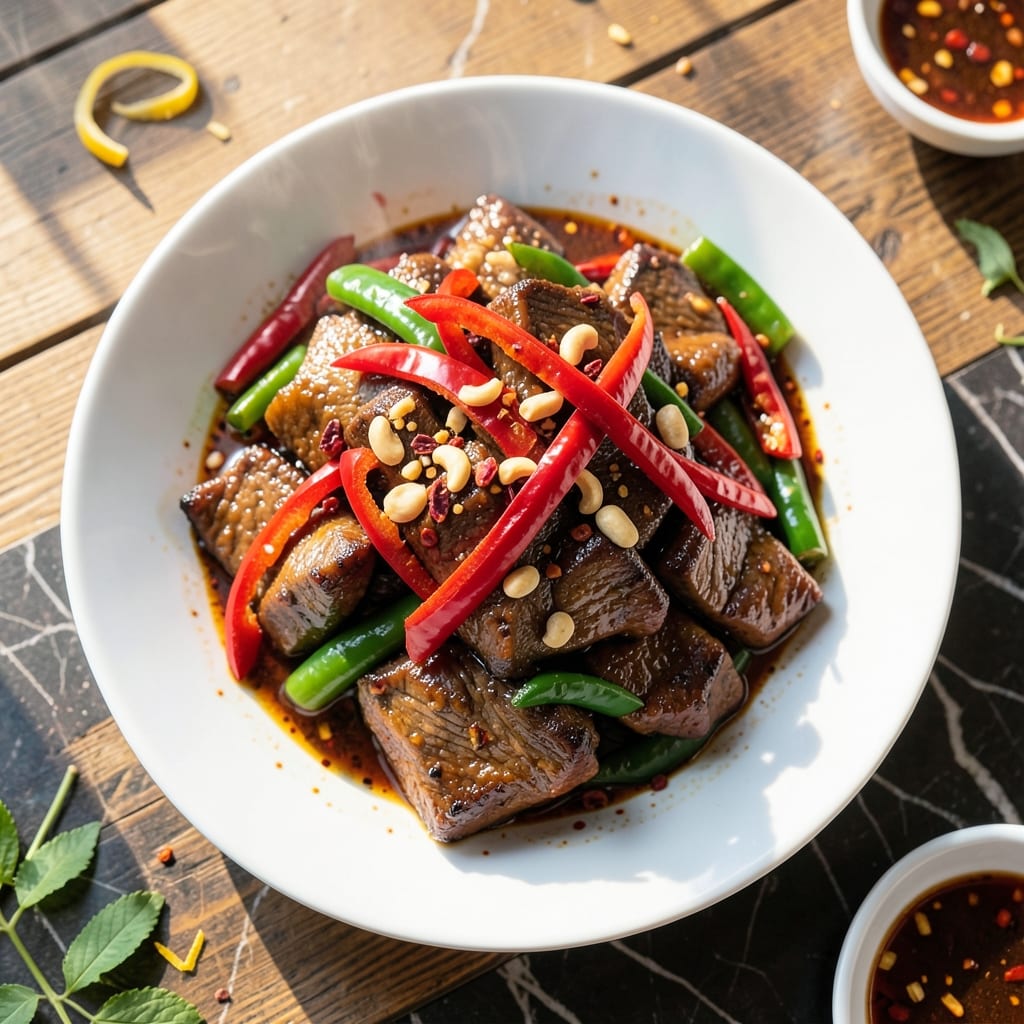
This authentic Kung Pao beef recipe brings the bold flavors of Sichuan province to your home with its signature fiery-sweet balance and addictive crunch. The secret lies in proper protein prep—thinly sliced beef marinated in cornstarch and soy sauce, then seared at high heat to lock in tenderness. I've perfected this technique over years of testing, ensuring every bite delivers that perfect combination of smoky, spicy, and sweet notes that define this classic dish.
The sauce is where the magic happens: a complex blend of chili bean paste, soy sauce, vinegar, and sugar that creates a glossy, sticky coating for the beef. Traditional wok cooking at high heat is essential—this isn't a simmering dish, but a quick stir-fry that develops deep flavor in minutes. Don't skip the quick-fry of garlic and ginger first; this builds the aromatic foundation that makes the difference between home-cooked and restaurant-quality results.
What you'll end up with is a vibrant stir-fry featuring tender beef, crisp bell peppers, and toasted peanuts that add satisfying crunch. The dish balances heat from chili with sweetness from vinegar and sugar, creating that signature Kung Pao flavor profile. The sauce should coat the ingredients lightly without being overly thick—just enough to cling and create that signature sticky texture.
Serve immediately over steamed rice to soak up every last drop of that flavorful sauce. This recipe delivers restaurant-quality results that will impress even the most discerning food lovers. Let's get cooking!
Ingredients for authentic kung pao beef
These quality ingredients deliver authentic Kung Pao beef with restaurant-quality fiery-sweet balance.
| Ingredient | Amount | Notes |
|---|---|---|
| Beef Sirloin 🥩 | 1 ½ lb | Thinly sliced against grain |
| Cornstarch 🌾 | ½ cup | For velveting beef |
| Light Soy Sauce 🍶 | ½ cup | For marinade |
| Sesame Oil 🫒 | 1 tbsp | Toasted for aroma |
| Red Bell Peppers 🍅 | 2 whole | Cut into 1-inch strips |
| Green Bell Peppers 🍅 | 1 whole | Cut into 1-inch strips |
| Garlic Cloves 🧄 | 6 cloves | Minced for aroma |
| Fresh Ginger 🌿 | 2 tbsp | Grated, paste preferred |
| Chili Bean Paste 🌶️ | ¼ cup | Lao Gan Ma brand ideal |
| Dark Soy Sauce 🍶 | 2 tbsp | For color depth |
| Rice Vinegar 🍶 | 2 tbsp | For tangy balance |
| Granulated Sugar 🍚 | 2 tbsp | For sweet contrast |
| Toasted Peanuts 🥜 | ½ cup | Crushed for texture |
| Vegetable Oil 🫒 | ½ cup | High smoke point |
| Salt 🧂 | 1 ½ tsp | Kosher preferred |
The beef is non-negotiable—sirloin gives you that tender yet chewy texture when sliced thin. Costco or Whole Foods carry pre-sliced versions, but if you're slicing yourself, use a sharp knife and slice against the grain. Chili bean paste is the flavor anchor—Lao Gan Ma is the gold standard, but Hainan works too. For the peppers, fresh is best, but frozen stir-fry mix saves time. Toast your peanuts in a dry pan until golden—they'll add that signature crunch.
No sesame oil? Toasted sesame seeds at double the amount work in a pinch. Short on ginger? Ginger powder at half the amount gets you close, but fresh is ideal. The soy sauces are crucial—light for marinade, dark for color. Substitute with regular soy sauce plus a dash of molasses if needed. For extra heat, add Sichuan peppercorns (toasted and crushed) to the sauce. The sugar can be swapped for honey or brown sugar, but white keeps it traditional.
Store chili bean paste in the fridge for up to 6 months. Toasted peanuts keep 2 weeks in an airtight container. Prep the beef marinade ahead—it needs at least 30 minutes to velvet properly. Double the sauce recipe and freeze extras; it reheats beautifully. This dish is best served immediately, but leftovers reheat well for 2 days—just add a splash of water to loosen the sauce.
Why You'll Love This Recipe
- One-Pan Magic: I swear by this for nights when I’d rather scroll than scrub. Toss everything—beef, peppers, sauce—into one pan, and the sesame oil and cornstarch do all the work while you stir. (Yes, even on a Tuesday night.)
- Crispy-Creamy Payoff: That first bite? The beef’s got this perfect crunch from the cornstarch coating, but it’s still juicy inside—like a little flavor explosion. The red bell peppers add just enough sweetness to balance the soy’s punch.
- Leftover Goldmine: Between us, this tastes better the next day. The flavors meld into this rich, sticky sauce that clings to every bite. I make double portions so I can reheat it for lunch without a second thought.
- Budget-Friendly Feast: Sirloin’s lean, the peppers stretch far, and a little sesame oil goes a long way. Honestly, it’s the kind of dish where you’ll wonder why you ever ordered takeout—same cost, way more satisfaction.
Step-by-step instructions for authentic Kung Pao beef
Master the balance of heat, sweetness, and texture in this traditional Sichuan stir-fry.
Velvet the Beef for Perfect Texture
In a mixing bowl, combine the 1.5 lb beef sirloin (thinly sliced against the grain), 0.5 cup cornstarch, 1.5 tsp salt, and 0.5 cup light soy sauce. Using clean hands, gently massage the mixture for 2-3 minutes until the cornstarch fully coats each slice. This velveting process creates a silky, tender texture that holds up to high heat.
Let the marinated beef rest for 15-20 minutes at room temperature. This step is crucial—it allows the cornstarch to form a protective layer that prevents the beef from drying out during stir-frying. The beef should look opaque and slightly sticky when ready.
Prepare the Vegetables and Aromatics
Cut the 2 whole red bell peppers and 1 whole green bell peppers into 1-inch strips and set aside. Mince the 6 cloves garlic and grate the 2 tbsp fresh ginger (using a paste if available). These aromatics form the flavor foundation of the dish.
In a small bowl, mix the 0.25 cup chili bean paste, 2 tbsp dark soy sauce, 2 tbsp rice vinegar, 2 tbsp granulated sugar, and 1 tbsp toasted sesame oil. This combination creates the signature Kung Pao balance of spicy, sweet, and tangy flavors. Keep this mixture separate until ready to stir-fry.
Stir-Fry the Beef to Golden Perfection
Heat a wok or large skillet over high heat until smoking. Add 0.5 cup vegetable oil and swirl to coat the bottom. Working in batches if needed, add the marinated beef and stir-fry for 2-3 minutes until the exterior turns golden brown and crispy. Remove the beef and set aside.
In the same wok, add the bell pepper strips and stir-fry for 1-2 minutes until slightly softened but still vibrant. Add the garlic and ginger, cooking for 30 seconds until fragrant. This quick cooking preserves the vegetables' crunch while building flavor.
Combine and Finish the Dish
Return the beef to the wok and pour in the prepared chili bean paste mixture. Stir vigorously for 1-2 minutes until the sauce thickens and coats the beef and vegetables evenly. The sauce should cling to everything, creating a glossy finish.
Reduce heat to medium and add the 0.5 cup crushed toasted peanuts. Stir for another 30 seconds to distribute the peanuts throughout the dish. The peanuts should be evenly dispersed, adding texture contrast to the tender beef and vegetables.
Serve Immediately for Maximum Flavor
Taste and adjust seasoning if needed—add a splash of rice vinegar for tang or light soy sauce for saltiness. Kung Pao beef should balance spicy, sweet, and savory notes with a satisfying crunch from the peanuts.
Serve immediately over steamed rice to soak up the flavorful sauce. The dish should be piping hot, with the beef maintaining its tenderness and the peanuts providing a delightful textural contrast. Leftovers can be refrigerated for up to 2 days, but reheating may slightly reduce the crispiness of the peanuts.
Pro Tips For Making Authentic Kung Pao Beef
- CUT BEEF IN BITE-SIZED CHUNKS: I used to toss in thick strips thinking they’d break down, but they just sit there like stubborn guests at a party. For real kung pao texture, slice beef sirloin into ½-inch cubes—small enough to cook through fast but big enough to hold shape. If your knife skills are rusty, freeze the beef for 20 minutes first; it makes slicing cleaner.
- VELVEET THE BELL PEPPERS: Skip the raw crunch—authentic versions use peppers that’ve been parboiled for 2 minutes, then shocked in ice water. This softens them just enough to blend into the sauce without turning to mush. (Yes, it’s extra work, but your dish won’t taste like a sad stir-fry.)
- DON’T DROWN THE DRY FRY: The magic happens when the beef hits the wok with just enough oil to sizzle, not swim. Too much? You’ll end up with greasy beef instead of that signature crust. Use about 1 tablespoon per pound of beef, and keep the heat ripping hot—if it’s not smoking, you’re doing it wrong.
- SAVE THE SESAME OIL: Pour that sesame oil last, right before serving. I learned this after ruining three batches by adding it too early—it burns off and leaves a bitter aftertaste. A quick splash (½ teaspoon) right off the heat keeps the aroma bright and the flavor intact. (Pro move: Use toasted sesame oil, not the cheap bottled kind.)
Wine and beer pairings for these flavors
Crisp White Wine
For Kung Pao beef, I recommend a dry Riesling or Sauvignon Blanc from China's Huadiao Valley—these wines cut through the dish's heat with their crisp acidity and citrus notes. The slight mineral finish complements the dish's spicy-sweet balance perfectly. If you can't find Chinese Riesling, a New Zealand Sauvignon Blanc works beautifully with its zesty lime and grapefruit flavors. 🍷
Light-Bodied Beer
A Chinese lager like Snow Beer or Tsingtao is ideal—its clean, slightly malty profile won't overpower the dish's complex flavors. For Western options, a Belgian Witbier (like Hoegaarden) adds subtle spice and citrus that mirrors Kung Pao's signature heat. Avoid heavy IPAs or stouts, which would clash with the dish's delicate balance.
Spicy-Sweet Pairing
The key is balancing the dish's fiery-sweet profile. A semi-dry Riesling with 1-2% residual sugar enhances the sweetness while the acidity cleanses your palate between bites. I love pairing it with fresh lychee juice on the side—its floral notes complement the peanuts and chili beautifully. 💛
Non-Alcoholic Options
For non-drinkers, jasmine green tea (chilled) is a fantastic match—its floral aroma and subtle sweetness harmonize with the dish's complex flavors. Alternatively, a ginger-lime soda (like San Pellegrino Aranciata) adds a refreshing tang that mirrors the rice vinegar in the sauce. The effervescence also helps cut through the dish's richness.
Regional Chinese Wines
If you're feeling adventurous, seek out Chinese Cabernet Sauvignon from Ningxia—its bold fruit flavors stand up to the dish's intensity. For a lighter option, Dragon Pearl Riesling from Beijing offers a perfect balance of sweetness and acidity. These regional wines provide an authentic pairing experience that transports you straight to Sichuan province. 🌏
Nutrition facts
Frequently asked questions
Why does authentic Kung Pao beef need cornstarch?
The cornstarch creates a velveting effect that locks in juices and prevents the beef from drying out during high-heat stir-frying. When combined with soy sauce, it forms a protective coating that gives the beef that signature tender-yet-chewy texture. This technique is essential for achieving restaurant-quality results at home.
Can I make Kung Pao beef without chili bean paste?
You can substitute with a mix of 1 tbsp chili flakes, 1 tbsp soy sauce, and 1 tsp sugar, but the flavor won't be as complex. For authenticity, look for Lao Gan Ma brand—it's the gold standard for that signature umami-spicy depth. If unavailable, combine 1 tbsp fermented black beans with 1 tsp chili oil for a close approximation.
How do I adjust the heat level in Kung Pao beef?
For milder heat, reduce the chili bean paste to 1 tbsp and add 1 extra tbsp sugar to balance. For extra spice, increase the chili bean paste to 0.35 cup and add 1 tsp Sichuan peppercorns (toasted and crushed) to the sauce. Always taste as you go—Kung Pao should be bold but not overwhelming.
What's the best way to reheat leftover Kung Pao beef?
Reheat in a wok or skillet over medium heat with 1 tbsp water or oil to prevent drying. Stir constantly for 1-2 minutes until piping hot. For extra crispiness, toast fresh peanuts separately and sprinkle on top before serving. Microwaving is possible but will make the peanuts soggy and the sauce watery.
Can I use chicken or shrimp instead of beef?
Yes, but adjust cooking times and marinade ratios. For chicken, use 1.5 lb boneless thighs and marinate for 30 minutes (no cornstarch needed). Shrimp should be 1 lb peeled with 0.25 cup cornstarch and cooked for 1-2 minutes per side. The sauce quantities remain the same, but chicken/shrimp versions will be less tender than beef.