
Main Courses
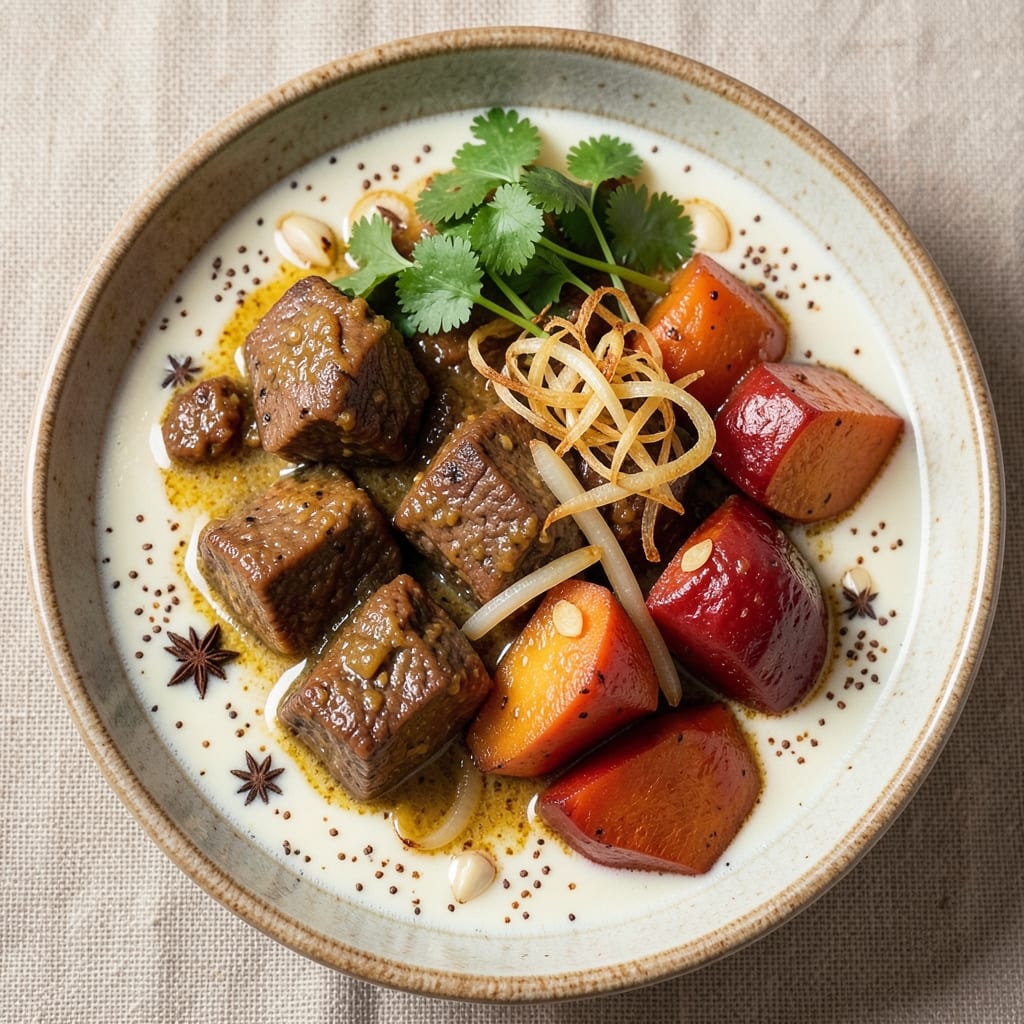
This authentic Massaman beef curry brings the rich, aromatic flavors of Thai cuisine to your kitchen with its signature blend of Persian and Thai spices. The slow-simmered sauce balances sweet, savory, and spicy notes, creating a dish that’s both comforting and complex. I’ve perfected this recipe over years of experimentation, ensuring every element—from rendering the spices to balancing the coconut milk—comes together just right.
The secret lies in the spices: cardamom, cinnamon, and star anise infuse the dish with warmth, while Massaman curry paste delivers its signature depth. The beef tenderizes beautifully as it simmers, absorbing the fragrant coconut milk and tamarind for a sauce that’s velvety yet vibrant. This isn’t just a curry; it’s a celebration of Thai-Persian fusion, where sweet potatoes and peanuts add texture and contrast.
By the time you serve it over steamed jasmine rice, the aroma alone will draw everyone to the table. The beef falls apart with each bite, the sauce clings perfectly, and the balance of flavors—sweet, tangy, and just spicy enough—makes this dish unforgettable. It’s the kind of curry that turns a simple weeknight into a flavor adventure.
For those who prefer a milder heat, adjust the chili paste, but the authenticity lies in the spices and technique. Serve with cucumber salad to cut through the richness, and you’ll have a meal that feels like a trip to Thailand—without leaving your kitchen.
Ingredients for authentic massaman beef curry
Pantry staples meet Thai market finds for this rich, aromatic curry that tastes like a trip to Thailand.
| Ingredient | Amount | Notes |
|---|---|---|
| Beef Chuck Roast 🥩 | 1 ½ lb | Cut into 1.5-inch cubes |
| Massaman Curry Paste 🌶️ | 3 tbsp | Store-bought or homemade |
| Coconut Milk 🥥 | 1 can | Full-fat, 13.5 oz can |
| Sweet Potatoes 🍠 | 1 ½ lb | Peeled, cut into chunks |
| Onions 🧅 | 1 whole | Yellow, sliced |
| Garlic Cloves 🧄 | 6 cloves | Peeled, minced |
| Cardamom Pods 🌿 | 4 whole | Lightly crushed |
| Cinnamon Sticks 🌿 | 2 whole | 2-inch pieces |
| Star Anise 🌶️ | 2 whole | Whole pods |
| Tamarind Paste 🍯 | 2 tbsp | Or 1 tbsp tamarind concentrate |
| Peanuts 🥜 | ½ cup | Roasted, unsalted |
| Tomatoes 🍅 | 2 medium | Ripe, diced (or 1 cup canned) |
| Red Curry Paste 🌶️ | 1 tbsp | Optional for extra heat |
| Jasmine Rice 🍚 | 1 ½ cups | Uncooked, for serving |
| Salt 🧂 | 1 tsp | Kosher or sea salt |
| Black Pepper 🌶️ | ½ tsp | Freshly ground |
| Sugar 🍚 | 1 tbsp | White or brown sugar |
The Massaman curry paste is non-negotiable—it’s the heart of this dish. Thai Kitchen or Maesri are my go-tos, but any quality brand works. If you’re feeling ambitious, make your own with galangal, lemongrass, and kaffir lime leaves. The beef should be chuck roast—it’s tough enough to tenderize beautifully during the long simmer. For sweet potatoes, grab the orange-fleshed ones—they’re sweeter and creamier. If you can’t find cardamom pods, ground cardamom at half the amount works, but the whole pods add that extra depth when lightly crushed.
No tamarind paste? Lime juice plus a pinch of sugar mimics the tang, though it won’t be identical. For the tomatoes, fresh is ideal, but canned diced tomatoes work in a pinch—just drain them well. The red curry paste is optional, but if you’re adding it, start with less and adjust to taste. Peanuts should be roasted until fragrant—toss them in a dry pan for 3-4 minutes until golden. The coconut milk can be split between two cans if you prefer a thicker sauce, but one full-fat can gives that luxurious creaminess. And trust me on the cinnamon sticks—they infuse the dish with warmth without overpowering.
This curry tastes even better the next day as the flavors meld. Store in an airtight container in the fridge for up to 4 days, or freeze portions for 3 months. I always make a double batch—one for dinner, one for lunch the next day. The rice? Cook it ahead and reheat with a splash of water. Serve with cucumber slices or a simple lime wedge to balance the richness. The peanuts can be toasted fresh or stored in a jar for up to 2 weeks—just give them a quick toast before serving.
Why You'll Love This Recipe
- One-Pot Magic: I swear by this—just brown the beef, toss in the Massaman paste, add coconut milk and sweet potatoes, then walk away. Thirty minutes later, you’ve got a restaurant-worthy dish with one pot to wash.
- Sweet Heat Balance: That Massaman paste? It’s the star—smoky, slightly sweet, with just enough kick to linger. The sweet potatoes soak up the flavor like a sponge, making every bite rich and satisfying without being heavy.
- Leftovers That Shine: Between us, this curry tastes better the next day. I make a big batch on Sundays, and by Wednesday, it’s still the highlight of my lunch. Freeze half if you’re not a glutton like me.
- Budget-Friendly Luxury: Beef chuck roast on sale? Massaman paste lasts for months? This is comfort food that doesn’t break the bank. Feed four for under $20, and you’ll feel like you’re dining out—without the guilt.
Step-by-step instructions for authentic Massaman beef curry
This rich, aromatic curry delivers the true Thai flavors you crave—slow-simmered to perfection.
Prepare the Beef and Spice Base
Cut the 1.5 lb beef chuck roast into 1.5-inch cubes for even cooking. In a large Dutch oven or heavy pot, heat 2 tablespoons coconut oil over medium-high heat. Add the beef in batches, searing until deeply browned on all sides—this builds incredible flavor. Remove the beef and set aside.
In the same pot, add 1 whole sliced onions, 6 minced garlic cloves, 4 lightly crushed cardamom pods, 2 cinnamon sticks, and 2 whole star anise. Cook for 3-4 minutes until fragrant and onions soften. Stir in 3 tablespoons massaman curry paste and 1 tablespoon red curry paste (if using), letting it toast for 1 minute to deepen the aroma.
Build the Curry Sauce
Pour in 1 can coconut milk and scrape up any browned bits from the bottom of the pot. Add 2 tablespoons tamarind paste, 1 tablespoon sugar, 1 teaspoon salt, and ½ teaspoon black pepper. Stir well to combine all ingredients into a smooth sauce. Return the beef to the pot and bring everything to a gentle simmer over medium-low heat. Cover and let it cook for 45 minutes, stirring occasionally.
Here's the thing—this slow simmer is where the magic happens. The spices infuse deeply, and the beef becomes fork-tender. You'll know it's ready when the sauce thickens slightly and the beef easily pulls apart with a fork. If the sauce reduces too quickly, add ½ cup water to maintain consistency.
Add Sweet Potatoes and Tomatoes
Peel and cut the 1.5 lb sweet potatoes into 1-inch chunks and add them to the pot along with 2 diced medium tomatoes. Stir gently to coat everything in the rich sauce. Return to a simmer and cook uncovered for 20-25 minutes, until the sweet potatoes are tender but still hold their shape. You want them to stay slightly firm—they'll continue cooking when served.
Taste the sauce now and adjust seasoning if needed. I usually add a pinch more salt or a splash of tamarind paste for balance. The sweetness from the potatoes and sugar should harmonize with the tangy tamarind and creamy coconut milk.
Finish and Serve
Remove the pot from heat and let the curry rest for 10 minutes. This resting period allows all the flavors to meld together beautifully. Stir in ½ cup roasted peanuts just before serving—they add a delightful crunch and nutty depth to each bite.
Serve the curry hot over 1.5 cups cooked jasmine rice, spooning generous portions of beef, sweet potatoes, and sauce over each serving. The combination of tender beef, sweet potatoes, and aromatic spices creates a truly satisfying dish that captures the heart of Thai cuisine.
Pro Tips For Making Authentic Massaman Beef Curry
- Sear the Beef First: After slicing the chuck roast thinly against the grain (yes, it’s tedious but worth it), hit the pan with a splash of oil and crank the heat to medium-high. Let those slices develop a deep brown crust for 2-3 minutes per side—this isn’t just for looks. The Maesri brand curry paste has a smoky depth that needs something to cling to, and raw beef just won’t cut it. I used to skip this, and the dish always tasted flat until I learned that lesson.
- Toast the Paste Dry: Don’t rush the paste straight into coconut milk. Once you’ve cooked down your onions until they’re golden and sticky, add the curry paste and let it sit in the pan for 30 seconds—just until it smells like toasted spices. A splash of water helps it bloom, but too much washes away the nutty, caramelized flavors. I learned this the hard way when my curry tasted more like wet cardboard than the rich, aromatic masterpiece it should be.
- Peel the Sweet Potatoes: Skip the peeling if you’re short on time, but if you want that restaurant-quality texture, take the five extra minutes to peel them. The skins stay tough even after hours of simmering, and they’ll turn the coconut milk murky. Plus, the flesh cooks more evenly without the extra moisture barrier. (Yes, even if you’re impatient like me.)
- Simmer Low and Slow: After adding the coconut milk, resist the urge to blast the heat. You want gentle bubbles, not a rolling boil—this isn’t a race. A steady simmer for at least 45 minutes (or up to 2 hours) lets the beef tenderize and the flavors meld. I was skeptical until I tried it: the beef falls apart with a fork, and the curry develops a depth that shortcuts just can’t match.
Common mistakes when making your authentic massaman beef curry
Skipping the Sear
One of the biggest mistakes is skipping the beef sear entirely. That initial browning creates the Maillard reaction, which builds deep, caramelized flavors that form the foundation of the curry. I always sear the beef in batches over medium-high heat until deeply browned—don’t rush this step. If you skip it, your curry will taste flat and one-dimensional. 🔥
Under-Rendering Spices
Many home cooks toss in the spices and immediately add the coconut milk, but that’s a missed opportunity. Toasting the cardamom, cinnamon, and star anise for 3-4 minutes until fragrant unlocks their full potential. If you rush this step, the spices will taste raw and bitter. I recommend crushing the cardamom pods lightly with the side of your knife first—this releases more aroma.
Wrong Heat Level
Simmering on high heat will cause the sauce to break and the coconut milk to curdle. This curry needs gentle, consistent heat—think medium-low—to let the flavors meld properly. I use a Dutch oven because it distributes heat evenly. If your sauce starts to bubble vigorously, reduce the heat immediately and add ½ cup water to stabilize it.
Overcooking the Sweet Potatoes
Sweet potatoes should be tender but still hold their shape when added to the curry. If you cook them too long, they’ll turn to mush and make the dish gluey. I aim for 20-25 minutes of simmering time—test one piece with a fork. If it’s still slightly firm, it’s perfect. The potatoes will continue cooking slightly when served over rice.
Ignoring the Resting Time
Letting the curry rest for 10 minutes off the heat is non-negotiable. This allows the flavors to meld and the sauce to thicken slightly. If you serve it immediately, the spices will taste disjointed, and the sauce may be too thin. I also stir in the roasted peanuts during this resting time so they absorb some of the sauce’s richness before serving.
Balancing Flavors Last
Taste as you go! Many cooks wait until the end to adjust seasoning, but by then it’s too late. After adding the sweet potatoes, taste the sauce and adjust salt, sugar, or tamarind paste as needed. The goal is a harmony of sweet, tangy, and savory—not one flavor dominating. I keep a small bowl of tamarind paste and sugar nearby to tweak the balance while cooking. ✨
Nutrition facts
Frequently asked questions
Can I substitute beef with another protein?
While beef is traditional, you can use chicken thighs (bone-in for flavor) or pork shoulder for a similar texture. For seafood lovers, firm white fish like cod works beautifully—just reduce cooking time to 15-20 minutes after adding. Avoid delicate proteins like shrimp, as they’ll overcook in the long simmer.
How do I make this curry less spicy?
Massaman curry is naturally mild, but if you prefer less heat, reduce the red curry paste to ½ tablespoon or omit it entirely. For extra sweetness to balance any lingering spice, add 1 extra tablespoon sugar or a pinch more tamarind paste. The coconut milk also helps mellow the flavors naturally.
Can I make this in an Instant Pot?
Yes! Sear the beef first, then sauté onions and spices as directed. Add all remaining ingredients (including sweet potatoes) and cook on high pressure for 20 minutes, followed by a 10-minute natural release. The texture will be slightly different but still delicious—just stir in peanuts at the end.
What’s the best way to store leftovers?
Store in an airtight container in the fridge for up to 4 days or freeze for 3 months. Reheat gently on the stove with a splash of water to restore creaminess. The flavors actually improve overnight as the spices meld further—perfect for lunch the next day!
Why does my curry taste bitter?
Bitterness usually comes from over-toasted spices or undercooked sweet potatoes. For future batches, toast spices for just 3 minutes and ensure sweet potatoes are tender but not mushy. If it happens, balance with ½ teaspoon sugar or a splash of coconut milk to round out the flavors.