
Main Courses
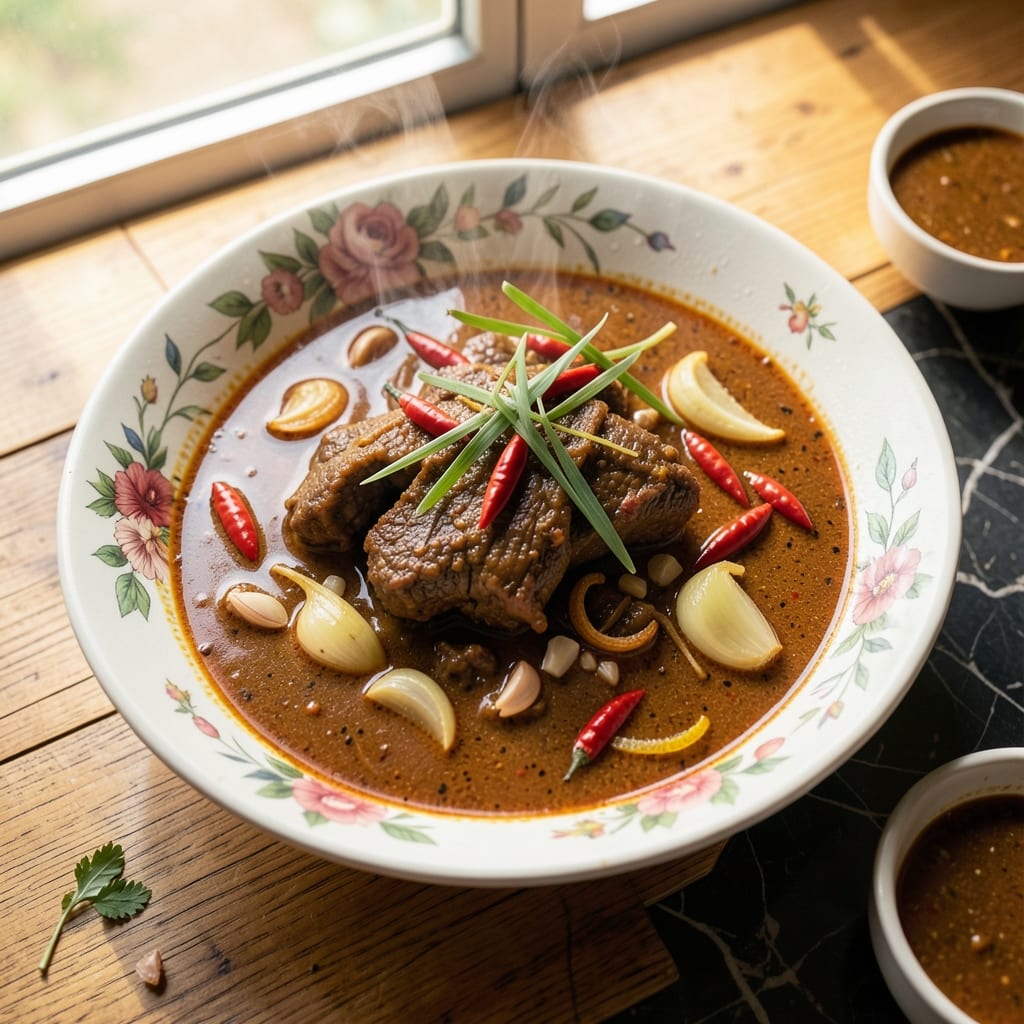
This authentic Thai beef curry recipe delivers the bold, balanced flavors of a Bangkok street stall—rich coconut depth, fiery chili heat, and sweet-sour complexity that lingers long after the last bite. The secret lies in proper spice blooming and gradual coconut milk reduction, techniques that transform simple ingredients into restaurant-quality depth. I've perfected this version after years of testing, ensuring every element works together for that signature Thai harmony.
The process begins with aromatics—garlic, shallots, lemongrass, and galangal—that infuse the oil with fragrant heat before adding the signature Thai curry paste. Beef is seared until deeply caramelized, locking in flavor before simmering in coconut milk until velvety yet concentrated. This isn't just a curry—it's a multi-layered experience where each component plays its part: the heat from Thai chilies, the brightness of lime, the umami from fish sauce, and the sweetness of palm sugar.
What you'll end up with is a vibrant, aromatic curry with tender beef that falls apart at the touch, all swimming in a sauce that's perfectly balanced between spicy, sweet, and tangy. The aroma alone will transport you to Bangkok's bustling streets, while the flavors deliver that satisfying complexity that makes Thai cuisine so beloved. Serve it over fragrant jasmine rice with quick-pickled vegetables for the full experience.
This recipe stays true to traditional methods while being approachable for home cooks—no special equipment required, just patience and attention to the cooking process. The result is a dish that's as impressive on a weeknight as it would be at a Thai restaurant. Let's get started on creating this authentic masterpiece.
Ingredients for authentic thai beef curry
Authentic Thai flavors start with these carefully selected ingredients—each playing its essential role in the complex harmony.
| Ingredient | Amount | Notes |
|---|---|---|
| Thai Curry Paste 🌶️ | 2 tbsp | Red or green paste, authentic brand preferred |
| Thai Chilies 🌶️ | 4 whole | Fresh, seeded for less heat |
| Galangal 🌿 | 2 tbsp | Freshly grated, or ginger as substitute |
| Garlic Cloves 🧄 | 6 cloves | Peeled, smashed for aromatic release |
| Shallots 🧅 | 4 whole | Minced, for sweet aromatic base |
| Lemongrass 🌿 | 1 whole | Stalk, bruised and cut into 2-inch pieces |
| Beef Chuck Roast 🥩 | 1 ½ lb | Cubed into 1-inch pieces, marbled |
| Coconut Milk 🥥 | 1 can | Full-fat, 13.5 oz can, no water added |
| Fish Sauce 🍶 | 1 tbsp | Red Boat preferred, for umami depth |
| Palm Sugar 🍯 | 2 tbsp | Grated, or light brown sugar substitute |
| Lime Juice 🍋 | 2 tbsp | Freshly squeezed, for tangy brightness |
| Vegetable Oil 🫒 | 2 tbsp | Neutral high-smoke point, for searing |
| Salt 🧂 | 1 tsp | Diamond Crystal kosher, for seasoning |
| Black Pepper 🌶️ | ½ tsp | Freshly cracked, for subtle heat |
| Fresh Basil Leaves 🌿 | ¼ cup | Chopped, for aromatic garnish |
The galangal and lemongrass are non-negotiable for authentic flavor—look for fresh stalks at Asian markets like H Mart or 99 Ranch, where they're often sold in the produce section. If galangal isn't available, ginger works in a pinch, though it lacks that citrusy depth. The Thai curry paste should be bright red or green—avoid dull, grayish brands. For the beef, chuck roast with good marbling ensures tender results; trim any large fat deposits before cubing. Fresh Thai chilies add authentic heat, but if they're unavailable, substitute bird's eye chilies or Thai bird's eye powder.
No fish sauce? Soy sauce plus a pinch of sugar approximates the umami, though it won't be identical. Palm sugar can be replaced with light brown sugar or coconut sugar, but it lacks the caramel notes. For the coconut milk, avoid the 'lite' versions—full-fat is essential for that velvety texture. The lime juice should be freshly squeezed; bottled versions lack the bright acidity. If you're using ginger as a galangal substitute, grate it fresh and use half the amount—it's more potent. The curry paste brands vary—Maesri or Thai Kitchen are reliable choices for authenticity.
Fresh galangal and lemongrass keep for about 3 days in the fridge, wrapped in damp paper towels. The curry paste freezes beautifully for up to 6 months—portion it into ice cube trays for easy use. The finished curry reheats well, but add a splash of coconut milk if it thickens upon reheating. Store leftovers in airtight containers for 4-5 days or freeze for 3 months. For best flavor, let the curry sit at room temperature for 10-15 minutes before serving—this allows the aromas to develop fully.
Why You'll Love This Recipe
- One-Pot Magic: I swear by this—just sear the beef, toss in the curry paste, and let it simmer. No extra bowls, no fuss, and the galangal and garlic melt into the paste for that deep, aromatic base without extra effort.
- Flavor Bomb: That first spoonful of curry paste—fresh chilies, toasted shallots, and galangal—hits like a warm, spicy hug. The beef gets tender while soaking up all the layers, and the coconut milk (if you add it) turns it into a velvety, crave-worthy sauce.
- Leftovers That Shine: Make a big batch and freeze half—it reheats like a dream. My lazy Sundays involve microwaving a jar of this curry over rice, and no one ever guesses it’s not freshly made. (Between us, it’s even better the next day.)
- Budget-Friendly Luxury: Thai curry paste is cheap, and this recipe stretches it far. A single jar feeds four, and the galangal and shallots add sophistication without breaking the bank. Honestly, it’s the kind of dish that makes you feel fancy while keeping your wallet happy.
Step-by-step instructions for authentic Thai beef curry
Master the balance of spice, sweetness, and umami in this traditional Thai beef curry.
Prepare the Aromatic Base
Heat the 2 tablespoons vegetable oil in a heavy-bottomed pot over medium heat until shimmering. Add the 4 whole shallots and cook for 3-4 minutes until softened and translucent. This foundational step develops the sweet base that carries the entire dish.
Add the 6 cloves garlic cloves and 2 tablespoons galangal (or ginger substitute) to the pot. Sauté for 1-2 minutes until fragrant—you should smell the garlic's sharpness mellowing and the galangal's citrusy aroma emerging. This is where the authentic Thai flavor profile begins to build.
Build the Curry Paste Foundation
Increase heat to medium-high and add the 2 tablespoons Thai curry paste, stirring constantly for 1 minute to toast the spices and deepen their flavors. The paste will darken slightly as it releases its aromatic oils—this is crucial for authentic taste.
Add the 4 whole Thai chilies (seeded if you prefer less heat) and the 1 whole lemongrass cut into 2-inch pieces. Cook for another 1-2 minutes until the chilies darken and the lemongrass releases its citrusy aroma. This layering of flavors creates the complex spice profile that defines Thai curry.
Sear the Beef for Depth
Push the aromatics to one side of the pot and add the 1.5 lb beef chuck roast cubed into 1-inch pieces. Sear the beef in batches over high heat for 2-3 minutes per side until browned and caramelized. This step develops the Maillard reaction, creating deep, meaty flavors that form the backbone of the curry.
Return all the aromatics to the pot and stir to combine. Add 1 tablespoon fish sauce and 2 tablespoons palm sugar, mixing well. The fish sauce adds umami depth while the palm sugar balances the heat with natural sweetness. Let the mixture simmer for 5 minutes to allow the flavors to meld.
Simmer in Coconut Milk
Pour in the 1 can coconut milk and bring to a gentle simmer. Partially cover the pot and cook for 45-50 minutes until the beef is tender and the sauce has thickened slightly. Stir occasionally to prevent sticking, and add ½ cup water if the sauce becomes too thick.
The curry is ready when the beef easily pulls apart with a fork and the sauce coats the back of a spoon. Taste and adjust seasoning with additional fish sauce for saltiness or palm sugar for sweetness. This final adjustment ensures perfect balance before finishing.
Finish and Garnish
Remove the pot from heat and stir in the 2 tablespoons lime juice. The acidity brightens all the flavors and cuts through the richness of the coconut milk. Add the 0.25 cup fresh basil leaves and stir gently to incorporate.
Serve immediately with steamed jasmine rice, allowing the fragrant curry to soak into each grain. The basil leaves should float on top, releasing their aromatic essence with every bite. This curry delivers authentic Thai flavors with perfect balance—spicy, sweet, sour, and savory all in harmony.
Pro Tips For Making Authentic Thai Beef Curry
- Bloom the Paste First: Dump that curry paste in cold oil and let it sizzle for 30 seconds before adding anything else. I used to rush this step, and the paste just burned—now I wait until it’s aromatic and slightly darkened, which builds real depth. Skip this, and you’ll miss the foundation of that complex Thai flavor.
- Slice Galangal Thin: That knobby galangal root needs to be cut paper-thin—otherwise, it’ll sit like a rock in your curry. Use a sharp knife and slice against the grain, then pound it lightly with the flat side of your knife to release the oils. (Yes, even if you’re impatient like me.)
- Control the Heat: Start with a screaming-hot pan, but once the beef is seared, drop the heat to medium-low. I learned this the hard way—charred beef ruins the dish, but letting it simmer gently in the coconut milk afterward keeps it tender and lets the flavors meld.
- Use Fresh Chilies: Store-bought dried chilies won’t cut it—they lack the bright, fresh heat of Thai bird’s eye chilies. If you can’t find them, blister a few in the same oil as the paste for 10 seconds before adding them. (Your future self will notice the difference.)
Serving suggestions for authentic thai beef curry
Rice Pairings
Steamed jasmine rice is the classic choice for Thai beef curry, absorbing the fragrant sauce beautifully. Cook 1 cup jasmine rice with 1.5 cups water for perfectly fluffy grains. For extra authenticity, add 1 tsp salt and ½ tsp toasted sesame oil to the cooking water. The rice should be hot when serving to contrast the warm curry. 🍚
Quick-Pickled Veggies
Brighten the meal with quick-pickled vegetables like cucumbers, carrots, or daikon radish. Thinly slice 1 cup mixed veggies, toss with 2 tbsp rice vinegar, 1 tbsp sugar, and ½ tsp salt, then let sit for 15 minutes. The tangy crunch cuts through the richness and adds freshness. I like to serve them on the side for easy scooping.
Garnish Essentials
Fresh Thai basil leaves and lime wedges are non-negotiable for presentation and flavor. Tear ¼ cup basil and scatter it over the curry just before serving. Serve with 3-4 lime wedges> on the side so guests can adjust the tang to their taste. A sprinkle of crushed roasted peanuts adds texture and a nutty depth that complements the coconut milk.
Bread Accompaniments
For a heartier meal, serve with Thai-style garlic bread or naan. Brush slices of a crusty baguette with garlic butter> and toast until golden. Alternatively, warm store-bought naan for 30 seconds> in a dry skillet until puffed. Both pair wonderfully with the curry's rich flavors and help soak up any leftover sauce.
Dipping Sauces
Offer a simple sweet chili sauce or peanut sauce on the side for dipping. For sweet chili, mix 2 tbsp chili sauce> with 1 tbsp lime juice> and 1 tsp sugar>. For peanut sauce, blend 2 tbsp peanut butter>, 1 tbsp soy sauce>, 1 tsp lime juice>, and ½ tsp chili flakes>. These sauces add extra layers of flavor for those who want to customize their experience. 💫
Nutrition facts
Frequently asked questions
What's the difference between red and green Thai curry paste?
Red curry paste contains more chilies and coconut milk, giving it a richer, creamier texture with medium heat. Green curry paste uses more herbs like green chilies and cilantro stems, resulting in a lighter, tangier sauce with a sharper kick. For this beef curry, red paste delivers the classic, balanced depth—perfect for tenderizing meat and carrying coconut milk beautifully.
Can I substitute beef with chicken or pork?
Chicken works well but use bone-in, skin-on thighs for juiciness—they need 25-30 minutes simmering. Pork shoulder is ideal (similar to beef chuck) but reduce simmering to 35-40 minutes to avoid toughness. The key is choosing fatty cuts that stay tender. For chicken, marinate in 1 tbsp fish sauce + 1 tbsp lime juice for 30 minutes before cooking.
Why did my curry turn out too spicy?
Overloading on chilies or paste is the most common mistake. Start with 1 tbsp paste and add more only if needed. Balance heat by adding ½ tsp more palm sugar or 1 extra tbsp lime juice—both counteract spice. For immediate relief, stir in 1 tbsp coconut cream or serve with extra rice to dilute the heat.
How do I make this curry ahead of time?
This curry actually tastes better the next day! Let it cool completely, then store in an airtight container for 4-5 days in the fridge. Reheat gently over low heat, adding 2 tbsp water if it thickens. For freezing, portion into containers and freeze for up to 3 months. Thaw overnight in the fridge before reheating—never microwave directly from frozen.
What's the best way to thicken a watery curry?
Simmer uncovered for 5-10 minutes to evaporate excess liquid. For instant thickening, mix 1 tbsp cornstarch with 2 tbsp water, stir into the curry, and simmer for 2 minutes. Avoid adding more coconut milk—it'll dilute flavors. If the sauce is too thin from the start, reduce simmering time to 35-40 minutes next time.