
Main Courses
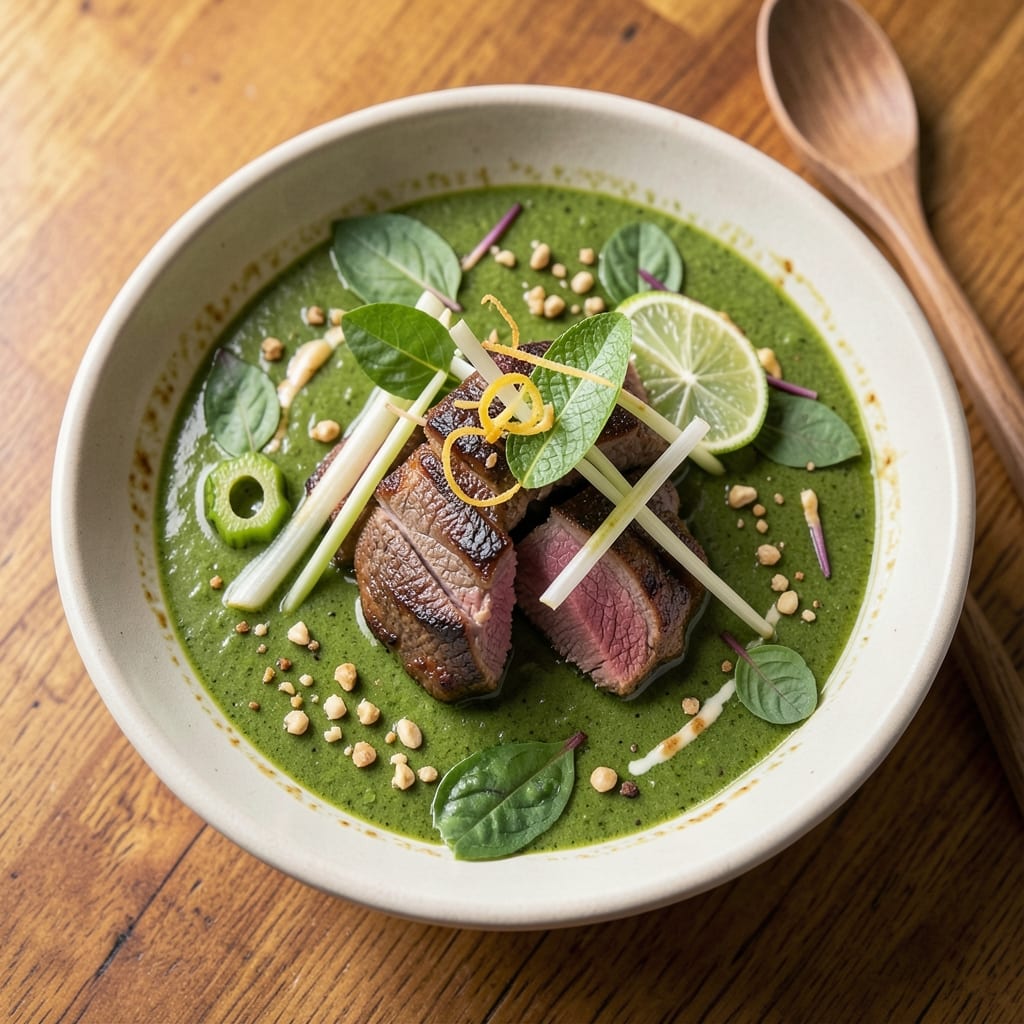
This authentic Thai green beef curry recipe delivers the perfect balance of herbal freshness and fiery heat that defines street-side Thai cuisine. The secret lies in the vibrant green curry paste—packed with lemongrass, galangal, kaffir lime leaves, and Thai basil—that transforms tender beef into melt-in-your-mouth perfection. I’ve refined this recipe over years of testing, ensuring every spoonful delivers the complex harmony of sweet, spicy, and sour flavors that make it unforgettable.
What sets this curry apart is the traditional technique of simmering the paste in coconut milk until it thickens into a velvety sauce, while the beef develops deep, caramelized flavors. No shortcuts here—this is the real deal, with optional garnishes like fresh Thai basil and lime wedges to elevate each bite. The result? A restaurant-quality dish that’s rich, aromatic, and bursting with authentic Thai soul.
Ready in about 45 minutes, this curry is ideal for weeknight dinners or special occasions. The process is straightforward but requires attention to balance—adjusting the heat to your preference while keeping the herbal notes bright. Serve it with jasmine rice to soak up every last drop of that fragrant, spiced sauce.
This recipe isn’t just about taste—it’s about recreating the experience of a bustling Bangkok street market in your own kitchen. The aroma alone will transport you, and the flavors will leave you craving more. Let’s make it together.
Ingredients for authentic thai green beef curry
These vibrant, aromatic ingredients transform simple beef into restaurant-quality Thai green curry.
| Ingredient | Amount | Notes |
|---|---|---|
| Beef Chuck Roast 🥩 | 1 ½ lb | Cut into 1-inch cubes |
| Green Curry Paste 🌶️ | ½ cup | Store-bought or homemade |
| Coconut Milk 🥥 | 1 can (13.5 oz) | Full-fat for richness |
| Lemongrass 🌿 | 3 stems | Bruised and cut into 2-inch pieces |
| Galangal 🌿 | 1 piece (3-inch) | Substitute ginger if unavailable |
| Kaffir Lime Leaves 🍋 | 4 whole | Bruised and torn |
| Thai Basil Leaves 🌿 | ½ cup | Packed, stems removed |
| Fish Sauce 🍶 | 1 tbsp | Red Boat preferred |
| Palm Sugar 🍯 | 2 tbsp | Or brown sugar substitute |
| Garlic Cloves 🧄 | 4 cloves | Minced for paste |
| Shallots 🧅 | 3 whole | Peeled and minced |
| Green Chili Peppers 🌶️ | 2 whole | Bird's eye for heat |
| Jasmine Rice 🍚 | 1 ½ cups | Uncooked, for serving |
| Lime Wedges 🍋 | 2 whole | For garnish |
| Vegetable Oil 🫒 | 2 tbsp | For searing |
The curry paste is the heart of this dish—Red Curry Paste from Thai Kitchen works in a pinch, but homemade delivers that authentic depth. Look for fresh galangal at Asian markets—it's the secret ingredient that gives Thai curries their unique kick. If you can't find it, ginger works, but the flavor won't be identical. Lemongrass should be plump and vibrant; avoid anything woody or dried out. Kaffir lime leaves are non-negotiable for that authentic aroma—substituting lime zest falls short. For the beef, chuck roast stays tender while developing rich flavor during the long simmer.
No fish sauce? Soy sauce plus a dash of sugar gets you close, though it won't be identical. Running short on Thai basil? Regular basil plus a pinch of cinnamon mimics some of the complexity. The palm sugar can be swapped for brown sugar, but it won't caramelize the same way. For extra heat, add extra bird's eye chilies—just remember to adjust for spice sensitivity. The coconut milk should be full-fat; light versions won't create that luxurious texture. And if you can't find jasmine rice, basmati is the next best thing for soaking up the sauce.
This curry tastes even better the next day as flavors meld—portion into containers for easy reheating. Store leftovers in the fridge for 4-5 days or freeze for 3 months. The paste keeps well in the freezer for 6 months if you make a double batch. For serving, keep the lime wedges separate until ready to eat—they brighten the dish dramatically. Garnish with fresh Thai basil just before serving to preserve its vibrant color and aroma.
Why You'll Love This Recipe
- Here’s the truth: this curry tastes even better the next day. The beef gets even more tender, the flavors meld, and it reheats like a dream. I’ve brought it to work for lunch three times this week, and no one’s complained—just empty containers.
- One-Pot Magic: I swear by this—just toss everything into one pot, stir occasionally, and let it simmer. No chopping mountains of veggies or fussing with multiple pans. The beef chuck roast practically melts into tender perfection while the curry paste and coconut milk do all the heavy lifting.
- Herb Bomb Flavor: That first spoonful of green curry paste—garlicky, grassy, with a hint of heat—is the star. Add lemongrass and galangal, and suddenly you’ve got a depth of flavor that’s ridiculously satisfying, especially when balanced with the creamy coconut milk. It’s the kind of taste that makes you want to eat it straight from the pot.
- Leftovers That Beg: Here’s the truth: this curry tastes even better the next day. The beef gets even more tender, the flavors meld, and it reheats like a dream. I’ve brought it to work for lunch three times this week, and no one’s complained—just empty containers.
Step-by-step instructions for authentic Thai green beef curry
Here's how to build a vibrant, balanced curry with layers of herbal freshness and subtle heat.
Prepare the Aromatic Base
In a large, heavy-bottomed pot, heat the 2 tablespoons vegetable oil over medium heat until shimmering. Add the 3 whole shallots and 4 cloves garlic cloves, cooking for 3-4 minutes until the shallots turn golden and fragrant. This is your foundation—don't rush it, or the flavors won't develop properly.
Next, add the 1 piece (3-inch) galangal (peeled and sliced) and 2 whole green chili peppers (sliced lengthwise). Cook for another 2 minutes until the galangal softens slightly and the chili peppers release their aroma. You'll notice the kitchen filling with that distinctive Thai herbal scent—this is where the magic begins.
Develop the Curry Paste
Stir in the 0.5 cup green curry paste, breaking it up gently with a wooden spoon. Cook for 2-3 minutes until the paste darkens slightly and releases its oils. This step is crucial—it ensures the paste's complex flavors fully integrate with your aromatic base rather than clumping.
Here's the thing—if your paste contains shrimp paste, you'll smell it intensifying. That's normal and delicious. Pour in ½ cup of the 1 can (13.5 oz) coconut milk, stirring constantly to prevent the paste from burning. Let this simmer for 3 minutes until the mixture thickens and coats the back of a spoon.
Sear the Beef for Depth
Push the curry mixture to one side of the pot and add the 1.5 lb beef chuck roast (cut into 1-inch cubes) to the empty space. Let the beef sear undisturbed for 3-4 minutes until it develops a deep brown crust. This Maillard reaction creates incredible flavor depth—don't move it too soon, or you'll steam instead of sear.
Once browned, stir the beef into the curry mixture. Pour in the remaining ½ cup coconut milk, then add the 2 tablespoons palm sugar and 1 tablespoon fish sauce. Bring to a gentle simmer, then reduce heat to low. Partially cover and let it cook for 45-50 minutes, stirring occasionally, until the beef is fork-tender and the sauce has thickened to your preferred consistency.
Finish with Herbal Freshness
When the beef is nearly done, add the 3 stems lemongrass (bruised and cut), 4 whole kaffir lime leaves (torn), and 0.5 cup Thai basil leaves. Simmer uncovered for 5-7 minutes—this allows the lemongrass and lime leaves to infuse their bright citrus notes while the basil wilts slightly, releasing its anise-like aroma.
Taste and adjust seasoning—you might need a touch more fish sauce for saltiness or a bit of palm sugar to balance acidity. The curry should be aromatic, slightly sweet, and have a gentle heat from the green chili peppers. Remove the lemongrass stems and lime leaves before serving.
Serve with Jasmine Rice
Cook the 1.5 cups jasmine rice according to package instructions until fluffy. To serve, spoon the curry over the rice, garnishing with fresh Thai basil leaves and 2 whole lime wedges. The lime brightens the rich, creamy curry with a final citrus punch.
This authentic Thai green beef curry delivers perfect balance—herbal freshness from the basil and lime, subtle heat from the green chili peppers, and deep umami from the beef and fish sauce. Every bite should be complex yet harmonious, with layers of flavor that build with each mouthful.
Pro Tips For Making Authentic Thai Green Beef Curry
- Bloom the Paste First: Dump that green curry paste into a dry pan and toast it for 30 seconds—just until it smells like a Thai street cart. This wakes up the aromatics and stops the curry from tasting raw later. (Yes, even if you’re impatient like me.)
- Slice the Galangal Thin: Galangal’s tougher than ginger, so slice it paper-thin or grate it—don’t just chop it into matchsticks. It needs to break down in the coconut milk, not sit like a chewy afterthought. (Pro move: Soak the slices in warm water for 10 minutes first.)
- Low and Slow for Beef: Chuck roast needs time—simmer it covered at the lowest heat setting for at least 2 hours, stirring occasionally. Rushing it makes the meat stringy; patience gives you fork-tender, melt-in-your-mouth results. (Check for doneness with a thermometer: 195°F internal.)
- Stir in Coconut Milk Gradually: Don’t dump all the coconut milk at once—add it in two batches, letting the first one reduce slightly. This thickens the sauce naturally instead of turning your curry into a thin, watery mess. (Also, use full-fat; the richness balances the heat.)
Creative variations of these flavors
Regional Thai Styles
Northern Thai green curry, known as gaeng keow wan, uses more galangal and lemongrass for a stronger herbal profile. I’ve adapted this version to include 1 extra stalk of lemongrass and ½ tsp ground coriander for depth. Southern Thai versions often add shrimp paste (½ tsp) and pandan leaves for a sweeter, coconut-forward taste. 🌿
Protein Swaps
For a lighter option, replace beef with chicken thighs (cut into 1-inch pieces) and reduce simmering time to 25 minutes. For seafood lovers, use white fish like cod (add after 10 minutes of simmering) or shrimp (cook for just 5 minutes to avoid overcooking). Vegetarians can use tofu (extra-firm, pressed and cubed) or mushrooms (shiitake or oyster).
Vegetable Additions
Add 1 cup bell peppers (red or green) and 1 cup bamboo shoots for texture, or 1 cup eggplant (cubed and pre-cooked for 5 minutes in oil) for richness. For a Thai-inspired veggie pack, include ½ cup Thai eggplant (roasted) and ½ cup green beans. Stir in ½ cup Thai basil at the end for freshness. 🥦
Spice Level Control
For mild heat, reduce green chilies to 1 whole pepper or remove seeds. For extra kick, add 1 tsp chili flakes or ½ tsp cayenne pepper with the fish sauce. I like to keep a small bowl of chili oil (mix 2 tbsp neutral oil + 1 tbsp crushed chilies) on the side for dipping—it lets everyone customize their spice level. 🌶️
Coconut Milk Variations
For a lighter sauce, replace half the coconut milk with vegetable broth (½ cup). For extra richness, stir in 1 tbsp coconut cream at the end. If you prefer a tangier profile, add 1 tbsp lime juice or ½ cup coconut water to balance the creaminess. Each variation changes the texture but keeps the dish authentically Thai.
Nutrition facts
Frequently asked questions
Why does authentic Thai green curry use both galangal and ginger?
Galangal (the root) provides a citrusy, peppery aroma that's essential for authentic Thai flavor, while ginger adds warmth and depth. If you can't find galangal, use ginger—but expect a slightly different profile. The combination creates that signature herbal complexity that sets green curry apart from other Thai dishes.
Can I make this curry without coconut milk?
While coconut milk is traditional, you can substitute with 1 cup full-fat Greek yogurt + ½ cup water for creaminess or 1 cup vegetable broth + 2 tbsp cornstarch for a lighter version. Just note the texture will be thinner and less rich. The curry paste still needs fat to develop properly.
How do I adjust the heat level for picky eaters?
Remove seeds from green chilies before slicing to reduce heat by 30%. For milder curry, use 1 whole green chili instead of 2. Add heat later by serving with chili oil on the side. Always taste before adding fish sauce—it's salty and can mask spice levels.
What's the best way to store leftovers?
Let curry cool completely, then store in an airtight container in the fridge for 4-5 days. Reheat gently on low heat with 1 tbsp water to prevent drying. Freeze for 3 months—portion into single servings for easy reheating. The flavors actually improve overnight!
Can I make the curry paste from scratch?
Blend 3 stalks lemongrass, 2-inch galangal, 4 kaffir lime leaves, 6 garlic cloves, 3 shallots, 2 green chilies, 1 tsp coriander seeds, and ½ tsp cumin until smooth. Toast spices first for deeper flavor. Homemade paste tastes 10x better but requires 15 minutes extra prep time.