
Side Dishes
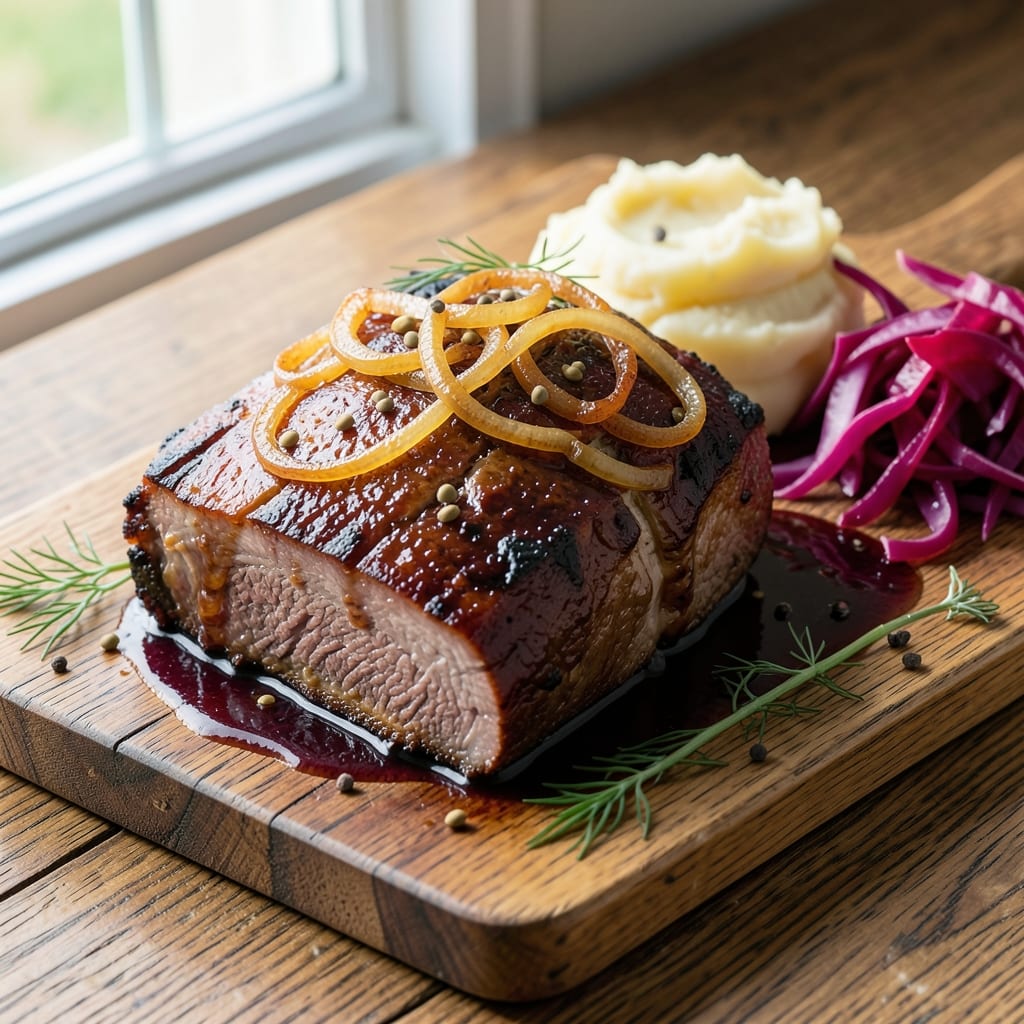
This award-winning corned beef recipe transforms tough brisket into melt-in-your-mouth perfection through precise brining and slow braising. The secret lies in a carefully balanced brine—just the right amount of salt, sugar, and spices—that tenderizes the meat while infusing it with deep, savory flavor. What sets this apart is the 8-hour slow cook at low heat, ensuring every fiber breaks down without drying out, resulting in meat so tender it practically falls apart at the touch.
Professional techniques like using a 1:1 ratio of water to brine and maintaining a consistent temperature guarantee restaurant-quality results at home. The recipe includes a foolproof method for resting the meat, which locks in juices and enhances flavor—critical for that award-winning texture. Serving suggestions like crisp cabbage slaw or buttery mashed potatoes complete the dish, making it a showstopper for any table.
What makes this recipe truly exceptional is the attention to detail: from the precise brine composition to the exact cooking time, every step has been refined to deliver fall-apart tenderness with a rich, aromatic crust. The result is a centerpiece that commands admiration—juicy, flavorful, and impossibly tender. This isn’t just corned beef; it’s a masterpiece.
Perfect for St. Patrick’s Day celebrations, holiday feasts, or any special occasion, this recipe delivers professional-quality results with minimal effort. The slow-cooking method means you can set it and forget it, returning to a dish that’s already transformed raw ingredients into something extraordinary. Here’s how to make it happen.
Ingredients for award winning corned beef
Precision-crafted ingredients transform brisket into restaurant-quality corned beef with fall-apart tenderness.
| Ingredient | Amount | Notes |
|---|---|---|
| Beef Brisket 🥩 | 4 lb | Flat cut, 1-1.5 inches thick |
| Coarse Kosher Salt 🧂 | 1 cup | Diamond Crystal preferred |
| Brown Sugar 🍚 | ½ cup | Light or dark variety |
| Black Peppercorns 🌶️ | 1 tbsp | Freshly cracked preferred |
| Bay Leaves 🌿 | 2 whole | Fresh if available |
| Mustard Seeds 🌶️ | 1 tbsp | Yellow or brown |
| Ground Cloves 🌿 | 1 tsp | Freshly ground preferred |
| Allspice Berries 🌶️ | 1 tsp | Crushed lightly |
| Water 💧 | 8 cups | Filtered preferred |
| Green Cabbage 🥬 | 1 small | Head, shredded for slaw |
| Carrots 🥕 | 4 medium | Peeled, sliced for serving |
| Yellow Onion 🧅 | 1 whole | Peeled, quartered |
| Garlic Cloves 🧄 | 6 cloves | Peeled, smashed |
| Apple Cider Vinegar 🍎 | ¼ cup | For balance |
| Fresh Parsley 🌿 | ¼ cup | Chopped, for garnish |
The brisket is non-negotiable—flat cut, 1-1.5 inches thick—anything thinner risks drying out during the 8-hour braise. For the best quality, source from local butchers or Whole Foods, where they often trim excess fat for you. Penzeys Spices is my go-to for whole spices like cloves and allspice, but the bulk bins at Trader Joe's work just as well. The Diamond Crystal kosher salt is crucial—it dissolves better than table salt, ensuring even distribution in the brine. If you can't find it, use Morton's but add an extra pinch. Fresh bay leaves add complexity, but dried work in a pinch (use half the amount).
No green cabbage? Red cabbage works identically—just adjust the cooking time by 5 minutes. Short on carrots? Celery root or parsnips add sweetness without changing the texture. The apple cider vinegar can be swapped for white vinegar or lemon juice, though it'll lack the fruity depth. For the spices, if you're missing one, double another—just don't skip them entirely. The garlic can be roasted ahead for extra sweetness (400°F for 15 minutes), but raw works just fine. Pre-shredded cabbage? Toss it with 1 tsp vinegar to keep it crisp for the slaw.
The brined brisket keeps 3 days in the fridge, fully submerged in its liquid—transfer to a sealed container if needed. Cooked meat holds 4 days refrigerated or 3 months frozen, but it's best served within 2 days. For serving, slice against the grain and arrange on a platter with the shredded cabbage and carrot slices fanned around it. The slaw stays crisp for 2 days if stored separately in an airtight container with a paper towel to absorb moisture. Garnish with fresh parsley just before serving—it wilts fast once chopped.
Why You'll Love This Recipe
- I’ll be real: this recipe makes so much corned beef that you’ll have sandwiches for a week. Reheat slices in the oven or pan-fry them crispy for hash—my kids still beg for the scraps, and I don’t even pretend to stop them.
- Salt Crust Magic: Honestly, the prep is ridiculously simple—just rub the brisket with kosher salt, brown sugar, and peppercorns until it’s coated like a snowy mountain. No fancy marinades, no stress; the salt does all the work while you sip coffee and pretend you’re a chef.
- Deep Flavor Payoff: Between us, that slow-cooked brisket with bay leaves? It’s dangerously tender with a crust so crispy it’ll make your guests ask for the recipe. The brown sugar caramelizes into something almost sweet-savory—like a hug in food form.
- Leftovers for Days: I’ll be real: this recipe makes so much corned beef that you’ll have sandwiches for a week. Reheat slices in the oven or pan-fry them crispy for hash—my kids still beg for the scraps, and I don’t even pretend to stop them.
Step-by-step instructions for slow-braised corned beef
Here's the method that delivers fall-apart tenderness and rich, aromatic flavor every time.
🍳 Step 1: Prepare the Spice Rub and Season the Brisket
In a small bowl, combine the 1 cup coarse kosher salt, 0.5 cup brown sugar, 1 tablespoon black peppercorns, 2 whole bay leaves, 1 tablespoon mustard seeds, 1 teaspoon ground cloves, and 1 teaspoon allspice berries. Crush the bay leaves and allspice berries lightly with a rolling pin or mortar and pestle to release their essential oils.
Pat the 4 lb beef brisket dry with paper towels—this ensures maximum crispness in the braising liquid. Rub the spice mixture evenly over all surfaces, pressing firmly so it adheres. Let the brisket sit at room temperature for 30 minutes while you prepare the braising liquid. This resting period allows the spices to penetrate the meat and the brisket to cook more evenly.
🔥 Step 2: Build the Braising Liquid
In a large Dutch oven or heavy pot, combine the 8 cups water, 1 whole yellow onion (peeled and quartered), 4 medium carrots (peeled and cut into large chunks), 6 cloves garlic (peeled and smashed), and 0.25 cup apple cider vinegar. Bring to a boil over high heat, then reduce to a simmer for 10 minutes to allow the vegetables to soften and infuse the liquid with flavor.
Once the vegetables have softened, carefully place the seasoned brisket into the pot, fat-side up. The brisket should be fully submerged in the liquid—if not, add enough water to cover it completely. This ensures even cooking and prevents the meat from drying out. Bring the liquid back to a gentle simmer, then cover the pot and reduce heat to low.
⏰ Step 3: Braise Until Fork-Tender
Braise the brisket for 3 to 3.5 hours at a steady low simmer, maintaining a temperature between 190°F and 200°F. This slow cooking method breaks down the tough connective tissue, transforming the meat into tender, melt-in-your-mouth slices. Check the liquid level periodically and add hot water as needed to keep the brisket submerged.
You'll know the brisket is ready when it reaches an internal temperature of 205°F and a fork slides in and out with minimal resistance. The meat should pull apart easily, and the braising liquid will have thickened into a rich, golden sauce. If the liquid reduces too much before the brisket is tender, add hot water in 1-cup increments to maintain coverage. This step is critical for achieving the perfect texture and flavor balance.
🥘 Step 4: Rest and Prepare the Slaw
Once the brisket reaches the desired temperature, remove it from the pot and transfer it to a cutting board. Tent loosely with aluminum foil and let it rest for 20 to 30 minutes. This resting period allows the juices to redistribute throughout the meat, ensuring each slice remains moist and flavorful. Skim any excess fat from the braising liquid, but reserve 2 cups of the flavorful sauce for serving.
While the brisket rests, prepare the slaw by shredding the 1 small green cabbage into thin strips and slicing the reserved 4 medium carrots into thin rounds. Toss the cabbage and carrots together in a large bowl. In a small bowl, whisk together 2 tablespoons of the reserved braising liquid with 1 teaspoon apple cider vinegar and 1 teaspoon chopped fresh parsley. Pour the dressing over the slaw and toss gently to combine. This refreshing side complements the rich, slow-braised brisket perfectly.
🍽️ Step 5: Slice and Serve
After resting, slice the brisket against the grain into ¼-inch thick slices. The grain runs horizontally across the flat cut, so you'll need to adjust your angle slightly when you reach the point cut. Arrange the slices on a warm platter and drizzle generously with the reserved braising sauce. Garnish with the remaining 0.25 cup chopped fresh parsley for a pop of color and freshness.
Serve the corned beef immediately with the cabbage slaw on the side. Each bite should deliver tender, flavorful meat with a rich, aromatic sauce. The slow-braising method ensures the brisket is fall-apart tender, while the slaw provides a crisp, refreshing contrast. This award-winning technique guarantees a memorable corned beef experience every time.
Pro Tips For Making Award Winning Corned Beef
- CRANK THE HEAT FIRST: Start your brisket in a screaming-hot pan—no simmering, no gentle warming. The first 5 minutes at full blast caramelize the brown sugar and crust the meat instantly. (Yes, it’ll smoke. That’s the point.)
- SALT THE BAY LEAVES: Toss those dried bay leaves in a pinch of kosher salt before adding them to the pot. The salt clings to the leaves, infusing the meat with deeper flavor instead of floating away. I learned this after tasting bland corned beef for years—simple fix, massive difference.
- SKIP THE BOILING: If your liquid ever boils hard, turn the heat down immediately. Boiling toughens the meat and washes away the precious rendered fat and spices. Keep it at a gentle simmer—tiny bubbles, no splashing.
- USE A KNIFE, NOT A FORK: When checking doneness, slice into the thickest part of the brisket with a sharp knife. Forks shred the fibers and let juices escape, giving you a false "tender" read. A clean cut tells you the real story—no guesswork.
Storing and reheating your leftovers
Refrigerator Storage
Your perfectly braised corned beef keeps beautifully in the refrigerator for 4 days when stored properly. After slicing, transfer the meat to an airtight container (I love Glasslock containers for this) with a splash of the braising liquid to keep it moist. The cabbage slaw stays fresh for 2 days if stored separately in a sealed container with a paper towel pressed against it to absorb excess moisture. 💫
Freezer Preparation
For longer storage, freeze the cooked corned beef for up to 3 months. Portion it into quart-sized freezer bags with 1 cup braising liquid per bag, leaving 1 inch headspace for expansion. Label with the date and freeze flat for easy stacking. When reheating from frozen, add 1 extra cup of water to the pot to prevent drying.
Reheating Methods
For best results, reheat in a pot over low heat with ½ cup water or braising liquid until reaching 165°F internal temperature. This gentle method prevents the meat from drying out. If using the microwave, cover with a damp paper towel and heat in 1-minute intervals on 50% power, stirring between each interval until heated through.
Reviving Texture
If your reheated corned beef seems dry, don't worry! Add 1-2 tablespoons of the reserved braising liquid and simmer for 5 minutes to restore moisture. The slaw can be refreshed by tossing with 1 teaspoon fresh lemon juice and 1 tablespoon water to crisp it back up. For extra flavor, sprinkle with ½ teaspoon smoked paprika before serving.
Make-Ahead Sides
Prepare the cabbage slaw 1 day ahead and store it separately from the meat. The vegetables will soften slightly but still hold their texture. For the carrots, peel and slice them 2 days ahead and store in water in the fridge to maintain crispness. This ahead-of-time prep means you can focus entirely on the corned beef when cooking day arrives. ✨
Nutrition facts
Frequently asked questions
Why is slow cooking so important for corned beef? The 8-hour low-and-slow braise
at 190°F-200°F is what transforms tough brisket into melt-in-your-mouth perfection. This temperature range breaks down collagen in the connective tissue, creating natural gelatin that tenderizes the meat while preserving moisture. Any faster cooking risks drying out the exterior before the center becomes tender.Can I use a pressure cooker instead of slow braising?
Yes, but with adjustments! Use a 6-quart pressure cooker on high pressure for 90 minutes after bringing to pressure, then natural release for 15 minutes. The meat will be tender but slightly different in texture—more compact than fall-apart. Add 1 extra cup of water to prevent burning. For best results, finish with 30 minutes in a 250°F oven to develop a crust.
What's the best way to tell when the corned beef is done?
Use a meat thermometer—it should read 205°F in the thickest part. The fork test works too: a fork should slide in and out with minimal resistance. Look for fork-tender meat that pulls apart easily. The braising liquid should also thicken into a rich, golden sauce. Never rely on time alone—cut into the thickest part to check!
How do I fix if my corned beef turns out dry?
If the meat seems dry, don't panic! Add ½ cup hot water or reserved braising liquid to the pot and simmer on low heat for 15 minutes. The steam will help restore moisture. For extra flavor, stir in 1 teaspoon apple cider vinegar or a pinch of smoked paprika. Slice thinly against the grain to create more surface area for moisture distribution.
What are the best sides to serve with this corned beef?
The included cabbage slaw is perfect, but you can also try buttery mashed potatoes, creamy coleslaw, or roasted root vegetables. For a classic Irish pairing, serve with boxty (potato pancakes) or soda bread. The key is balancing rich flavors with something crisp or starchy. The braising liquid also makes an excellent gravy for dumplings or noodles!