
Main Courses
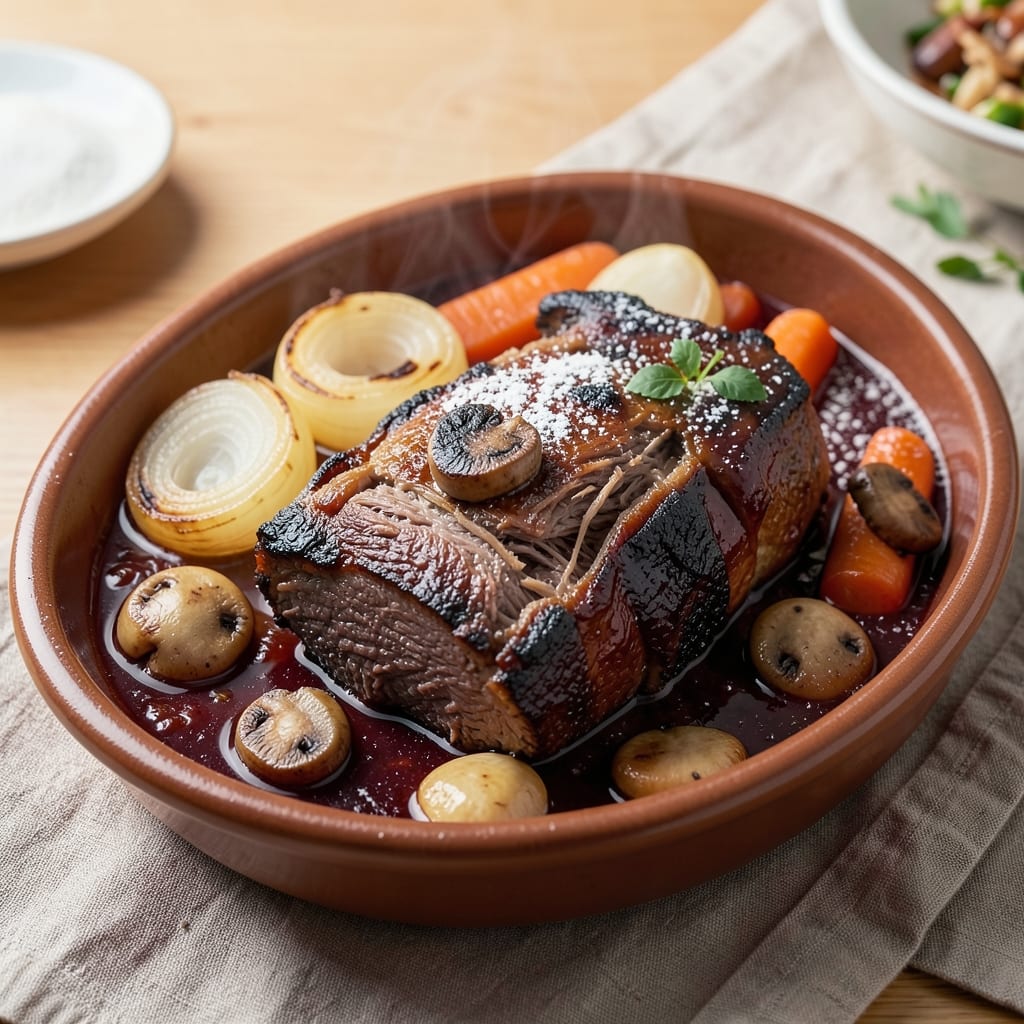
This basic beef bourguignon recipe transforms tough beef into melt-in-your-mouth tenderness through slow simmering in rich red wine. 💛 The secret lies in proper browning and patience—no shortcuts here. What starts as simple cuts of beef and humble vegetables becomes a deeply flavorful dish that tastes like a Parisian bistro.
Begin with a foolproof technique: sear the beef until deeply browned, then deglaze the pan with wine to capture all those flavorful bits. This creates the foundation for a sauce that's velvety and packed with umami. Carrots, onions, and mushrooms add natural sweetness and texture, while herbs like thyme and bay leaves infuse the wine with aromatic depth.
After hours of gentle simmering, you'll be rewarded with beef that falls apart at the touch of a fork, all swimming in a glossy, wine-infused sauce. The aroma alone will have everyone gathering around the table. This dish proves that with time and proper technique, even simple ingredients can create something extraordinary.
Serve with crusty bread to soak up every last drop of that rich sauce, or pair with buttery mashed potatoes for a comforting meal. The wine used in cooking pairs beautifully with a glass of the same variety—red wine lovers will appreciate this classic preparation. Let's get started on this timeless French masterpiece.
Ingredients for basic beef bourguignon
Fourteen ingredients transform humble cuts into Parisian bistro-worthy beef bourguignon through patience and technique.
| Ingredient | Amount | Notes |
|---|---|---|
| Chuck Roast 🥩 | 2 lb | Well-marbled for tenderness |
| Yellow Onions 🧅 | 2 whole | Diced into 1/2-inch pieces |
| Carrots 🥕 | 4 whole | Cut into 1-inch chunks |
| Cremini Mushrooms 🍄 | 8 oz | Wiped clean, quartered |
| Garlic Cloves 🧄 | 4 cloves | Minced for aromatic depth |
| All-Purpose Flour 🌾 | 2 tbsp | For dredging beef |
| Dry Red Wine 🍷 | 2 cups | Bold Cabernet Sauvignon preferred |
| Beef Broth 💧 | 1 ½ cups | Low-sodium preferred |
| Fresh Thyme 🌿 | 2 tbsp | Leaves only, chopped |
| Fresh Rosemary 🌿 | 1 tbsp | Needles only, chopped |
| Bay Leaves 🌿 | 2 whole | Removed before serving |
| Tomato Paste 🍅 | 1 tbsp | Smooth, not chunky |
| Olive Oil 🫒 | 2 tbsp | Extra-virgin for richness |
| Salt 🧂 | 1 ½ tsp | Diamond Crystal preferred |
| Ground Black Pepper 🌶️ | 1 tsp | Freshly ground for heat |
The chuck roast is non-negotiable for this dish—its marbling ensures melt-in-your-mouth tenderness. Look for well-marbled cuts at specialty butchers or the meat department—avoid leaner options like sirloin. For the wine, Cabernet Sauvignon or Merlot from a reputable producer delivers the best balance of acidity and depth. If you're using a pre-minced garlic blend, toast it in olive oil first to intensify its flavor. The mushrooms should be wiped clean with a damp cloth rather than rinsed to prevent excess moisture in the sauce.
No red wine? Substitute with a mix of beef broth and balsamic vinegar—use the same acidity ratio. Fresh thyme and rosemary can be swapped for one-third the amount of dried herbs, though they won't have the same aromatic punch. The tomato paste can be omitted entirely if you prefer a more traditional preparation, but it adds a subtle sweetness that complements the wine. For the flour, all-purpose works fine, but bread flour creates a slightly thicker sauce if you prefer. If you're using a pre-made tomato paste tube, Trader Joe's brand is a reliable choice that keeps well in the pantry.
The beef should be refrigerated until ready to use—sear it immediately after taking it out of the fridge to maintain its texture. Store any leftover wine in the original bottle, sealed tightly, for up to 3 months in the refrigerator. The finished bourguignon reheats beautifully—simmer gently for 5-10 minutes on the stove or warm in a 350°F oven for 15 minutes. For maximum flavor, let it sit at room temperature for 10 minutes before serving to allow the sauce to meld fully with the beef.
Why You'll Love This Recipe
- One-Pot Magic: I swear by this—just brown the chuck roast, toss in chopped onions, carrots, and mushrooms, then let the red wine and garlic work their magic. No extra pans, no fuss, and honestly? It feels like a restaurant dish for half the effort.
- Rich, Deep Comfort: That slow-cooked chuck roast? It turns tender enough to melt, while the mushrooms soak up all the garlic-wine sauce. The onions caramelize right in the pot—no extra step, just layers of flavor that make you want to linger over the plate.
- Leftovers You’ll Crave: Between us, this tastes better the next day. I make a big batch on Sunday, and by Wednesday, the sauce has thickened just right. Reheat it with a splash of water, and suddenly, a simple lunch feels like a treat.
- Budget-Friendly Feast: A chuck roast stretches across meals, and the veggies? Cheap and hearty. I’ve fed six people for under $20, and no one ever complains—especially when the mushrooms add that meaty, umami punch without breaking the bank.
Step-by-step instructions for deep red-wine simmered beef
Mastering this classic French technique transforms tough chuck roast into melt-in-your-mouth perfection.
🔥 Step 1: Sear the Chuck Roast for Deep Flavor
Pat the 2 lb chuck roast completely dry with paper towels—this ensures maximum browning. Heat 2 tbsp olive oil in a heavy Dutch oven over medium-high heat until shimmering. Place the roast in the pan and sear for 4-5 minutes per side until deeply browned in spots. Here's the thing—don't move it around. Let it develop that rich crust without disturbing it.
While the roast browns, sprinkle both sides generously with 1.5 tsp salt and 1 tsp ground black pepper. This seasoning will penetrate during the long simmer. Once browned, remove the roast and set it aside on a plate. You'll notice the pan has beautiful browned bits—these are pure flavor. Don't scrape them away yet; we'll use them to build the sauce.
🍳 Step 2: Build the Aromatic Base
In the same Dutch oven, add 2 tbsp olive oil and reduce heat to medium. Add the 2 whole yellow onions (previously diced) and cook for 5 minutes until softened and beginning to caramelize. Add the 4 whole carrots (cut into chunks) and cook for another 5 minutes, stirring occasionally. The vegetables should release their natural juices and begin to soften.
Add the 8 oz cremini mushrooms (quartered) and cook for 4 minutes until they release their moisture and start to brown. Stir in the 4 cloves garlic (minced) and cook for 30 seconds until fragrant. Here's where it gets fun—sprinkle in the 2 tbsp all-purpose flour and stir vigorously for 1 minute to coat all the vegetables. This creates a roux that will thicken our sauce beautifully.
🍳 Step 3: Deglaze and Simmer the Wine
Pour in the 2 cups dry red wine and scrape up all those browned bits from the bottom of the pan with a wooden spoon. This deglazing step captures all that concentrated flavor. Let the wine simmer for 5-7 minutes until reduced by half—you'll see it go from deep ruby to a richer, more concentrated color. This reduction builds the foundation of our sauce.
Add the 1.5 cups beef broth, 1 tbsp tomato paste, 2 tbsp fresh thyme, 1 tbsp fresh rosemary, and 2 whole bay leaves. Return the seared chuck roast to the pot, placing it fat-side up. Bring everything to a gentle simmer, then reduce heat to low. Here's the critical part: cover and let it cook for 2.5 hours. The key is patience—this long, slow cook time breaks down the connective tissue, transforming tough meat into tender slices.
⏰ Step 4: Finish and Rest for Maximum Tenderness
After 2.5 hours, check the internal temperature of the beef with an instant-read thermometer. It should reach 200-205°F—this is where the meat becomes fork-tender. If it's not quite there, continue cooking for another 30 minutes. The sauce should now coat the back of a spoon and have a rich, velvety consistency.
Remove the beef and let it rest for 15 minutes before slicing. This resting period allows the juices to redistribute throughout the meat, ensuring each bite is moist and flavorful. Skim any excess fat from the surface of the sauce if desired. To serve, slice the beef against the grain into ½-inch thick pieces and spoon the sauce generously over the top. The result should be tender beef with a deep, complex sauce that's perfectly balanced between wine, herbs, and vegetables.
Pro Tips For Making Basic Beef Bourguignon
- SEAR THE ROAST HARD: Chuck roast needs a deep, dark crust to hold up through hours of braising—don’t treat it like a gentle patty. Use a heavy pan (cast iron if you have it), crank the heat to medium-high, and walk away for 3-4 minutes per side. I used to rush this, and the meat would turn out soft instead of rich and flavorful.
- CUT MUSHROOMS SMALL: Cremini mushrooms shrink dramatically when cooked, so slice them into ¼-inch pieces instead of leaving them in thick chunks. This ensures they cook evenly and absorb the bourguignon’s sauce instead of sitting like rubbery obstacles. (Yes, even if it looks like overkill.)
- DEGLAZE WITH BOURGONDY: After browning the meat, don’t grab the wine bottle yet—scrape up every last bit of fond with a wooden spoon first. Then pour in the bourguignon (or red wine) and let it bubble for 2 minutes before adding broth. This step extracts the maximum flavor from the pan, and skipping it means a duller sauce.
- REST THE MEAT: The roast will release juices when sliced, so transfer it to a cutting board and tent loosely with foil for 10 minutes before serving. I know, I know—you’re hungry now. But cutting into it too soon turns that tender beef into a sad, dry pile. (Your future self will notice the difference.)
Storing and reheating this recipe
Refrigerator Storage
Let your bourguignon cool completely before transferring to airtight containers—I use glass Pyrex with snap-on lids. Store in the fridge for up to 4 days, but the flavors actually deepen overnight as the wine and herbs meld. The sauce thickens slightly when chilled, so add a splash of beef broth when reheating if it seems too stiff. 💛
Freezer Storage
For longer storage, freeze in quart-sized freezer bags (leave ½-inch headspace for expansion). The beef and sauce freeze beautifully for up to 3 months, though I recommend eating within 2 months for peak texture. Thaw overnight in the fridge before reheating—never microwave directly from frozen. This prevents the sauce from breaking and keeps the beef tender.
Stovetop Reheating
My preferred method is gentle stovetop reheating. Place the entire dish in a heavy-bottomed pot over medium-low heat and add ¼ cup beef broth to prevent drying. Simmer uncovered for 10-15 minutes, stirring occasionally, until heated through (165°F internal temp). The sauce will reduce slightly, intensifying its richness. Taste and adjust seasoning—you might need a pinch more salt or a splash of red wine to refresh the flavors.
Oven Reheating
For hands-off reheating, transfer the bourguignon to an oven-safe dish, cover loosely with foil, and warm in a 350°F oven for 15-20 minutes. This method preserves the sauce's texture better than microwave reheating. If using leftovers, I often reheat just the sauce separately and add it back to the beef at the table—this keeps the meat extra tender while warming the sauce to perfection.
Microwave Safety
If you're short on time, microwave reheating works but requires care. Transfer to a microwave-safe dish, cover with a damp paper towel, and heat in 1-minute intervals on 50% power, stirring between each interval. The goal is 165°F internal temp—overheating can make the beef dry. Add a splash of beef broth if the sauce thickens too much during reheating. This method is fastest but least ideal for texture.
Sauce Refreshers
After reheating, the sauce might need a little revival. A quick fix is 1 tsp butter or 1 tbsp crème fraîche stirred in at the end—this adds silkiness. For extra brightness, add ½ tsp fresh lemon juice or a pinch of sugar to balance any wine acidity. I also keep fresh thyme sprigs on hand to add back in if the herb notes have faded. These small adjustments make reheated bourguignon taste almost as good as fresh! ✨
Nutrition facts
Frequently asked questions
Can I use a different cut of beef instead of chuck roast?
While chuck roast is ideal for its marbling and tenderness, you can substitute with chuck shoulder or stew beef. Avoid leaner cuts like sirloin or ribeye—they won't become tender enough during the long simmer. If using a tougher cut, increase cooking time by 30 minutes to ensure maximum tenderness.
What's the best way to reduce the cooking time?
For a quicker version, use a pressure cooker (like an Instant Pot) on high pressure for 45 minutes after searing. Alternatively, braise in the oven at 325°F for 2.5 hours instead of stovetop simmering. Just remember—rushing the process may result in slightly less tender beef, though it'll still be flavorful!
How do I know when the beef is perfectly tender?
The beef should reach an internal temperature of 200-205°F and easily pull apart with two forks. If it's not quite there, continue cooking for another 30 minutes. The sauce should also coat the back of a spoon and have a rich, velvety consistency. This is your cue that the flavors have melded beautifully!
Can I make beef bourguignon in a slow cooker? Sear the beef as directed, then transfer everything to a slow cooker and cook on low for 8 hours or high for 5 hours. The slow cooker's gentle heat will work wonders for tenderizing the meat. Just
What's the secret to the best-tasting sauce?
The secret lies in degazing the pan after browning the beef—this captures all those flavorful browned bits. Also, don't skip the tomato paste (just 1 tbsp) as it adds subtle sweetness that balances the wine's acidity. Finally, let the sauce reduce naturally during simmering—this concentrates all the flavors into a rich, velvety finish!