
Main Courses
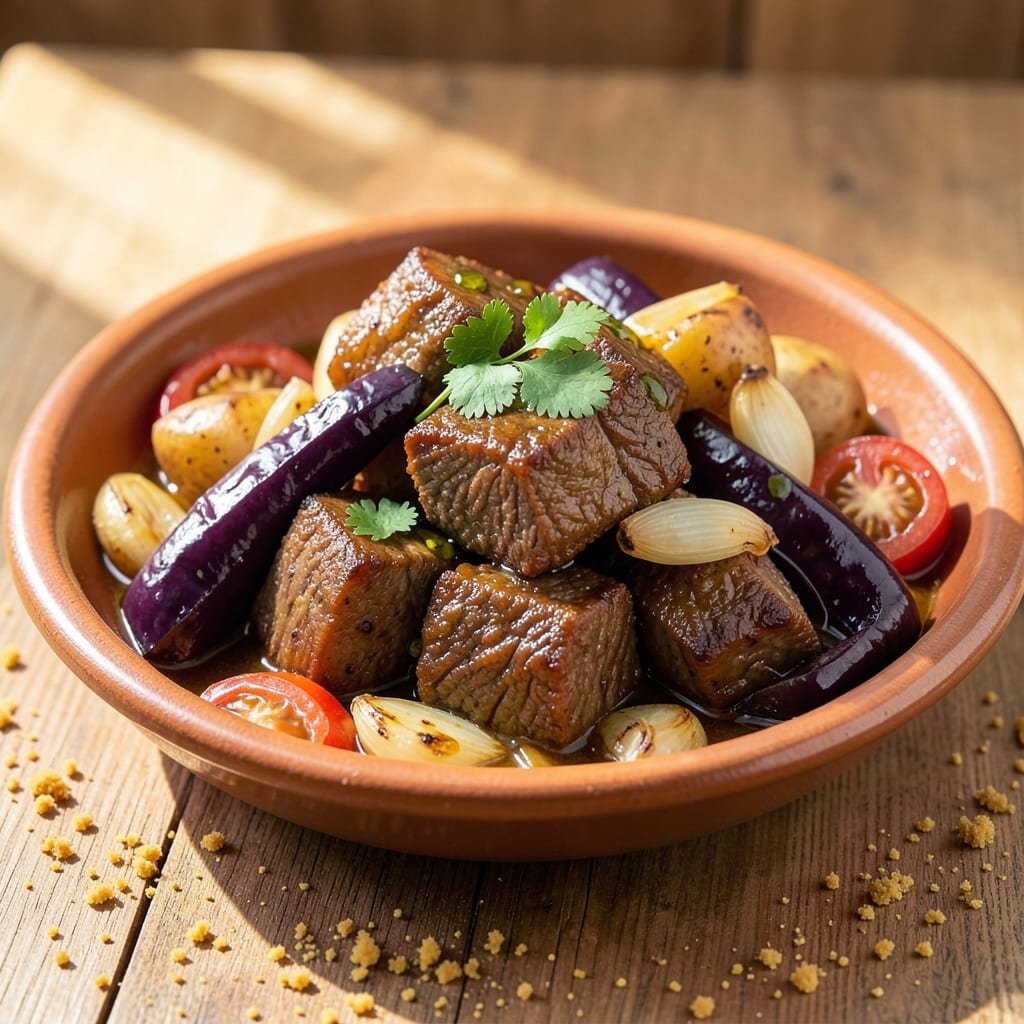
This Batangas beef caldereta recipe delivers the deep, slow-braised richness that makes it a Filipino comfort food classic. The secret lies in tender beef chuck simmered with eggplant until silky, potatoes that melt into the sauce, and a balance of spices that create layers of flavor. I've perfected this version to stay true to tradition while making it accessible for home cooks with a 3-hour simmering process that transforms tough cuts into melt-in-your-mouth perfection.
The dish begins with searing beef until deeply browned, then braising it with garlic, onions, and tomatoes until the meat falls apart. Eggplant and potatoes join later, absorbing the rich, slightly tangy sauce that defines caldereta. What makes this version special is the silky texture of the eggplant—achieved through careful timing—and the aromatic blend of bay leaves and black pepper that gives it that authentic Batangas touch.
By the time you serve it over steamed rice, you'll have a dish that's hearty, comforting, and packed with the kind of deep flavors that make it a centerpiece for family gatherings. The sauce clings to each bite of beef and vegetable, creating a harmonious balance of textures and tastes that's impossible to resist. Garnish with fresh green onions and a squeeze of calamansi for brightness.
This recipe works equally well in a Dutch oven or slow cooker, making it versatile for any kitchen. The long cooking time develops complex flavors that store-bought versions simply can't match, proving that patience pays off in every delicious bite. Let's get started on creating this Filipino staple at home.
Ingredients for batangas beef caldereta
These fifteen ingredients transform tough beef into melt-in-your-mouth perfection with silky eggplant and rich sauce.
| Ingredient | Amount | Notes |
|---|---|---|
| Beef Chuck Roast 🥩 | 3 lb | Tough cut for braising, cut into 1.5-inch cubes |
| Long Eggplant 🍆 | 2 whole | Asian variety preferred, peeled and sliced |
| Russet Potatoes 🥔 | 4 whole | Large, peeled and quartered |
| Yellow Onions 🧅 | 3 whole | Medium, sliced into wedges |
| Garlic Cloves 🧄 | 8 cloves | Minced, for deep flavor |
| Ripe Tomatoes 🍅 | 4 whole | Medium, chopped or crushed |
| Tomato Paste 🥫 | ½ cup | Squeeze tube preferred |
| Bay Leaves 🌿 | 4 whole | Dried, for aromatic depth |
| Black Peppercorns 🌶️ | 1 tsp | Freshly cracked for heat |
| Salt 🧂 | 1 ½ tsp | Kosher or sea salt |
| Olive Oil 🫒 | ½ cup | For searing beef |
| Calamansi Juice 🍋 | ¼ cup | Or substitute lime juice |
| Green Onions 🧅 | ¼ cup | Sliced, for garnish |
| Soy Sauce 🥫 | 2 tbsp | For umami depth |
| Sugar 🍚 | 1 tbsp | Balances acidity |
The beef is non-negotiable—chuck roast gives that signature fall-apart texture. Grab it from Costco or your local butcher for the best marbling. If pre-cubed, use it—saves time. Asian eggplant (the long, dark kind) is ideal, but regular eggplant works too. For tomatoes, San Marzano canned or fresh vine-ripened both work. The calamansi juice? If you can't find it, lime juice is the next best thing—just double the amount. Look for fresh bay leaves at Trader Joe's or the spice aisle—they pack more flavor than dried.
No soy sauce? Worcestershire sauce at half the amount works in a pinch. Fresh eggplant? Salt it first, let it sweat, then pat dry—removes bitterness and makes it silky. Short on calamansi? Lemon juice plus a pinch of sugar mimics the tang. The sugar balances the acidity—don't skip it. For the potatoes, Russets hold up best to long braising. If you've got sweet potatoes, they'll add a nice contrast but might need less cooking time. The green onions are just for garnish, so use whatever you've got—even chives if you're feeling fancy.
This dish tastes even better the next day—3-4 days in the fridge, 3 months frozen. Portion into containers with rice so lunches are ready. The sauce thickens as it cools, so add a splash of water if it's too thick when reheating. Store the beef and veggies separately if you're prepping ahead—combine when ready to serve. Leftovers reheat beautifully in a skillet with a splash of water to loosen the sauce.
Why You'll Love This Recipe
- One-Pot Magic: The beef, potatoes, and eggplant all simmer together—no fancy layers, no separate pans. Just brown the meat, toss in the veggies, and let the sauce work its magic. That’s it. (Yes, even on a Tuesday night.)
- Rich Without Effort: The beef chuck roast melts into tender, saucy bites while the eggplant soaks up the garlic-onion base like a sponge. Here’s what sold me—the crispy edges on the potatoes? Pure satisfaction after five minutes of stirring.
- Leftovers That Beg for More: This dish tastes better the next day. Honestly, I’ve reheated it three times and still crave it. The flavors deepen, the beef gets even more fall-apart, and the eggplant stays tender—no sad, rubbery leftovers here.
- Budget-Friendly Crowd-Pleaser: A single beef chuck roast feeds six, and the rest of the ingredients cost pennies. Between us, this is my secret weapon for family gatherings or when friends drop by unannounced. Everyone leaves happy, and my wallet stays intact.
Step-by-step instructions for Batangas beef caldereta
Here's how to create this rich, slow-braised dish with tender beef and silky eggplant.
Sear the Beef Chuck Roast
Heat the 0.5 cup olive oil in a large Dutch oven over medium-high heat until shimmering. Add the 3 lb beef chuck roast cut into 1.5-inch cubes and sear undisturbed for 3-4 minutes until deeply browned on all sides. This step develops the deep, caramelized flavors that form the base of your caldereta.
Don't rush this step—you want a good crust on each piece. Once browned, remove the beef with tongs and set aside. You'll notice the oil will darken slightly, which is perfect for building flavor. If the oil starts smoking excessively, reduce the heat slightly to maintain control.
Sauté the Aromatics
In the same Dutch oven, add 3 whole yellow onions sliced into wedges and cook for 5 minutes until softened and beginning to caramelize. Add the 8 cloves minced garlic cloves and cook for another 30 seconds until fragrant—this is when your kitchen should smell like pure comfort food.
Next, add the 4 whole ripe tomatoes chopped or crushed, along with the 0.5 cup tomato paste, 2 tbsp soy sauce, and 1 tbsp sugar. Stir well to combine, then add 1.5 tsp salt and 1 tsp cracked black peppercorns. Let this mixture cook for 5 minutes until the tomatoes break down and the sauce begins to thicken slightly.
Braise the Beef and Vegetables
Return the browned beef to the Dutch oven and add 2 cups water (enough to partially submerge the beef). Stir in the 4 whole bay leaves and bring the mixture to a gentle simmer. Here's the key: cover the pot and reduce heat to low, then let it cook for 1.5 hours without disturbing it.
During this time, the beef will become fork-tender and the flavors will meld beautifully. After 1.5 hours, add the 4 whole russet potatoes peeled and quartered, and the 2 whole long eggplant peeled and sliced. These vegetables will absorb all that rich beef flavor as they cook.
Finish with Calamansi Juice
Continue simmering uncovered for another 30-40 minutes until the potatoes are tender and the eggplant is silky soft. The sauce should have thickened into a velvety consistency. Stir in the 0.25 cup calamansi juice and cook for another 5 minutes to brighten the flavors.
Here's where the magic happens: the calamansi juice cuts through the richness of the beef and tomatoes, creating that perfect balance of tangy and savory. Taste and adjust seasoning if needed—you might want to add a pinch more salt or a splash more calamansi juice to taste.
Serve with Fresh Green Onions
Remove the bay leaves and discard them. Ladle the caldereta into serving bowls, making sure each portion has plenty of beef, potatoes, and eggplant. Garnish each serving with 0.25 cup sliced green onions just before serving to add a fresh, bright contrast to the rich dish.
Serve immediately with steamed rice to soak up all that delicious sauce. The beef should be fork-tender, the eggplant creamy, and the potatoes perfectly cooked. This dish tastes even better the next day as the flavors continue to meld, so consider making extra for leftovers!
Pro Tips For Making Batangas Beef Caldereta
- Sear the Chuck Roast First: I learned this the hard way—skipping the sear means you’ll end up with beef that’s tender but tastes like it’s been simmered in its own juices. Brown the chuck roast in batches over medium-high heat until deep caramelization forms, then deglaze with a splash of vinegar or soy sauce. That crust locks in flavor and keeps the meat from turning mushy during the long simmer.
- Slice the Eggplant Thinly: Thick eggplant slices? They’ll turn to mush before the beef is done. Use a sharp knife to cut long eggplant into ¼-inch slices—no thinner, or they’ll fall apart. Salt them lightly and let them sit for 15 minutes to draw out bitterness, then pat dry. Trust me, this makes all the difference when they soak up the rich sauce without falling apart.
- Don’t Rush the Potatoes: After burning three batches, I finally figured out that potatoes need time to soften fully in the stew. Add them in the last 30 minutes of cooking, not when the beef is already tender. Their starch will thicken the sauce just right—no need for extra flour or cornstarch. (Yes, even if you’re impatient like me.)
- Use Garlic Wisely: My grandmother swore by this, and she was right: minced garlic burns faster than you think. Sauté it in the oil for no more than 30 seconds—just until fragrant—before adding onions. If you let it turn brown, it’ll make the whole dish taste bitter. Keep the heat medium-low and move the pan often.
Creative variations of this recipe
Spicy Batangas Style
For a fiery twist, add 2 tbsp Penzeys Calabrian chili paste when sautéing the aromatics. This brings authentic heat that pairs perfectly with the rich beef and silky eggplant. I also like adding 1-2 slices of siling labuyo (bird's eye chili) directly to the simmering pot during the final 10 minutes of cooking. The chili's sharp heat cuts through the richness beautifully. 🌶️
Vegetarian Adaptation
Swap the beef for 3 cups extra-firm tofu pressed and cubed, then pan-fried until golden before braising. Use 1 cup coconut milk instead of water for depth, and add 1 tbsp soy sauce plus 1 tsp smoked paprika to mimic the beefy umami. The eggplant and potatoes will still absorb the rich flavors, creating a satisfying meatless version.
Slow Cooker Version
Transfer all ingredients (except green onions) to a 6-quart slow cooker after searing the beef. Cook on LOW for 7-8 hours or HIGH for 4-5 hours, adding the calamansi juice during the final 30 minutes. The slow cooker's gentle heat ensures tender beef and perfectly cooked vegetables without constant monitoring. Perfect for busy weeknights!
Creamy Coconut Twist
Stir in 1 cup coconut milk with the calamansi juice during the final 10 minutes of cooking. This adds a velvety texture that contrasts beautifully with the silky eggplant. For extra richness, top each serving with 2 tbsp toasted coconut flakes and a sprinkle of fresh cilantro. The tropical notes complement the dish's savory depth wonderfully.
Protein Swaps
Try pork shoulder instead of beef for a slightly sweeter flavor—just reduce cooking time to 1 hour after adding vegetables. For seafood lovers, use firm white fish like cod (cook for 15 minutes after adding) or shrimp (add during the final 10 minutes). The caldereta's rich sauce works beautifully with any protein, making it endlessly adaptable.
Regional Variations
In Pampanga, caldereta often includes bagoong (fermented shrimp paste)—add 1 tbsp during the final 5 minutes of cooking for a funky, umami punch. For a Tagalog twist, add 1 cup long green beans with the potatoes—they stay crisp while absorbing the sauce. Each regional version keeps the core technique but adds unique local flavors. 🗺️
Nutrition facts
Frequently asked questions
Why does Batangas beef caldereta need such a long cooking time?
The 3-hour simmer is key to transforming tough beef chuck into melt-in-your-mouth tenderness. The slow braising breaks down collagen in the meat while allowing flavors to develop deeply. This method also creates that signature silky texture in the eggplant and perfectly cooked potatoes that define the dish.
Can I use regular eggplant instead of the Asian long variety?
Yes, but with a small adjustment! Regular eggplant has more moisture, so salt it first, let it sit for 10 minutes, then pat dry before adding. This removes bitterness and helps achieve that silky texture. The cooking time remains the same, but monitor the eggplant closely to prevent overcooking.
What's the best way to reheat leftover Batangas beef caldereta?
Reheat in a skillet over medium-low heat with 1-2 tablespoons of water or beef broth to loosen the sauce. Cover and warm for 5-7 minutes until heated through. Never microwave—it makes the sauce watery and the beef dry. For extra richness, add a splash of calamansi juice when serving.
Is there a quicker version of this recipe?
For a faster option, use a pressure cooker: sear the beef as directed, then pressure cook with all ingredients (except calamansi juice) for 45 minutes on high pressure. Add the juice during the final 5 minutes of natural release. The result is still tender beef with rich flavors in about 1 hour total.
How do I know when the beef is perfectly tender?
The beef should easily shred with a fork and pull apart when pressed with tongs. For best results, test a piece after 1.5 hours of braising. If it's still slightly firm, continue cooking another 30 minutes. The sauce should coat the beef completely, indicating it's ready to absorb all those rich flavors.