
Main Courses
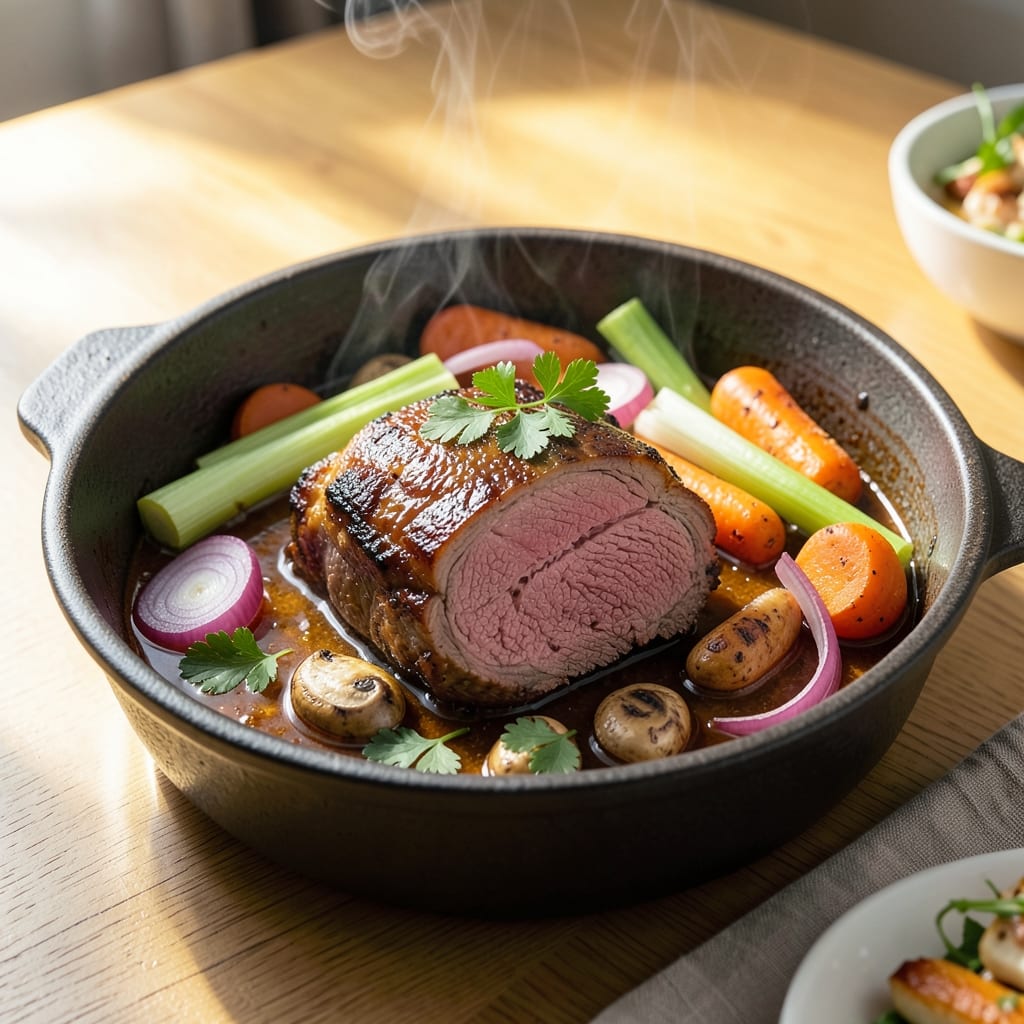
This Bavarian beef recipe delivers the deep, caramelized richness of a traditional German stew that transforms tough cuts into melt-in-your-mouth perfection. The slow-braising process creates a sauce so flavorful it clings to every bite, while classic techniques like browning the meat and deglazing the pot build layers of umami that define Bavarian comfort food.
The secret lies in patience—allowing the beef to develop tender texture while the vegetables soften into the sauce. A touch of dark beer or red wine enhances the depth, balancing the natural richness of the meat. This recipe stays true to Bavarian roots while being approachable for home cooks, with straightforward steps that yield restaurant-quality results.
By the end, you'll have a steaming pot of beef that's fork-tender and surrounded by a glossy, caramelized sauce. The aroma alone will have everyone gathering at the table, and every spoonful delivers that satisfying combination of meaty depth and velvety texture that makes this dish a staple in Bavarian homes.
Serve with traditional sides like spaetzle, boiled potatoes, or crusty bread to soak up every last drop of that rich sauce. The dish improves with time, so plan ahead—this is the kind of meal that gets better as it sits, rewarding your effort with flavors that feel like a warm embrace on a chilly evening.
Ingredients for bavarian beef
Pantry staples plus a few specialty touches for that authentic Bavarian depth.
| Ingredient | Amount | Notes |
|---|---|---|
| Beef Chuck Roast 🥩 | 2 lb | Tough cut for slow braising |
| Yellow Onion 🧅 | 1 whole | Chopped into 1/2-inch pieces |
| Carrots 🥕 | 4 medium | Peeled and cut into 1-inch chunks |
| Celery Stalks 🌿 | 3 whole | Trimmed and cut into 1-inch pieces |
| Garlic Cloves 🧄 | 4 cloves | Minced for deep flavor |
| Dark Beer 🍺 | 1 cup | Dunkel or bock style preferred |
| Red Wine 🍷 | 1 cup | Bold dry variety like Cabernet |
| Beef Broth 💧 | 2 cups | Homemade or quality store-bought |
| Tomato Paste 🍅 | 2 tbsp | Smooth texture for richness |
| Worcestershire Sauce 🧂 | 1 tbsp | For umami depth |
| Bay Leaves 🌿 | 2 whole | Fresh for best flavor |
| Thyme Sprigs 🌿 | 4 whole | Fresh preferred, dried works |
| Allspice Berries 🌶️ | 4 whole | Crushed for subtle warmth |
| Salt 🧂 | 1 ½ tsp | Kosher or sea salt |
| Black Peppercorns 🌶️ | 1 tsp | Freshly cracked preferred |
The beef is non-negotiable—chuck roast with good marbling is key. Costco or Whole Foods usually carry it pre-cut, but if you're buying a whole roast, ask the butcher to cube it for you. Look for pieces about 1.5 inches thick—they'll break down beautifully. For the beer, Ayinger or Paulaner are classic choices, but any dark lager works. The wine? Cabernet Sauvignon or Merlot—whatever's open in your fridge. Skip the cooking wine here; you want real flavor. The tomato paste? Trader Joe's has great squeeze tubes that make this easy.
No dark beer? Substitute with extra beef broth plus 1 tbsp balsamic vinegar—it adds depth without alcohol. Worcestershire sauce missing? Soy sauce or a splash of fish sauce (if you're okay with umami) gets you close. Fresh herbs wilt fast, so dried thyme at one-third the amount works in a pinch. Allspice berries can be tricky to find—substitute with 1/2 tsp ground allspice if needed. The carrots and celery should be similar sizes so they cook evenly. Baby carrots work if that's what you've got, but regular carrots cut into chunks taste better.
This dish tastes even better the next day—plan ahead. Store in the fridge for 4-5 days, or freeze portions for up to 3 months. I like to portion it into containers so lunches are ready to grab. The sauce thickens as it cools, so add a splash of broth or water when reheating. For extra richness, stir in a pat of butter at the end—trust me on this. Leftovers reheat beautifully in a skillet with a splash of water to deglaze.
Why You'll Love This Recipe
- One-Pot Magic: I swear by this recipe when I’m too tired to chop a million things—just toss in the whole onion, carrots, and celery (no peeling even needed), add the beef chuck, and let the slow cooker do the work. The veggies soften into the meat, so you don’t even notice they’re there.
- Deep, Caramelized Richness: That beef chuck roast? It turns unbelievably tender, almost falling apart, while the onions and garlic develop this deep, savory sweetness from the slow cooking. Honestly, the first bite makes me pause—it’s like a hug in stew form.
- Leftovers That Shine: Between us, this recipe feeds my family for days without getting boring. Reheat the next day with a splash of broth, or turn it into sliders with crusty bread—suddenly, you’ve got lunch and dinner covered. My kids actually ask for leftovers.
- Budget-Friendly Luxury: A chuck roast is cheap, but it tastes like a fancy restaurant dish. You’re getting that restaurant-quality depth without the price tag, and the veggies stretch the meal further. I’ll be real: this is how I feed my household without breaking the bank.
Step-by-step instructions for Bavarian beef
Here's how to transform tough beef into melt-in-your-mouth perfection with rich, caramelized flavors.
Sear the Beef Chuck Roast
Pat the 2 lb Beef Chuck Roast completely dry with paper towels—this is crucial for developing that beautiful crust. Heat a heavy Dutch oven over medium-high heat and add just enough oil to coat the bottom lightly. Place the roast in the pot and sear on all sides until deeply browned, about 5-7 minutes total. You want that golden-brown color because it's the foundation for all that flavor.
While the roast is searing, crush the 4 whole Allspice Berries with a mortar and pestle or the bottom of a heavy pan. This releases their aromatic oils. Once the roast is browned, remove it from the pot and set it aside on a plate. You'll notice the pot has some lovely browned bits stuck to the bottom—don't scrape them out. These are flavor gold.
Build the Flavor Base
In the same Dutch oven, add the chopped 1 whole Yellow Onion, 1-inch chunks of 4 medium Carrots, and 1-inch pieces of 3 whole Celery Stalks. Cook these vegetables over medium heat for 8-10 minutes, stirring occasionally, until they begin to soften and take on some color. This process, called sweating, helps develop their natural sweetness.
Next, add the minced 4 cloves Garlic Cloves, 2 tbsp Tomato Paste, and the crushed allspice berries. Stir everything together and cook for another 2 minutes until the garlic becomes fragrant. This aromatic trio forms the flavor foundation for your Bavarian beef. If you smell the garlic burning, reduce the heat slightly—it happens fast.
Deglaze and Simmer the Braise
Pour in the 1 cup Dark Beer and scrape up all those browned bits from the bottom of the pot with a wooden spoon. This deglazing step captures all the meaty flavors that would otherwise stick to the pan. Let the beer simmer for 3-4 minutes until it reduces by about half. You'll notice the alcohol smell dissipating—that's when you know it's ready for the next step.
Add the 1 cup Red Wine, 2 cups Beef Broth, 1 tbsp Worcestershire Sauce, 2 whole Bay Leaves, and 4 whole Thyme Sprigs to the pot. Return the seared beef to the Dutch oven, making sure it's submerged in the liquid. The liquid should come about halfway up the roast. If it doesn't, add a little water or broth to help it along.
Slow Braise to Tender Perfection
Cover the Dutch oven with a tight-fitting lid and transfer it to a 325°F oven. Here's where the magic happens—this low and slow cook transforms tough beef into fork-tender perfection. Braise for 3 hours, then carefully remove the lid and spoon some of the cooking liquid over the beef to keep it moist. Return it to the oven and cook for another 30-60 minutes until the beef is fork-tender.
To check for doneness, insert a fork into the thickest part of the beef. If it slides in with little resistance and the meat is easily pulled apart, it's ready. The vegetables should also be tender but still hold their shape. If the liquid has reduced too much, add a little water or broth to maintain the proper consistency.
Finish and Serve
Remove the beef from the pot and place it on a cutting board. Let it rest for 10-15 minutes before slicing. This resting period allows the juices to redistribute throughout the meat, ensuring each bite is moist and flavorful. While the beef rests, remove the bay leaves and thyme sprigs from the braising liquid and discard them.
Slice the beef against the grain into ¼-inch thick slices. The grain direction will be visible as lines running through the meat. Ladle the braising liquid over the sliced beef and serve immediately. The rich, caramelized sauce should coat each tender slice beautifully. Serve with crusty bread or buttered egg noodles to soak up all that delicious sauce.
Pro Tips For Making Bavarian Beef
- Sear the Roast Hard: I learned this the hard way—skipping the deep sear means your chuck roast will end up fork-tender but flavorless. Use a heavy pot (Dutch oven if you have one) and high heat for 4-5 minutes per side until the meat turns a deep, crusty brown. That crust locks in juices and builds the rich, caramelized base for the gravy.
- Mise en Place the Veggies: Chop your onions, carrots, and celery into even ½-inch pieces—no need for perfection, but consistency matters. I used to eyeball it, and some veggies would turn mushy while others stayed crunchy. A quick knife session upfront saves you from uneven cooking later.
- Skip the Crowding: After searing the roast, remove it and set it aside. If you dump all the veggies and liquid in right away, you’ll steam instead of brown them. Sauté the onions, garlic, and celery in the same pot for 5-6 minutes until softened but not colored—this builds flavor before the roast goes back in.
- Deglaze Aggressively: Once the roast is back in the pot with the veggies, add just enough liquid (beer, broth, or water) to come about halfway up the meat. Bring it to a simmer, then scrape the browned bits off the bottom with a wooden spoon—yes, even the stubborn ones. Those bits are pure flavor, and skipping this step means a watery gravy.
Regional styles of this dish
Classic Bavarian Goulash
This is the hearty, rustic version you'd find in Munich beer halls, where the beef is slow-cooked with onions, paprika, and dark beer until it's so tender it falls apart. The key difference is the addition of 1-2 tablespoons sweet Hungarian paprika (not smoked) to the braising liquid. Use Weissbier (wheat beer) instead of Dunkel for a lighter touch, and serve with semmelknödel (bread dumplings) for the full experience. 🍺
Austrian Beef Rouladen
Instead of stewing the beef, Bavarian cooks often roll thin slices of beef around fillings like mustard, bacon, and pickles, then braise them. For this version, use 1 lb thinly sliced beef top round (about ¼-inch thick). Spread each slice with 1 teaspoon Dijon mustard, layer with 2 slices bacon and 1 dill pickle spear, then roll tightly and secure with toothpicks. Brown the rolls in the Dutch oven before adding the braising liquid. The result is a showstopping dish with crispy bacon edges.
Swabian Beef Stew
In Swabia (the region bordering Bavaria), the stew includes sauerkraut and potatoes> for a heartier, more substantial dish. After searing the beef, add 2 cups chopped sauerkraut> and 4 peeled, halved potatoes> to the pot with the vegetables. The sauerkraut adds a tangy contrast that cuts through the richness of the beef. Serve with dark rye bread> to soak up the sauce—this is a Sunday supper classic in Southern Germany.
Franconian Beer-Braised Beef
Franconia, another Bavarian region, favors a richer version with cream and mustard> added at the end. After braising the beef, stir in ½ cup heavy cream> and 1 tablespoon whole-grain mustard> just before serving. The cream lightens the sauce while the mustard adds depth. Pair this with buttered spaetzle> and a crisp Franconian Riesling> for a refined yet comforting meal.
Tyrolean Alpine Twist
For a mountain-inspired variation, add 1 cup grated Gruyère cheese> and ½ cup chopped parsley> to the braising liquid during the final 30 minutes> of cooking. The Alpine region of Tyrol loves cheese in their stews, and Gruyère melts beautifully into the sauce. Finish with a sprinkle of fresh parsley> and serve with polenta> for a rustic, hearty dish that feels like a cozy lodge dinner. ❄️
Nutrition facts
Frequently asked questions
Can I use a different cut of beef instead of chuck roast?
Yes, but choose wisely! Chuck roast is ideal because its fat content makes it perfect for slow braising. Short ribs or brisket work well too—they'll add even more flavor to the sauce. Avoid lean cuts like sirloin, as they won't become tender enough. If you can't find chuck, beef shank is another great alternative.
Why does my Bavarian beef sauce turn out watery?
This usually happens when the beef isn't fully submerged or the liquid hasn't reduced enough. Make sure the beef is covered by liquid (add broth if needed), and simmer uncovered for the last 15-20 minutes to thicken it naturally. For extra richness, stir in 1 tablespoon cornstarch mixed with 2 tablespoons cold water at the end.
Can I make this recipe without alcohol?
Replace the 1 cup dark beer with 1 cup beef broth plus 1 tablespoon balsamic vinegar, and substitute the 1 cup red wine with an extra 1 cup beef broth. The balsamic adds depth that mimics the alcohol's caramelization. The dish will still be delicious—just slightly less complex.
How do I reheat leftovers without drying out the beef?
Always reheat slowly! Place the beef and sauce in a skillet over low heat and add 2-3 tablespoons water or broth to create steam. Cover and cook for 10-15 minutes, stirring occasionally. For microwave reheating, cover the dish and heat in 30-second intervals, stirring between each interval. The sauce should be warm but not boiling.
What's the best way to serve this Bavarian beef?
Traditional pairings include buttered spaetzle, boiled potatoes, or crusty dark rye bread to soak up the sauce. For a complete meal, add a simple green salad with a tangy vinaigrette. In Bavaria, this dish is often served with a cold Helles beer or a crisp Riesling to cut through the richness.