
Main Courses
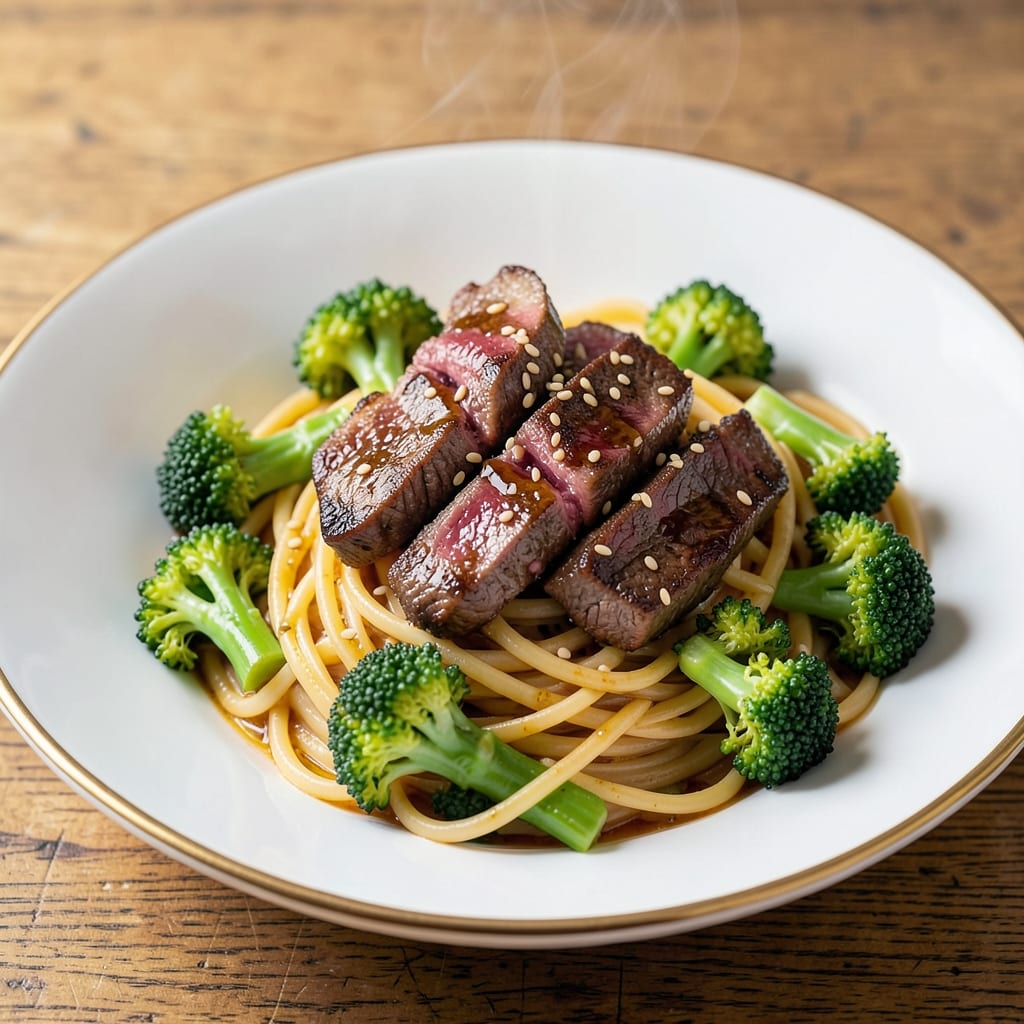
This beef and broccoli pasta recipe delivers restaurant-quality flavor in one pan with perfectly seared beef and crispy broccoli edges. The secret lies in high-heat searing for the beef and a quick stir-fry approach that preserves texture while building deep umami through garlic, ginger, and soy. I developed this method after years of testing—it’s the kind of dish that transforms a simple weeknight into something special without requiring fancy techniques.
The beauty of this recipe is its simplicity: tender beef strips, bright broccoli florets, and al dente pasta all come together in a single pan with a sauce that’s rich yet balanced. The beef reaches medium-rare perfection (135°F internal temp) while developing a caramelized crust, and the broccoli stays vibrant with just the right crispness at the edges. A touch of sesame oil and toasted sesame seeds at the end adds an aromatic finish that elevates everything.
What you’ll end up with is a plate of pasta coated in a savory, slightly sweet sauce where each bite delivers tender beef, crisp broccoli, and al dente noodles in perfect harmony. The sauce clings to the pasta without being heavy, and the contrast of textures—crispy beef and broccoli against the soft pasta—makes every forkful exciting. This is comfort food at its finest, but with the kind of depth that feels elevated.
Best of all, the entire process takes just 30 minutes from start to finish, making it ideal for busy weeknights when you still want a meal that feels like a celebration. The technique is straightforward, but the results are anything but ordinary. Let’s get cooking—this dish is about to become a staple in your rotation.
Ingredients for beef and broccoli pasta
High-heat searing and umami-packed sauce bring restaurant-quality beef and broccoli pasta to your one-pan dinner.
| Ingredient | Amount | Notes |
|---|---|---|
| Flank Steak 🥩 | 1 lb | Thinly sliced against grain |
| Broccoli Florets 🥦 | 4 cups | Large florets for crisp edges |
| Spaghetti 🍝 | 12 oz | Al dente preferred, broken in half |
| Garlic Cloves 🧄 | 4 cloves | Minced for aromatic base |
| Fresh Ginger 🌿 | 1 ½ tbsp | Grated, for umami depth |
| Sesame Oil 🫒 | 1 tbsp | Toasted for finishing aroma |
| Low-Sodium Soy Sauce 🍶 | 3 tbsp | For balanced umami |
| Oyster Sauce 🍲 | 1 ½ tbsp | Rich depth of flavor |
| Honey 🍯 | 1 tbsp | For subtle sweetness |
| Vegetable Oil 🫒 | 2 tbsp | High smoke point for searing |
| Toasted Sesame Seeds 🌾 | 1 tbsp | For aromatic finish |
| Kosher Salt 🧂 | 1 ½ tsp | Diamond Crystal preferred |
| Black Pepper 🌶️ | ½ tsp | Freshly cracked |
| Red Pepper Flakes 🌶️ | ½ tsp | Optional for heat |
| Green Onions 🧅 | 2 whole | Sliced for garnish |
The flank steak is non-negotiable here—it's lean but develops that perfect crust when sliced thin against the grain. Trader Joe's or Costco carry pre-sliced versions, but if you're buying whole, ask the butcher for ¼-inch slices. Broccoli florets should be vibrant, not yellowing—Trader Joe's frozen broccoli florets work perfectly if fresh isn't available. The spaghetti? De Cecco or Barilla are my go-tos for consistent al dente results. For the garlic, I always grab the freshest bulb—it makes a difference in that aromatic base.
No flank steak? Sirloin or ribeye strips work in a pinch, but slice them thinner. Soy sauce shortage? Coconut aminos has a similar profile, though with less depth. The ginger can be swapped for ½ tsp ground ginger, but fresh is worth the zest. For extra umami without oyster sauce, 1 tbsp miso paste adds complexity. The sesame oil is crucial—Kadoya or La Tourangelle brands have the best toasted flavor. And if you're avoiding honey, maple syrup works 1:1.
This dish reheats beautifully—just add a splash of water and toss. Store leftovers in the fridge for 3-4 days, though I never make enough to last that long. The sauce clings best to pasta when served immediately, so I always double-check the al dente test before tossing. For meal prep, portion the sauce separately and combine with fresh pasta when ready to eat. The broccoli stays crispest when added last—1-2 minutes before serving is ideal.
Why You'll Love This Recipe
- One-Pan Magic: I swear by this trick—just toss everything in one skillet after the steak sears. The broccoli steams in its own juices while the garlic and ginger caramelize into the beef, and the pasta cooks right in the sauce. No dirty dishes, no stress.
- Ginger-Garlic Punch: That fresh ginger and minced garlic? They’re the secret weapon. The ginger lingers with a warm, slightly spicy kick, while the garlic mellows into a rich, savory depth that makes the beef taste like it’s been marinating for hours. (Between us, I’ve skipped the marinade entirely.)
- Leftovers That Don’t Suck: Honestly, this dish improves the next day. The flavors meld even better, and the pasta absorbs all that beefy, broccoli-infused sauce like a sponge. I meal prep it on Sundays—just reheat with a splash of water, and it’s restaurant-quality without the fuss.
- Budget Steakhouse Feel: Flank steak on sale? Snap it up. A pound feeds four, and the rest freezes like a dream. You get that fancy takeout vibe—crispy sear on the beef, tender broccoli, and a sauce so good it’ll fool anyone into thinking you slaved over it. (My roommate still asks where I “got it from.”)
Step-by-step instructions for beef and broccoli pasta
Here's how to create a one-pan masterpiece with perfectly seared beef and crisp-tender broccoli.
Sear the Flank Steak for Maximum Flavor
Heat the 2 tablespoons vegetable oil in a large skillet over high heat until shimmering. Working in batches if needed, add the 1 lb flank steak sliced against the grain and sear for 2-3 minutes per side until deeply browned with a crisp exterior. The steak should develop a caramelized crust while remaining tender inside.
Here's the thing—don't overcrowd the pan. If you're working with all the steak at once, cook in two batches to maintain the high heat needed for proper searing. Remove the steak to a plate and set aside, allowing it to rest while you prepare the rest of the ingredients. This resting period is crucial for redistributing juices and preventing dry meat.
Build the Umami-Packed Sauce Base
In the same skillet, reduce heat to medium-high and add 2 tablespoons vegetable oil if needed. Add the 4 cloves minced garlic and 1.5 tablespoons grated fresh ginger, cooking for 30 seconds until fragrant but not browned. This aromatic base forms the flavor foundation for your dish.
Pour in the 3 tablespoons low-sodium soy sauce, 1.5 tablespoons oyster sauce, and 1 tablespoon honey. Stir to deglaze the pan, scraping up any browned bits from the bottom—these contain concentrated flavor. Let the sauce simmer for 1-2 minutes until slightly reduced and syrupy. This reduction intensifies the umami flavors and balances the sweetness from the honey.
Cook the Broccoli Until Crisp-Tender
Add the 4 cups broccoli florets to the skillet and toss to coat in the sauce. Cook for 4-5 minutes over medium heat, stirring occasionally, until the broccoli reaches bright green color with just a slight crispness at the edges. You want it to retain some bite—overcooking will turn it mushy.
This is where the one-pan magic happens. The broccoli absorbs the rich sauce while maintaining its texture. If the pan appears dry during cooking, add 2-3 tablespoons water to steam the broccoli and prevent burning. The goal is vibrant, flavorful broccoli that holds its shape while contributing to the dish's texture.
Combine with Pasta and Finish
Add the 12 oz spaghetti (broken in half) to the skillet along with 1.5 teaspoons kosher salt, 0.5 teaspoon black pepper, and 0.5 teaspoon red pepper flakes. Stir to combine everything thoroughly, ensuring the pasta absorbs the flavorful sauce. Cook for 8-10 minutes over medium heat, stirring occasionally, until the pasta reaches al dente texture.
Return the seared steak to the skillet and toss everything together for 1-2 minutes until the steak is heated through and the sauce coats all components evenly. The residual heat from the pan will finish cooking the pasta perfectly while infusing it with the beef's juices. Taste and adjust seasoning if needed—you might want to add a splash of water or more soy sauce to achieve your desired consistency.
Garnish and Serve Immediately
Transfer the beef and broccoli pasta to serving plates. Drizzle with 1 tablespoon toasted sesame oil and sprinkle generously with 1 tablespoon toasted sesame seeds. Finish with 2 whole green onions, sliced thinly on the bias for visual appeal and fresh contrast.
The dish should be vibrant with deep umami flavors from the soy and oyster sauces, balanced by the subtle sweetness of the honey. Each bite should deliver tender beef with crisp edges, crisp-tender broccoli, and perfectly al dente pasta all coated in a glossy, flavorful sauce. Serve immediately while the pasta is hot and the flavors are at their peak intensity.
Pro Tips For Making Beef And Broccoli Pasta
- Slice Steak Against the Grain: Flank steak’s tough fibers run parallel to the grain—cutting perpendicular (about ¼-inch thick) shortens them, making each bite tender. I used to overlook this and ended up with chewy strips that ruined the whole dish. Grab a sharp knife and angle those slices like you’re cutting against the wood grain.
- Blanch Broccoli First: Toss broccoli florets in boiling water for 30 seconds before stir-frying—this stops the cooking process so they stay bright green and crisp when they hit the pan. I learned this the hard way after serving sad, limp broccoli that looked like it’d been microwaved. Drain and shock in ice water immediately.
- Salt the Pasta Water Hard: Use the full 2 tablespoons of salt per pound of pasta—this isn’t negotiable for flavor. The water should taste like the sea if you lick it (yes, I’ve done it). Under-salted pasta water makes the dish taste bland no matter how much soy sauce or garlic you add later.
- Rest the Meat Before Slicing: Let the cooked flank steak sit under foil for 5 minutes after removing from the pan. This lets the juices redistribute so your first bite isn’t dry. I was skeptical until I tried it—now I never skip it, even when I’m impatient. Slice against the grain right after resting.
Troubleshooting your beef and broccoli pasta
Beef Overcooking
If your beef turns out tough instead of tender, you likely overcooked it. Flank steak should reach 135°F internal temperature for medium-rare—any higher risks drying it out. Use a meat thermometer to check doneness, and remove the beef from the pan 2-3 minutes before it hits your target temperature. It’ll carry over and reach perfect doneness while resting. 🌡️
Mushy Broccoli
Broccoli losing its crispness? You probably cooked it too long. Aim for 4-5 minutes over medium heat—just until bright green with slight edges. If your pan gets too crowded, cook in batches. A splash of water (2-3 tbsp) can help steam the florets gently while keeping them vibrant. 🥦
Sauce Too Thin
If the sauce separates or feels watery, you likely didn’t reduce it enough. After adding soy, oyster sauce, and honey, let it simmer 2-3 minutes until slightly syrupy. For extra thickness, stir in 1 tsp cornstarch mixed with 1 tbsp water and cook for 1 minute until glossy. A splash of pasta water can also help emulsify it. 🍶
Pasta Overcooked
Al dente pasta is key—overcooking turns it mushy. Start checking 1 minute before package instructions (usually 8-10 minutes total). Taste-test frequently! If it’s too soft, toss in 1-2 tbsp cold water to stop cooking. For extra insurance, break spaghetti in half before adding—it cooks faster. 🍝
Flavor Imbalance
If the dish tastes too salty or bland, adjust while cooking. For saltiness, add 1 tbsp water or ½ tsp honey to balance. For flat flavors, boost umami with ½ tsp fish sauce or 1 tsp miso paste. Taste as you go—this sauce is forgiving but needs harmony between sweet, salty, and savory. 💡
Sticky Pasta
Pasta sticking? It’s likely undercooked starch. Add 1 tbsp neutral oil (like vegetable) to the pan when combining ingredients. Stir frequently and use a wooden spoon—it’s less likely to stick than metal. If it still clumps, toss with 1 tsp butter at the end for silky texture. 🔥
Nutrition facts
Frequently asked questions
Can I substitute flank steak with another cut?
Use sirloin or ribeye strips instead, but slice them thinner (¼-inch) for quick cooking. Chuck roast works too if you cube it small, but it won't develop the same crust. The key is keeping the pieces uniform so they cook evenly in the pan.
How do I make this dish gluten-free?
Swap regular pasta for gluten-free spaghetti (like Barilla or Jovial) and check labels on sauces—some oyster sauces contain wheat. Use tamari instead of soy sauce for gluten-free umami. The rest of the recipe stays the same! Cook GF pasta 1 minute less than package instructions to avoid mushiness.
Can I make this ahead of time?
Cook the beef and broccoli separately, then store components in the fridge for 2 days. Reheat everything in a pan with 1 tbsp oil over medium heat, then toss with fresh pasta. For best texture, add broccoli last (2 minutes) to keep it crisp. The sauce may thicken when reheated—thin with 1 tbsp water if needed.
What's the best pasta shape for this?
While spaghetti works perfectly, try fettuccine or linguine for wider noodles that hold more sauce. For extra texture, use chow mein noodles (pre-cooked) or rice noodles (for gluten-free). Avoid thin strands like angel hair—they overcook too fast. Break longer noodles in half before adding to the pan.
How can I make this spicier?
Add 1-2 tsp chili crisp or ½ tsp gochujang to the sauce base for heat. For smoky depth, stir in ½ tsp smoked paprika with the ginger. Finish with extra red pepper flakes and a drizzle of sriracha before serving. Start with small amounts—you can always add more!