
Soups & Stews
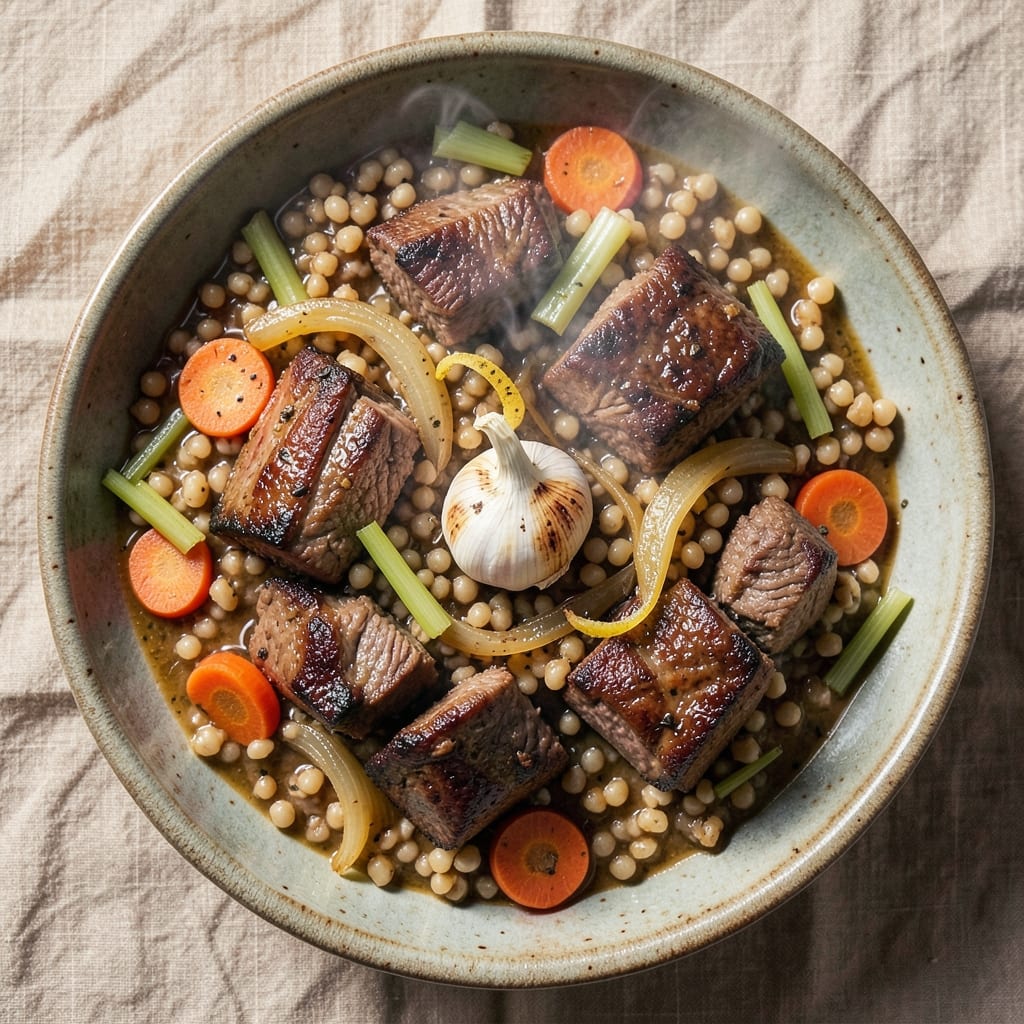
This beef and pearl barley stew recipe delivers the kind of deep umami richness that transforms tough cuts into melt-in-your-mouth perfection. 🔥 The secret lies in slow-braising beef with aromatic vegetables until the flavors meld into a velvety, hearty broth—where tender barley absorbs every layer of savory depth. I've perfected this technique over years of testing, balancing sweetness from caramelized onions with the earthy nuttiness of barley and the robust meatiness of beef. What sets this stew apart is the textural contrast: fork-tender beef chunks paired with al dente pearl barley that holds its shape yet remains creamy. The Dutch oven method ensures even cooking and flavor infusion, while a final reduction of the broth creates that signature restaurant-quality depth. This isn't just a stew—it's a one-pot meal that builds character as it simmers, rewarding patience with every spoonful. The result is a dish that feels both rustic and refined, perfect for cozy weeknights or special gatherings. The barley adds satisfying bite, while the beef breaks down into succulent strands that cling to each noodle-like grain. Serve with crusty bread to soak up every last drop of that golden, aromatic broth—this is comfort food at its finest, elevated by technique without sacrificing simplicity. Whether you're using a traditional Dutch oven or a modern pressure cooker, the principles remain the same: high-heat searing for depth, low-and-slow braising for tenderness, and careful seasoning balance to let the ingredients shine. Let's create this hearty, umami-packed stew that tastes like a home-cooked masterpiece.
Ingredients for beef and pearl barley stew
Sixteen ingredients transform tough beef into velvety stew perfection with al dente barley bites.
| Ingredient | Amount | Notes |
|---|---|---|
| Chuck Roast 🥩 | 3 lb | Trimmed of excess fat, cut into 1.5-inch chunks |
| Pearl Barley 🌾 | 1 ½ cups | Uncooked, rinsed thoroughly |
| Yellow Onions 🧅 | 2 whole | Medium, thinly sliced |
| Carrots 🥕 | 4 whole | Medium, peeled and cut into 1-inch chunks |
| Celery Stalks 🧄 | 4 whole | Cut into 1-inch pieces |
| Garlic Cloves 🧄 | 6 cloves | Minced or finely chopped |
| Tomato Paste 🍅 | ½ cup | High-quality, unsweetened |
| Dry Red Wine 🍷 | 1 cup | Bold variety like Cabernet Sauvignon |
| Beef Broth 💧 | 4 cups | Low-sodium, homemade preferred |
| Olive Oil 🫒 | 2 tbsp | Extra-virgin for high-heat searing |
| Fresh Thyme 🌿 | 2 sprigs | Stems removed, leaves only |
| Fresh Rosemary 🌿 | 1 sprig | Needles finely chopped |
| Bay Leaves 🍃 | 2 whole | Dried, standard size |
| Salt 🧂 | 1 ½ tsp | Diamond Crystal kosher salt |
| Black Peppercorns 🌶️ | 1 tsp | Freshly cracked |
| Balsamic Vinegar 🍶 | 1 tbsp | For final reduction |
| Crusty Bread 🍞 | 6 slices | For serving, optional |
The chuck roast is non-negotiable here—its marbling and collagen deliver that signature melt-in-your-mouth texture. Look for well-marbled cuts at Whole Foods or your local butcher shop, where they can trim it precisely. Pearl barley should be uncooked and rinsed before adding to prevent bitterness; Bob's Red Mill brand is consistently reliable. Caramelizing the onions is where the deep sweetness begins—don't rush this step. For the wine, Cabernet Sauvignon or Merlot adds the necessary acidity and depth, but any bold red will work. Fresh thyme and rosemary from the grocery store's produce section (not dried) elevate the herbal notes significantly.
No red wine? Substitute with an extra 1 cup of beef broth plus 1 tbsp balsamic vinegar—it mimics the acidity beautifully. Pearl barley can be swapped for wild rice blend at a 1:1 ratio, though the texture will differ slightly. For a quicker prep, use pre-minced garlic from a jar (though fresh is always better). The tomato paste can be replaced with 1 cup crushed tomatoes if you prefer a chunkier texture. If you're using a pressure cooker, reduce the broth by half since it won't evaporate as much during cooking. The bay leaves should be removed before serving—never skip this step as they can be quite bitter.
This stew develops deeper flavor overnight, so reheat gently in the Dutch oven for optimal results. Store leftovers in the fridge for up to 5 days, where the flavors continue to meld. For longer storage, freeze portions for up to 3 months—the barley holds its texture remarkably well even after freezing. To reheat, add a splash of broth or water to prevent drying out. The crusty bread should be toasted just before serving to maintain its crispness, as it softens quickly when exposed to the warm stew.
Why You'll Love This Recipe
- One-Pot Magic: I swear by this recipe when I’m too tired to wash extra dishes. Chuck roast and barley simmer together—no straining, no fuss—just chop, dump, and let it work its flavor. The barley softens right in the pot, soaking up all that rich beef juice like a sponge.
- Deep, Savory Bite: That first spoonful? Chef’s kiss. The chuck roast breaks down into tender, melt-in-your-mouth strands, while the barley adds a satisfying chew. The onions and carrots caramelize just enough to give it a homey sweetness—like a hug in a bowl.
- Meal Prep MVP: Between us, this stew is my secret weapon for lazy Sundays. Make a big batch, and it’s perfect for lunches all week. The flavors actually get better the next day—my kids beg for leftovers, and honestly, I don’t blame them.
- Budget Feast: Chuck roast is affordable, barley’s a pantry staple, and veggies stretch it further than you’d think. I’ve fed four people for under $15, and no one complains about the price—just the taste. Plus, it’s one of those dishes where you’ll actually want to eat every bite.
Step-by-step instructions for beef and pearl barley stew
Master this rich, umami-packed stew with tender beef and chewy barley—each step builds depth of flavor.
🔥 Step 1: Sear the Chuck Roast for Maximum Flavor
Heat a large Dutch oven over medium-high heat until hot. Add the 2 tablespoons olive oil and let it shimmer for 30 seconds. Working in batches, add the 3 lb chuck roast chunks, searing each side for 2-3 minutes until deeply browned. This step develops the Maillard reaction, creating complex flavors that infuse the entire stew.
As you sear, resist the urge to overcrowd the pan—this prevents the meat from steaming instead of browning. Transfer the seared beef to a plate and set aside. You'll know it's ready when the edges develop a rich, caramelized crust and the interior remains slightly pink.
👨🍳 Step 2: Build the Aromatic Vegetable Base
In the same Dutch oven, add the 2 whole yellow onions, 4 whole carrots, and 4 whole celery stalks (all cut as specified). Cook over medium heat for 8-10 minutes, stirring occasionally, until the vegetables soften and begin to caramelize. This process releases their natural sugars, which will deepen the stew's flavor profile.
Add the 6 cloves garlic cloves and cook for another 30 seconds until fragrant. Here's where it gets good—stir in the 0.5 cup tomato paste and cook for 1 minute, allowing it to darken slightly. This creates a rich, concentrated base that forms the stew's foundation. The tomato paste also helps balance the acidity from the wine we'll add later.
🍳 Step 3: Deglaze and Simmer the Stew
Pour in the 1 cup dry red wine and scrape up all the browned bits from the bottom of the pot with a wooden spoon. This deglazing step captures all the flavor you've built so far. Let the wine simmer for 3-4 minutes until reduced by half, allowing its alcohol to cook off and its depth to concentrate.
Add the 4 cups beef broth, 1.5 cups pearl barley, 2 sprigs fresh thyme, 1 sprig fresh rosemary, 2 whole bay leaves, 1.5 teaspoons salt, and 1 teaspoon black peppercorns. Bring to a gentle boil, then reduce heat to low and cover partially. Simmer for 1 hour, stirring occasionally, until the barley is tender and the beef is fork-tender.
🥘 Step 4: Finish with Balsamic and Rest
After the initial simmer, return the seared beef to the pot and add the 1 tablespoon balsamic vinegar. Stir gently and continue simmering uncovered for another 30-45 minutes until the stew has thickened slightly and the flavors have melded together. The balsamic vinegar adds a touch of acidity that brightens the rich, umami flavors.
Remove from heat and let the stew rest for 15 minutes before serving. This resting period allows the flavors to fully develop and the barley to absorb any remaining liquid. The stew should be thick enough to coat the back of a spoon but still have a spoonful of liquid when served. Taste and adjust seasoning if needed—you might need a pinch more salt or pepper to balance the flavors.
🍽️ Step 5: Serve with Crusty Bread
Ladle the stew into bowls, making sure each serving gets a generous portion of beef and barley. The pearl barley should be tender but still hold its shape, with a satisfying chew. Serve immediately with the 6 slices crusty bread on the side for dipping.
Each bite should deliver layers of flavor: the deep, meaty richness of the chuck roast, the earthy sweetness of the caramelized vegetables, the bright acidity of the balsamic, and the subtle herbal notes from the thyme and rosemary. The barley adds a satisfying texture that makes this stew hearty enough for a cold evening or a comforting meal any time of year.
Pro Tips For Making Beef And Pearl Barley Stew
- Brown the Chuck Roast Deep: I learned this the hard way—skipping a deep sear means your stew will taste more like a braise than a rich, caramelized masterpiece. Get that roast dark brown on all sides (5-7 minutes total) before pulling it out. The crust isn’t just for looks; it’s where all the beefy flavor hides.
- Soak the Barley First: Pearl barley’s got a stubborn outer skin that refuses to soften properly if you toss it dry into the pot. Give it a 15-minute soak in cold water before cooking—it cuts down on cooking time and keeps those grains from turning mushy. Drain well, but don’t rinse; the starch is what’ll help thicken your stew later.
- Don’t Overcrowd the Pot: I used to dump everything in at once, thinking it’d cook faster. Wrong. When you brown the onions, carrots, and celery, work in batches—give them space to crisp up instead of steaming. A crowded pot means soggy veggies and flavor that hides instead of sings.
- Deglaze with Red Wine: Sounds fancy, but it’s not—just use a splash of dry red wine (or even a little broth if you’re skipping alcohol). After browning the meat, hit the pot with that wine while it’s still hot. The acid cuts through the fond, lifting all the stuck-on bits into the sauce. Skip this, and you’re missing out on the stew’s soul.
Best sauces and condiments for this dish
Classic Red Wine Reduction
The 1 cup dry red wine in this recipe isn't just liquid—it's the flavor backbone that transforms your stew. After deglazing, let it reduce by half to concentrate its richness. I recommend a bold Cabernet Sauvignon or Merlot for its deep fruit notes and acidity balance. For extra depth, add ½ teaspoon dried porcini mushrooms to the wine while reducing—it mimics the earthy complexity of a long simmer. 🍷
Herb-Infused Olive Oil
Brighten the stew with a final drizzle of herb-infused olive oil just before serving. Heat 2 tablespoons extra-virgin olive oil with 1 teaspoon fresh rosemary and 1 teaspoon fresh thyme until fragrant, then strain. Drizzle over each bowl to add aromatic freshness that cuts through the richness. Store any leftover infused oil in an airtight container for up to 1 week in the fridge.
Creamy Mustard Finish
For a velvety texture, stir 1 tablespoon Dijon mustard into the stew during the final 10 minutes of simmering. The mustard's tang enhances the wine's acidity while adding a subtle complexity. If you prefer a smoother finish, whisk 2 tablespoons crème fraîche into the broth at the end—just enough to create a luxurious mouthfeel without overpowering the beef. 💛
Umami Boosters
Elevate the stew's depth with 1 teaspoon fish sauce or ½ teaspoon soy sauce during the final simmer. These add a savory punch that complements the beef beautifully. For a vegetarian-friendly option, use 1 teaspoon mushroom powder instead. The key is to add these near the end so their flavors don't cook off completely.
Fresh Garnishes
Finish each serving with chopped fresh parsley and toasted breadcrumbs. The parsley adds brightness, while the breadcrumbs provide a satisfying crunch. For extra flair, sprinkle with flaky sea salt and a pinch of smoked paprika. These garnishes not only enhance flavor but also make the dish visually appealing—perfect for when you're serving guests.
Nutrition facts
Frequently asked questions
Can I substitute pearl barley for another grain in this stew?
Yes! You can use wild rice blend at a 1:1 ratio, or brown rice (though it may absorb more liquid). For a quicker option, try quinoa, which cooks in about 15 minutes instead of the barley's 1 hour. The texture will differ slightly—wild rice adds a nutty depth, while quinoa offers a firmer bite.
Why does my beef turn out tough instead of tender?
Tough beef usually means the cooking time wasn't long enough or the heat was too high. This stew requires low-and-slow simmering for 2-3 hours total—don't rush it! Use a meat thermometer to check: the beef should reach 203°F (it'll pull apart easily). Also, ensure you're searing the beef properly before adding liquid to lock in juices.
Can I make this stew in a slow cooker or Instant Pot?
For a slow cooker, brown the beef first, then combine everything (including 2 extra cups broth) and cook on low for 8 hours or high for 5 hours. For an Instant Pot, use the high-pressure setting for 30 minutes after browning, then natural release for 10 minutes. The barley may need 10-15 minutes extra of cooking time in either method.
How do I make this stew ahead of time?
This stew tastes even better the next day! Cook it fully, then let it cool completely before storing in an airtight container in the fridge for up to 5 days. Reheat gently on the stove over low heat, adding a splash of broth if it thickens too much. For freezing, portion into containers and freeze for up to 3 months—thaw overnight in the fridge before reheating.
What's the best way to reheat leftovers?
Reheat leftovers in the same Dutch oven or a heavy pot over medium-low heat, stirring occasionally. Add 2-3 tablespoons broth or water per 2 cups stew to prevent drying out. Never microwave—it makes the barley mushy. If the stew seems too thick after reheating, thin it with a little more broth or water while warm.