
Soups & Stews
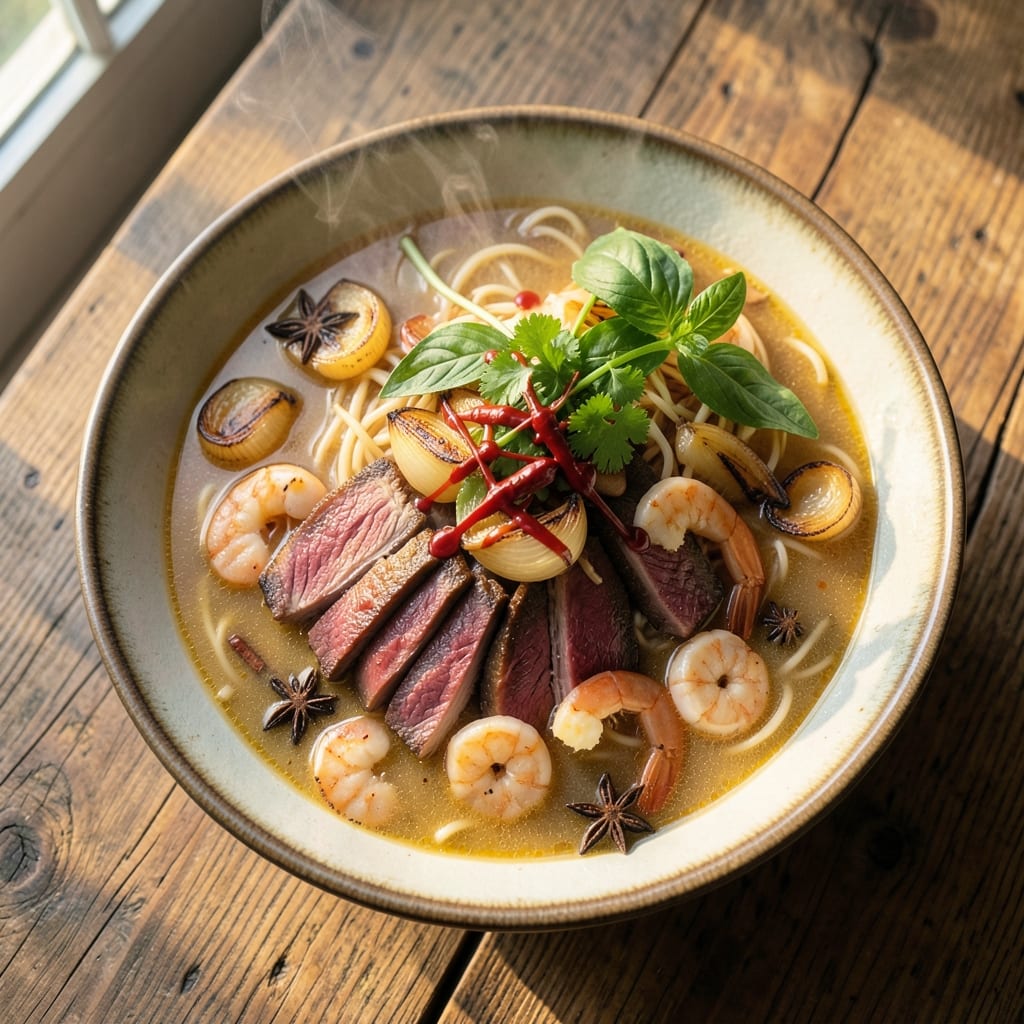
This beef and shrimp pho recipe delivers restaurant-quality Vietnamese comfort in your own kitchen, where fragrant broth meets tender proteins and silky rice noodles. The secret lies in layering flavors—charred onions and star ankye ground into a fragrant paste, slow-simmered beef brisket, and perfectly cooked shrimp that stay tender. I've perfected this version to balance traditional techniques with modern shortcuts, so you get authentic depth without spending all day in the kitchen.
The broth is the heart of pho, and we build it right: beef bones and brisket simmer for hours with aromatic spices until the liquid transforms into a rich, golden elixir. While the broth works its magic, thinly sliced beef brisket and plump shrimp cook just until done, ensuring they stay tender. Rice noodles soak up the fragrant liquid, creating a silky texture that's impossible to resist. Every element comes together in a bowl that's as beautiful as it is delicious.
What makes this recipe special is the harmony of textures and flavors—crisp bean sprouts, fresh herbs like Thai basil and cilantro, and bright lime wedges cut through the richness of the broth. The garnishes aren't just decoration; they're essential for that perfect balance of sweet, sour, and umami. Whether you're serving a crowd or treating yourself to a cozy meal, this pho delivers the warmth and satisfaction of a Vietnamese street stall.
Ready in about 2 hours (with most of that time being hands-off simmering), this recipe is perfect for weeknight dinners or special occasions. The broth can be made ahead and reheated, so you can focus on the fresh garnishes when it's time to serve. Let's create a bowl of pho that feels like a hug in every spoonful.
Ingredients for beef and shrimp pho
Six aromatic spices, tender proteins, and silky noodles transform into a bowl of Vietnamese comfort.
| Ingredient | Amount | Notes |
|---|---|---|
| Beef Brisket 🥩 | 1 ½ lb | Thinly sliced against grain |
| Shrimp 🦐 | 1 ½ lb | Large, peeled, deveined |
| Yellow Onions 🧅 | 4 whole | Charred for aromatic paste |
| Star Anise 🌶️ | 2 whole | Lightly crushed |
| Cinnamon Sticks 🍃 | 2 whole | 2-inch pieces |
| Cardamom Pods 🌿 | 4 whole | Lightly crushed |
| Cloves 🌶️ | 4 whole | Lightly crushed |
| Ginger Root 🌿 | 1 inch | Fresh, peeled, sliced |
| Garlic Cloves 🧄 | 8 cloves | Peeled, smashed |
| Beef Bones 🦴 | 2 lb | Marrow or knuckle bones |
| Rice Noodles 🍜 | 12 oz | Banh pho, flat rice noodles |
| Bean Sprouts 🌱 | 4 cups | Fresh, crisp |
| Thai Basil Leaves 🌿 | 1 cup | Fresh, stems removed |
| Cilantro Leaves 🌿 | ½ cup | Fresh, chopped |
| Lime Wedges 🍋 | 4 whole | For serving |
| Fish Sauce 🍶 | 2 tbsp | Red Boat preferred |
| Soy Sauce 🍶 | 2 tbsp | Light or all-purpose |
| Sugar 🍚 | 1 tbsp | White or brown |
The star anise and cinnamon are non-negotiable—they build that signature pho aroma. Whole Spice Shop or bulk bins at Asian markets have the freshest, most potent spices. Look for star anise that's plump and fragrant, not shriveled. The beef brisket should be well-marbled—Costco or local butchers often have the best cuts. Shrimp? Buy live if possible, or frozen jumbo shrimp from Trader Joe's—they thaw beautifully in cold water. Rice noodles are key: Vietnamese markets carry banh pho, but Asian grocery stores usually stock them too.
No fish sauce? Soy sauce plus a splash of vinegar gets you close, but it won't be authentic. Short on star anise? Anise seeds work at double the amount. The ginger and garlic can be pre-minced from the store (those little jars are a lifesaver), but fresh is always better if you've got time. For the broth, beef marrow bones give the most flavor—knuckle bones work too. If you can't find them, regular beef bones with extra time still deliver. The noodles soak up the broth perfectly—don't overcook them, or they'll turn mushy.
Broth keeps for 5 days in the fridge or 3 months frozen—make extra, you'll want it. Store noodles in a cool, dry place and use within 6 months. Fresh herbs? Wrap them in damp paper towels and store in a resealable bag for 5 days. The shrimp and beef can be cooked ahead and reheated gently—just add them to the hot broth for 1-2 minutes to warm through. Lime wedges stay fresh for 1 week in the fridge, so buy them fresh when ready to serve.
Why You'll Love This Recipe
- Simmer, Don’t Stress: I swear by this broth—just toss in brisket, star anise, and cinnamon sticks with water, then let it work its magic. No constant stirring, no fancy techniques, and honestly? The deeper it simmers, the richer it gets.
- Two Proteins, Zero Guilt: Beef brisket adds that deep, slow-cooked satisfaction, while shrimp slide in at the end—plump, juicy, and ready in minutes. My kids fight over the last piece, and I don’t even have to bribe them.
- Leftover Hero: This broth begs to be reheated. Next-day pho? Even better—flavors meld like old friends, and I’ve turned last night’s dinner into tomorrow’s lunch without breaking a sweat.
- Spice Cabinet Staples: Star anise and cinnamon sticks aren’t just for holidays. They turn a simple pot of water into aromatic gold, and I’m always grabbing them for this recipe. (Yes, even on a Tuesday night.)
Step-by-step instructions for beef and shrimp pho
Here's how to build a deeply aromatic broth and silky noodle bowl that captures Vietnam's soul.
Char the Onions for Aromatic Base
Heat a dry skillet over medium-high heat and place the 4 whole yellow onions cut in half, skin-on side down. Char them for 10-12 minutes until deeply blackened and sweet-smelling. Flip occasionally so they brown evenly on all sides.
This caramelization creates the pho's signature depth. When they're ready, peel off the charred skins and transfer the onions to a food processor. Pulse until you get a thick, dark paste—this is your flavor foundation. Set aside until you need it.
Build the Spice Packet and Sear the Bones
In a large stockpot, combine the 2 lb beef bones, 1.5 lb beef brisket (cut into large chunks), 1 inch ginger root (sliced), 8 cloves garlic (smashed), 2 whole star anise, 2 cinnamon sticks, 4 cardamom pods, and 4 whole cloves. Toast these spices in the dry pot over medium heat for 3-4 minutes until fragrant.
Add 4 cups cold water and bring to a boil. Skim off any foam that rises to the surface. Reduce heat to low and simmer uncovered for 2 hours, stirring occasionally. This slow simmer extracts maximum flavor from the bones and spices.
Create the Signature Broth
After the initial simmer, add the onion paste you prepared earlier along with the 1 tbsp sugar, 2 tbsp fish sauce, and 2 tbsp soy sauce. Stir well to combine. Simmer uncovered for another 30 minutes to allow the flavors to meld together.
Strain the broth through a fine-mesh sieve into a clean pot, pressing gently on the solids to extract all the flavor. You should have about 6 cups of rich, golden broth. Taste and adjust seasoning—add more fish sauce for saltiness or sugar for balance if needed.
Prepare the Noodles and Toppings
While the broth simmers, soak the 12 oz rice noodles in warm water for 10-15 minutes until pliable but still slightly firm. Drain and set aside. For the toppings, peel and devein the 1.5 lb shrimp, keeping them whole. Rinse the 4 cups bean sprouts and 1 cup Thai basil leaves, and chop the 0.5 cup cilantro leaves. Keep everything separate until serving.
Slice the remaining 1.5 lb beef brisket thinly against the grain—this ensures tender bites. You'll want about 1 tbsp slices per serving. Keep the beef cold until ready to add to the bowl.
Assemble and Serve the Pho
Bring the broth back to a gentle simmer. Divide the rice noodles among 6 bowls, covering each with about 1 cup hot broth. Add 1 tbsp sliced beef and 2-3 shrimp to each bowl. Top with ½ cup bean sprouts, 2 tbsp Thai basil, and 1 tbsp chopped cilantro. Serve immediately with lime wedges on the side.
Watch the shrimp turn pink—just 1-2 minutes in the hot broth is perfect. The noodles should be silky but still hold their shape. Squeeze lime over each bowl and let everyone customize their pho with additional fish sauce or soy sauce to taste. The aroma alone will make your kitchen smell like a Hanoi street stall.
Pro Tips For Making Beef And Shrimp Pho
- Simmer Brisket Low and Slow: Pho broth needs time—don’t rush the beef. After browning, drop the brisket into cold water, then simmer at a bare simmer (tiny bubbles, not a rolling boil) for at least 3 hours. I used to crank the heat and wonder why my broth tasted flat; patience here makes all the difference.
- Blanch Shrimp First: Shrimp cooks in seconds—add them straight to the broth and they’ll turn rubbery. Instead, blanch them in boiling water for 30 seconds, then shock in ice water before tossing into the pho. This keeps them tender and bright pink, not sad and mushy.
- Char Onions Properly: Slice onions thick (½-inch) and cook them until deeply caramelized—dark brown edges, almost black spots. Skip this, and your broth will lack depth. I learned this the hard way after making pho that tasted like it was missing something.
- Toast Spices Whole: Star anise and cinnamon sticks should sizzle in oil for 30 seconds before hitting the broth—this unlocks their flavor. Crush them afterward for extra aroma, but toasting first prevents bitterness. (Yes, even if you’re impatient like me.)
Storing and reheating this recipe
Broth Storage
Your pho broth is a flavor powerhouse that stores beautifully. Let it cool to room temperature first, then transfer to airtight containers. It keeps in the refrigerator for up to 5 days—the flavors actually deepen over time. For longer storage, freeze in 1-cup portions using silicone ice cube trays. Once frozen solid, transfer cubes to a freezer bag for up to 3 months. 💫
Reheating Broth
When reheating from the fridge, warm broth gently on the stovetop over low heat until steaming. Never microwave—it destroys the delicate aromatics. For frozen broth, thaw overnight in the fridge, then reheat. If you notice the broth has reduced too much, add ¼ cup hot water per cup of broth to restore consistency. Always bring to a simmer before adding proteins.
Noodle Prep
Cooked rice noodles can be stored in the fridge for 3 days in a sealed container with a damp paper towel on top. To reheat, submerge noodles in hot broth for 2-3 minutes until warmed through. For freezing, blanch noodles for 30 seconds first, then shock in ice water. Freeze in a single layer before transferring to a bag—this prevents clumping. Thaw overnight in the fridge before reheating.
Protein Handling
Cooked shrimp and beef can be refrigerated separately for 2 days in airtight containers. Reheat shrimp in hot broth for just 1 minute—overcooking makes them rubbery. For beef, warm in broth for 2-3 minutes until reaching 165°F internal temperature. Never reheat proteins in the microwave, as it dries them out. I like to reheat everything together in the broth for maximum flavor infusion. 🔥
Herb Preservation
Fresh Thai basil and cilantro stay vibrant for 5 days in the fridge. Wrap them in a damp paper towel, then place in a resealable bag with a few ice cubes. Bean sprouts keep for 4 days in a sealed container. For longer storage, freeze herbs in 1-tbsp portions on a baking sheet before transferring to a bag. Thaw herbs in the fridge overnight before using—they'll be slightly wilted but regain freshness when submerged in warm broth.
Complete Bowl Assembly
For make-ahead convenience, assemble pho bowls without the broth. Store components separately in the fridge for 2 days, then assemble when ready to eat. Reheat broth separately, then combine with noodles and proteins. The key is timing—add shrimp last to maintain perfect tenderness. Garnishes like lime and bean sprouts can be added fresh at serving time for maximum crispness and brightness. 🌿
Nutrition facts
Frequently asked questions
Can I substitute chicken for the beef in this pho?
While beef is traditional, you can absolutely use chicken! Swap the brisket for 2 lb chicken thighs and drumsticks (skin-on for flavor) and reduce the cooking time to 1.5 hours for the broth. Chicken pho is common in northern Vietnam—just adjust the seasoning slightly since chicken broth tends to be milder. For extra richness, add a 1-inch piece of chicken neck to the broth.
How do I get my pho broth to be clearer?
For a clearer broth, use a double strainer with cheesecloth or a fine-mesh sieve after skimming the foam. Simmer the broth uncovered for the full 2 hours—this helps render more fat, which can be skimmed off. If you prefer a lighter color, reduce the cooking time slightly to 1.5 hours, but taste the flavor first. Remember, pho broth is meant to be rich and aromatic!
What's the best way to slice the beef brisket thinly?
Slice against the grain for maximum tenderness! First, freeze the brisket for 30 minutes to firm it up, then slice ⅛-inch thick using a sharp chef's knife. For even thinner slices, freeze again for 15 minutes and slice once more. Keep the slices cold until ready to cook—they'll warm through perfectly in the hot broth.
Can I make this pho in a slow cooker?
Yes, but with adjustments! Brown the beef bones and brisket first in a skillet, then transfer everything to the slow cooker with 6 cups water. Cook on low for 8 hours or high for 4 hours, then finish with the onion paste and seasonings on the stovetop. The slow cooker won't develop the same depth of caramelization, but it's a great time-saving method for busy days.
How do I know when the shrimp are cooked?
Shrimp should turn opaque pink and curl slightly at the edges—this happens in just 1-2 minutes in the hot broth. Overcooking makes them rubbery, so add them last and remove immediately after they turn pink. For extra safety, use a thermometer—they're done at 145°F internal temperature. The key is timing, not color!