
Main Courses
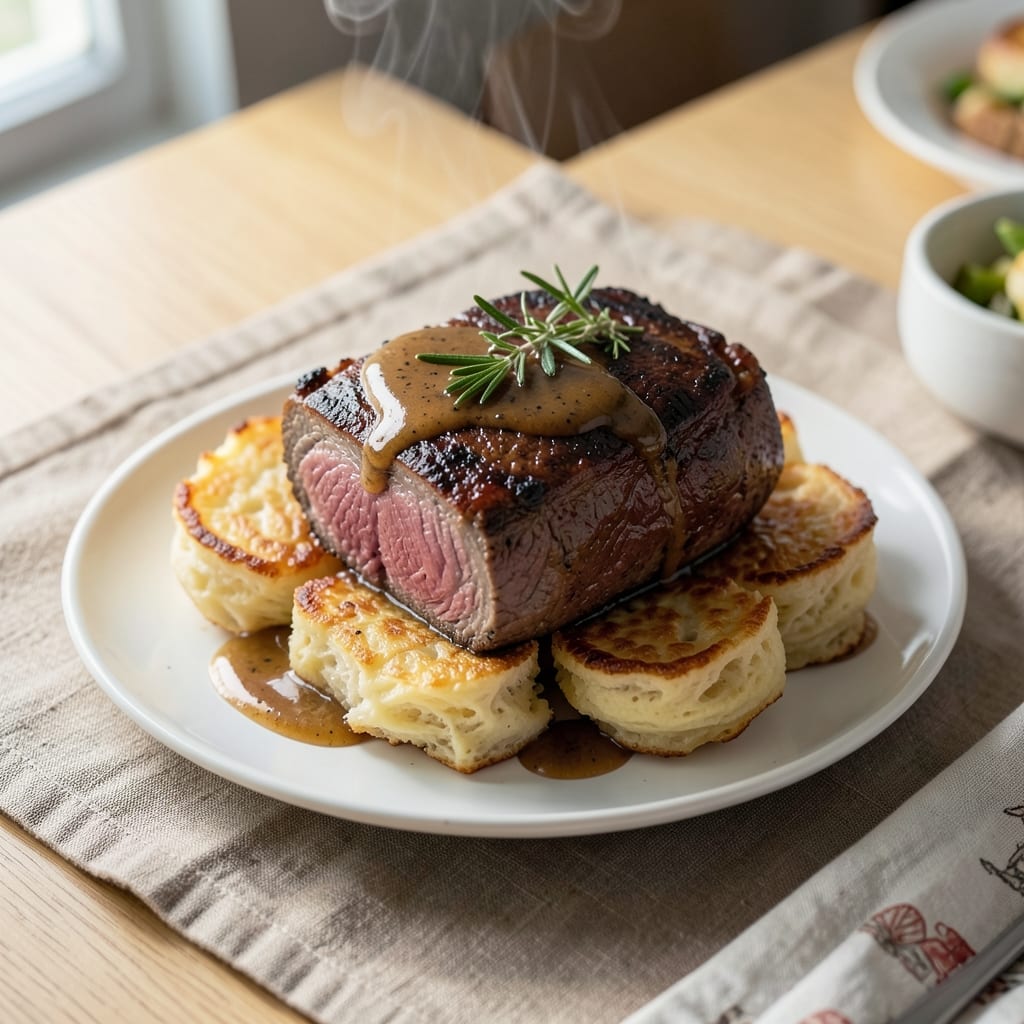
This Sunday roast beef and Yorkshire pudding recipe transforms a classic dinner into a showstopping centerpiece with its crispy crowns and tender beef. The secret lies in mastering the pudding batter—light, airy, and baked at high heat to create those signature golden domes—while the beef roasts to perfect medium-rare tenderness. I’ve perfected this combination over years of Sunday dinners, ensuring every bite delivers the harmony of rich, savory beef and pillowy, crisp-edged pudding.
The key to success is timing: the Yorkshire pudding must bake while the beef rests, so the oven stays hot and the batter transforms into those irresistible puffs in minutes. For the beef, a simple dry rub and careful searing lock in juices, while a homemade gravy ties everything together. This isn’t just a meal—it’s an experience that elevates a simple Sunday dinner into something memorable.
What makes this recipe stand out is the balance—crispy yet tender pudding that holds its shape, paired with beef so flavorful it steals the show. The pudding’s airy texture contrasts beautifully with the beef’s richness, while the gravy adds depth to every forkful. Whether you’re hosting family or treating yourself, this dish delivers restaurant-quality results at home.
Serve the beef sliced thick, topped with gravy, and surrounded by those golden Yorkshire puddings—each bite a testament to the magic of a well-executed Sunday roast. The pudding can even be used as a vessel for gravy, turning every mouthful into a flavorful moment. Ready to impress? Let’s get cooking.
Ingredients for beef and yorkshire pudding
Six ingredients transform a simple roast into a Sunday centerpiece with golden, crispy crowns.
| Ingredient | Amount | Notes |
|---|---|---|
| Beef Top Round Roast 🥩 | 3 lb | Center-cut for even cooking |
| Kosher Salt 🧂 | 1 ½ tsp | Diamond Crystal preferred |
| Freshly Ground Black Pepper 🌶️ | 1 tsp | Coarse grind for texture |
| All-Purpose Flour 🌾 | 1 ½ cups | Sifted for light batter |
| Large Eggs 🥚 | 4 whole | Room temperature for best results |
| Whole Milk 🥛 | 1 ½ cups | Full-fat for richness |
| Unsalted Butter 🧈 | ¼ cup | Cold, cubed for gravy |
| Beef Dripping 🫒 | ½ cup | Reserved from roast |
| Flour for Gravy 🌾 | ¼ cup | All-purpose, for thickening |
| Fresh Parsley 🌿 | ¼ cup | Chopped, for garnish |
| Fresh Thyme 🌿 | ¼ cup | Leaves only, for aromatics |
| Garlic Cloves 🧄 | 4 cloves | Minced for seasoning |
| Beef Stock 💧 | 1 cup | Homemade preferred |
The beef selection is critical—top round roast delivers consistent tenderness without excessive fat. Whole Foods or local butchers often carry center-cut roasts, which cook more evenly. For the dry rub, Diamond Crystal kosher salt dissolves better than table salt, and freshly ground black pepper adds subtle texture. The roast should sit at room temperature for 1 hour before cooking to ensure even doneness. If buying pre-cut, look for uniform slices—this ensures consistent cooking times across all pieces.
No beef drippings? Substitute with an extra 0.25 cup unsalted butter and 0.25 cup beef stock for gravy. The Yorkshire pudding batter relies on full-fat milk and eggs—low-fat substitutes will yield dense, rather than airy, puddings. For the gravy, low-sodium beef stock prevents over-salting, and a fine-mesh sieve ensures a silky texture. Fresh herbs like parsley and thyme elevate the dish, but dried equivalents at half the amount work in a pinch. The flour for the pudding must be sifted to eliminate lumps, which can create dense spots in the batter.
Store the cooked beef in an airtight container for 3-4 days or freeze for up to 3 months. Yorkshire puddings are best served immediately, but reheat in a 350°F oven for 5-7 minutes to restore crispness. The gravy reheats beautifully—simply warm on the stove with a splash of stock or water. For meal prep, cook the beef and gravy ahead, then bake the puddings fresh. The beef drippings should be reserved in an airtight container in the fridge for up to 1 week—they’re perfect for future gravies or roasted vegetables.
Why You'll Love This Recipe
- Two-Pan Magic: I swear by this combo—beef roasting while the Yorkshire pudding batter bubbles in the same oven. No flipping, no fuss, just set it and forget it while the crust gets that golden, almost-burnt perfection.
- Crispy Gold Edge: That first bite of the pudding? The outside cracks like a perfect chip, but inside it’s light as air—all thanks to the eggy batter and hot fat from the roast. Honestly, it’s the one thing that makes beef roast feel fancy.
- Sunday Roast Hero: Between us, this is my go-to for family dinners or lazy weekends. The beef stays juicy, the pudding soaks up all the juices, and suddenly you’ve got a meal that feels like a restaurant’s centerpiece—without the stress.
- Budget Feast Stretch: A whole roast and pudding for four? Under $15. I’ll be real: the Top Round isn’t the priciest cut, but the pudding turns scraps into something luxurious. Leftovers? Even better—sandwiches for days, and the pudding reheats like a dream.
Step-by-step instructions for beef and Yorkshire pudding
Master the perfect balance of tender beef and golden Yorkshire puddings with these precise techniques.
Prepare the Beef Roast for Even Cooking
Remove the 3 lb beef top round roast from the refrigerator and pat it completely dry with paper towels. This step is non-negotiable for achieving that signature crisp exterior and juicy interior. I like to use a clean kitchen towel for the final wipe—it absorbs more moisture than paper towels alone.
Place the roast on a wire rack set inside a rimmed baking sheet. This elevation allows hot air to circulate evenly around all surfaces, preventing steam buildup that would otherwise soften the outer crust. Season both sides generously with 1.5 teaspoons kosher salt and 1 teaspoon freshly ground black pepper, pressing the seasoning into the meat so it adheres well.
Let the seasoned roast sit at room temperature for 30 minutes while you prepare the Yorkshire pudding batter. This brief resting period ensures even cooking from edge to center, preventing any potential cold spots that could lead to uneven doneness.
Create the Yorkshire Pudding Batter
In a medium mixing bowl, whisk together the 1.5 cups all-purpose flour and 1.5 cups whole milk until smooth. I use a whisk for this step to avoid developing gluten, which would make the batter tough instead of light and airy. The mixture should be completely free of lumps—if you see any, strain it through a fine-mesh sieve.
Add the 4 whole large eggs to the flour mixture and whisk vigorously for about 2 minutes. The batter should become thick and glossy, almost like a light pancake batter. Here's the thing—don't overmix. You're looking for just enough aeration to create those signature crispy crowns, not a dense, cake-like texture.
Let the batter rest at room temperature for 15 minutes. This resting period allows the flour to fully hydrate and the gluten to relax slightly, which results in taller, crispier puddings. Real talk: I've learned the hard way that skipping this rest leads to flat, dense puddings that fall apart.
Roast the Beef to Perfect Medium-Rare
Preheat your oven to 425°F. When fully preheated, place the seasoned beef roast in the oven and roast for 20 minutes. This initial high-heat sear creates a flavorful crust while the interior begins to warm through.
After 20 minutes, reduce the oven temperature to 325°F. Continue roasting the beef until an instant-read thermometer inserted into the thickest part of the roast (without touching bone) reads 130°F for medium-rare—this should take approximately 1 hour 15 minutes to 1 hour 30 minutes total cooking time.
During the final 30 minutes of cooking, tent the roast loosely with aluminum foil to prevent the surface from drying out. The internal temperature will rise about 5°F after removal from the oven, so pull it out when it reaches 125°F for medium-rare perfection.
Bake the Yorkshire Puddings
While the beef roasts, heat 0.5 cup beef dripping in a muffin tin over medium heat until it shimmers but doesn't smoke. The dripping should be hot enough to create a sizzle when you add the batter, but not so hot that it burns.
Carefully pour the rested Yorkshire pudding batter into the muffin tin, filling each cup about ¾ full. The key here is precision—don't overfill or the puddings will spill over and lose their shape. Return the muffin tin to the oven and bake at 425°F for 20-25 minutes, until the puddings are puffed and golden brown.
Here's where it gets tricky: don't open the oven door during the first 15 minutes of baking. The sudden temperature drop causes the puddings to collapse. When they're done, they should have risen dramatically and developed a deep golden crust—almost like a crispy crown.
Rest and Serve with Homemade Gravy
Remove the beef roast from the oven and transfer it to a cutting board. Let it rest for 15-20 minutes before carving. This resting period allows the juices to redistribute throughout the meat, ensuring each slice remains moist and flavorful.
While the beef rests, use the 0.5 cup beef dripping from the roasting pan to make the gravy. Place the pan on the stovetop over medium heat and add the 4 minced garlic cloves. Cook for 1 minute until fragrant, then sprinkle in the 0.25 cup flour for gravy and stir constantly for 2 minutes.
Gradually whisk in the 1 cup beef stock until smooth, then add the 0.25 cup cold cubed unsalted butter. Simmer for 5 minutes until the gravy thickens to your desired consistency. Season with salt and pepper to taste, then garnish with chopped fresh parsley and thyme leaves before serving alongside the sliced beef and Yorkshire puddings.
Pro Tips For Making Beef And Yorkshire Pudding
- Preheat Your Pan Properly: Yorkshire puddings need a screaming-hot cast-iron skillet—seriously, let it sit on the stove until a drop of water sizzles and dances like it’s auditioning for a Broadway show. Cold pans mean soggy bottoms, and nobody wants that.
- Season the Beef Like a Pro: Skip the generic "sprinkle salt" advice—rub the top round roast with about 1.5 teaspoons of kosher salt and a full teaspoon of black pepper before searing. The pepper clings to the meat’s surface, creating a crust that locks in juices while you’re basting.
- Don’t Overmix the Batter: Whisk the egg, flour, and milk just until combined—lumps are fine, but a smooth batter turns into dense puddings. After three batches of rubbery failures, I learned: a few streaks of flour are better than overworking it into glue.
- Baste the Beef Early: Pull the roast from the oven at 145°F internal temp, tent it loosely with foil, and baste with its own juices twice while resting. This redistributes fat and keeps the meat tender—no more dry slices cutting through your perfect Yorkshire puddings.
Essential equipment for this recipe
Oven Essentials
Your oven is the heart of this recipe, so invest in a quality oven thermometer like the Thermoworks Oven Thermometer to ensure accurate temperature control. Yorkshire puddings require 425°F precision—even a 25°F variation can ruin their crispy texture. I also recommend a wire rack for the beef roast to promote even air circulation and prevent steam buildup. 🔥
Muffin Tin Must-Haves
Use a non-stick muffin tin with 12 cups (like Wilton Non-Stick Muffin Cups) for perfect Yorkshire puddings. The non-stick coating prevents sticking, while the right size ensures each pudding rises properly. For extra insurance, lightly grease the tin with beef dripping before adding batter—this mimics traditional methods and adds flavor. Avoid aluminum tins, as they can react with acidic ingredients.
Beef Roasting Tools
A wire rack (like the OXO Good Grips Wire Rack) is non-negotiable for roasting beef—it elevates the meat for even browning. Pair it with a rimmed baking sheet to catch drippings. For timing, an instant-read thermometer (I love Thermoworks Smoke) is essential to hit 130°F internal temp for medium-rare perfection. A sharp carving knife (like Victorinox Fibrox) ensures clean slices after resting.
Batter Mixing Gear
Whisking the batter properly requires a balloon whisk (I use OXO Good Grips) to incorporate air without overmixing. For straining lumps, a fine-mesh sieve (like Heston Blumenthal’s) catches any grit. A liquid measuring cup with spouts (such as Pyrex) ensures precise 1.5 cups milk and 1.5 cups flour measurements—critical for the right batter consistency. 💡
Gravy-Making Tools
Reserve beef drippings in a fat separator (like OXO Good Grips) to clarify them for gravy. A wooden spoon (traditional but effective) or heat-resistant silicone spatula helps stir the roux smoothly. For thickening, a fine-mesh sieve strains out any lumps from the flour mixture. A small saucepan (like All-Clad Stainless Steel) keeps the gravy from boiling over while simmering.
Optional Upgrades
For a professional touch, a meat mallet (like Victorinox) tenderizes the beef if you prefer a more uniform texture. A digital kitchen scale (such as OXO Good Grips) ensures precise 3 lb beef measurements. For plating, a slotted spoon (like OXO Good Grips) helps transfer puddings without collapsing them. These extras elevate the dish from homey to restaurant-worthy. ✨
Nutrition facts
Frequently asked questions
Can I make Yorkshire puddings ahead of time?
Freshness is key for Yorkshire puddings—they're best served immediately after baking. However, you can prepare the batter up to 24 hours ahead and store it in the refrigerator. When ready to bake, let the batter sit at room temperature for 15 minutes before using. For reheating, pop them in a 350°F oven for 5-7 minutes to restore crispiness. The texture won't be identical to freshly baked, but it's a good workaround for timing!
What's the best way to reheat leftover beef?
For maximum tenderness, reheat sliced beef in a 350°F oven for 10-15 minutes with a splash of beef stock or water to keep it moist. Avoid microwaving—it dries out the meat. For extra flavor, place the slices on a baking sheet with a little butter and garlic, then cover loosely with foil. The oven method maintains that perfect medium-rare texture while adding a restaurant-quality finish.
Why did my Yorkshire puddings turn out flat?
Flat puddings usually mean one of three things: the oven wasn't hot enough (425°F is critical), the batter was overmixed (whisk just until combined), or the oven door was opened too soon. The batter also needs to rest 15 minutes before baking—skipping this step prevents proper gluten relaxation. For extra lift, use room-temperature eggs and make sure your muffin tin is properly greased with hot beef dripping.
Can I substitute beef with another protein?
While beef is traditional, you can use lamb leg (great for a Mediterranean twist) or venison (excellent with gamey flavors). For poultry, try chicken thighs (boneless, skin-on) or duck breast30-40 minutes at 375°F while duck should reach 145°F internal temp. The puddings remain the same, but the protein's richness changes the flavor profile.
How do I make Yorkshire puddings without a muffin tin?
No muffin tin? No problem! Use a cast-iron skillet or baking sheet with 1-inch circles drawn in oil (use a glass to create rings). Heat the oil until smoking hot, then pour batter into the circles—it should sizzle immediately. Bake at 450°F for 12-15 minutes until puffed. For individual servings, try ramekins or even mini cast-iron pans. The key is maintaining that high heat to create the signature rise!