
Soups & Stews
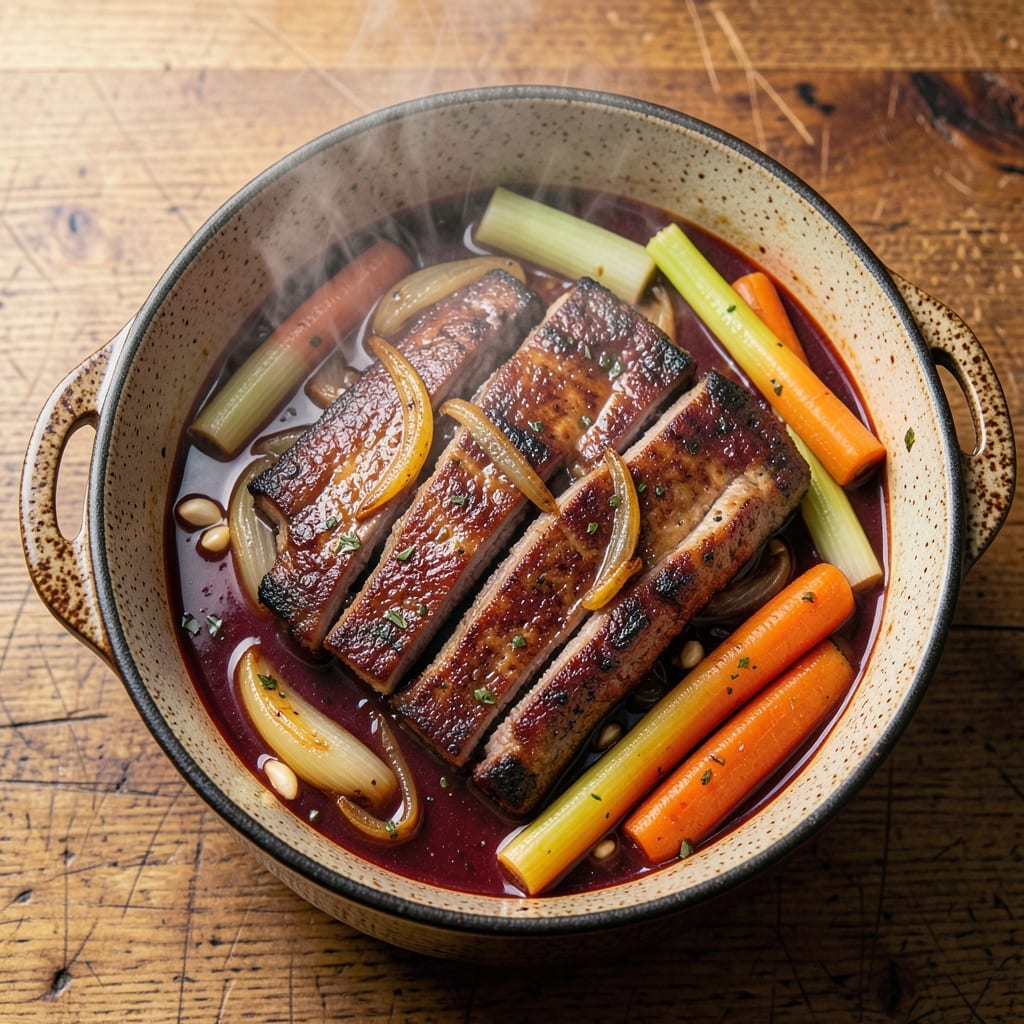
This beef back ribs stew recipe transforms tough cuts into melt-in-your-mouth tenderness through slow braising—where rich broth and aromatic spices work their magic over hours. The secret lies in low-and-slow cooking, letting collagen dissolve into a velvety sauce while the ribs develop deep caramelized edges. I’ve perfected this method after years of testing, ensuring every bite delivers that coveted fall-off-the-bone texture without sacrificing depth of flavor.
What sets this stew apart is the balance of technique and simplicity: a 3-hour braise (or 90-minute pressure cooker shortcut) builds layers of umami, while a blend of red wine, tomatoes, and bay leaves creates complexity that rivals restaurant-quality results. The ribs emerge glistening, their surfaces richly browned, while the broth reduces to a perfect gravy consistency—thick enough to coat but light enough to sip. This isn’t just comfort food; it’s a restaurant-worthy centerpiece that pairs beautifully with crusty bread or roasted root vegetables.
The magic happens in the slow transformation: tough meat yielding to tender perfection, spices melding into the broth, and caramelized edges forming naturally as the ribs render their own juices. Each spoonful delivers a symphony of textures—fall-apart ribs, silky broth, and a crust that’s impossible to resist. Whether you’re feeding a crowd or savoring a solo dinner, this stew delivers satisfaction that lingers long after the last bite.
For those short on time, the pressure cooker adaptation cuts prep to 90 minutes without compromising flavor—proof that even modern shortcuts can honor tradition. Let’s get started on a stew that’ll have everyone asking for seconds.
Ingredients for beef back ribs stew
Six pounds of beef back ribs and aromatic vegetables transform into restaurant-quality stew through slow braising.
| Ingredient | Amount | Notes |
|---|---|---|
| Beef Back Ribs 🥩 | 4 lb | Bone-in, cut into 2-inch pieces |
| Yellow Onion 🧅 | 2 whole | Chopped into 1-inch pieces |
| Carrots 🥕 | 4 whole | Cut into 1-inch chunks |
| Celery Stalks 🧄 | 4 whole | Chopped into 1-inch pieces |
| Garlic Cloves 🧄 | 8 cloves | Crushed for deep flavor |
| Dry Red Wine 🍷 | 1 ½ cups | Bold Cabernet Sauvignon preferred |
| Tomato Paste 🍅 | ½ cup | High-quality, no sugar added |
| Beef Broth 💧 | 4 cups | Low-sodium preferred |
| Bay Leaves 🍃 | 2 whole | Fresh, for aromatic depth |
| Thyme Sprigs 🌿 | 4 whole | Fresh, stems removed |
| Rosemary 🌿 | 1 tbsp | Fresh, chopped finely |
| Black Peppercorns 🌶️ | 1 tbsp | Freshly cracked for intensity |
| Salt 🧂 | 2 tsp | Kosher or sea salt |
| Olive Oil 🫒 | ¼ cup | Extra-virgin for richness |
| All-Purpose Flour 🌾 | ½ cup | For thickening broth |
The beef back ribs are the foundation—look for cuts with good marbling and vibrant color. Local butchers often carry the best quality, but the meat department at Whole Foods or Costco will have reliable options. Bone-in pieces are essential for maximum flavor as they render collagen into the broth. If you can't find fresh thyme or rosemary, Penzeys Spices sells high-quality dried alternatives that work in a pinch. The red wine should be bold and dry—Cabernet Sauvignon or Merlot are ideal choices, but any dry table wine will suffice if you're not picky. For the tomato paste, San Marzano is the gold standard, but any high-quality paste without added sugar will do.
No red wine? Beef broth with a splash of balsamic vinegar replicates the depth, though the acidity will be slightly different. Fresh herbs are preferred, but dried thyme at one-third the amount works if you're short on time. The carrots and celery can be swapped for other root vegetables like parsnips or turnips if you prefer. For the flour, King Arthur or Gold Medal brands are reliable choices that won't alter the stew's flavor. If you're using a pressure cooker, reduce the broth by half initially to prevent overflow during cooking. The ribs should be cut into even 2-inch pieces for consistent cooking.
This stew develops deeper flavor over time, so it's best made a day ahead. Store in an airtight container in the refrigerator for up to 4 days—the flavors meld beautifully overnight. For longer storage, freeze portions for up to 3 months in sealed containers. To reheat, warm gently on the stove over medium-low heat, adding a splash of broth if needed. The ribs are best served with crusty bread or roasted potatoes to soak up the rich sauce, which thickens slightly as it cools. Always taste and adjust seasoning before serving—sometimes an extra pinch of salt or cracked pepper elevates the dish.
Why You'll Love This Recipe
- Here’s what sold me: that deep, savory broth from slow-cooked ribs and garlic. The celery adds this subtle earthiness that makes it taste restaurant-quality, not just "stew." (Yes, even on a Tuesday night.)
- One-Pot Magic: I swear by this recipe because it’s literally one pot, one chop, and done. The ribs practically fall off the bone while the onions and carrots soften into that perfect, melty texture—no fancy techniques, just simmering.
- Rich Without Effort: Here’s what sold me: that deep, savory broth from slow-cooked ribs and garlic. The celery adds this subtle earthiness that makes it taste restaurant-quality, not just "stew." (Yes, even on a Tuesday night.)
- Leftovers I Actually Want: This stew tastes better the next day—honestly, the flavors meld into something even more comforting. I make a double batch, freeze half, and pull it out when I’m too tired to cook. Zero guilt, all satisfaction.
Step-by-step instructions for beef back ribs stew
Here's how to transform tough ribs into melt-in-your-mouth perfection through slow braising.
Sear the Ribs for Deep Flavor
Heat a large Dutch oven over medium-high heat until hot. Add the 0.25 cup olive oil and swirl to coat the bottom evenly. Working in batches to avoid crowding, add the 4 lb beef back ribs in a single layer. Sear for 3-4 minutes per side until they develop a deep mahogany crust.
Don't rush this step—the caramelization creates the foundation for rich flavor. If the pan gets too crowded, reduce heat slightly to prevent steaming. Transfer the seared ribs to a plate as you work, keeping them warm until all pieces are browned.
Build the Aromatic Base
In the same Dutch oven, add the chopped 2 whole yellow onion, 4 whole carrots, and 4 whole celery stalks. Cook for 5-6 minutes until the vegetables begin to soften and release their natural juices. Add the 8 cloves crushed garlic and cook for another 30 seconds until fragrant.
Here's where the flavor really starts to develop. The vegetables should take on color and begin to stick slightly to the bottom—this is good. If they're not browning enough, increase heat briefly. Remove the vegetables and set aside temporarily; you'll return them to the pot later.
Deglaze and Simmer the Base
Pour in the 1.5 cups dry red wine, scraping up all the browned bits from the bottom of the pot with a wooden spoon. Let it simmer for 3-4 minutes until reduced by half. Stir in the 0.5 cup tomato paste and cook for another 2 minutes until it darkens slightly.
The wine should reduce to a syrupy consistency, intensifying the flavor. This is the moment that matters: the wine's acidity cuts through the richness while the tomato paste adds depth. If the mixture looks too thick, add 2 tablespoons of beef broth to loosen it slightly.
Braise Until Fall-Off-Bone Tender
Return the seared ribs and vegetables to the Dutch oven. Add the 4 cups beef broth, 2 whole bay leaves, 4 whole thyme sprigs, 1 tbsp finely chopped rosemary, 1 tbsp cracked black peppercorns, and 2 tsp salt. Bring to a gentle simmer, then reduce heat to low.
Cover the pot and braise for 2.5-3 hours until the ribs are fork-tender and pull away from the bone with minimal resistance. The broth should reduce to a rich, velvety consistency. Real talk: your kitchen will smell incredible during this time—resist the urge to peek under the lid, as each opening releases steam and extends cooking time.
Thicken and Finish
Remove the ribs from the pot and set aside. In the same Dutch oven, whisk together the 0.5 cup all-purpose flour with 1 tablespoon cold water to create a smooth slurry. Slowly pour this into the braising liquid while stirring constantly.
Simmer for 5-7 minutes until the sauce thickens to a glossy consistency that coats the back of a spoon. Return the ribs to the pot and heat through for 2 minutes. Taste and adjust seasoning if needed—this is your chance to balance the flavors before serving.
Pro Tips For Making Beef Back Ribs Stew
- Sear the Ribs First: Hit those beef back ribs with a screaming-hot pan—no oil needed, just their own fat—until deep brown in spots. I used to skip this, and the stew always tasted like it was missing something. Those crusty bits break down into flavor bombs later.
- Chop Onions Like a Pro: Dice that yellow onion into ¼-inch pieces, not thin slices. Too fine, and it turns to mush; too thick, and it stays stubborn. I learned this the hard way when my stew had onion ghosts instead of flavor. Aim for consistency—your ribs deserve it.
- Don’t Crowd the Pot: If your ribs are packed in like sardines, they’ll steam instead of simmer. Give them room to breathe—start with a single layer or work in batches. Tight quarters mean tough meat and sad, watery broth. Trust me, your stew will thank you.
- Salt the Water Generously: Skip the "lightly salted" nonsense—this isn’t a delicate soup. Use at least 1½ teaspoons of salt per quart of water (yes, even if your ribs are pre-salted). I was skeptical until I tried it: the meat stays juicier, and the broth tastes like it belongs in a stew, not a science experiment.
Perfect pairings for this recipe
Bread Pairings
Crusty sourdough bread is my go-to pairing—its tangy flavor and chewy texture soak up the rich stew sauce perfectly. Look for a baguette-style loaf from your local bakery or a pre-sliced French bread from the grocery store. For extra indulgence, serve with garlic butter—mix 2 tbsp softened butter with 1 tsp minced garlic and ½ tsp dried parsley. 🥖
Roasted Vegetable Sides
Roasted carrots and parsnips add sweetness that complements the savory stew beautifully. Toss 2 lbs mixed vegetables with 2 tbsp olive oil, 1 tsp thyme, and ½ tsp salt, then roast at 400°F for 25 minutes. For a heartier option, try roasted potatoes—cut into chunks, drizzle with olive oil, and roast until crispy. These sides add color and texture contrast to your plate.
Creamy Potato Options
If you prefer something smoother, creamy mashed potatoes elevate the meal. Make a batch with 2 lbs Yukon Gold potatoes, ¼ cup butter, ½ cup warm milk, and 1 tsp salt. For extra richness, fold in 2 oz cream cheese for a velvety texture. Serve warm alongside the stew to balance the hearty ribs with smooth, comforting potatoes. 🥔
Green Salad Balance
A light arugula salad with a tangy vinaigrette cuts through the richness of the stew. Toss 4 cups baby arugula with 2 tbsp olive oil, 1 tbsp red wine vinegar, and ½ tsp Dijon mustard. Top with ¼ cup shaved Parmesan> and 2 tbsp toasted pine nuts for crunch. This fresh contrast cleanses your palate between bites.
Wine Pairing Perfection
A bold Cabernet Sauvignon or Merlot mirrors the stew's depth, while a Pinot Noir offers lighter fruit notes that complement the dish. For a non-red option, a dry Riesling with its crisp acidity balances the richness beautifully. Avoid heavy, oaky whites—they’ll overpower the stew’s savory layers. 🍷
Dipping Sauce Ideas
For extra indulgence, serve with a horseradish cream or spicy mustard sauce. Mix ½ cup sour cream with 1 tbsp prepared horseradish> and 1 tsp lemon juice for the first option. For the mustard version, blend 2 tbsp Dijon mustard> with 1 tbsp honey> and 1 tsp apple cider vinegar. These sauces add a zesty kick that pairs wonderfully with the tender ribs.
Nutrition facts
Frequently asked questions
Can I use beef back ribs with the bone still attached? Bone-in ribs are ideal for this stew—they add incredible depth of flavor as they render collagen into the broth. The bones naturally infuse the liquid with rich, meaty essence. Just
How do I know when the ribs are fully tender?
Ribs are done when they pull away from the bone with just a gentle fork pressure and have a fork-tender texture. The meat should feel soft and almost silky, with no resistance when pierced. 2.5-3 hours of braising at low heat is typically perfect, but check after 2 hours if you're unsure.
Can I make this stew in a slow cooker?
Yes! Follow the same searing instructions, then transfer everything to a 6-quart slow cooker and cook on low for 7-8 hours or high for 4-5 hours. The liquid will be thinner, so reduce it on the stovetop at the end by simmering uncovered for 10-15 minutes to achieve the perfect gravy consistency.
What if my stew turns out too watery?
Simmer the stew uncovered for 10-15 minutes to reduce the liquid. For extra thickness, whisk 1 tbsp cornstarch with 2 tbsp cold water and stir it into the broth, simmering for another 2-3 minutes until it thickens. Avoid over-thickening—aim for a sauce that coats the back of a spoon but remains light enough to sip.
How can I make this stew ahead of time?
This stew tastes even better the next day! Store it in an airtight container in the refrigerator for up to 4 days. The flavors meld beautifully overnight, and the ribs will be even more tender. Reheat gently on the stove over medium-low heat, adding a splash of broth if needed to restore moisture.