
Soups & Stews
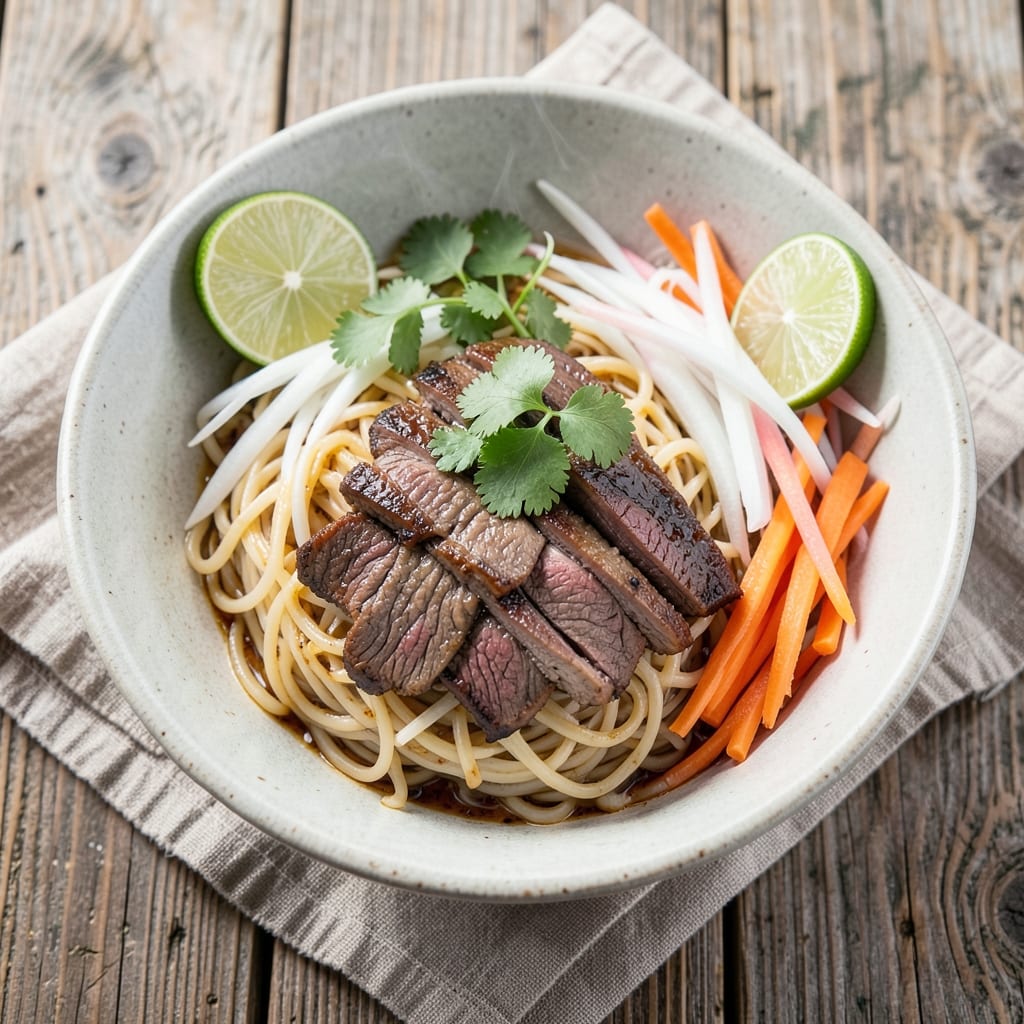
This beef banh mi bowl recipe brings the bold flavors of Vietnam to your dinner table with crispy rice noodles, tender beef, and a tangy pickled veggie crunch. The secret lies in thinly sliced beef marinated in fish sauce and lime, then seared to perfection—creating a texture that’s both tender and crispy at the edges. I’ve perfected this dish over years of testing, ensuring every bite delivers that perfect balance of sweet, savory, and spicy.
The bowl starts with chewy rice noodles, crisped just enough to add texture without losing their signature bite. Thinly sliced carrots and daikon radish are quick-pickled in rice vinegar and sugar, adding a bright, tangy contrast to the rich beef. Caramelized onions and fresh herbs like cilantro and Thai basil round out the flavors, while a drizzle of homemade banh mi sauce ties everything together. This isn’t just a bowl—it’s a flavor explosion in every spoonful.
What makes this recipe stand out is the authenticity without the fuss. The beef is marinated for just 30 minutes, so you won’t spend hours prepping. The pickled veggies come together in minutes, and the sauce is simple but packed with depth. Whether you’re serving this for a weeknight dinner or a weekend feast, it’s a dish that feels special yet approachable. The crispy rice noodles and tender beef make it impossible to stop at one bite.
Customize it with spicy mayo, extra jalapeños, or even avocado for a modern twist. The beauty of this recipe is its flexibility—keep it traditional or make it your own. Once you try it, you’ll never go back to takeout. Let’s get cooking!
Ingredients for beef banh mi bowl
Crispy noodles, tender beef, and tangy pickled veggies—just 15 ingredients for this bold Vietnamese-inspired bowl.
| Ingredient | Amount | Notes |
|---|---|---|
| Rice Noodles 🍜 | 8 oz | Ban mi or vermicelli, uncooked |
| Flank Steak 🥩 | 1 lb | Thinly sliced, 1/4-inch thick |
| Fish Sauce 🍶 | 2 tbsp | Red Boat brand preferred |
| Lime Juice 🍋 | ¼ cup | Freshly squeezed |
| Carrots 🥕 | 1 medium | Thinly sliced, 1/8-inch thick |
| Daikon Radish 🥬 | 1 small | Thinly sliced, 1/8-inch thick |
| Rice Vinegar 🍶 | ¼ cup | White or seasoned |
| Granulated Sugar 🍚 | 1 tbsp | Or coconut sugar |
| Yellow Onions 🧅 | 1 medium | Thinly sliced |
| Olive Oil 🫒 | 2 tbsp | For caramelizing onions |
| Fresh Cilantro 🌿 | ¼ cup | Chopped, stems included |
| Thai Basil Leaves 🌿 | 0.2 cup | Or regular basil |
| Mayonnaise 🥛 | 2 tbsp | For spicy mayo |
| Sriracha 🌶️ | 1 tbsp | Adjust to taste |
| Salt 🧂 | 1 tsp | Kosher or sea salt |
The beef is where this dish shines. Flank steak slices thinly against the grain—ask your butcher to do it if they won't slice it for you. Red Boat fish sauce is the gold standard, but any good-quality brand works. Lime juice should be fresh-squeezed (none of that bottled stuff). For the noodles, ban mi or vermicelli from an Asian market gives the best texture—regular rice noodles work in a pinch but won't crisp as nicely. The daikon radish can be tricky to find; sub extra carrot if needed, but the crunch is key for that authentic banh mi bite.
No fish sauce? Soy sauce plus a pinch of sugar gets you close. Running short on Thai basil? Regular basil or even mint works in a bind. The pickled veggies need time to develop flavor—at least 30 minutes before serving. For the spicy mayo, Hellmann's or Duke's mayo both work well. If you want extra crunch, add toasted sesame seeds or crushed peanuts on top. The caramelized onions should be golden and sweet—don't rush this step, or you'll miss out on that deep flavor. And trust me, the crispy noodles are worth the extra minute in the pan.
Store the pickled veggies in their juices for up to 5 days in the fridge—they taste even better the next day. The cooked beef keeps for 3 days wrapped tightly, but I recommend using it up fresh. Noodles reheat best with a splash of water—just microwave them covered for 30 seconds. For meal prep, assemble everything separately and combine when ready to eat. This dish is even better the second day, so make extra if you can—it disappears fast around here.
Why You'll Love This Recipe
- No-Marination Needed: I’ll be real—most beef recipes demand hours of marinating. Not this one. A quick toss with fish sauce, lime, and a pinch of sugar transforms that flank steak into something tender and packed with punch in 15 minutes. (Yes, even on a Tuesday night.)
- Umami Bomb: That first bite? The caramelized edges on the steak, the bright tang of lime cutting through the richness, and the chewy rice noodles soaking it all up—it’s the kind of flavor combo that makes you pause mid-bite. Honestly, I’ve made it for potlucks, and people always ask for the recipe.
- Lunchbox Hero: Between us, this is my go-to for meal prep. The noodles hold up for days, the steak stays juicy when reheated, and I can swap in pickled veggies or extra herbs to keep it fresh. Toss it in a container, grab it for work, or pack it for a picnic—it’s always a win.
- Budget Flex: Flank steak is affordable, and a single pound stretches across two bowls (or three if you’re feeding a crowd). The fish sauce and lime? Pantry staples that add depth without breaking the bank. I’ve made this for $8 a serving, and it still feels like a restaurant-worthy meal.
Step-by-step instructions for beef banh mi bowl
Here's how to build this vibrant bowl with perfectly crispy rice noodles and bold flavors.
Prepare the Tangy Pickled Vegetables
In a medium bowl, combine the thinly sliced 1 medium carrots and 1 small daikon radish. In a small saucepan, heat the 0.25 cup rice vinegar, 1 tbsp granulated sugar, and 1 tsp salt over medium heat until the sugar dissolves completely. Pour this warm mixture over the vegetables and let them marinate for at least 30 minutes (or up to 2 hours for more intense flavor). The vegetables should soften slightly and absorb the tangy liquid, creating those signature bright pink pickles.
This step is where the magic happens - the vinegar and sugar work together to create that perfect balance of sweet and sour that defines banh mi. I like to give them a good stir every 10 minutes to ensure even coating. The longer they sit, the more flavor they'll develop, so don't rush this part.
Cook the Rice Noodles to Al Dente Perfection
Bring a large pot of water to a rolling boil. Add the 8 oz rice noodles and cook according to package instructions - usually about 4-5 minutes for al dente texture. The noodles should be tender but still have a slight bite to them. Drain immediately and rinse under cold water for 10 seconds to stop the cooking process and prevent them from sticking together.
Here's the thing about rice noodles - they cook faster than you might expect, and they continue cooking even after you drain them. That's why I recommend draining them just slightly underdone. They'll finish cooking when you toss them with the other components. Spread them on a rimmed baking sheet and drizzle with 1 tbsp olive oil, tossing gently to coat. This creates that beautiful crispy texture we're after.
Marinate and Cook the Flank Steak
In a small bowl, whisk together 2 tbsp fish sauce, 0.25 cup lime juice, and 1 tbsp Sriracha. Add the 1 lb flank steak and let it marinate for at least 20 minutes (or up to 2 hours in the refrigerator). Heat a large skillet over high heat and cook the steak for 2-3 minutes per side until it reaches 145°F internally and has a nice caramelized crust.
Don't skip the marinating step - this is what gives the beef that signature banh mi flavor. The fish sauce adds umami depth while the lime juice brightens it up. As the steak cooks, you'll notice it develops a beautiful crust on the outside while staying tender inside. Let it rest for 5 minutes before slicing against the grain into thin strips - this makes each bite more tender and flavorful.
Caramelize the Onions for Sweet Depth
Heat 1 tbsp olive oil in a large skillet over medium-low heat. Add the 1 medium yellow onions and cook slowly for about 15-20 minutes, stirring occasionally, until they're beautifully caramelized with a deep golden color. This might seem like a long time, but patience pays off here - those caramelized onions add incredible sweetness and texture to the bowl.
I like to push the onions to get that perfect caramelization. You'll know they're ready when they're soft, sweet-smelling, and have developed that rich golden color. If they start to brown too quickly, just reduce the heat slightly. These onions will be the base of your bowl, so take your time to get them just right.
Assemble the Banh Mi Bowl
In a small bowl, mix together the 2 tbsp mayonnaise and remaining 1 tbsp olive oil to create the spicy mayo. Divide the cooked rice noodles among four bowls. Top each with the pickled vegetables, sliced steak, caramelized onions, and Thai basil leaves. Drizzle with the spicy mayo and garnish with the chopped 0.25 cup fresh cilantro.
This is where everything comes together. The crispy noodles provide texture contrast, the tangy pickles cut through the richness of the beef, and the spicy mayo ties it all together. Serve immediately while everything is still crispy and the flavors are at their peak. Each bite should deliver that perfect balance of textures and flavors that makes this dish so special.
Pro Tips For Making Beef Banh Mi Bowl
- SEAR FLANK STEAK FAST: High heat and a hot pan—this isn’t the time to be gentle. Slice the steak thin against the grain, then sear in batches for 30 seconds per side until deeply browned. Crowding the pan steams the meat instead of creating that crisp crust you want.
- SOAK NOODLES JUST UNTIL PLIABLE: Dumping dry rice noodles straight into boiling water is a rookie move. Soak them in room-temperature water for 5–7 minutes until they’re bendy but still hold shape—over-soaking turns them mushy, and under-soaking means chewing. Drain and rinse with cold water to stop cooking.
- SAVE THE CARROT JUICE: Shredding carrots for the bowl? Don’t toss the juice. Strain it through a fine-mesh sieve, reduce it by half in a small pan, then mix it into your fish sauce-lime dressing. It adds natural sweetness and thickens the sauce without extra sugar.
- REST THE STEAK OR REGRET IT: Skipping the rest is the fastest way to end up with dry, tough slices. After searing, tent the steak with foil and let it sit for at least 5 minutes—this keeps it juicy when you slice it thin. I learned this the hard way after serving my first batch like a sad, overcooked shoe leather.
Wine and beer pairings for this dish
Crisp White Wine
For this vibrant bowl, I recommend a dry Vietnamese white wine like Bia Hơi Bia White or a crisp Sauvignon Blanc from New Zealand. The bright acidity and citrus notes complement the tangy pickled veggies and rich beef beautifully. A glass of chilled Pinot Grigio from Italy also works wonderfully, balancing the dish's bold flavors without overpowering them. 🍷
Light Lager Pairing
If you prefer beer, go for a light Vietnamese lager like Bia Saigon or Bia Hơi—their subtle maltiness and refreshing crispness cut through the dish's richness. For a Western option, try a German Helles or American wheat beer (like Blue Moon), both of which enhance the bowl's fresh, herby notes without clashing. 🍺
Spicy Cocktail Twist
For a fun twist, serve a Sriracha-infused gin and tonic or a Vietnamese-inspired lychee martini (gin, lychee liqueur, lime, and soda). The spicy kick mirrors the bowl's heat, while the floral lychee adds a refreshing contrast to the savory beef. Garnish with lime wedges for that authentic Vietnamese touch. 🍸
Red Wine for Heartier Palates
If you prefer red, opt for a light-bodied Syrah or Grenache—their subtle fruitiness and earthy notes pair surprisingly well with the beef and caramelized onions. Avoid heavy Cabernets or bold Zins, as they’ll overpower the dish’s delicate balance. A Pinot Noir from Oregon is a safe, elegant choice. 🍇
Nutrition facts
Frequently asked questions
Can I use regular rice noodles instead of banh mi noodles?
Yes, you can! While banh mi or vermicelli noodles give that authentic crispy texture, regular rice noodles work in a pinch. Just cook them slightly less (3-4 minutes instead of 4-5 minutes) and crisp them longer in the pan. The flavor won't be identical, but the dish will still taste amazing.
How do I get the beef extra crispy like in banh mi sandwiches?
For that signature crispy texture, slice the beef paper-thin against the grain and sear it in a very hot, dry skillet for 30-45 seconds per side. Use a meat mallet if needed to flatten it to 1/8-inch thickness. The key is high heat and minimal oil—this creates a beautiful crust while keeping the inside tender.
Can I make this dish ahead of time?
The pickled veggies taste better after 24 hours in the fridge. Cook the beef and noodles fresh day-of for best texture, but you can prep components separately. Store the beef in the fridge for up to 3 days and the pickled veggies for 5 days. Assemble just before serving to keep everything crisp.
What's the best way to reheat leftover beef banh mi bowls?
Reheat only the beef and noodles separately. Microwave the noodles for 30 seconds with a splash of water, then crisp them again in a dry skillet for 1-2 minutes. Warm the beef in a skillet over medium heat for 1 minute per side. Keep the pickled veggies and sauce cold—adding them fresh keeps the crunch and tang.
Can I make this vegetarian?
Yes! Swap the beef for marinated tofu (pressed, sliced, and seared) or shitake mushrooms (marinated in fish sauce and lime). Keep the pickled veggies, caramelized onions, and crispy noodles—they'll still deliver that signature banh mi flavor. Use vegetarian fish sauce (like soy sauce + a pinch of sugar) for the marinade.