
Soups & Stews
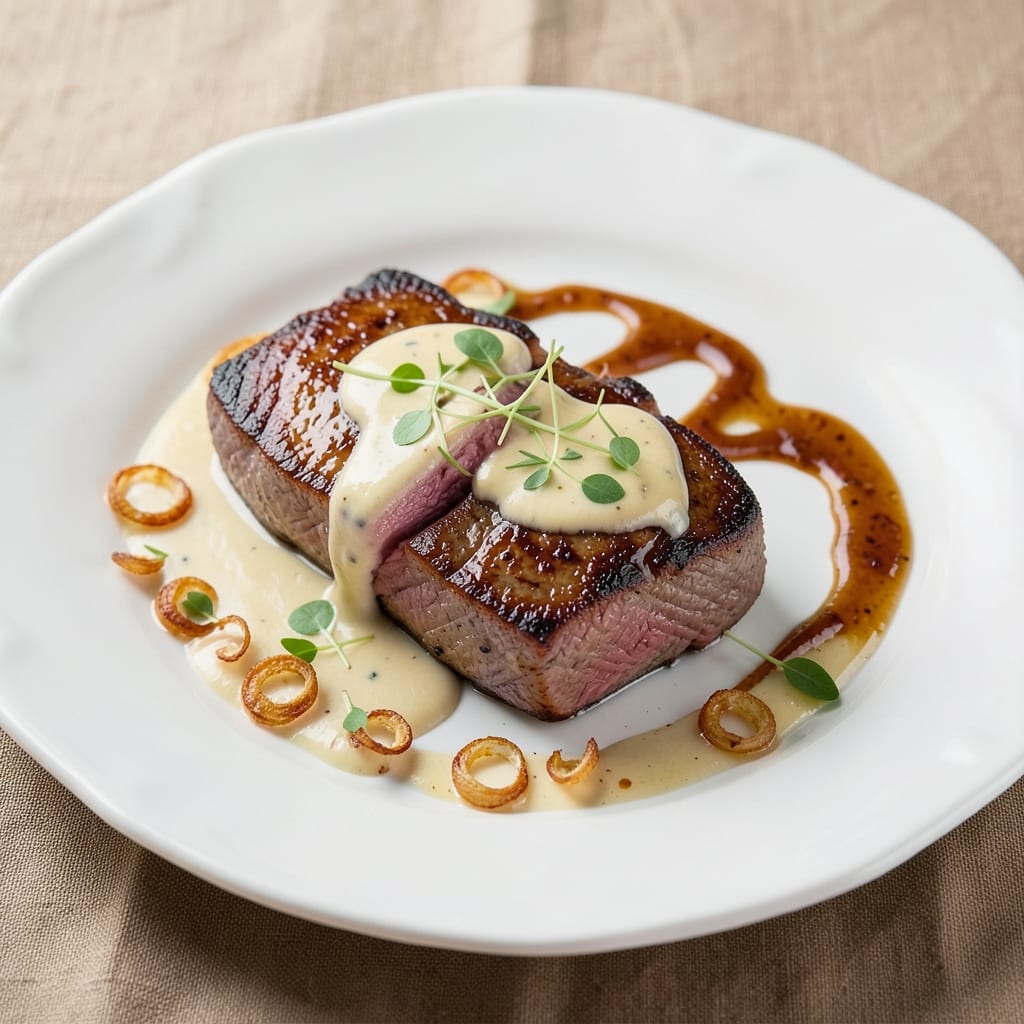
This beef bearnaise recipe transforms simple ingredients into a luxurious, velvety sauce that elevates any protein. The secret lies in mastering the emulsion—a delicate balance of butter, egg yolks, and vinegar that creates a rich, golden sauce with herbal depth. I’ve refined this technique over years, ensuring it’s foolproof for home cooks while staying true to classic French methods.
The foundation of bearnaise starts with a shallot reduction, which adds sweetness and depth before incorporating the emulsifying base of egg yolks and vinegar. Once the sauce comes together, it’s all about precision—adding butter gradually to create that signature silky texture. The result? A sauce that’s buttery, tangy, and infused with tarragon and chervil, perfect for drizzling over steak, fish, or grilled vegetables.
What makes this recipe stand out is its versatility. While traditional bearnaise pairs beautifully with beef, it also works wonders on poultry, seafood, or even roasted vegetables. The key is keeping it warm and using it immediately, as the emulsion can break if left to sit too long. For those who love experimentation, modern twists like adding white wine or a touch of Dijon mustard can take it to the next level.
With just a few pantry staples and a little patience, you’ll have a restaurant-quality sauce that’s sure to impress. Whether you’re hosting a dinner party or simply craving a gourmet touch for weeknight meals, this bearnaise recipe delivers every time.
Ingredients for beef bearnaise
Eight essential ingredients create this velvety bearnaise—simple yet transformative for any protein.
| Ingredient | Amount | Notes |
|---|---|---|
| Shallots 🧅 | 3 whole | Finely minced for reduction |
| White Wine Vinegar 🍷 | ½ cup | High-quality, dry variety |
| Fresh Tarragon 🌿 | ¼ cup | Chopped stems and leaves |
| Fresh Chervil 🌱 | ⅛ cup | Chopped, optional but traditional |
| Large Egg Yolks 🥚 | 3 whole | Fresh, room temperature |
| Unsalted Butter 🧈 | 1 cup | Cold, cubed for gradual addition |
| Diamond Crystal Kosher Salt 🧂 | ½ tsp | For seasoning during process |
| Ground Black Pepper 🌶️ | ¼ tsp | Freshly cracked for finish |
The shallots form the aromatic base—French shallots from Whole Foods or specialty markets impart the finest sweetness. For vinegar, Bragg's or Heinz dry varieties work best; avoid anything with a sharp, acidic bite. Fresh tarragon is non-negotiable here—dried loses its anise-like brightness. If chervil is unavailable, extra tarragon at half the amount preserves the herbal profile. The egg yolks must be fresh and room temperature—older yolks emulsify poorly, and cold yolks risk breaking the sauce. For butter, Plugrá or Land O'Lakes unsalted are reliable choices; avoid salted as it disrupts the delicate balance.
No fresh tarragon? Dried tarragon at one-quarter the amount works in a pinch, though the flavor will be muted. Substitute chervil with flat-leaf parsley or extra chives for a milder herbal note. For a richer sauce, add 1 tbsp white wine or shallot reduction to the final emulsion. If the sauce breaks, whisk in 1 tsp hot water to re-emulsify. The butter must be added gradually and slowly—rushing causes separation. For a modern twist, infuse the butter with garlic or herbs before adding, creating a compound flavor that elevates the dish.
Store assembled bearnaise in an airtight container with a thin layer of plastic wrap pressed directly on the surface to prevent a skin from forming. Keeps for 3-4 days refrigerated—reheat gently over low heat, stirring constantly to maintain emulsion. For longer storage, freeze in ice cube trays and transfer to a bag; thaw in the fridge and reheat with a splash of warm water. Always use bearnaise immediately after reheating, as the emulsion can separate upon standing. The sauce pairs best with seared beef, duck, or grilled fish, where its buttery richness shines.
Why You'll Love This Recipe
- I’ll be real: this sauce is the lazy chef’s secret weapon. Sauté shallots in butter until golden—no chopping, no stress—then whisk in vinegar and herbs while the yolks thicken over a double boiler. That’s it. Ten minutes tops, and you’ve got restaurant-quality sauce without the drama.
- Here’s what sold me: that rich, emulsified sauce improves the next day. Store it in the fridge, and the flavors meld even deeper—perfect for reheating with a splash of water or milk. I’ve turned a single batch into three meals: steak night, sandwiches the next day, and even a quick pasta sauce on day three. Zero waste, maximum flavor.
Step-by-step instructions for beef bearnaise recipe
Mastering bearnaise transforms simple proteins into restaurant-worthy dishes. Here's the precise method.
Create the Shallot-Vinegar Reduction
In a small saucepan, combine the 3 whole shallots and 0.5 cup white wine vinegar. Bring to a simmer over medium heat, then reduce until the shallots are completely softened and the liquid reduces by half—about 8-10 minutes. You'll know it's ready when the mixture becomes syrupy and the shallots dissolve into the vinegar.
Strain through a fine-mesh sieve into a clean bowl, pressing firmly to extract all the flavor. Discard the solids. This reduction forms the acidic base that will emulsify with the butter. If you skip straining, your bearnaise will be grainy and unappealing.
Prepare the Herb-Infused Base
In a separate bowl, whisk together the 3 whole large egg yolks, 0.25 cup chopped fresh tarragon, 0.125 cup chopped fresh chervil, 0.5 teaspoon kosher salt, and 0.25 teaspoon ground black pepper. The herbs should be finely chopped to blend seamlessly into the sauce. This mixture will form the flavor core of your bearnaise.
Place this bowl over a pot of barely simmering water (double boiler method) to gently warm the yolks. Never let the water boil—direct heat will scramble the eggs. The goal is to warm the yolks to about 160°F, just until they're thickened but not cooked through.
Gradually Incorporate the Butter
Remove the yolk mixture from the heat and let it cool slightly. Begin adding the 1 cup cold cubed unsalted butter one piece at a time, whisking vigorously after each addition. The butter should melt into the yolks, creating a smooth emulsion. If the sauce breaks (separates), immediately whisk in a tablespoon of the strained shallot-vinegar reduction to re-emulsify.
Continue whisking until all the butter is incorporated. The sauce should be thick, glossy, and hold its shape when drizzled. This gradual addition prevents the sauce from curdling. If you add butter too quickly, the emulsion will fail, and you'll have to start over.
Finish and Emulsify
Return the sauce to the double boiler and cook gently, stirring constantly with a wooden spoon, until it reaches 160°F—about 3-5 minutes. The sauce should thicken slightly and coat the back of the spoon. Taste and adjust seasoning with additional kosher salt or black pepper if needed.
Remove from heat and immediately strain through a fine-mesh sieve into a clean bowl to remove any herb stems or potential egg bits. This final step ensures a silky, professional finish. Serve the bearnaise immediately over grilled steak or roasted vegetables, where its rich, herbal depth will elevate any dish.
Pro Tips For Making Beef Bearnaise
- Whisk Like Your Life Depends On It: Bearnaise isn’t just a sauce—it’s an emulsion, and emulsions demand respect. Start with the yolks and vinegar over low heat, then slowly drizzle in the hot butter while whisking like you’re trying to outrun a kitchen fire. The second the sauce thickens, stop. No overcooking. No excuses.
- Mince Those Shallots: I used to slice them like an onion, and the sauce always tasted raw. Finely mince the shallots—almost a paste—so they dissolve into the vinegar without a trace. No one wants to taste texture in their bearnaise.
- Strain the Herbs: Fresh tarragon and chervil are the soul of bearnaise, but their stems and tough bits ruin the texture. Strain the infused vinegar through a fine-mesh sieve before mixing it with the yolks. Yes, it’s an extra step, but your sauce will be smoother.
- Use Cold Butter: Let the butter sit out just until it’s soft enough to melt easily—not liquid. Cold butter emulsifies better and gives the sauce a velvety finish. If it’s too warm, you’ll end up with a greasy mess. Trust me, I’ve made that mistake.
Essential equipment for this recipe
Double Boiler Setup
This is the most critical piece of equipment for bearnaise—no shortcuts here. I use a stainless steel double boiler (like the OXO Good Grips) because it distributes heat evenly and prevents the yolks from scrambling. If you don’t own one, create your own by placing a heatproof bowl over a saucepan filled with 1-2 inches of simmering water. The key is keeping the water at a gentle simmer—never boiling—so the yolks warm slowly and evenly. 🔥
Fine-Mesh Sieve
A fine-mesh stainless steel sieve (I recommend EZ Fold) is non-negotiable for straining the shallot-vinegar reduction and the finished sauce. The tiny holes remove herb stems and any egg bits, giving you that silky, professional texture. I’ve tried cheap plastic sieves, but they clog easily and don’t extract all the flavor. Press the solids firmly with a spoon to get every last drop of aromatic liquid.
Whisk and Heatproof Bowl
Your whisk should be silicon-coated (like the OXO Good Grips Balloon Whisk) to handle the hot butter without warping. Pair it with a heatproof glass or stainless steel bowl (I use CorningWare) that fits snugly over your double boiler. The bowl must be large enough to hold all ingredients without overflowing, but not so big that the sauce spreads too thin. A medium-sized saucepan (8-inch) works perfectly for most home kitchens.
Instant-Read Thermometer
An instant-read thermometer (I swear by the ThermoWorks Thermapen ONE) is your secret weapon for nailing the perfect bearnaise. You need to monitor the yolk mixture at 160°F and the finished sauce at the same temperature. Without one, you risk overcooking the yolks or undercooking the sauce, which can lead to separation. It’s worth the investment—this tool alone will elevate your bearnaise from homemade to restaurant-quality. ✨
Wooden Spoon for Finishing
Once the butter is incorporated, switch to a wooden spoon (I prefer a long-handled one for stability) to gently stir the sauce on the double boiler. Wood won’t scratch your bowl and won’t conduct heat like metal, which helps maintain the emulsion. Stir constantly in small, figure-8 motions to prevent scorching and ensure even heating. This is where the magic happens—patience pays off with a velvety, glossy finish.
Storage Containers
For leftovers, use airtight glass containers (like Pyrex) with a thin layer of plastic wrap pressed directly onto the sauce’s surface to prevent a skin from forming. If you plan to reheat, portion the sauce into small ramekins for easy reheating. Avoid metal containers, as they can react with the acidic components of the sauce over time. Label your containers with the date—bearnaise keeps for 3-4 days refrigerated but loses its emulsion if stored too long. 💡
Nutrition facts
Frequently asked questions
Can I make bearnaise without a double boiler?
Yes! You can create a makeshift double boiler by placing a heatproof bowl over a saucepan filled with 1-2 inches of simmering water. Keep the water at a gentle simmer—never boiling—to prevent scrambling the egg yolks. The key is maintaining even, indirect heat throughout the process.
What should I do if my bearnaise breaks or separates?
Don't panic! Immediately whisk in 1 tablespoon of hot water or a splash of the shallot-vinegar reduction to re-emulsify. If that fails, try whisking vigorously while adding 1 more cold butter cube at a time. The sauce should come back together with patience. Prevention tip: Add butter very slowly and whisk constantly.
Can I substitute white wine vinegar with another vinegar?
White wine vinegar is ideal for its mild acidity, but you can use apple cider vinegar or rice vinegar in a pinch. Avoid balsamic or red wine vinegar—their strong flavors will overpower the delicate herbs. For best results, use a dry, high-quality vinegar with minimal sweetness.
How can I make bearnaise ahead of time?
Bearnaise is best used fresh, but you can prepare components ahead: Make the shallot-vinegar reduction up to 2 days in advance and store it refrigerated. For the full sauce, assemble it 2 hours before serving and keep warm in a thermos or slow cooker on "warm" setting. Never reheat fully assembled bearnaise in the microwave—it will break.
What other proteins pair well with bearnaise besides beef?
Bearnaise works beautifully with duck breast, grilled salmon, seared scallops, and even roasted asparagus or mushrooms. The buttery richness complements both rich meats and delicate seafood. For vegetarian options, try drizzling it over grilled eggplant or portobello mushrooms.