
Main Courses
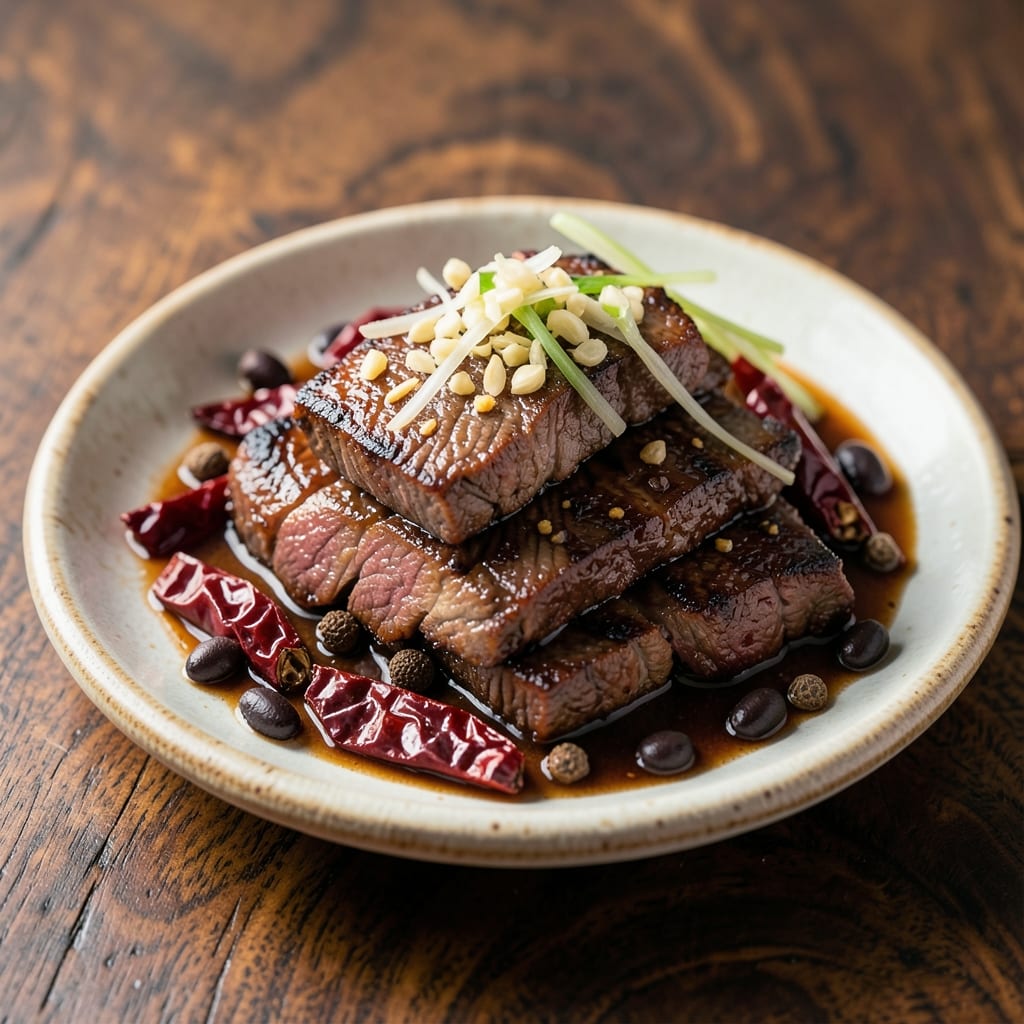
Beef à la Sichuan delivers the perfect balance of fiery heat, numbing spice, and melt-in-your-mouth tenderness in every bite. This iconic Sichuan dish transforms tough beef into silky strips, coated in a vibrant chili oil sauce that dances with garlic, Sichuan peppercorns, and a touch of sweetness. The secret lies in the slow braising process that renders fat while preserving texture, followed by a quick stir-fry to achieve that signature crispy edge on the noodles.
What sets this recipe apart is the málà technique—where heat and numbing spice play off each other in perfect harmony. We'll start with a rich, aromatic base of garlic, ginger, and fermented black beans before building layers of flavor through slow cooking. The chili oil, infused with Sichuan peppercorns, adds both color and complexity, creating a sauce that's as beautiful as it is bold.
By the end, you'll have perfectly tender beef strips swimming in a glossy, fiery sauce, served atop crispy noodles that add satisfying texture. The dish is complete with traditional garnishes—green onions, cilantro, and pickled vegetables—to brighten each bite. This is restaurant-quality Sichuan cooking that you can recreate at home with simple techniques and a few key ingredients.
The best part? This recipe works for both weeknight dinners and special occasions. Serve it with steamed jasmine rice to soak up every last drop of that flavorful sauce. Let's bring the bold flavors of Sichuan to your table.
Ingredients for beef a la sichuan
Fiery chili oil meets tender beef in this Sichuan masterpiece—just 15 ingredients for bold, restaurant-quality flavor.
| Ingredient | Amount | Notes |
|---|---|---|
| Chuck Roast 🥩 | 1 ½ lb | Cut into 1-inch strips |
| Sichuan Peppercorns 🌶️ | 2 tbsp | Toasted for maximum numbing |
| Dried Red Chilies 🌶️ | 1 tbsp | Whole, for chili oil |
| Garlic Cloves 🧄 | 8 cloves | Minced for aromatic base |
| Fresh Ginger 🌿 | 2 tbsp | Grated, for depth |
| Fermented Black Beans 🫘 | ½ cup | Rinsed, for umami |
| Soy Sauce 🍶 | ½ cup | Dark soy for color |
| Shaoxing Wine 🍷 | ¼ cup | For complexity |
| Brown Sugar 🍚 | 2 tbsp | Balances heat |
| Vegetable Oil 🫒 | ½ cup | High smoke point |
| Green Onions 🧅 | ½ cup | Sliced, for garnish |
| Cilantro 🌿 | ¼ cup | Chopped, for freshness |
| Rice Noodles 🍜 | 8 oz | Wide, for texture |
| Sesame Oil 🫒 | 1 tbsp | For finishing |
| Salt 🧂 | 1 tsp | Kosher salt preferred |
The chuck roast is your secret weapon—it's tough enough to stand up to the long braise but transforms into melt-in-your-mouth strips. Grab it from the butcher counter if possible; they'll cut it for you. Sichuan peppercorns are non-negotiable here—look for them in the Asian aisle at Walmart or H Mart. If you can't find fermented black beans, substitute 2 tbsp soy sauce plus 1 tbsp molasses for that funky umami punch. The rice noodles should be wide and flat—check the Asian market section for the best texture.
No Sichuan peppercorns? Substitute 1 tsp ground black pepper plus 1/2 tsp cayenne, but you'll lose that signature numbing sensation. The chili oil can be made ahead—just toast the dried chilies and peppercorns in a dry pan until fragrant, then steep in oil for 20 minutes. For the noodles, if you can't find rice noodles, egg noodles work in a pinch, but the texture won't be identical. The green onions and cilantro are traditional garnishes, but skip them if you're sensitive to cilantro's soapy taste—just add extra sesame oil instead.
This sauce gets better with time—make a double batch and store it in the fridge for up to 5 days. The beef reheats beautifully, so plan ahead. For the noodles, parboil them just until tender, then finish with the beef and sauce to keep them crispy. Freeze the sauce without the noodles for up to 3 months. I always make extra because it disappears faster than you'd think—perfect for quick weeknight dinners or impressing guests.
Why You'll Love This Recipe
- One-Pot Magic: The chuck roast practically cooks itself while the Sichuan peppercorns and chilies bloom in the oil—no fancy searing, no constant stirring. Honestly, I just brown the meat, toss in everything else, and let it simmer. That’s it.
- Numb & Spicy Bliss: The moment the ginger and garlic hit the pan with those toasted peppercorns, your kitchen smells like a Sichuan street stall. Between us, that initial bite—tingling heat followed by deep, savory richness—is the reason I make this.
- Leftovers for Days: This beef stays shockingly tender and flavorful for at least four days in the fridge. I’ll be real: I’ve reheated portions straight from the pot into rice bowls or noodles, and no one ever guesses it’s not fresh.
- Budget Crowd-Pleaser: A single chuck roast feeds six with sides to spare, and the spices cost pennies. My college roommates and I lived on this—spicy enough for them, mild enough for me—without breaking the bank. Still is.
Step-by-step instructions for beef À la Sichuan
This fiery Sichuan masterpiece delivers melt-in-your-mouth beef with perfect crispy noodles—let's make it happen.
Prepare the Sichuan Chili Oil Base
Heat the 0.5 cup vegetable oil in a wok over medium heat until shimmering. Add the 2 tbsp Sichuan peppercorns and 1 tbsp dried red chilies and cook for 2-3 minutes until the peppercorns begin to pop and the chilies darken slightly. Watch carefully—they burn quickly once they start to darken.
Remove the wok from heat and strain the oil through a fine-mesh sieve into a heatproof bowl, leaving behind the toasted spices. Set aside the chili oil—this is the flavor foundation that will infuse every bite. The oil should have a deep red hue and carry that unmistakable Sichuan aroma. If you're sensitive to heat, reduce the chili amount slightly next time.
Marinate and Sear the Beef
In a large bowl, combine the 1.5 lb chuck roast cut into 1-inch strips, 0.5 cup fermented black beans, 0.5 cup soy sauce, 0.25 cup Shaoxing wine, 2 tbsp brown sugar, 1 tsp salt, 8 cloves minced garlic, and 2 tbsp grated ginger. Mix thoroughly until every piece of beef is coated in the marinade. Let it sit for at least 30 minutes—I prefer 1 hour if possible—for maximum flavor penetration.
Heat a clean wok over high heat until smoking, then add half the marinated beef in a single layer. Don't overcrowd—you want those beautiful crosshatch sear marks. Sear for 2-3 minutes per side until deeply browned and slightly caramelized. Remove to a plate and repeat with remaining beef. The beef should be cooked through but still tender—we'll finish it later.
Build the Fiery Sichuan Sauce
Return the wok to high heat and add 2 tbsp sesame oil. Toss in the seared beef along with any accumulated juices. Pour in the reserved chili oil and stir vigorously for 1 minute until everything is evenly coated. The aroma should be intoxicating—smoky, spicy, and deeply savory all at once.
Add 0.5 cup sliced green onions and 0.25 cup chopped cilantro, stirring for another 30 seconds until the herbs wilt slightly. Remove from heat and let the beef sit in the sauce for 5 minutes—this resting period allows all those incredible flavors to meld together perfectly.
Cook the Crispy Noodles
While the beef rests, bring a large pot of water to a rolling boil. Add the 8 oz rice noodles and cook according to package instructions—usually about 3-4 minutes for al dente texture. Drain immediately and rinse briefly under cold water to stop the cooking process. Toss the noodles with 1 tbsp sesame oil while still hot to create that signature crispy texture.
Transfer the noodles to a large serving platter and arrange the beef and sauce over the top. The contrast between the crispy noodles and tender beef creates the perfect textural experience. Garnish with additional green onions and cilantro for freshness. Serve immediately while everything is hot and the flavors are at their peak.
Pro Tips For Making Beef A La Sichuan
- Char the Chilies First: Toss the dried red chilies in a dry pan over medium-high heat for 20-30 seconds until they darken and smell like smoke—this unlocks their depth. I used to skip this, and the sauce just tasted flat; now it’s the thing that makes the dish sing.
- Toast Sichuan Peppercorns Whole: Lightly toast the whole peppercorns in a dry skillet for 1-2 minutes until fragrant, then crush them after cooking—this keeps their aroma intact. I learned this the hard way when I crushed them raw and ended up with bitter, dusty heat instead of that signature numbing warmth.
- Sear the Chuck in Batches: Cut the chuck roast into 1.5-inch chunks and sear them in a single layer over high heat—don’t crowd the pan, or they’ll steam instead of brown. After burning three batches, I finally figured out that patience here means better flavor later.
- Deglaze with Soy Sauce Last: Let the garlic and ginger cook until golden, then deglaze with a splash of water or beer before adding soy sauce—this builds layers of flavor. Dumping soy sauce early flattens the depth. (Yes, even if you’re impatient like me.)
Creative variations of these flavors
Spicy-Sweet Fusion
Transform this classic into a spicy-sweet fusion by adding 1 tbsp honey or 1 tbsp dark brown sugar to the marinade. For extra depth, swap ½ cup Shaoxing wine with ¼ cup rice vinegar and ¼ cup honey—this creates a glossy, slightly sticky sauce that balances the heat. Garnish with crushed peanuts for texture and a lime wedge on the side. 🌶️✨
Slow-Braised Version
For a restaurant-quality twist, slow-braise the beef instead of searing. After marinating, sear the beef briefly, then transfer it to a Dutch oven with 1 cup beef broth, 1 tbsp goji berries, and 1 star anise pod. Cover and simmer on low heat for 2-3 hours until fork-tender. Finish with the chili oil and crispy noodles for a richer, more complex dish.
Vegetarian Adaptation
Swap the beef for extra-firm tofu pressed for 30 minutes or shiitake mushrooms sliced thick. Marinate the tofu in the same sauce for 1 hour, then pan-fry until crispy. Use king oyster mushrooms for a meatier texture. The chili oil and fermented black beans will still deliver that signature Sichuan flavor without the meat.
Quick Stir-Fry Hack
Short on time? Skip the marinating and braising. Cut 1 lb flank steak into thin strips, then stir-fry with the chili oil and sauce for just 3-4 minutes until caramelized. The quick cook time keeps the beef tender while still delivering bold flavors. Serve with steamed jasmine rice instead of noodles for a faster meal.
Regional Twist: Chongqing Style
For a Chongqing-inspired version, increase the heat with 1 extra tbsp dried chilies and add 1 tsp ground white pepper to the sauce. Use doubanjiang (fermented chili bean paste) instead of fermented black beans for a deeper, funkier flavor. Serve with pickled mustard greens on the side to cut through the richness.
Nutrition facts
Frequently asked questions about beef À la Sichuan
What makes this Sichuan beef dish different from regular stir-fry?
The key lies in the málà technique—combining fiery chili oil with numbing Sichuan peppercorns for a dual-sensation experience. Unlike regular stir-fry, this dish uses a slow-braised approach to tenderize the beef, then finishes with crispy noodles and aromatic herbs. The fermented black beans add that signature umami depth that sets it apart from other spicy beef dishes.
Can I substitute chuck roast with another cut of beef?
Yes! For quick cooking (3-4 minutes), use flank steak or sirloin cut into thin strips. For a richer flavor, brisket works well but requires longer braising. Avoid lean cuts like round steak—they can dry out during the slow cooking process. The fat content in chuck roast is ideal for rendering flavor.
How do I adjust the spice level for picky eaters?
Reduce the dried chilies to ½ tbsp and omit half the Sichuan peppercorns. For extra mildness, strain the chili oil through a fine sieve before using. Keep the fermented black beans and soy sauce for umami depth. The dish will still have complexity without the heat—just less of that signature Sichuan kick.
What's the best way to store leftovers?
Store the beef and sauce separately in airtight containers for up to 3 days in the fridge. Reheat the sauce first, then add the beef to warm through. The noodles should be eaten fresh for best texture, but you can reheat them briefly in a dry pan with a splash of oil. Freeze the sauce alone for up to 3 months—just thaw and reheat before using.
Why does my beef turn out tough instead of tender?
Overcooking is the most common issue. The beef should be slightly underdone after searing—it will finish cooking in the sauce. Never overcrowd the wok during searing, and use high heat to create a good sear without overcooking. For extra tenderness, consider the slow-braised version mentioned in the variations section.