
Soups & Stews
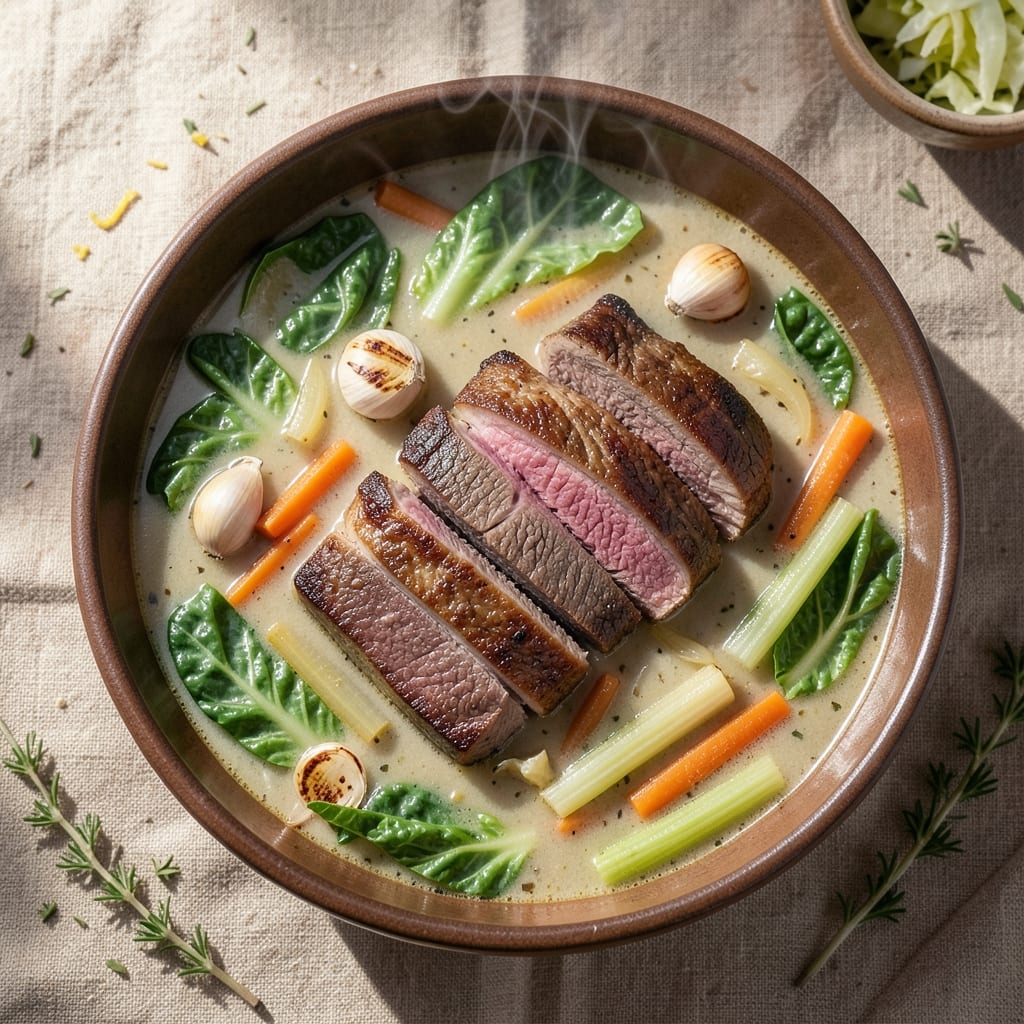
This award-winning vegetable beef soup transforms humble ingredients into a deeply satisfying one-pot masterpiece. 💛 The secret lies in slow-simmering beef and cabbage until the flavors meld into perfect harmony—rich, savory, and comforting in every spoonful. What sets this recipe apart is the balance of tender beef, crisp cabbage, and a broth so flavorful it tastes like it simmered all day.
Professional techniques like browning the beef and deglazing the pot create layers of umami that elevate this beyond basic soup. The cabbage adds a satisfying crunch, while aromatic vegetables like carrots and celery build depth. This isn't just soup—it's a hearty, restaurant-quality meal that comes together in one pot with minimal effort.
By the time you serve this, you'll have a bowl of deep-simmered richness with perfectly tender beef, vibrant vegetables, and a broth so flavorful it deserves its own praise. The aroma alone will have everyone gathering at the table, and the first bite delivers on that promise of award-winning comfort.
Perfect for chilly evenings, family dinners, or meal prep—this soup tastes even better the next day. Let's get cooking! The instructions will guide you through every step to achieve that restaurant-quality result at home.
Ingredients for award winning vegetable beef soup recipe with cabbage
Six hearty servings of restaurant-quality beef and cabbage soup—all from your kitchen.
| Ingredient | Amount | Notes |
|---|---|---|
| Chuck Roast Beef 🥩 | 2 lb | Cut into 1-inch cubes |
| Green Cabbage 🥬 | 1 small | Shredded, core removed |
| Yellow Onion 🧅 | 1 whole | Diced, medium size |
| Carrots 🥕 | 4 medium | Peeled, sliced into rounds |
| Celery Stalks 🌿 | 3 whole | Diced, tough strings removed |
| Garlic Cloves 🧄 | 6 cloves | Minced, fresh preferred |
| Tomato Paste 🍅 | ½ cup | Squeeze tube or canned |
| Beef Broth 💧 | 6 cups | Low-sodium preferred |
| Red Wine 🍷 | 1 cup | Dry, bold variety |
| Bay Leaves 🌿 | 2 whole | Fresh, removed before serving |
| Thyme Sprigs 🌿 | 2 whole | Fresh, or 1 tsp dried |
| Black Peppercorns 🌶️ | 1 tsp | Freshly ground |
| Salt 🧂 | 1 ½ tsp | Kosher or sea salt |
| Olive Oil 🫒 | 2 tbsp | Extra-virgin for richness |
The beef is the star here. Chuck roast from the butcher counter (not pre-cubed) gives you the best texture—tender and flavorful. Costco or Whole Foods usually have great cuts, but any grocery store with a meat department will work. Look for good marbling—it means more flavor. If you can't find chuck, brisket or short ribs will do in a pinch, but trim any excess fat. The cabbage should be firm and crisp, not wilted. Green or purple both work, but green is more traditional for this dish. Shred it yourself—pre-shredded cabbage gets soggy fast.
No red wine? Substitute extra beef broth with a splash of balsamic vinegar—it adds depth without alcohol. Fresh thyme is ideal, but dried at one-third the amount works if that's all you have. The tomato paste can be the squeeze tube kind from Trader Joe's—no waste, and it keeps for months. For the carrots, medium-sized ones are perfect, but baby carrots work too if that's what's in your fridge. The celery? Tough strings removed—nobody wants a mouthful of that. And the garlic? Freshly minced is best, but jarred minced garlic in a pinch (just add a pinch of salt to match the flavor).
This soup tastes even better the next day—3-4 days in the fridge, no problem. Freeze portions for up to 3 months if you want to make a big batch. I like to portion it into containers so I can grab it straight from the fridge for lunches. The broth gets richer as it sits, so don't skip the overnight rest if you can help it. Store it covered, and if you're freezing, leave a little headspace for expansion. Reheat gently on the stove—no microwaving, or you'll lose that perfect texture.
Why You'll Love This Recipe
- One-Pot Magic: I swear by this recipe—just toss everything into one pot and walk away. The chuck roast slow-cooks until tender, while the cabbage and carrots soften into perfect harmony without needing constant stirring.
- Deep Umami Love: That chuck roast? It’s the star—rich, savory, and falling-apart tender. The yellow onion and celery build layers of flavor that make every spoonful feel like a hug, especially when the cabbage adds that satisfying crunch.
- Leftovers That Shine: Between us, this soup only gets better the next day. The flavors meld overnight, and reheating it is my secret weapon for lazy mornings or quick lunches—no one ever guesses it’s yesterday’s meal.
- Budget-Friendly Feast: A single chuck roast stretches to feed four, and the veggies (cabbage, carrots, celery) are cheap but pack serious flavor. Honestly, it’s the kind of meal that makes grocery day feel like a win.
Step-by-step instructions for award-winning vegetable beef soup with cabbage
Here's how to build a soup so rich and flavorful it'll win over any critic.
🔥 Step 1: Sear the Beef for Maximum Flavor
Heat the 2 tablespoons olive oil in a large Dutch oven over medium-high heat until shimmering. Add the 2 lb chuck roast beef cut into 1-inch cubes in a single layer, working in batches if needed. Let them sear undisturbed for 3-4 minutes until deeply browned on all sides—this creates the Maillard reaction that builds deep, meaty flavor.
Real talk: Don't rush this step. You're not just cooking the beef; you're building the foundation for your soup. If the pan gets too crowded, reduce heat slightly to prevent steaming instead of searing. Once all pieces are golden and crispy, remove them with a slotted spoon and set aside.
🍳 Step 2: Build the Aromatic Base
In the same Dutch oven (no need to wipe it clean—those browned bits are flavor gold), add the diced yellow onion, diced celery stalks, and sliced carrots. Cook over medium heat for 6-8 minutes, stirring occasionally, until the vegetables soften and the onion becomes translucent.
Here's where it gets fun—toss in the minced garlic cloves and cook for just 30 seconds until fragrant. Add the ½ cup tomato paste and stir to coat the vegetables completely. This creates a rich, umami base that'll tie all your flavors together beautifully.
🍷 Step 3: Deglaze and Simmer the Foundation
Pour in the 1 cup red wine and scrape up all those browned bits from the bottom of the pot with a wooden spoon. This deglazing step captures all that concentrated beef flavor you worked so hard to create. Let the wine simmer for 3-4 minutes until it reduces by about half and the alcohol cooks off.
Add the seared beef back to the pot along with the 6 cups beef broth, 2 whole bay leaves, 2 whole thyme sprigs, 1 teaspoon black peppercorns, and 1½ teaspoons salt. Bring to a gentle boil, then reduce heat to low-medium and let it simmer uncovered for 1 hour—this is where the magic happens.
🥬 Step 4: Add Vegetables and Simmer to Perfection
After the initial 1-hour simmer, stir in the shredded green cabbage. The beef should now be fork-tender with just a slight resistance. If it's not quite there, continue simmering for another 15-20 minutes until the cabbage wilts and the flavors meld together perfectly.
I know it seems like a long cook time, but trust me—this slow simmering is what transforms simple ingredients into an award-worthy soup. The cabbage should be tender but still hold its shape slightly, not mushy. Taste and adjust seasoning if needed, remembering that the broth will reduce slightly as it cooks.
⏰ Step 5: Rest and Serve with Confidence
Remove the bay leaves and thyme sprigs before serving. Let the soup rest for 10-15 minutes off the heat—this allows all the flavors to settle and the soup to thicken slightly. The resting period also gives you time to prepare crusty bread or gather your serving bowls.
Ladle the soup into bowls and serve immediately. Each spoonful should deliver layers of rich, beefy flavor balanced by the sweetness of the carrots, the earthiness of the cabbage, and the aromatic depth from the wine and herbs. The perfect bowl of soup should be hearty enough to satisfy but light enough to enjoy any time of year.
Pro Tips For Making Award Winning Vegetable Beef Soup Recipe With Cabbage
- SEAR THE CHUCK ROAST FIRST: I used to toss the beef in whole chunks, but after burning through three roasts, I realized—brown that meat first. Cut the chuck into 1.5-inch cubes, pat them dry, and sear in batches over medium-high heat with a splash of oil. The crust locks in flavor and keeps the soup from tasting like boiled beef. (Yes, even if you're impatient like me—wait for a deep golden color, not just a light tan.)
- SWEAT THE VEGETABLES LOW AND SLOW: Diced onion, carrots, and celery? Don’t rush them. Cook these on low heat for 10-12 minutes until the onions are translucent and the carrots just start to soften—this builds the soup’s base flavor. If you crank the heat, you’ll end up with bitter, raw-tasting veggies. (Pro move: Add a pinch of salt here—it helps draw out moisture and speeds up softening.)
- SAVE THE CABBAGE WATER: That outer cabbage leaf? The one you usually toss? Don’t. Core the cabbage, remove the tough outer leaves, but save the core—chop it into chunks and add it to the pot. It’ll break down into the broth, adding depth without making the soup watery. (I learned this the hard way after straining a perfectly good pot of stock.)
- SIMMER, DON’T BOIL: Once everything’s in the pot, keep the heat at a bare simmer. A rolling boil turns tough beef to mush and makes the cabbage turn to sludge. Aim for tiny bubbles at the edges—this keeps the beef tender and the veggies intact. (Your future self will thank you when you’re not fishing for shredded beef.)
Wine and beer pairings for award winning vegetable beef soup recipe with cabbage
Red Wine Pairings
This rich, beefy soup calls for a bold red wine that can stand up to its deep flavors. I always reach for a Cabernet Sauvignon from Napa Valley—its dark fruit notes and tannins complement the beef beautifully. A Malbec from Argentina adds a touch of smokiness that pairs wonderfully with the cabbage and caramelized onions. 🍷 For a lighter option, try a Pinot Noir from Oregon, which offers bright acidity to cut through the richness.
Beer Pairings
A dark lager like Samuel Adams Black Lager or Guinness brings malty sweetness that balances the soup's savory depth. The roasted barley notes enhance the caramelized beef flavors. For a hoppier option, a Belgian-style dubbel like Westmalle Dubbel adds fruity complexity that plays off the wine and tomato paste in the soup.
White Wine Pairings
If you prefer white wine, a Chardonnay with noticeable oak—like one from Sonoma County—works surprisingly well. The buttery notes soften the cabbage's bite while complementing the beef. For something lighter, try a Viognier with its floral aromas and citrus notes to refresh your palate between spoonfuls.
Non-Alcoholic Options
For those skipping alcohol, a sparkling apple cider like Martinelli's adds effervescence that cleanses the palate. Alternatively, a ginger beer like Feather's brings zesty warmth that pairs surprisingly well with the soup's hearty flavors. Both options keep the meal lively without alcohol. 🍎
Regional Pairing Tips
In California, where bold flavors reign, I'd lean toward a Zinfandel with its jammy fruitiness. For New England cooks, a Port-style ruby port (sipped after dinner) enhances the meal's richness. If you're serving this in Texas, a Texas Hill Country Ales like Lone Star Brewing Co.'s amber ale offers malty sweetness that matches the soup's depth perfectly.
Nutrition facts
Frequently asked questions
Why does this recipe use chuck roast instead of ground beef?
Chuck roast creates tender, melt-in-your-mouth beef that stays juicy even after long simmering. Ground beef would turn mushy and lose texture. The slow cooking breaks down the connective tissue, resulting in that award-winning richness that makes this soup truly special. Plus, chuck roast has more natural fat, which keeps the soup flavorful and hearty.
Can I make this soup in a slow cooker?
Brown the beef first in a skillet, then transfer everything to your slow cooker. Cook on low for 6-8 hours or high for 3-4 hours. The slow cooker will handle the long simmer time perfectly, and you'll still get that deep, flavorful result. Just add the cabbage during the last 30 minutes to prevent it from getting too soft.
What if I don't have red wine? Can I substitute?
Yes! Use 1 cup beef broth plus 1 tablespoon balsamic vinegar for the same rich, slightly tangy flavor. Or try 1 cup beef broth with 1 teaspoon soy sauce for umami depth. The key is to maintain that savory base—just avoid sweet substitutes like apple cider, which would overpower the beef flavors.
How do I know when the beef is tender enough?
The beef should be fork-tender with just a slight resistance—it should pull apart easily but not be mushy. For chuck roast, this usually takes about 1 hour of simmering. Test a piece by piercing it with a fork—if it slides in easily and the edges pull apart cleanly, it's ready. If it's still tough, simmer another 15-20 minutes.
Can I add other vegetables to this soup?
Try adding 1 cup diced potatoes (they'll take about 20 minutes to cook) or 1 cup chopped mushrooms for extra earthiness. For a modern twist, stir in ½ cup frozen peas during the last 10 minutes of cooking. Just remember that heartier veggies (like potatoes) need more time, while delicate ones (like peas) should go in later to preserve their texture.